
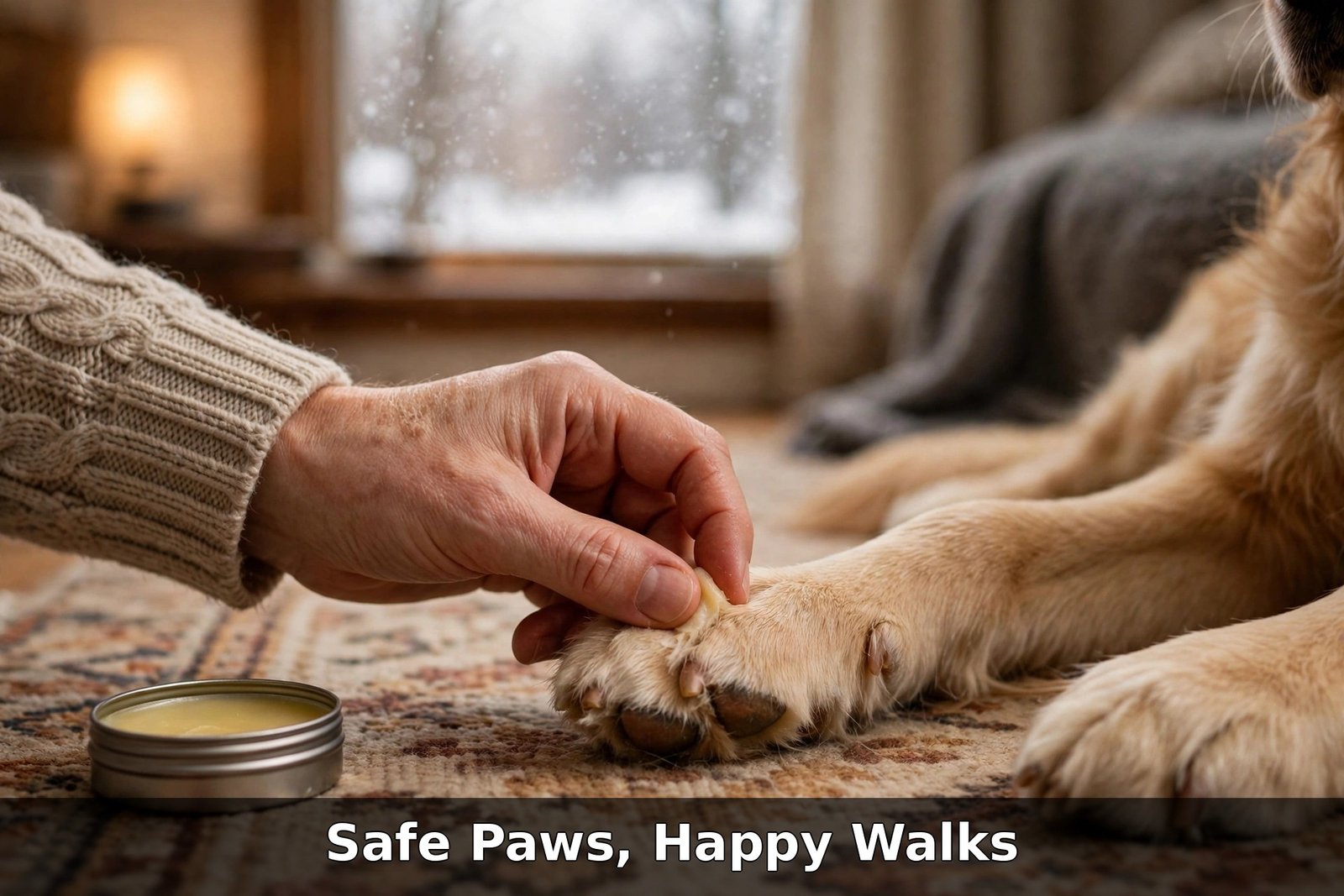
How to Choose the Best Dog Paw Balm for Winter (2026): Salt, Ice & Cracked Pads
Winter is hard on dog paws in a way that is easy to miss until your dog starts limping on a walk you have done a hundred times. Ice balls pack between the toes, road salt stings tiny cracks, and dry cold air pulls moisture out of the pads until they split. A paw balm is the simplest line of defense, and also the most misunderstood one. It is not a boot, it is not a cure, and it will not survive a dog that licks it straight off. Used right, though, it turns a painful February walk into an ordinary one.
Cracked winter pads rarely heal with a balm applied now and then, especially if the dog licks it straight off. The routine that works is boring in the best way: trim the fur between the toes, apply a thin layer before walks, wipe the paws after, and reapply at night when the pads were already dry. Balm is a habit, not a single purchase.
Quick Verdict: For winter walks on salted pavements, a wax-style protective balm applied before walks, plus a softer healing balm for already-cracked pads at night, covers both jobs. Balm beats nothing and loses to boots on sharp ice and deep cold. If your dog will not stop licking, a lick-safe formula and a short distraction after application matter more than which tin you buy.
What Winter Actually Does to Paws
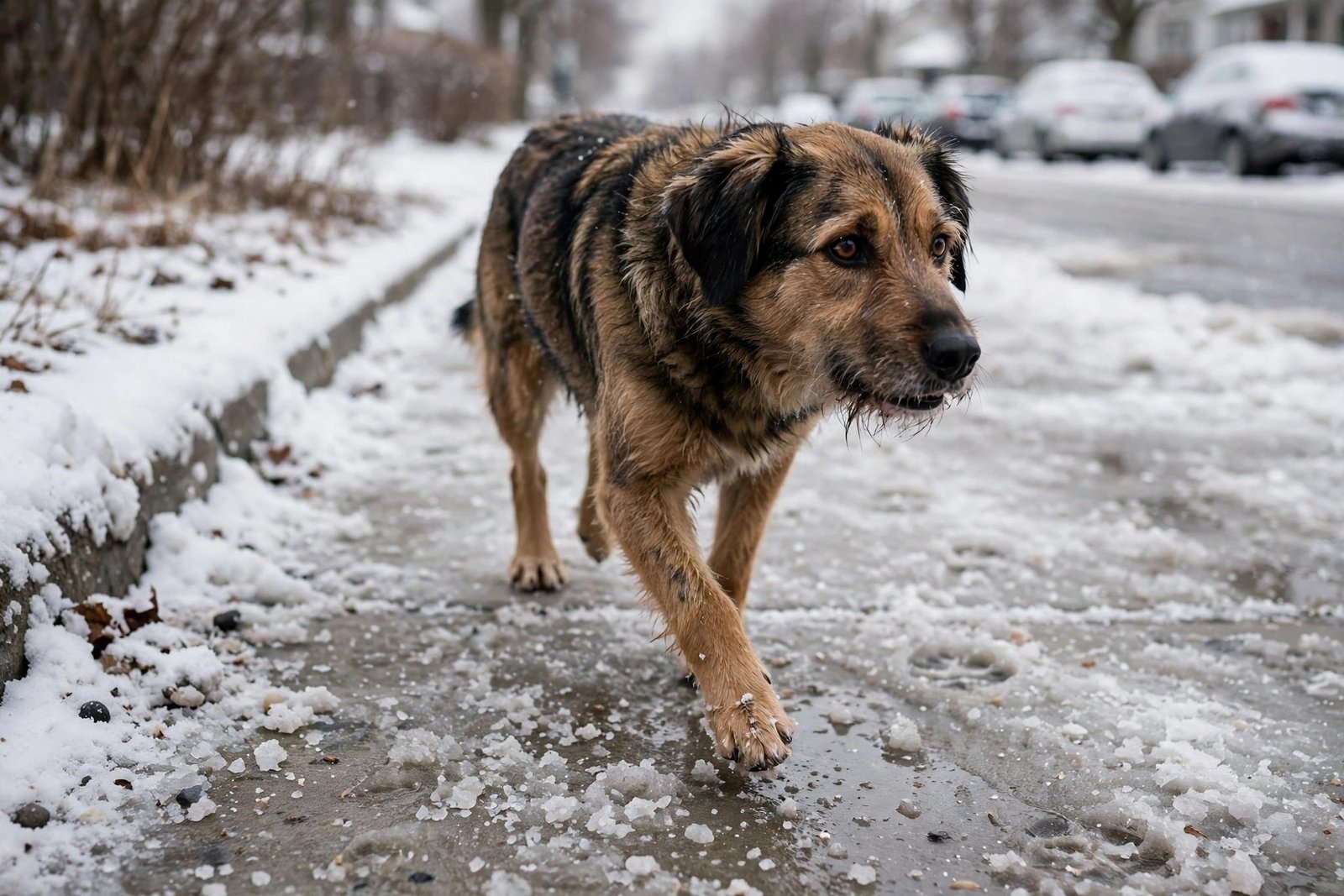
Three things happen at once. Cold dries the pads, so they lose flexibility and crack under normal pressure. Salt and de-icing chemicals sit in those cracks and sting, which is why a dog that walked fine on a snowy trail will limp on a salted sidewalk. And snow packs into the fur between the toes, forming ice balls that pull the toes apart and make every step uncomfortable. A dog that stops on walks, chews at its feet, or leaves pink prints in the snow is telling you about at least one of these.
Breed and coat change the picture. Dogs with heavy feathering between the toes collect ice balls fastest, so trimming that fur is often worth more than any balm. Small dogs walk closer to the salt spray from the road. Senior dogs and dogs with existing pad damage start winter already behind, so their routine needs to start before the first freeze, not after the first limp.
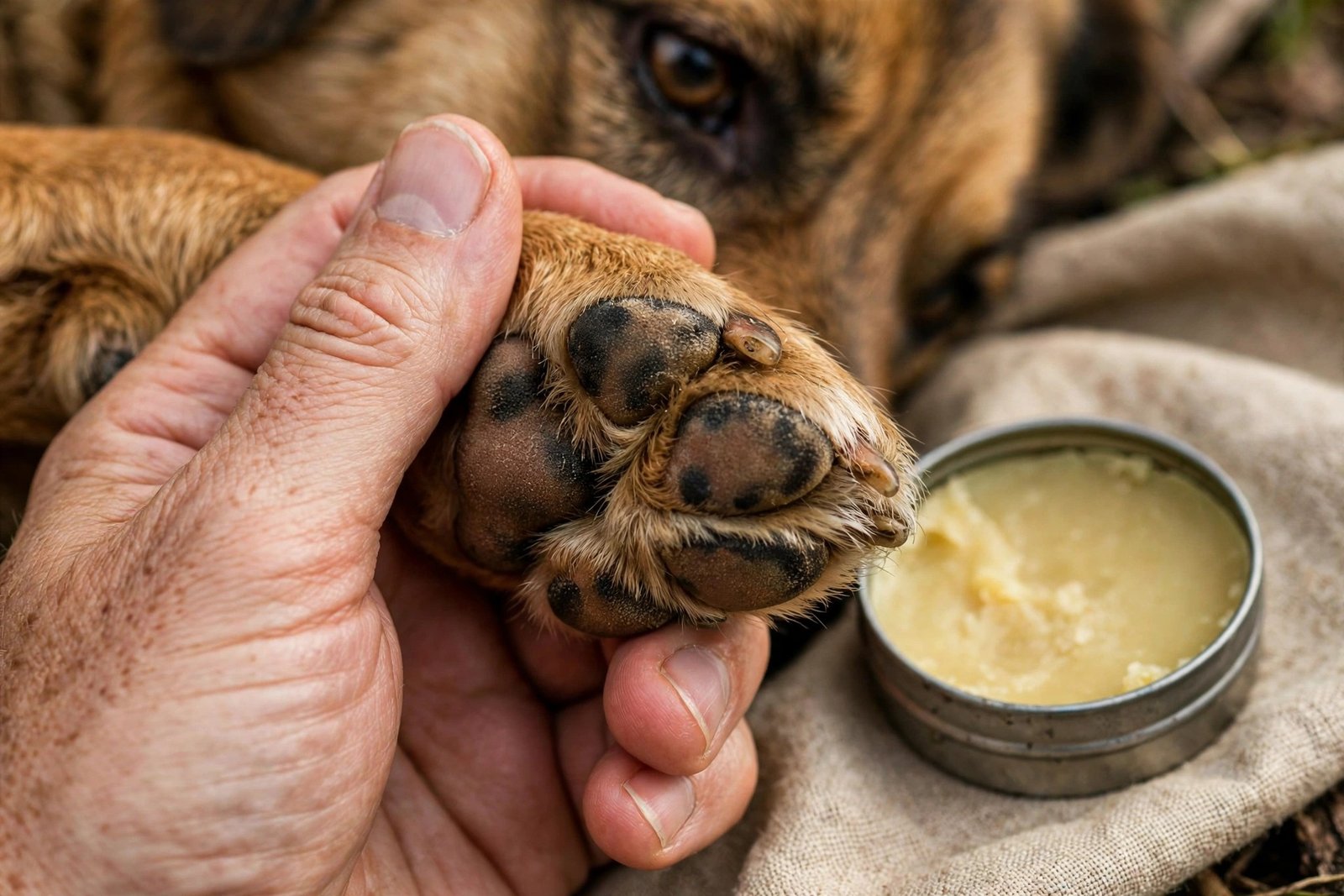
Balm Types: Match the Formula to the Job
| Balm Type | Best For | Downside |
|---|---|---|
| Wax-style protective balm | Pre-walk barrier against salt, ice, and grit | Can feel greasy; picks up debris if over-applied |
| Soft healing balm or butter | Dry, cracked, or rough pads; overnight repair | Absorbs fast, so it protects less on a long walk |
| Stick balm | Quick applications at the trailhead; pocket carry | Runs out fast on big dogs; less coverage per swipe |
| Lick-safe formula | Dogs that lick everything off within minutes | Still needs a distraction window to absorb |
The honest summary: no single tin does both jobs perfectly. A wax barrier is for going out; a soft butter is for healing overnight. Owners who buy one tin and use it for everything usually conclude balm does not work, when the real problem is using a healing butter as a salt barrier, or a wax as a crack treatment. Two small tins, used at different times of day, beat one big tin used wrong.
The Routine That Works
Step 1: Trim the toe fur. Before winter sets in, trim the hair between the pads flush with the pad surface. This alone prevents most ice balls, and it lets balm reach skin instead of sitting on fur. If you are not confident with clippers around paws, a groomer can do it in minutes.
Step 2: Apply before the walk, thinly. Rub a thin layer over the pads and between the toes, then give it a minute to settle before you head out. A thick smear is not more protection; it is more grease on your floor and more reason for your dog to lick.
Step 3: Wipe after the walk. Salt does its damage after the walk as much as during it. Wipe each paw with a damp cloth, check for cracks, ice, or a thorn, and dry the paws properly. This thirty-second check catches problems while they are still small.
Step 4: Heal at night. If pads are dry or cracked, apply the softer healing balm at bedtime, when the dog is settling and less likely to lick it straight off. A short chew or a lick mat as a distraction helps the balm absorb instead of becoming a snack.
Balm vs Boots: An Honest Comparison
Boots protect better against sharp ice, deep cold, and heavy salt, full stop. Balm wins on convenience, on dogs that will not tolerate boots, and on short walks where a full boot routine is overkill. Many owners end up with both: balm for everyday winter walks, boots for the worst days. If your dog refuses boots entirely, balm plus shorter walks on cleared paths is a respectable plan, and it beats doing nothing while waiting for the dog to accept footwear.
What balm cannot do is also worth saying. It will not heal a deep crack, stop bleeding, or fix a limp that appeared suddenly. Cracked pads that bleed, swell, or do not improve within a few days of care deserve a vet visit, not a stronger balm. The same goes for a dog that suddenly refuses to walk: pain, not stubbornness, is the likelier story. Our guide on why dogs lick their paws so much helps separate a licking habit from a paw problem.
Ingredients Worth Knowing
Useful balms are built on a short list: beeswax or plant waxes for the barrier, shea butter or coconut oil for moisture, and a little vitamin E or calendula for skin support. What to avoid matters just as much: anything with tea tree oil, which is toxic to dogs, and anything with a strong fragrance your dog hates, because a balm your dog immediately licks off is a balm that never worked. Lick-safe matters here not as a marketing word but as a practical one: if the ingredients are safe in small amounts, the inevitable lick is not an emergency.
Winter paw care pairs naturally with winter feet in general. If your dog also hates anything on its feet, our winter dog boots guide covers the boot-training side, and our raincoat guide covers the rest of the wet-weather kit.
Frequently Asked Questions
How often should I apply paw balm in winter?
Before every walk on salted or icy ground, and nightly if pads are dry or cracked. On mild days with no salt, a few times a week is enough. Over-applying daily on healthy pads in mild weather just leaves grease everywhere.
Will my dog just lick it all off?
Probably at first. Use a thin layer, choose a lick-safe formula, and follow application with a few minutes of distraction: a chew, a short training game, or dinner. Most dogs lose interest once the novelty wears off, usually within a week.
Can I use regular moisturizer or petroleum jelly instead?
Plain petroleum jelly gives a short-lived barrier but does not nourish the pad, and human moisturizers often contain fragrances or ingredients that are not dog-safe. A simple wax-and-butter paw balm is cheap enough that the substitution is not worth the risk.
When should cracked pads see a vet?
If a crack bleeds, swells, oozes, smells, or does not improve after several days of balm and rest, or if your dog suddenly will not bear weight on the paw. Deep cracks can become infected, and what looks like dry skin can sometimes be a symptom of something else.
🎄 Visit Our Etsy Shop — Fukroo
Printable Christmas wall art, gift tags & party games — instant download
Shop on Etsy →


2 Comments