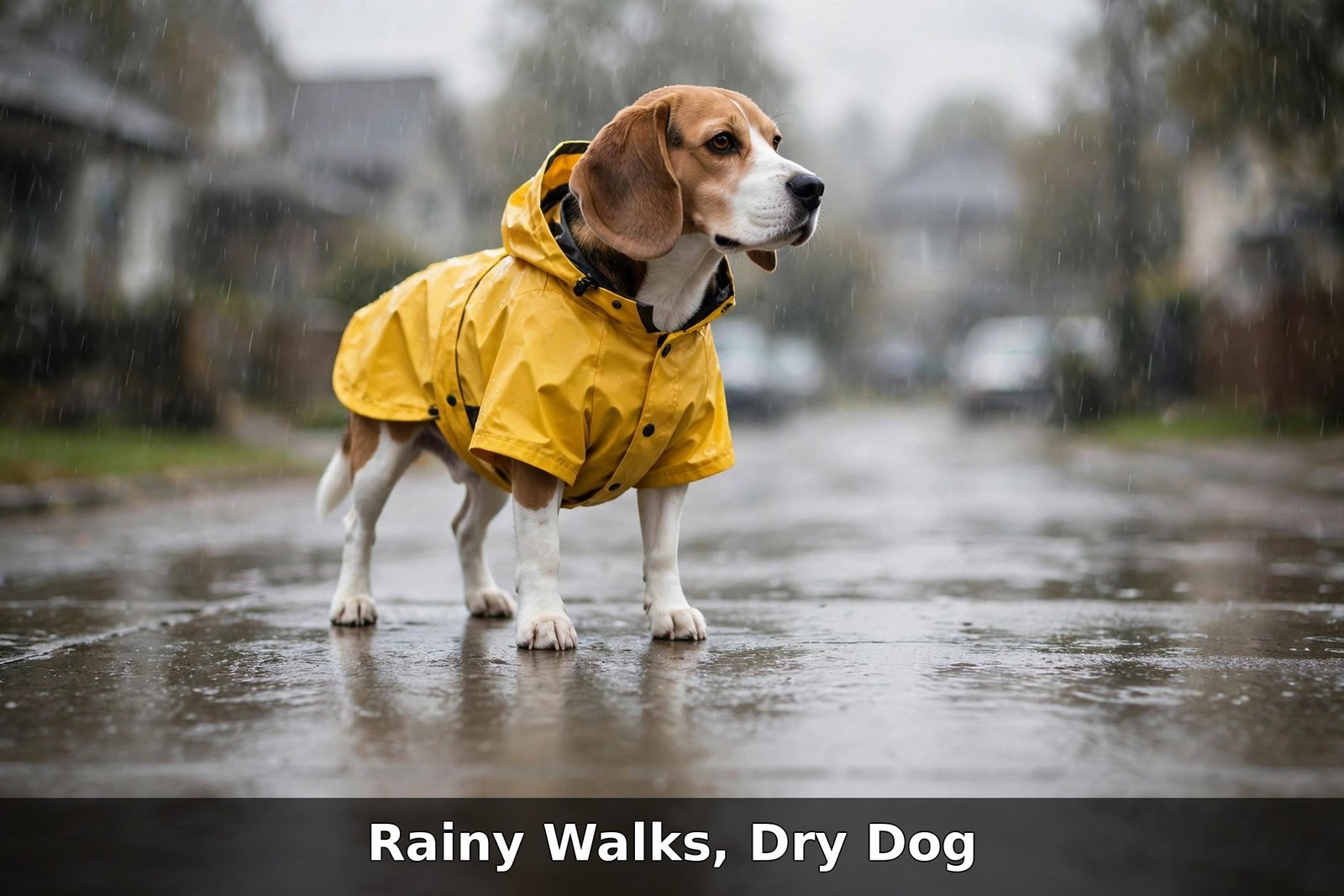
How to Choose the Best Dog Raincoat (2026): Match the Coat to the Rain
⚡ Quick Verdict: Buy the rain, not the dog.
Light drizzle? A packable water-resistant shell. A genuine downpour? A fully taped-seam waterproof coat. Cold slush and sideways rain? An insulated suit with full belly coverage. Whatever you pick, measure your dog first — back length from collar to tail base, plus chest girth — because a bad fit is the #1 reason raincoats “don’t work.”
October rain has a habit of arriving halfway through a walk, and a soaked dog will happily shake wet-dog perfume all over the hallway walls. A raincoat only helps if it actually fits: a coat whose back ends inches short or leaves the belly open does very little.
That is the idea this whole guide is built on: most people buy the wrong raincoat because they match it to the dog instead of the rain. There’s a best coat for drizzle, a best coat for a downpour, and a best coat for nasty cold slush. Sort the rain first, and picking the coat gets easy.
Why Most Raincoats “Don’t Work”: It’s Almost Always the Fit
Before you look at a single coat, grab a soft measuring tape. You need two numbers:
- Back length: from the base of the collar straight along the spine to the base of the tail — where the tail meets the body, not the tip.
- Chest girth: around the widest part of the ribcage, right behind the front legs, with two fingers of slack.
Here’s the rule that saves more rainy walks than any fabric technology: between sizes, always size up. A slightly loose coat still sheds water. A too-tight coat gaps at the chest, rides up the back, and rubs raw spots behind the front legs. I’ve watched a great waterproof shell turn into a soggy cape just because someone sized down “so it wouldn’t flap.”
Breed shape beats weight charts: a greyhound and a bulldog can weigh the same and take completely different sizes. And if your dog is long and low — dachshunds, corgis, bassets — watch the belly coverage, because their undersides live inches from puddles.
Match the Coat to the Rain, Not the Dog
Think of it as a decision tree. Look out the window first, then buy.
Rain type 1: Light drizzle or steady mist. The kind of rain where you can’t decide if you even need a coat yourself. A thin water-resistant shell is plenty — it’s mostly about keeping the topcoat from getting damp and musty. These are the lightest coats you can buy, and most dogs barely notice they’re wearing one.

Rain type 2: Real downpour. Heavy rain that soaks your own jacket. Water-resistance gives up here — you want sealed or taped seams and a high storm collar, because rain finds every stitching hole. One honest warning: dogs that are scared of thunder often find heavy storms overwhelming anyway. A coat won’t fix fear, and skipping the walk on the worst days is the kinder call.
Rain type 3: Cold, wet, and miserable — sleet, slush, or sideways wind. Water is only half the problem here; cold is the other half. A plain shell keeps rain out but does nothing for a shivering dog. This calls for an insulated coat or slush suit with full belly coverage, especially for short-coated breeds, puppies, and seniors who lose heat fast.
What “Waterproof” Actually Means on the Label
Coat labels throw around three words like they mean the same thing. They don’t:
- Water-resistant: the outer fabric is treated so water beads up and rolls off — for a while. In sustained rain it eventually wets through. Fine for drizzle, not for downpours.
- Waterproof shell: a waterproof film bonded inside the fabric. Water can’t pass through the material — but the seams are still rows of tiny stitching holes unless they’re sealed.
- Taped seams: those stitching holes are covered with waterproof tape on the inside. This is the difference between a coat that’s waterproof in theory and one that’s waterproof in a storm. For serious rain, it’s the single feature I’d prioritize.
Breathability matters for dogs too: a fully sealed cheap shell can turn into a sauna. If your dog runs hot, look for ventilation around the chest or a lighter build.
The 4 Coat Types That Cover Every Rain
| Coat type | Rain it’s built for | Coverage | Packability |
|---|---|---|---|
| Full-coverage premium shell | Drizzle to steady rain | Full back + chest + belly strap | Medium |
| Technical taped-seam raincoat | Heavy downpours | Full back + high storm collar | Low-medium |
| Reversible packable coat | Light drizzle, travel | Back only, minimal straps | Excellent |
| Insulated slush suit | Cold slush, sleet, wind | Full body + belly coverage | Low |
BEST ALL-ROUND
1. Full-Coverage Premium Shell with Leash Portal & Storm Collar

The one-and-done pick for most owners. The storm collar protects the neck without a hood, and the leash portal — a reinforced opening over the back — lets you clip the leash to a harness underneath. If your dog pulls, clipping through the portal stops the coat twisting sideways; the training side is covered in our leash-pulling guide.
Best for: owners who want one coat that handles 90% of rainy days.
Pros: neck protection without hood stress; leash portal works with a harness; adjustable belly strap for a custom fit.
Cons: bulkier than packable shells; overkill for a five-minute drizzle.
HEAVY-RAIN PICK
2. Technical Taped-Seam Raincoat
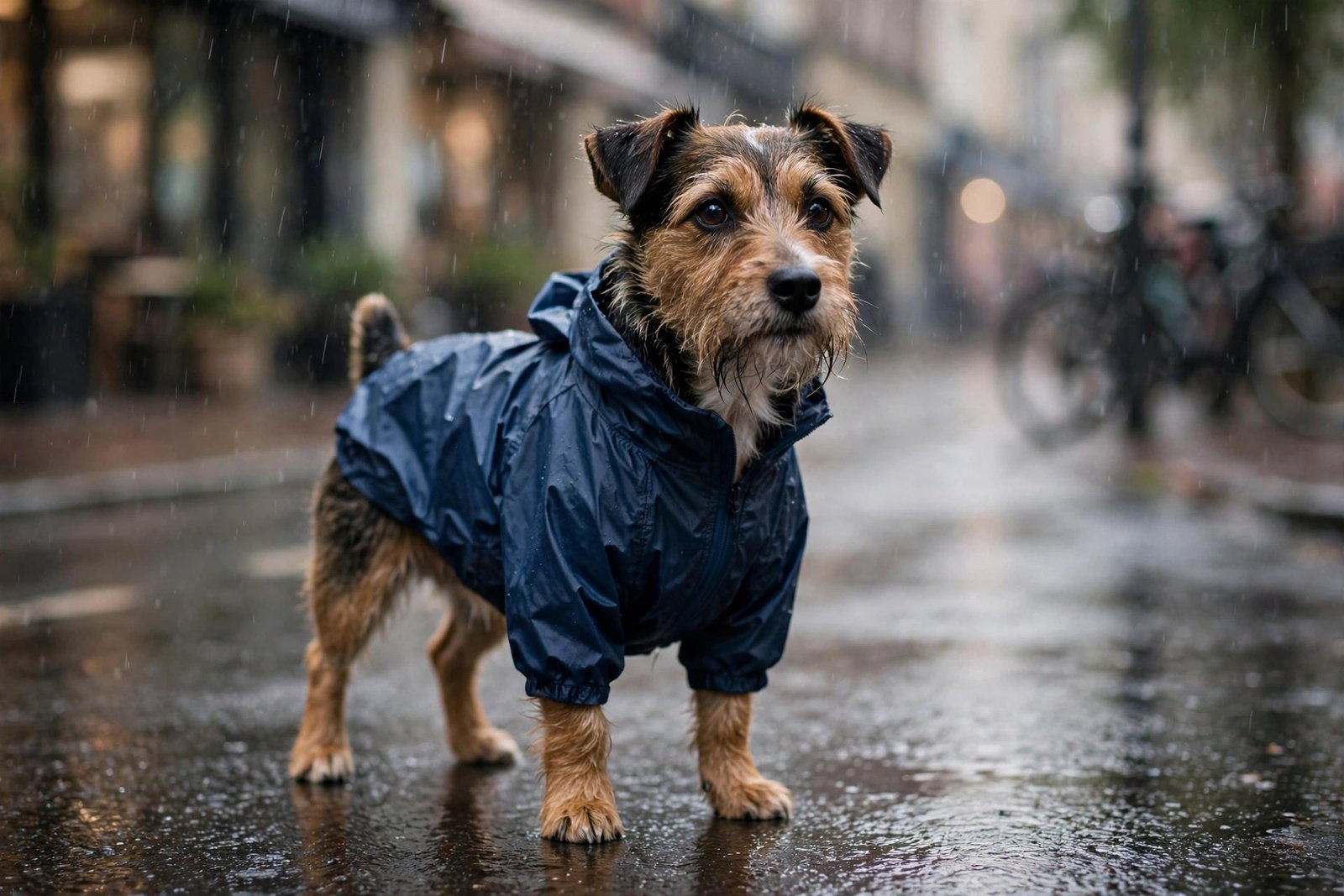
For the “heavy rain” forecast days when the walk still has to happen. Sealed or taped seams close off the stitching holes that let water wick through on cheaper coats, so it stays waterproof in sustained downpours — not just the first twenty minutes. The trade-off: fully sealed coats run warmer, so save them for genuinely cold, wet days.
Best for: all-weather walkers in rainy climates who can’t skip the bad days.
Pros: genuinely waterproof in sustained rain; high storm collar blocks wind-driven rain; toughest fabrics of the four classes.
Cons: least breathable — can overheat energetic dogs in mild weather; heavier and less packable.
VALUE / TRAVEL PICK
3. Reversible Packable Lightweight Coat
The coat you keep in the car or by the front door for “is it going to rain?” days. Folds to almost nothing, slips on in seconds, and the reversible design gives you a bright visibility side. Be honest about what it is, though: a drizzle shield, not storm armor — back covered, belly open, and it will wet through in a real downpour.
Best for: travel, quick walks in light or uncertain rain, dogs that hate wearing gear.
Pros: packs tiny; lightest class — most dogs barely notice it; reversible with a visibility side.
Cons: thin — folds to almost nothing, but offers no warmth for cold-wet days.
COLD-WET PICK
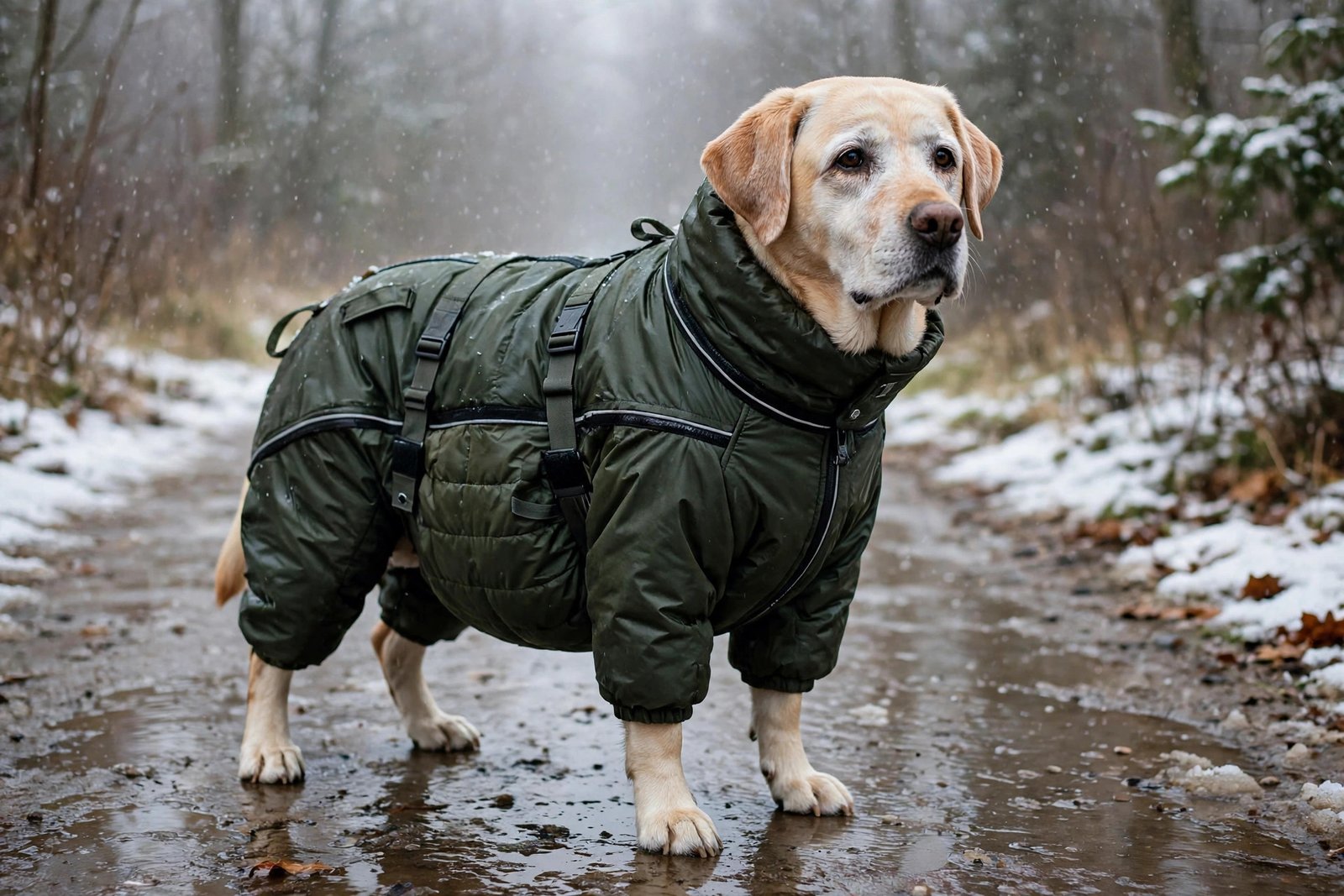
4. Insulated Slush Suit with Full Belly Coverage
When rain comes with cold — slush, sleet, wet snow, raw wind — your dog needs insulation as much as waterproofing. A slush suit covers the belly fully, which matters enormously for long, low breeds whose undersides drag through every puddle, and for short-coated dogs, puppies, and seniors that lose body heat fast. The honest downside: the warmest, bulkiest class — save it for genuinely cold wet days, or it will overheat most dogs.
Best for: cold wet climates, dachshunds/corgis and other low riders, winter slush season.
Pros: full belly coverage keeps the muddiest zone dry; insulation fights cold + wet combined; best class for low-slung breeds.
Cons: too warm for mild-weather rain; bulkiest class — some dogs need a few wears to accept it.
Honest Caveats Nobody Puts in the Product Photos
Skip the hood. Hoods look adorable in photos and stress out most real dogs — they muffle hearing, block side vision, and slide over the eyes. A tall storm collar protects the neck without the misery; if a coat comes with a hood, leave it folded down.
Cheap vinyl shells overheat dogs. The shiniest, cheapest raincoats are often non-breathable plastic that traps body heat. Heavy panting or rubbing at the coat mid-walk means it’s too warm — a breathable fabric beats a sauna every time.
Check for chafing. After the first few wears, run your fingers along the strap lines and behind the front legs. Redness means loosen a strap or size up. And hang the coat to dry between walks — a damp coat re-worn is how wet-dog smell becomes permanent.
FAQ
Do dogs actually need raincoats?
Most healthy adults with thick double coats don’t need one for light rain. Raincoats earn their keep for short-coated breeds, puppies, seniors, cold-sensitive dogs, and anyone walking in sustained heavy rain or slush — plus a coated dog means a far less muddy hallway for you. For the wet-season cleanup routine, see how often you should bathe your dog.
My dog is between sizes. Size up or down?
Up, every time. A slightly roomy coat still sheds water; a tight one gaps at the chest, rides up the back, and chafes. You can always take in a strap — you can’t add fabric that isn’t there.
Are hoods bad for dogs?
Mostly, yes. They muffle hearing and block side vision, which is why so many dogs freeze or paw at them. A high storm collar protects the neck just as well without the sensory shutdown.
Can my dog overheat in a raincoat?
Absolutely — especially in cheap non-breathable shells or insulated suits worn on mild days. Match the coat to the temperature as well as the rain. Heavy panting or rubbing at the coat mid-walk means it’s too warm.
Should we still walk during a thunderstorm?
A raincoat handles rain; it doesn’t handle fear. If your dog trembles or tries to bolt at thunder, forcing a walk during a storm can make the anxiety worse. Our thunder-fear guide explains what helps — on the worst days, a short potty break plus indoor play beats a miserable soaked walk for both of you.
How do I wash a dog raincoat?
Rinse off mud, then wash gentle with mild soap — skip fabric softener, which kills water-repellent coatings. Hang dry, never tumble. If an older coat starts wetting through, a spray-on reproofer can bring the beading back.
🎄 Visit Our Etsy Shop — Fukroo
Printable Christmas wall art, gift tags & party games — instant download
Shop on Etsy →