
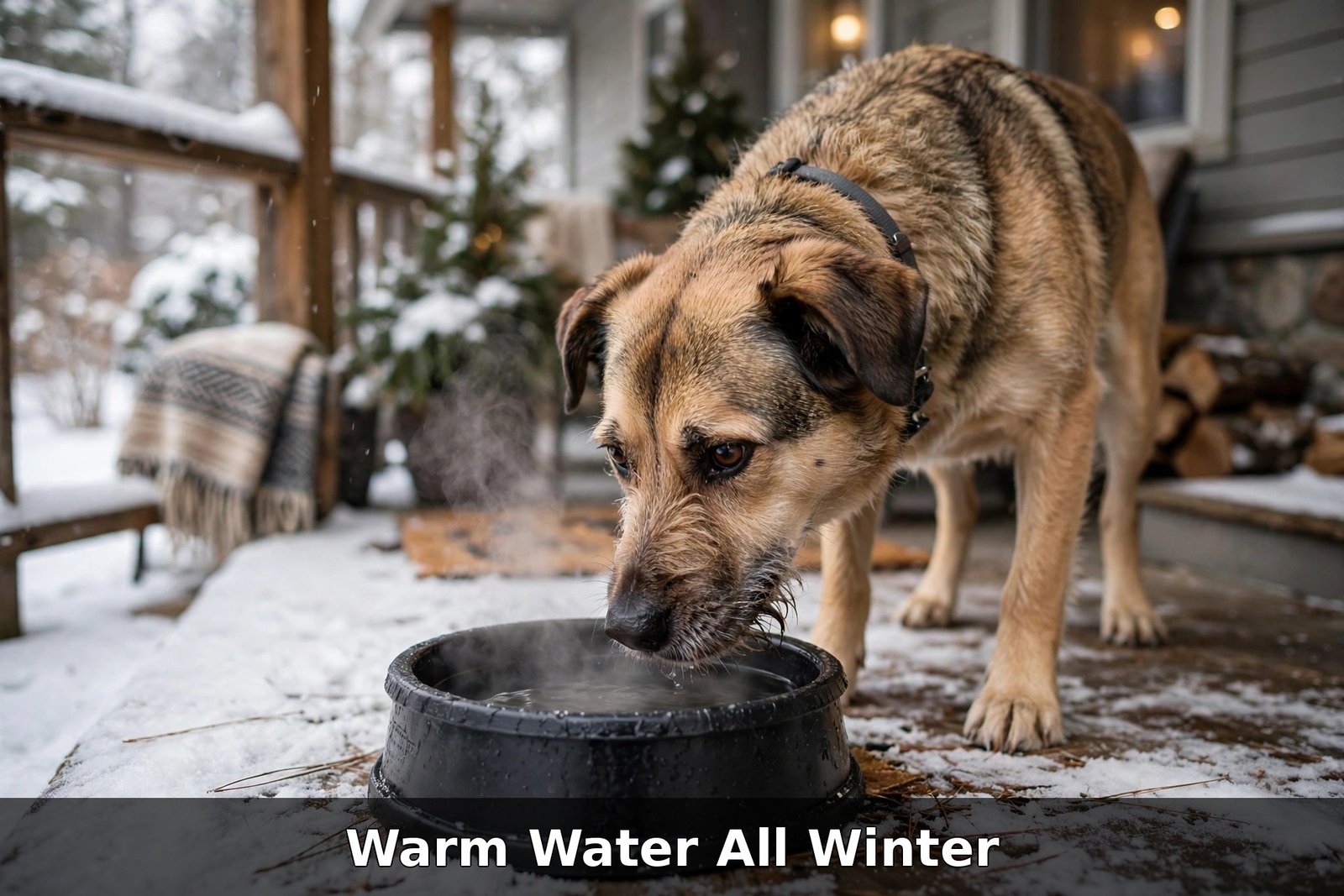
How to Choose the Best Heated Dog Water Bowl for Winter (2026): The Safety-First Buyer’s Guide
The first hard freeze of the year always catches someone out. You fill the bowl in the morning, the temperature drops overnight, and by breakfast your dog is licking a solid disc of ice. Dogs still need the same amount of water in winter as they do in summer, and snow is not a substitute. A heated water bowl exists for exactly this problem, but it is also an electrical device sitting outside in wet, freezing weather, so buying the wrong one, or setting it up carelessly, creates a new problem instead of solving the old one.
I have watched outdoor dogs go through winters with everything from a rubber bucket that gets kicked over daily to a properly set-up heated bowl that just works. The difference is rarely money. It is a handful of details: a thermostat, a safety listing, a cord your dog cannot chew, and a sheltered spot out of the wind. Get those right and winter hydration stops being a daily chore.
Quick Verdict: For most dogs, a thermostatically controlled heated bowl sized for a full day of drinking, plugged into a ground-fault protected outdoor outlet with its cord routed out of chewing reach, is the safest winter setup. Stainless steel suits chewers and easy cleaning; plastic suits tight budgets and lighter use. If you have no outdoor power, a deep rubber bowl in a sunny, sheltered spot with frequent fresh-water swaps is the honest fallback, not a heated bowl on a long extension cord.
Why Winter Water Is a Real Problem
Cold weather does not switch off thirst. Dogs lose water through breathing, activity, and digestion all year, and heated indoor air dries them out further. A dog that cannot drink enough will drink less, not complain more, and mild dehydration in winter often shows up as lethargy or a reluctance to go outside rather than an obvious crisis. Outdoor dogs and dogs that spend long stretches in a yard or kennel are the ones most at risk, because their water source is the one thing nobody checks between morning and evening.
Ice forms faster than most owners expect. A shallow bowl can freeze solid within a few hours on a still, clear night, and a thin skin of ice is enough to stop a polite dog from drinking. Breaking the ice by hand twice a day works until the week you are busy, ill, or away, which is exactly when a heated bowl earns its keep.
The Four Details That Actually Matter
1. A thermostat, not a constant heater. A good heated bowl only warms when the water approaches freezing, then switches off. That keeps running costs tiny, stops the water getting warm enough to grow slime quickly, and avoids the slow evaporation that leaves a crusty ring. A bowl that heats all the time is a worse product, however it is marketed.
2. A genuine safety listing for the whole product. Look for a recognized testing mark covering the finished bowl, not just a component inside it. This is the detail that separates serious outdoor electrical gear from cheap lookalikes. If the listing is unclear, treat that as a no.
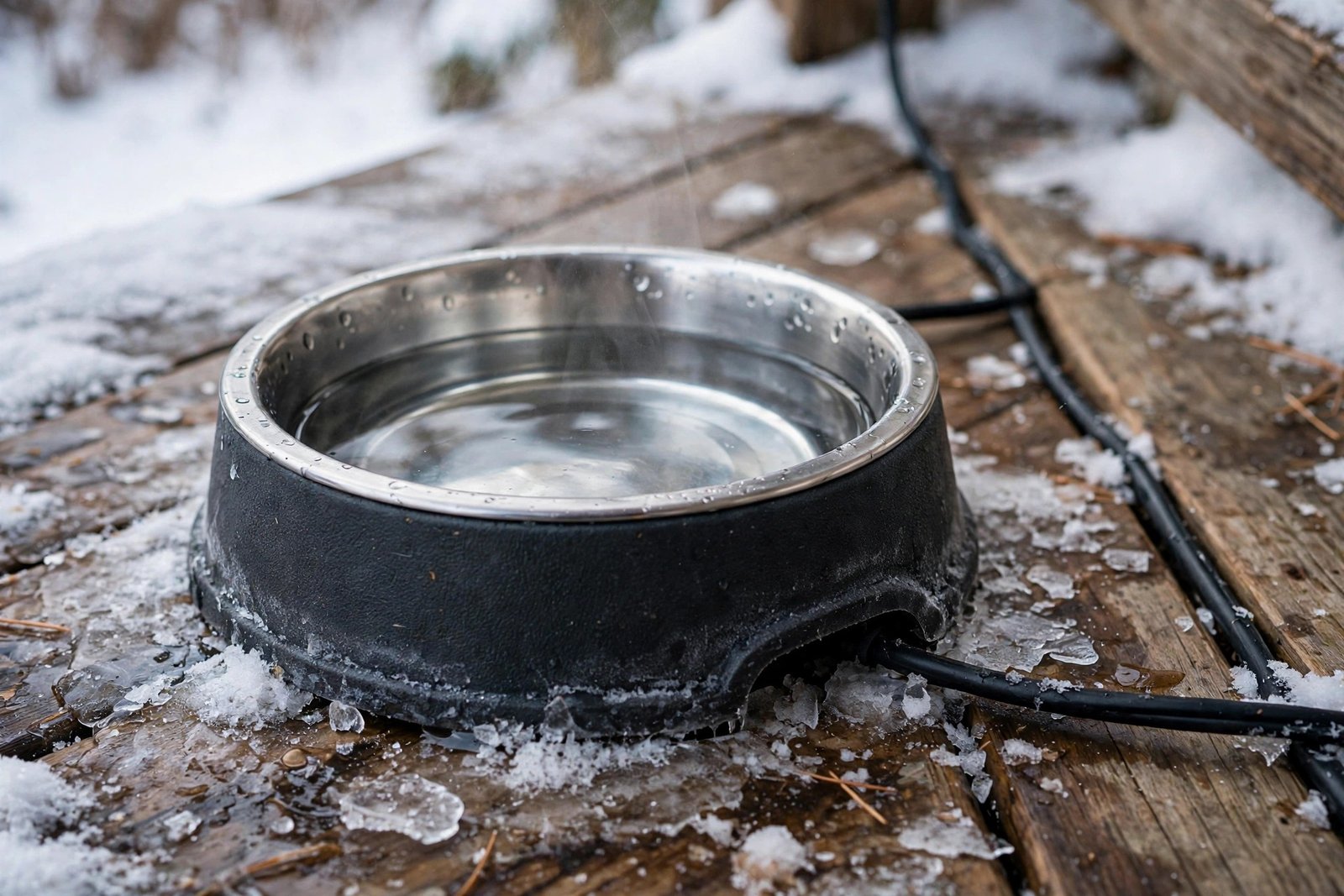
3. A chew-resistant cord, routed properly. The cord is the weakest point of every heated bowl. A wrapped or armored cord helps, but routing matters more: run it where your dog cannot reach it, keep connections off the ground and out of snow, and plug into a ground-fault protected outdoor outlet. If your dog is a determined cord chewer, no heated bowl is safe until the cord is physically out of reach, and a stainless steel bowl will not fix a cord problem.
4. Shelter beats wattage. Wind strips heat faster than still cold air. A modest bowl under a porch roof or beside a doghouse will outperform a powerful bowl sitting exposed in an open yard, and it will form far less ice around the rim. Place the bowl somewhere sheltered before you blame the wattage.
Picking the Right Type for Your Dog
| Bowl Type | Best For | Watch Out For |
|---|---|---|
| Plastic heated bowl, medium capacity | One medium dog, sheltered porch, everyday use | Stains and slime if not rinsed often; light enough to tip |
| Large-capacity heated bowl | Large breeds, or two or more dogs sharing | Heavy when full; needs a flat, stable spot |
| Stainless steel heated bowl | Chewers, dogs that tip plastic, easy sanitizing | Costs more; still needs the same cord care |
| Small heated bowl | Small dogs, kennels, cats sharing the station | Runs dry fast for a big dog; check twice daily |
Size by a full day of drinking, not by what looks neat on the porch. A rough guide is about one ounce of water per pound of body weight per day, more for active dogs, so a 60-pound dog needs roughly seven or eight cups before you count spillage and evaporation. A bowl that runs dry by evening has failed at its one job. If you are unsure how much your dog actually drinks, our guide on how much water a dog should drink a day walks through the numbers.
Setup Checklist: Do This Before the First Freeze
Set the bowl up before the cold arrives, not during it. Choose a flat, sheltered spot near a ground-fault protected outlet, ideally under a roof overhang or beside a doghouse wall. Run the cord along a wall or through a conduit where teeth cannot reach it, and keep every connection raised and dry. Fill it, plug it in, and check after the first cold night: is the water liquid, is there an ice rim, is the cord untouched? One check answers all three questions.
Cleaning still matters in winter. Heated water grows a slippery film faster than cold water, so rinse and wipe the bowl every day or two, and scrub it properly once a week. If algae or slime keeps returning, the bowl is probably sitting in direct sun on mild days, or the water is sitting too long between refills. Fresh water daily is part of the product working, not an optional extra.

No Outdoor Power? The Honest Alternatives
Not every yard has a safe outdoor outlet, and running a long extension cord across a yard to a water bowl is not a safe workaround. Without power, use a deep, dark rubber bowl placed in the sunniest sheltered spot you have, and swap in fresh water several times a day. A floating ball can slow thin ice forming, and insulating the bowl inside a foam box or an old tire helps a little. None of this matches a heated bowl in sub-zero weather, and I would rather say that plainly than pretend otherwise. If your dog lives outside through real winters, getting a proper outdoor outlet installed is the upgrade that matters, and it is worth doing before the coldest month.
Winter care does not stop at water. Paws take a beating from ice and road salt at the same time, so pair the bowl with a paw routine, and make sure the sleeping spot is dry and draft-free. Senior dogs feel the cold first, so if your older dog is drinking less or moving stiffly, our guide on the best elevated bowl stand for senior dogs and our dog water fountain guide cover the indoor side of the same problem.
Pros and Cons at a Glance
Pros: water stays liquid through freezes; thermostat keeps running costs low; one daily check replaces constant ice-breaking; good for outdoor dogs, kennels, and multi-dog yards.
Cons: needs a safe outdoor outlet; the cord is a chewing risk if routed badly; needs regular cleaning; useless without power; a cheap unlisted bowl is a genuine electrical risk outdoors.
Frequently Asked Questions
Will a heated bowl make the water too warm?
No, if it is thermostatically controlled. It only warms enough to prevent freezing, so the water stays cool, not warm. A bowl that feels warm to the touch is either faulty or not thermostatically controlled, and should be replaced.
Can I use an extension cord with a heated bowl?
As a rule, no. Most makers advise against it, and a cord lying across a yard in snow is a tripping, chewing, and water-ingress risk all at once. If the outlet is too far away, choose a bowl with a longer cord, move the bowl, or have a proper outlet installed.
How much electricity does a heated bowl use?
Very little. Most draw somewhere in the tens of watts at most, and because the thermostat cycles on and off, the actual use across a day is far less than the headline figure. Shelter placement saves more power than chasing a lower wattage.
Is a heated bowl safe to leave plugged in all winter?
Yes, provided it is a listed product, plugged into a ground-fault protected outlet, with its cord out of reach and its connections dry. Check it after storms and after the first few cold nights, and unplug it for cleaning rather than wiping it while live.
🎄 Visit Our Etsy Shop — Fukroo
Printable Christmas wall art, gift tags & party games — instant download
Shop on Etsy →


