
How to Choose the Best Winter Coat for Dogs (2026): The Fit-First Buyer’s Guide
Winter coats are also one of the most oversold dog products around. Plenty of dogs do not need one at all, and plenty of owners buy heavy insulated parkas for dogs that would have been happier in a light rain shell. This guide sorts out who actually needs a coat, which type matches which weather, and how to measure so the thing you order is the thing that fits.
Quick Verdict: Measure three numbers before you buy anything: back length from the base of the neck to the base of the tail, chest girth at the widest point, and neck circumference. Then match the coat type to your weather, not to the prettiest photo: a fleece-lined waterproof coat covers most cold, wet winters; a light rain shell is enough for a double-coated dog; a full insulated coat earns its keep only for short-coated, small, elderly, or lean dogs in real cold. If your dog sits between sizes, size up and adjust the straps. And if a coat restricts the front legs or covers the tail area so your dog cannot toilet comfortably, send it back, however warm it claims to be.
Does Your Dog Actually Need a Coat?
Start here, because the honest answer is often no. Dogs with thick double coats — huskies, malamutes, Bernese mountain dogs, German shepherds — carry their own insulation. A second coat on top of that mostly traps heat and restricts movement. For those dogs, a light waterproof shell for long, wet walks is the sensible ceiling, and even that is about keeping them dry rather than warm.
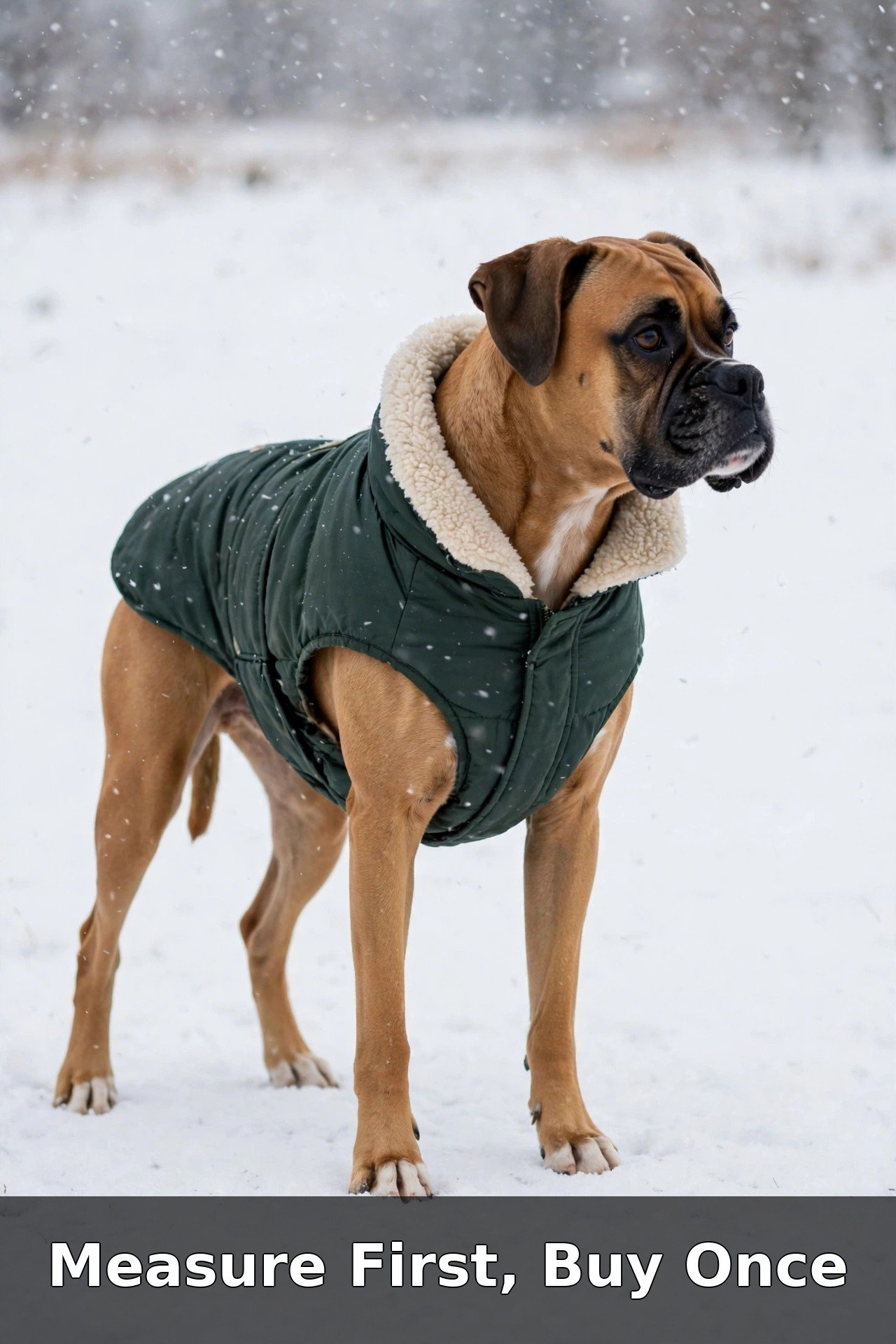
On the other side are the dogs winter genuinely bothers: short-coated breeds like greyhounds, boxers, and French bulldogs; small dogs with little body mass; lean sighthounds; puppies; and seniors whose joints stiffen in the cold. If your dog shivers, cuts walks short, or hunts for shelter, believe the dog over any breed chart.
Age and health cut across breed, too. An arthritic senior lab may need a coat her younger self would have laughed at, and a dog recovering from illness often feels the cold more. When in doubt, try a coat on a cold day and watch what happens: a dog that walks normally, tail up, pace steady, is comfortable. A dog that freezes or tries to scrape the coat off is either cold in a different way or wearing the wrong fit.
The Four Coat Types, Matched to Weather
| Coat type | Best for | Watch out for |
|---|---|---|
| Fleece jumper / sweater | Dry cold days, indoor warmth, short walks | Soaks up rain and goes cold when wet; no wind protection |
| Insulated waterproof coat | Most cold, wet winters — the all-rounder | Cheap ones leak at the seams; check the belly coverage |
| Light rain shell | Double-coated dogs, mild wet weather | No insulation — useless on a freezing day |
| Full-body snowsuit | Deep snow, very short legs, dogs that cake up with snowballs | Restricts movement if sized wrong; many dogs hate leg sleeves |
For most owners in a typical cold, wet winter, the insulated waterproof coat is the one purchase that covers the most days. It pairs a water-resistant or waterproof outer with a warm lining, usually fleece or quilted insulation, and it handles the two things that actually chill a dog: wind and wet. A fleece jumper is lovely on a dry, still day and a liability in rain, because a soaked fleece against skin cools a dog fast.
Full-body snowsuits deserve a careful word. They solve a real problem — snowballing between toes and on bellies, and short-legged dogs wading through drifts — but leg sleeves are the first thing a dog will object to, and a suit that binds at the shoulders turns a walk into a waddle. Try one at home first, indoors, with treats, before committing to a long walk in it.

Measure Once: The Three Numbers That Matter
Almost every coat return I have heard about traces back to guessing a size from weight or breed alone. Two dogs of the same weight can have wildly different chest depths and back lengths, and brands do not share a sizing standard. The size chart of the coat you are actually buying is the only one that counts.
With your dog standing square, take three measurements with a soft tape. Back length: from the base of the neck, where the collar sits, to the base of the tail — not the tail tip. Chest girth: around the widest part of the ribcage, just behind the front legs. Neck circumference: around the base of the neck where the coat collar will sit. Write all three down, then compare against the brand’s chart. If back length and chest point to different sizes, chest usually wins for insulated coats, because a tight chest restricts breathing and stride.
Between sizes? Size up. A roomy coat can be cinched in with straps; a too-small coat cannot be stretched, and it will chafe at the armpits where the front legs move.
Then do the two-finger test once the coat arrives. With the coat on and fastened, you should be able to slide two fingers flat between the coat and your dog’s body at the chest and belly. Less than that and it is too tight; much more and it will shift and let wind in. Check the toilet test, too: the coat should end before it interferes with your dog going to the bathroom, and for male dogs the belly coverage should not extend so far back that it soaks. Watch your dog walk, trot, and turn in the house for a few minutes. Stiff legs or constant stopping to chew at a strap mean the fit is wrong, not that your dog “needs to get used to it.”
Features Worth Paying For, and Ones That Are Not
A harness opening on the back is worth real money if your dog walks on a harness: it lets you clip the lead without threading it under the coat or cutting a hole yourself. Reflective trim is worth it for anyone walking in dark winter mornings and evenings; it is cheap to add and genuinely helps drivers see a dark-coated dog. Adjustable belly straps and a neck drawcord are the difference between a coat that fits in November and one that still fits in February after a haircut or a few winter pounds.
Hoods, on the other hand, are mostly decoration. Most dogs shake them off or ignore them, and a hood that flops over the eyes is a hazard, not a feature. Likewise, be wary of coats that fasten only with zips down the belly on a wriggly dog: Velcro belly straps are faster at the front door in the rain, and a coat that takes a wrestling match to put on will stay in the cupboard.
Washing matters more than people expect. Winter coats collect mud, road salt, and wet-dog smell, and a coat you cannot machine wash will either stink by January or never get worn because you are protecting it. Check the care label before buying, and wash on a gentle cycle with the fastenings closed so Velcro does not shred the lining.
If Your Dog Hates Coats
Some dogs freeze at the sight of a coat, and forcing the issue teaches them that winter walks start with a fight. Introduce it the slow way: coat on the floor with treats on it, then draped over the back for a few seconds with praise, then fastened for a minute indoors, then a short garden walk. Keep every step short and end on a win. Most dogs that “hate coats” actually hate one bad coat — too tight or put on with a struggle — and a better-fitting, quieter coat changes the whole story.
For dogs that truly will not wear one, shorten winter walks, pick the driest part of the day, and warm up indoors after. A coat is a tool, not a test of obedience, and a dog that walks happily for twenty minutes without one is better off than a dog that refuses to leave the house in one. For the rest of the cold-weather kit, see our guides to winter boots that actually stay on, paw balm for salt and ice, and heated houses for dogs that spend time outside.
Pros and Cons, Without the Sales Talk
Insulated waterproof coats: cover the most winter days, handle wind and wet together, and come in the widest size ranges. Their downsides are price at the good end, and the fact that a poor fit ruins them completely.
Fleece jumpers: cheap, comfortable, easy to wash, and dogs tend to accept them. Their limit is weather: wet or windy days expose them fast.
What I would skip: fashion coats with no weatherproofing sold as winter wear, any coat whose brand publishes no size chart, and a snowsuit bought without an indoor trial.
Frequently Asked Questions
How do I know if my dog is cold on a walk?
Shivering, lifting paws, slowing down, seeking shelter, or curling the tail tight are the usual signs. A dog that wants to keep walking at a normal pace is probably fine.
Can a dog overheat in a winter coat?
Yes, especially active dogs on milder days and double-coated dogs in insulated coats. If your dog pants heavily, lags, or tries to lie in snow to cool off, take the coat off. Match the coat to the day, not the season.
Do coats replace paw protection?
No. A warm body with sore, salt-cracked paws still cuts walks short. Coats and paw care go together in winter, not instead of each other.
🎄 Visit Our Etsy Shop — Fukroo
Printable Christmas wall art, gift tags & party games — instant download
Shop on Etsy →


3 Comments