How to Choose the Best Escape-Proof Dog Crate for Anxious Dogs (2026): The Honest Buyer’s Guide
There is a particular kind of dread that comes with coming home to a destroyed crate. The door is bent, the tray is chewed through, and your dog is either loose in the house or, worse, hurt. Ordinary wire crates are fine for calm dogs. They are not built for a panicking dog that can bend wire, work latches with its nose, or chew through a corner in an afternoon. An escape-proof crate is a different category of product, and it is worth understanding before you spend serious money on one.
Let me be blunt about one thing first, because every honest guide should say it: no crate cures separation anxiety. A stronger crate keeps an anxious dog safe while you work on the anxiety. It does not treat it. If a seller promises that a crate will fix your dog’s distress, walk away. The crate is the safe room; the training and, when needed, the vet are the treatment.
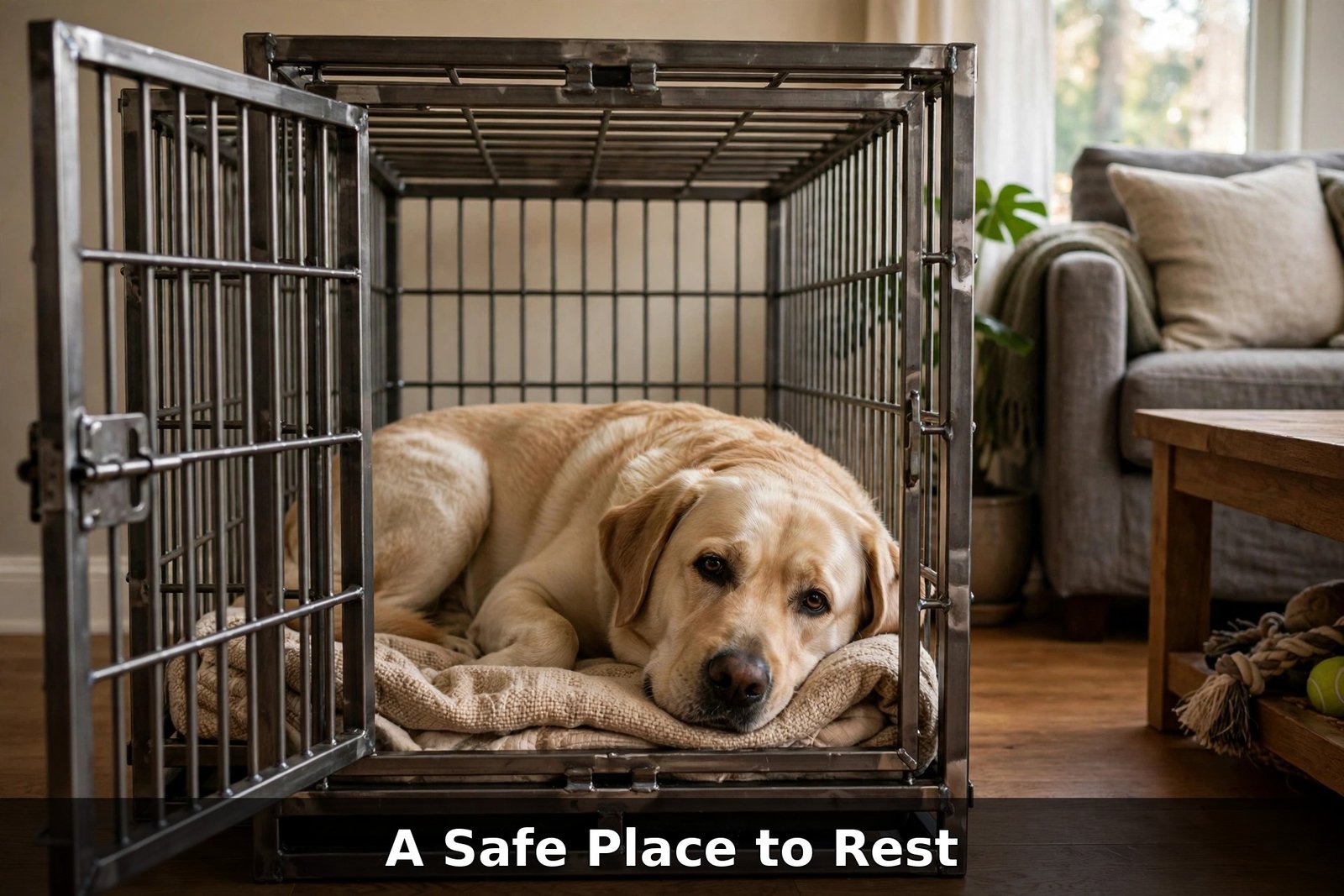
Quick Verdict: For a confirmed escape artist, a heavy-gauge steel or aircraft-grade aluminum crate with multi-point latches, small ventilation gaps, and a chew-proof frame is the standard that actually holds. A reinforced steel crate covers most strong dogs at a lower cost; a premium aluminum crate is the buy-once answer for severe cases. Either way, size it generously, introduce it slowly, and treat the anxiety alongside the crate, not instead of it.
How Dogs Actually Escape
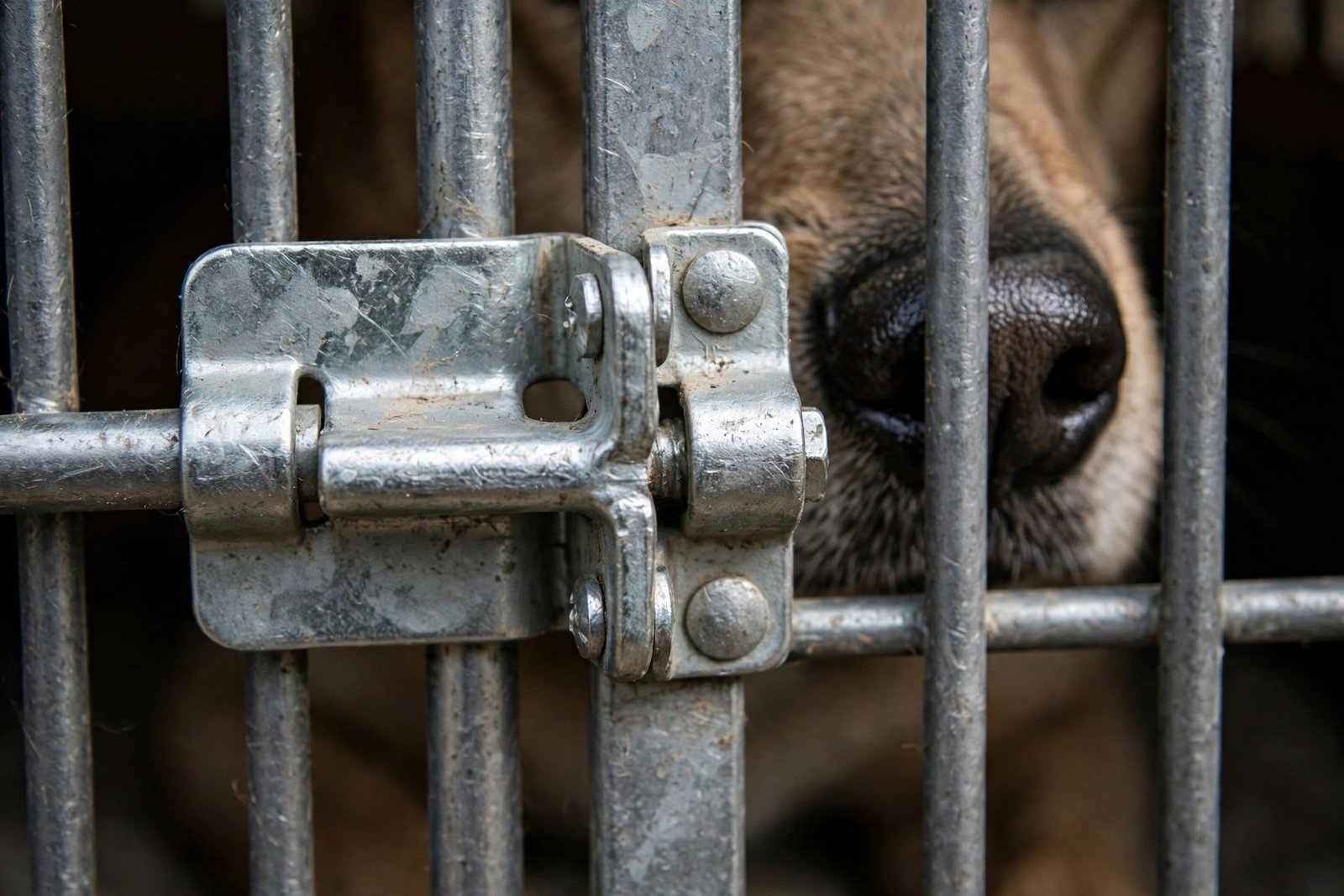
Dogs do not escape by magic. They escape through four weak points, and every failed crate I have seen failed at one of them. First, the latch: a single slide-bolt can be nosed, pawed, or rattled open by a determined dog. Second, the wire gauge: thin wire bends, and once a gap opens, a dog widens it. Third, the corners and joints: bolted corners loosen under repeated impact, while welded joints hold. Fourth, the tray: a plastic tray is a chew toy, and once it is gone, the dog works on the floor bars.
Knowing this changes how you shop. You are not looking for a crate that looks strong. You are looking for a crate with no single weak point: latches that need two actions or sit flush, bars or panels too thick to bend, welded or reinforced joints, and a tray that cannot be reached or chewed from inside. If any one of those is weak, the dog will find it. They always find it.
Crate Types Compared
| Crate Type | Best For | Trade-off |
|---|---|---|
| Reinforced steel crate | Strong, anxious dogs; most escape artists | Heavy; not collapsible; industrial look |
| Aircraft-grade aluminum crate | Severe cases; dogs that destroyed steel crates | Premium cost; heavy; overkill for mild cases |
| Heavy-duty wire crate, upgraded gauge | Moderate chewers on a budget | Still has wire weak points; not truly escape-proof |
| Furniture-style crate | Calm dogs; living-room looks | Not for escape artists at all; skip for this problem |
The price gap between a reinforced steel crate and a premium aluminum one is large, and it is worth being honest about when each is justified. If your dog has bent one wire crate, a reinforced steel crate usually ends the problem. If your dog has destroyed two crates, injured itself escaping, or is a large, powerful breed in full panic, the premium aluminum crate is the cheaper option in the long run, because it is the last crate you buy. Buying the middle option twice costs more than buying the right one once.
Sizing: The Mistake Almost Everyone Makes
An anxious dog in a crate that is too small panics more, not less. The rule is simple: the dog should be able to stand without crouching, turn around comfortably, and stretch out on its side. Add a few inches to the dog’s length and height measurements rather than trusting a weight chart, because a long, lean dog and a short, stocky dog of the same weight need different crates. If you are between sizes, go up, and use a divider only for puppies that are still growing.
Ventilation matters for anxiety too. Small, well-placed ventilation holes keep the crate feeling like a den, which calms many dogs, while still moving enough air. Wide-spaced bars let a dog get teeth and paws through, which is both an escape route and an injury risk. The den feeling is a feature, not a flaw: a darker, quieter crate often settles a dog faster than a bright, open one. If your dog’s anxiety shows up mainly when you leave, read our signs of separation anxiety guide first, so you are solving the right problem.

Introducing the Crate Without a Fight
A new, stronger crate introduced badly becomes a new thing to fear. The slow way works better and it is not actually slow: leave the crate open in the living room for a few days with the bedding and a chew inside, feed meals near it, then inside it, and only close the door for seconds at first, building up while you are home. Never use the crate as punishment, and never lock a dog in a brand-new crate and leave the house on day one. That is how a dog learns the crate is a trap.
Comfort inside the crate helps more than people expect. A proper bed, a safe long-lasting chew, and something that smells like you all lower the baseline. Our calming bed guide covers what actually helps inside a crate, and our piece on crate versus free roam for separation anxiety helps you decide whether crating is even the right call for your dog.
Safety Rules That Are Not Optional
Always remove collars and harnesses before crating; a tag or buckle catching on a bar is a strangulation risk, and it happens more often than people think. Never leave a dog crated longer than it can comfortably hold its bladder, and never crate a dog that is actively injuring itself to escape without a vet and behaviorist involved. A dog that breaks teeth, tears nails, or panics to the point of collapse in a crate needs professional help that day, not a stronger box.
Also check the crate itself regularly. Latches wear, trays crack, and a bolt that was tight in January can be loose by June. A two-minute check each month catches the wear before your dog does.
Frequently Asked Questions
Will a stronger crate stop my dog’s separation anxiety?
No. It keeps your dog safe while you address the anxiety through gradual alone-time training, and sometimes with veterinary support. Think of it as a seatbelt: essential for safety, not a cure for the driving.
Is a heavy-duty crate cruel?
Not when sized right and introduced properly. Many anxious dogs choose to sleep in their crate with the door open once they trust it. Cruelty is leaving a panicking dog in a crate it can injure itself escaping from, or crating a dog for hours without training or breaks.
What size crate does my dog need?
Measure your dog’s length from nose to tail base and height from floor to top of head or ears, then add a few inches to each. The dog must stand, turn, and lie stretched out comfortably. When in doubt, size up.
Can I use an escape-proof crate for car travel?
Some heavy-duty crates are crash-resistant, but not all, and a crate that is escape-proof at home is not automatically safe in a vehicle. Check the maker’s crash-testing claims specifically, and secure the crate so it cannot slide or tip.
🎄 Visit Our Etsy Shop — Fukroo
Printable Christmas wall art, gift tags & party games — instant download
Shop on Etsy →