How to Choose the Best Dog Boots for Winter (2026): The Stay-On Buyer’s Guide
Winter walks are hard on paws. Salted sidewalks, hard-packed snow and little balls of ice wedged between the toes can leave a dog holding one front paw in the air after only a few minutes outside.
This guide covers the best dog boots for winter, with a focus on the problem that ruins most first purchases: boots that will not stay on. A boot that slides off in the first hundred yards is not a bargain. It is litter on a snowy sidewalk. Below, I cover why winter hurts paws, the main boot types, how to measure, the features that keep boots in place, and a gentle break-in routine for dogs who hate the whole idea.
Quick Verdict
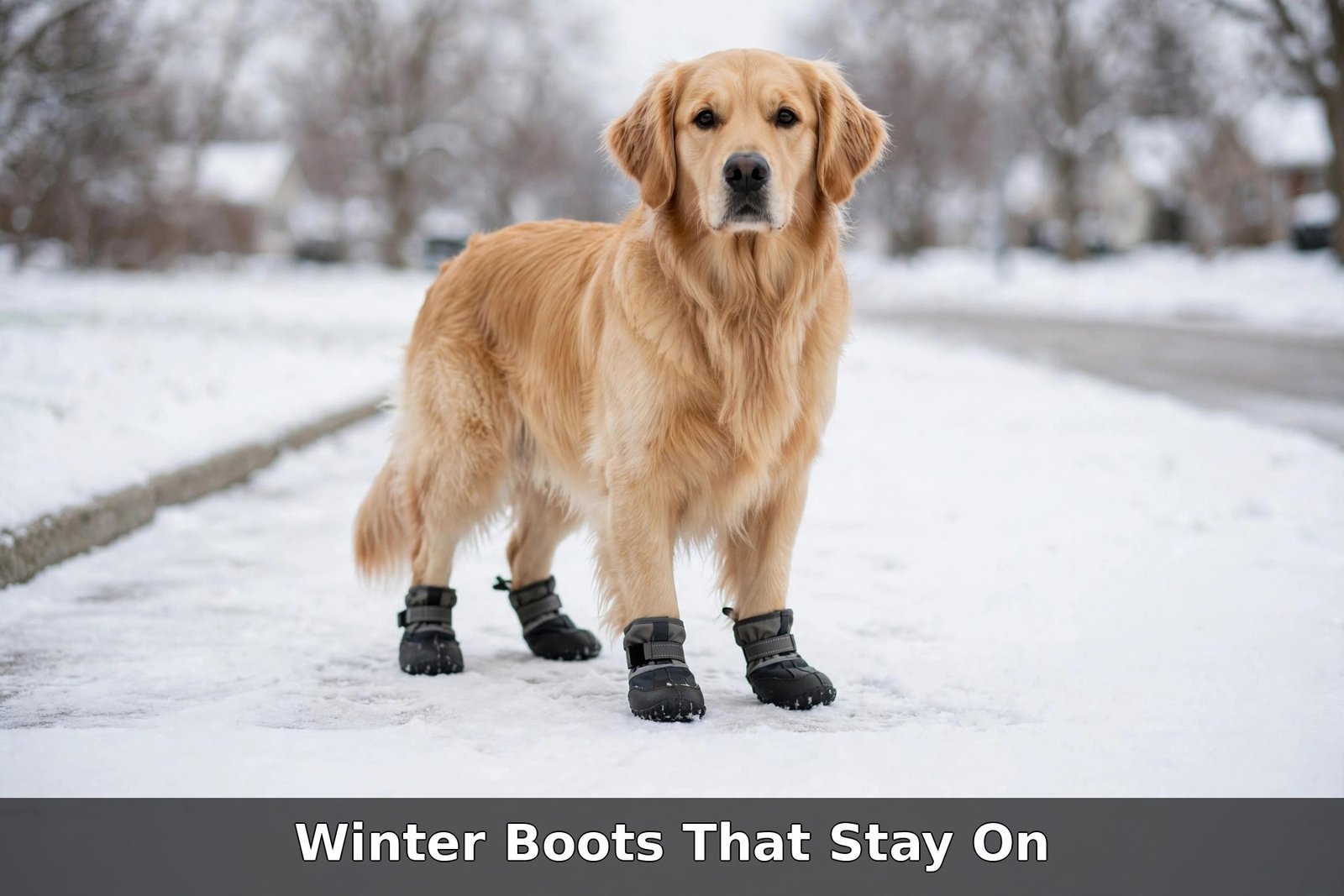
For most dogs in real winter weather, a tall, fleece-lined boot with two separate straps and a snug ankle closure is the safest starting point. It covers the ankle, stays put better than a short slip-on style, and keeps snow and salt away from the skin. For quick trips on treated paths, a disposable rubber paw cover can be enough. And if your dog flatly refuses every boot, paw wax is a reasonable backup, not a failure. Measure both front and back paws first, and expect a short adjustment period either way.
Why Winter Is So Hard on Paws
Cold alone is only part of the story. Road salt dries out paw pads and stings small cracks, and a dog who licks salt off his paws at home can end up with an upset stomach, so wipe paws after every walk, boots or no boots. Packed snow also turns sharp underfoot, and freeze-thaw cycles leave a crust that abrades pads over a long walk. Then there are snow balls: long hair between the toes collects snow, which melts slightly, refreezes, and forms hard lumps that pull at the hair. Trimming that hair helps, but it does not solve salt or sharp ice on its own. Watch for paw lifting, a sudden limp that clears up indoors, or licking at paws after a walk. If paws are cracked or bleeding, skip home fixes and check with a vet. Boots protect healthy paws. They do not treat injured ones.

The Main Winter Boot Types, Compared
Most winter boots fall into four broad types. They are not good or bad in the abstract. They suit different dogs, different winters, and different patience levels.
| Boot type | Best for | Watch out for |
|---|---|---|
| Fleece-lined tall boot | Deep snow, long walks, cold climates | Bulkier fit; needs correct measuring |
| Short everyday boot | Pavement walks, milder cold | Slips off more easily; snow can enter at the ankle |
| Disposable rubber paw cover | Quick outings, salted sidewalks | No warmth; tears on rough ground |
| Suspender-style boot set | Dogs who kick boots off constantly | Fitting takes longer; not every dog tolerates straps |
Fleece-lined tall winter boots
Fleece-Lined Tall Winter Boot
Pros: Warmest option here; good ankle and snow protection; usually the most secure fit when sized well.
Cons: Can feel stiff at first; heavier than a light cover; a poor size is harder to forgive than in a softer style.
Short everyday boots
Short Everyday Boot
Pros: Light, easy to put on, good starter style for reluctant dogs.
Cons: Less warmth; snow and salt can enter at the ankle; stays on less reliably in deep snow.
Disposable rubber paw covers
Disposable Rubber Paw Cover
Pros: Excellent salt barrier; snug fit; easy to carry as a backup.
Cons: No real insulation; not made for long or rough walks; single-use by design.
Suspender-style boot sets
Suspender-Style Boot Set
Pros: Hardest type to kick off; boots stay paired and attached; good for determined escape artists.
Cons: Slower to fit; straps need adjusting; some dogs dislike the sensation at first.
How to Measure Paws Properly
Most sizing trouble starts here, not with the boot. Dog paws are rarely identical. Front paws are usually wider than back paws, and the left and right can differ a little too. Measure all four, and size for the largest paw in each pair if a set splits front and back sizes.
Stand your dog on paper on a hard floor, while he is standing, not lying down, because a paw spreads under load. Trace around each paw with a pencil held upright, then measure the widest point. That width, not length, is the number most sizing charts lean on. If a paw falls between sizes, go up a size. Trim nails first, and measure after a walk if you can, since paws can swell slightly with activity.
Stay-On Features That Actually Work
Dual straps. One strap at the ankle and a second higher up give two points of grip. Once a single strap loosens, the boot is gone.
A drawstring or cinch at the top. This closes the gap between boot and leg so snow cannot pour in.
A shaped ankle, not a straight tube. Dogs have a narrow ankle above a wide paw, and boots shaped to match stay on far better.
A flexible, grippy sole. A stiff sole makes a dog walk oddly and kick more, which loosens boots. A sole that bends with the paw keeps his gait closer to normal.
Reflective trim. Winter walks often happen in the dark, and reflective strips help on evening walks near roads.
Put boots on indoors and let your dog walk around the house for a few minutes first. Straps settle as he moves, and you will often need one small re-tighten before the walk starts.

A Break-In Routine for Boot-Hating Dogs
Almost no dog loves boots on day one. The high-stepping dance is normal, but do not head straight out for a long walk. Day one, let your dog sniff the boots, put one on a front paw, give a treat, and take it off. Day two, try two boots indoors for a few minutes. Day three, try all four indoors for a short play session. Only when he can walk around the house without constant freezing or kicking should you try a short outdoor walk. If he freezes completely, do not drag him forward. Lure him a few steps with a treat. And if one paw keeps causing trouble, check its fit again before you blame stubbornness. A boot that pinches a toe will always be fought, and rightly so.
The same slow-and-steady idea applies to other outdoor gear. If your dog already tolerates a dog raincoat on wet days, he has already learned that wearing something can be normal, and boots tend to go more smoothly. Dogs who travel a lot may already be used to gear routines, and the habits in our dog car seat cover guide show how a little preparation makes outings calmer for everyone.
When Boots Are Not Needed, and the Paw Wax Alternative
Not every dog needs boots every day. On a mild day with cleared, untreated paths and no salt, many healthy dogs are happy barefoot. Boots earn their keep on salted roads, in deep snow, on long walks, and for dogs with thin or sensitive pads. Paw wax is the middle ground: rubbed into pads before a walk, it forms a thin barrier against salt and moisture and helps stop snow sticking between toes. It does not insulate like a lined boot, and it wears off, so it suits short walks and dogs who will not wear boots. Cracked or bleeding paws need a vet, not a tub of wax.
For water-loving dogs, the same logic applies in other seasons. Our dog life jacket guide makes a similar point: the right gear depends on the conditions, not on owning every product on the shelf. Match the protection to the walk in front of you.
Sizing and Fit Troubleshooting
Boots twist sideways: re-tighten both straps and check the paw sits fully forward in the boot. One boot always comes off: measure that paw again, as it is often smaller than its partner. Red marks after a walk: take a break until the skin settles, then re-check size and strap tightness. Snow still gets inside: a taller boot or a drawstring top will keep more out than tightening a short boot ever will.
Frequently Asked Questions
Do all dogs need winter boots?
No. Boots matter most on salted roads, in deep snow, on long walks, and for dogs with thin pads, puppies, and older dogs.
How long should a dog wear boots?
For the walk itself. Take boots off indoors afterwards, check for redness or trapped snow, and let paws breathe.
What if my dog keeps losing boots in snow?
Start by re-measuring the paw that loses its boot, then move to a taller style with dual straps and a drawstring top. Suspender-style sets are the next step for dogs who defeat everything else.
Are boots or paw wax better?
Boots protect more against cold, salt, and sharp ice. Wax is a lighter barrier for short walks. Many owners use both: wax on mild days, boots when the weather turns serious.
Can puppies wear winter boots?
Yes, once they walk confidently outdoors, but keep sessions short and check the fit every few weeks, as puppy paws grow fast.
🎄 Visit Our Etsy Shop — Fukroo
Printable Christmas wall art, gift tags & party games — instant download
Shop on Etsy →