

How to Choose the Best Heated Dog House for Winter (2026): Insulation First, Heat Second
A heated dog house is not really one product. It is two different ideas wearing the same name, and mixing them up is how people overspend or, worse, build something unsafe. Some houses are insulated boxes that trap your dog’s own body heat. Others add an electric heat source on top of that insulation. Both can work. They work in very different winters, for very different dogs, and the right pick depends on your actual coldest nights, not the worst night you can remember from three years ago.
Quick Verdict: Buy insulation first and treat heat as the backup, not the plan. A well-insulated house with thick foam walls, a raised floor, a windproof door flap, and straw or thermal bedding keeps most healthy adult dogs warm through ordinary winter nights. Add a thermostat-controlled heated pad only if your nights regularly sit below freezing and your dog spends extended time outside. Skip electric heat entirely if you cannot protect the cord, use a ground-fault protected outlet, and check the pad daily. And in hard, sustained freezes, no outdoor house replaces bringing the dog inside.
Heated vs Insulated: What the Words Actually Mean
Walk through any listing and you will see “heated” used for three different things. Sorting them out saves money and avoids a false sense of security.
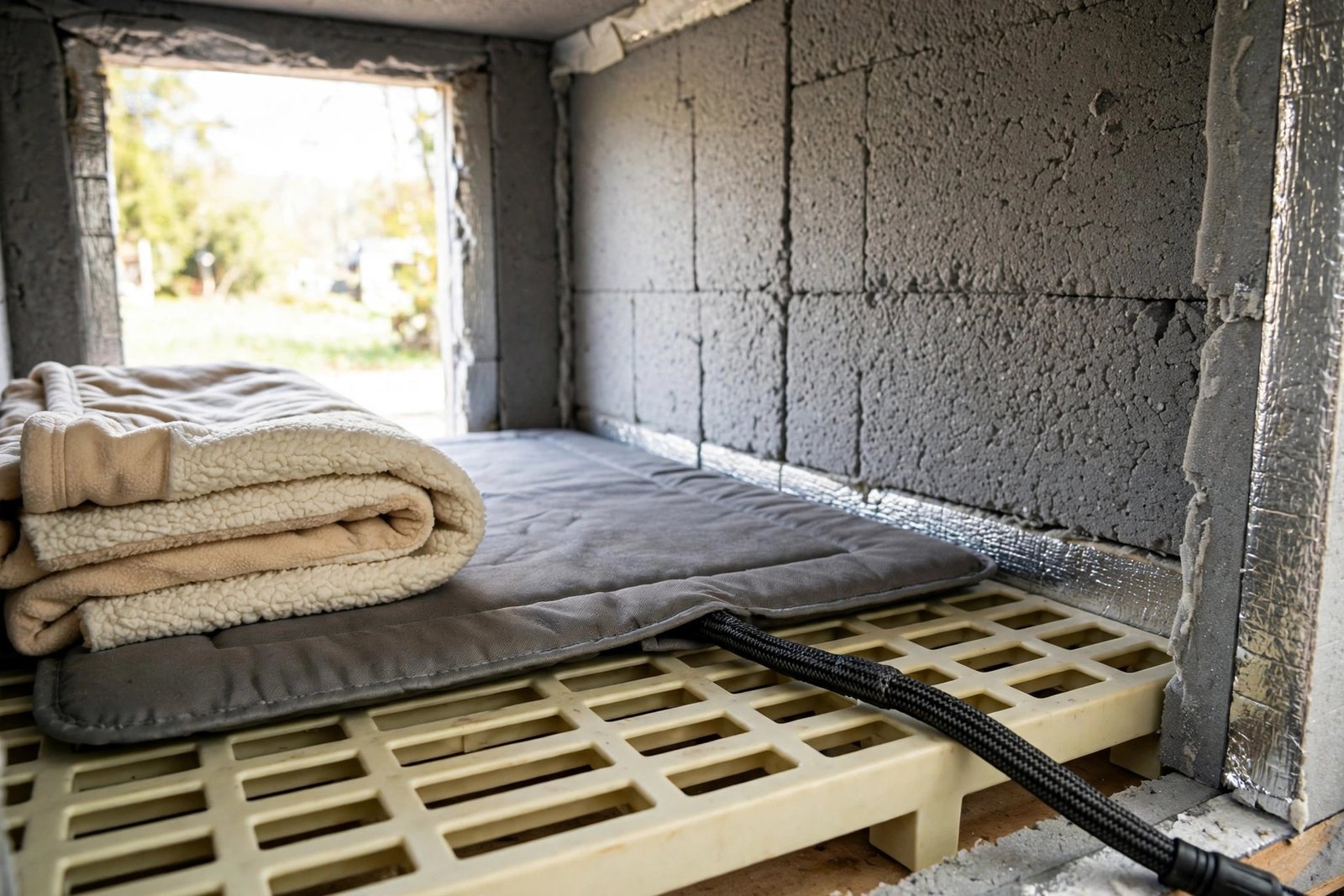
An insulated house has no power at all. Foam or double-wall panels slow heat loss, the raised floor keeps damp and cold ground away from your dog, and a door flap stops wind from blowing straight through. Your dog’s body does the heating. On a still night, a good insulated house can sit noticeably warmer inside than the air outside, and it keeps working in a power cut, which is exactly when you need it most.
A house with a built-in heater adds an electric element or a heated pad, usually with a thermostat and sometimes a remote. It holds a steadier temperature on bitter nights, but it needs a safe outdoor power supply, a cord your dog cannot chew, and a heater that switches itself off instead of cooking the space. Heaters also fail. If the heater dies in January and the house has no insulation worth speaking of, your dog is suddenly sleeping in a cold plastic box.
The third type is the add-on route: an insulated house you already own, plus a separate outdoor-rated heated pad laid on the floor. This is my usual recommendation for most people, because you can replace the pad without replacing the house, and you can take the pad out on mild nights. The house still has to be insulated, though. A heated pad in a thin, draughty house is like running a heater with the windows open.
The Three Types, Compared Honestly
| Type | Best for | Watch out for |
|---|---|---|
| Insulated-only house | Mild to cold winters, healthy adult dogs, places where power is awkward | Thin “insulated” claims with no wall thickness stated; no door flap |
| Built-in heater house | Regular sub-freezing nights, older or thin-coated dogs outdoors for hours | Chewable cords, heaters without auto shut-off, total failure if power goes out |
| Insulated house + heated pad | Most buyers: flexible, repairable, easy to upgrade later | Pad must be outdoor-rated with a thermostat; indoor pads are not substitutes |
Sizing: The Mistake That Undoes Good Insulation
Bigger is not warmer here. A house that is too roomy gives your dog’s body heat too much air to warm, and the dog ends up cold in a palace. A house that is too small stops the dog turning around or stretching out, and a cramped dog sleeps badly and wakes stiff.
The rule that has held up for me: your dog should be able to walk in, turn around comfortably, and lie down stretched out without touching three walls at once. Measure shoulder height and body length, then check the doorway too — a tall, wide doorway is a wind tunnel, while a doorway your dog has to duck through slightly keeps more heat in. Puppies grow, so if you are buying for a young large-breed dog, buy for the adult size and fill the extra space with straw for the first winter, rather than buying twice.
Placement matters as much as size. Put the house where the wind does not hit the doorway head-on, ideally with its back to the prevailing wind and a fence or wall breaking the worst gusts. Raise it off wet ground even if it already has a raised floor, and keep the entrance clear of snowdrifts. I have seen a well-insulated house fail simply because its door faced the January wind across an open yard.
The Safety Checklist Before You Plug Anything In
Electric heat and a chewing, digging animal are a combination that deserves respect. Run through this list before the first cold night, not after a problem.
First, the outlet. Outdoor power should run through a ground-fault protected circuit, and the connection itself should stay dry — a covered outdoor outlet box, not an extension lead draped across wet grass. Second, the cord. It needs a chew-resistant covering and a route your dog cannot reach, ideally run through conduit or along a wall the dog cannot get behind. If your dog is a known cord chewer, that alone settles it: skip electric heat and lean on insulation plus bedding.
Third, the thermostat. A pad or heater without one can overheat a small insulated space, and a dog that is too warm cannot always move away in a small house. Look for automatic temperature regulation and an auto shut-off, and test it on a mild evening while you are home to watch. Fourth, bedding. Straw stays warmer than blankets when damp, because blankets hold moisture and go cold; if you use a blanket, check it daily and swap it when it is wet. Finally, check the whole setup every day in winter: cord intact, pad warm but not hot, bedding dry, door flap hanging straight.
When No House Is Enough: Bring Them In
This is the part some guides bury, and I will not. There are nights when the honest answer is indoors, full stop. Hard freezes that last for days, wind chill that bites through your own coat in minutes, rain that soaks bedding faster than you can change it — those are indoor nights for almost every dog, and certainly for puppies, seniors, thin-coated breeds, and any dog that is ill or recovering.
Short-coated dogs like greyhounds and French bulldogs feel the cold far earlier than a husky or a Bernese mountain dog, and age cuts both ways: old joints stiffen in the cold, and young puppies cannot regulate temperature well yet. If your dog is shivering, holding paws up, seeking shelter against the house wall, or refusing to settle in the dog house, believe the dog, not the product page. A heated house extends the outdoor season; it does not cancel winter. For more on keeping dogs comfortable through the coldest months, see our guides to winter boots that actually stay on, paw balm for salt and ice, and heated water bowls that do not freeze over.
Pros and Cons, Without the Sales Talk
Insulated houses: no power bills, nothing to fail in a storm, silent, and usually cheaper. Their limit is real, though — on a truly bitter night, body heat alone may not be enough for a small or elderly dog.
Heated houses and pads: steadier warmth, a genuine help for older and thin-coated dogs, and thermostat models take the guesswork out. Their downsides are cost, dependence on power, and the daily safety checks that cannot be skipped.
What I would skip: heat lamps inside a dog house (fire risk, and a dog cannot move away from the heat easily), indoor heating pads used outdoors (not built for damp and chewing), and any house whose insulation thickness is not stated anywhere. If the seller will not say how thick the walls are, assume they are thin.
Frequently Asked Questions
Do heated dog houses use a lot of electricity?
A thermostat-controlled pad draws power in bursts, only when it needs to hold temperature, so a winter of use is usually modest compared with heating a room. A heater left running constantly in a poorly insulated house is the expensive version — another reason insulation comes first.
Can I leave a heated pad on all night?
Outdoor-rated pads with thermostats and auto shut-off are made for that, and most owners do. Check it the first few nights while you are awake, keep bedding dry, and never cover the pad with thick blankets that trap heat around it.
Is straw really better than a blanket in a dog house?
In winter, yes, for most setups. Straw sheds moisture and keeps lofting even when damp, while a wet blanket goes flat and cold. Change straw when it gets soiled or flattened, and keep a dry spare bale where it stays dry.
What temperature is too cold for a dog outside?
There is no single number, because breed, coat, age, and health change it so much. As a rough guide, once nights sit below freezing for hours, an uninsulated shelter is not enough for most dogs, and sustained hard freezes are indoor nights for nearly all of them. Watch your own dog’s behavior over any chart.
🎄 Visit Our Etsy Shop — Fukroo
Printable Christmas wall art, gift tags & party games — instant download
Shop on Etsy →


One Comment