

Can Dogs Eat Christmas Ham? (2026): The Honest Answer
Christmas ham sits in the middle of the table. It is glazed, it smells wonderful, it feeds a crowd, and there is always someone who looks down at the dog, looks back at the ham, and thinks one small slice cannot hurt. I have watched that moment happen in my own house, and I have been the person doing the thinking.
So here is the honest answer, up front: as a rule, no — dogs should not eat Christmas ham. A tiny piece of plain, unseasoned ham is unlikely to be toxic in the way some Christmas foods are, but ham is salty and fatty in a way a dog’s gut is not built to handle, and most Christmas hams carry a glaze that makes it worse.
Quick Verdict: Do not feed your dog Christmas ham. It is far too salty and fatty, and the glaze often hides garlic, onion, cloves, raisins, or sweeteners. Cooked ham bones splinter and should never be given. If your dog eats ham, watch for vomiting, belly pain, lethargy, and loss of appetite, and call your vet, the ASPCA Animal Poison Control Center at 888-426-4435, or the Pet Poison Helpline at 855-764-7661.
The Salt and Fat Problem
Ham starts as pork and ends up cured, which means salt — a lot of it. A single slice can carry more sodium than a small dog should eat in a whole day. Too much salt can cause excessive thirst and urination, and in larger amounts, vomiting, diarrhoea, tremors, and salt poisoning.
Then there is the fat. Ham is a fatty cut, and that fat is exactly what makes it taste so good to us — and so risky to a dog. A rich, fatty meal is one of the classic triggers for pancreatitis, a painful inflammation of the pancreas that can leave a dog vomiting, hunched in pain, and needing days of vet care.
| Ham part | Risk level | Why |
|---|---|---|
| Plain cooked ham, small piece | Low, but not recommended | Salty and fatty; unlikely to be toxic, but can upset the stomach |
| Plain cooked ham, large amount | High | Salt overload and pancreatitis risk from the fat |
| Honey or brown-sugar glaze | High | Sugar, plus hidden garlic, onion, cloves, or raisins in many glazes |
| Sugar-free glaze | Emergency | May contain xylitol, highly toxic to dogs |
| Ham bone (cooked) | Emergency | Cooked bones splinter and can pierce the gut or block it |
| Ham fat and rind | High | Concentrated fat — most likely to trigger pancreatitis |
The Glaze Is the Real Danger
Garlic and onion are the two to know by name. Both can damage a dog’s red blood cells, leading to anaemia, whether raw, cooked, powdered, or baked into a glaze — and you cannot scrape it off once it has cooked into the meat. Cloves are another common ham seasoning, and they are not safe for dogs either — they can cause stomach upset and, in larger amounts, liver problems. Raisins turn up in some glazes and stuffings too, and they can cause sudden kidney failure, with no known safe amount. Our Christmas pudding guide covers the raisin danger in full.
Then there is the sugar-free glaze, the most dangerous of all. Some are sweetened with xylitol, harmless to people and highly toxic to dogs — even a small amount can cause a dangerous drop in blood sugar, and larger amounts can damage the liver. If a glaze is labelled sugar-free, keep the dog away from it, and if the dog has eaten some, treat it as an emergency and call your vet or a poison helpline immediately.
Ham Bones: Never Give One
After dinner, someone always offers the dog the bone. It feels like the kind thing to do — the dog has been watching the ham all evening. Do not do it. Cooked bones splinter, and a cooked ham bone can break into sharp pieces that cut the mouth and throat, pierce the stomach or intestines, or lodge in the gut and cause a blockage. Ham bones are particularly risky: large, hard, and often cut with sharp edges, and a determined chewer can crack off a piece in seconds.
Raw bones carry their own risks — bacteria, choking, broken teeth — and they are not a safe substitute either. The safest answer is the boring one: no bones from the Christmas table, full stop. Give a proper dog chew instead, and throw the ham bone in a bin with a lid the dog cannot open.
My Dog Ate Ham — What Do I Do?
First, stay calm and work out what the dog actually ate. A tiny piece of plain ham is very different from a glazed slice, a chunk of fat, or a bone. Note how much, when, whether the ham was glazed or seasoned, and whether any bone was involved. Then call your vet — or, if it is Christmas Day and your vet is closed, the ASPCA Animal Poison Control Center at 888-426-4435 or the Pet Poison Helpline at 855-764-7661, both staffed around the clock, including holidays. Fees may apply; have the details ready: the dog’s weight, what was eaten, and when.
Do not try to make your dog vomit unless a vet or poison helpline specifically tells you to. Home remedies can do more harm than good, and with a bone involved, vomiting can be dangerous on its own. Do not give milk or food to “soak it up” — it does not work that way.
Watch for vomiting, diarrhoea, and loss of appetite. Belly pain is the one people miss most: the dog hunches, refuses to lie down comfortably, flinches when you touch its belly, or does the “prayer position”, front end down and back end up. Lethargy and a reluctance to move or eat are all worth taking seriously. These are the classic signs of pancreatitis, and they can appear hours after the meal, sometimes the next day. What the vet does depends on what was eaten and how much.
Safe Swaps: What Your Dog Can Have Instead
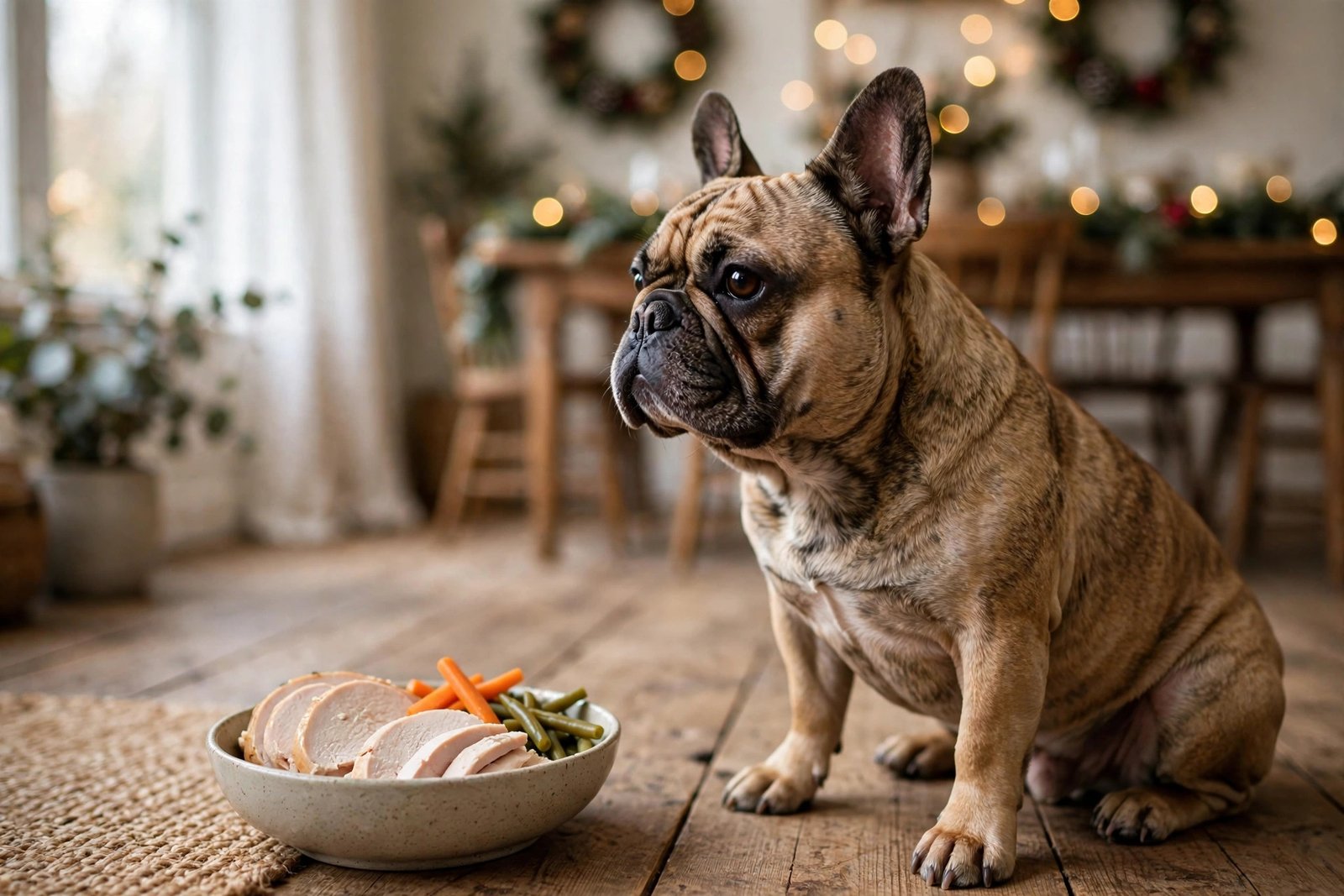
Christmas dinner has plenty of dog-safe food, and a dog that gets its own little plate is far less interested in yours. Plain cooked turkey, skin and bones removed, a few small slices, no gravy, no stuffing — most dogs prefer it to ham. Green beans, plain and unseasoned. Carrot sticks, apple slices without the pips, a spoonful of plain pumpkin.
Our guide to what dogs can and cannot eat at Christmas dinner covers the full table, and our cranberry sauce guide is worth a read first — the answer depends on how it is made. Make the dog’s plate before you sit down, and tell your guests: “Please don’t feed the dog from the table — there’s a plate for him by the door.”
And when dinner is over, the dog still deserves something festive. Our Christmas treats guide sorts dog-safe festive treats by type, and if you are buying something warm for the season, the Christmas sweater guide starts with fit rather than the pattern — a better gift than a slice of ham.
Tempting vs Risky: The Honest Balance Sheet
There are no real pros to feeding a dog Christmas ham, so here is the honest version instead. What is tempting: the dog is begging, the ham smells wonderful, and a small piece feels like kindness. What is risky: salt overload, a fatty meal that can trigger pancreatitis, and a glaze that may hide garlic, onion, cloves, raisins, or xylitol — and a bone can splinter and cause a blockage. The honest middle: the dog does not need ham to have a good Christmas. A plate of plain turkey, carrots, and green beans makes the dog just as happy — and nobody spends the night at the vet.
Frequently Asked Questions
Can my dog eat a tiny bit of Christmas ham?
A tiny piece of plain ham is unlikely to be toxic, but it is still salty and fatty — plain turkey or carrots give the dog the same joy with none of the risk. If the ham is glazed or seasoned, even a tiny piece is a bad idea.
Is ham toxic to dogs?
Ham itself is not toxic in the way raisins or xylitol are, but it is very salty and fatty, and that can cause vomiting, diarrhoea, and pancreatitis. The glaze is the bigger danger: garlic, onion, cloves, and raisins are all harmful, and sugar-free glazes may contain xylitol.
Can dogs eat ham bones?
No — never give a dog a cooked ham bone. Cooked bones splinter into sharp pieces that can cut the mouth and throat, pierce the stomach or intestines, or cause a blockage. Throw the bone in a lidded bin, and offer a proper dog chew instead.
Can dogs eat honey-glazed ham — what about the glaze?
No. Honey glaze is mostly sugar, and many glazes also contain garlic, onion, cloves, or raisins. Sugar-free glazes are the most dangerous, because they may contain xylitol. If you do not know what is in the glaze, assume it is not safe.
My dog ate ham — what should I do, and what are the signs of pancreatitis?
Work out what the dog ate — how much, whether it was glazed, and whether a bone was involved — then call your vet, the ASPCA Animal Poison Control Center (888-426-4435), or the Pet Poison Helpline (855-764-7661). Do not make your dog vomit unless a vet or the helpline tells you to. Watch for vomiting, diarrhoea, belly pain, lethargy, and loss of appetite — the classic signs of pancreatitis.
For the rest of the Christmas table, see our guides to Christmas dinner, Christmas pudding, cranberry sauce, and eggnog — and once dinner is over, our Christmas sweater guide and the Christmas blanket guide will help you pick something warm for the dog to curl up in.
🎄 Visit Our Etsy Shop — Fukroo
Printable Christmas wall art, gift tags & party games — instant download
Shop on Etsy →




One Comment