
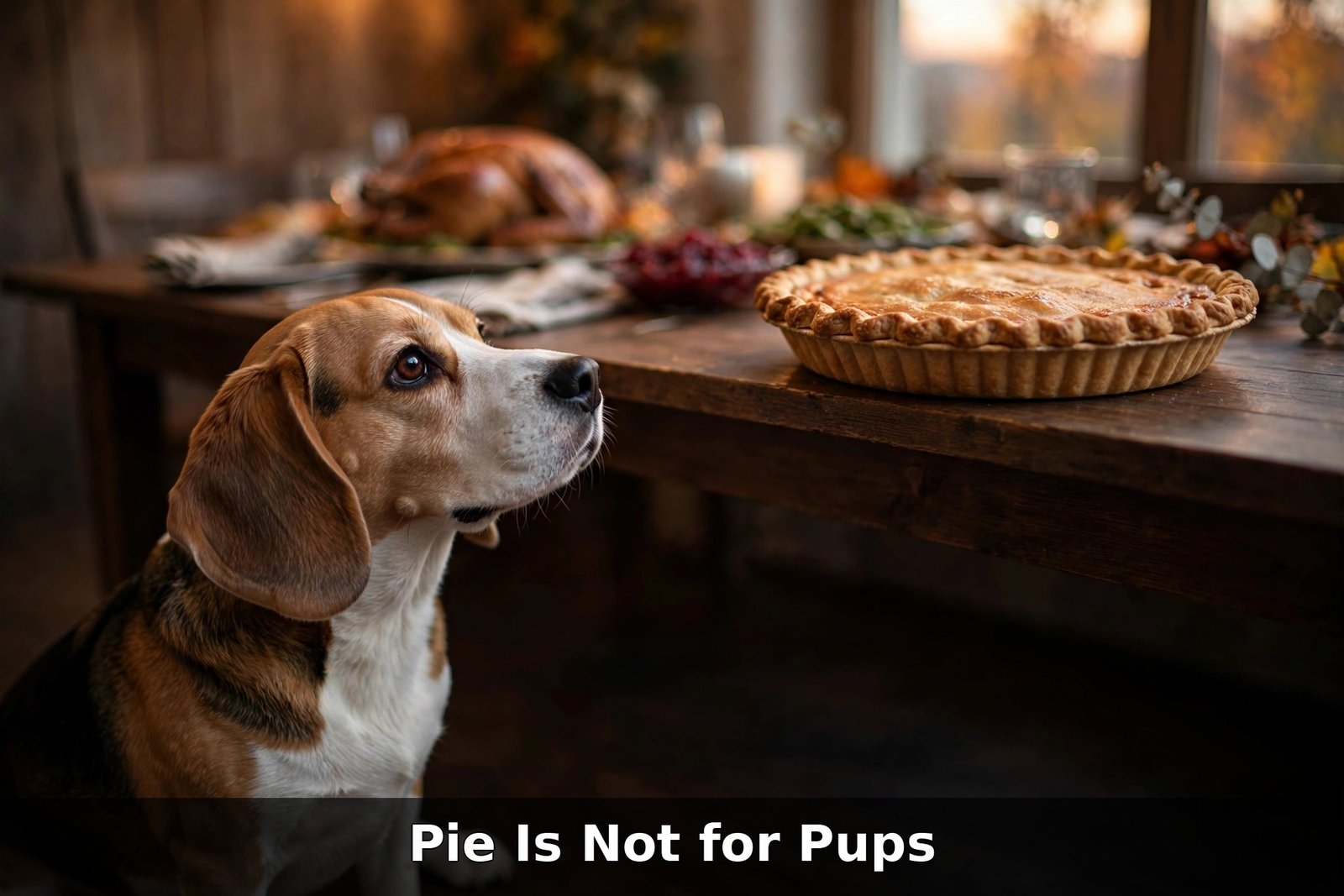
Can Dogs Eat Pumpkin Pie? (2026): The Thanksgiving Answer
So here is the short answer, before the detail: do not give your dog pumpkin pie. Not a slice, not a “tiny taste,” and not the filling scraped out of the crust. A licked crumb off the floor is not an emergency, and I will cover exactly what to do if that happens, but pie should never be served to a dog on purpose. The rest of this guide explains why, what each ingredient does, and what to give instead so your dog still gets a Thanksgiving treat.
Quick Verdict: Pumpkin pie is off the menu for dogs. The pumpkin in it is fine, but the sugar, fat, spices, and possibly the sweetener around it are not — nutmeg is toxic to dogs in larger amounts, and sugar-free versions can contain xylitol, which is dangerous even in small amounts. Give plain cooked pumpkin or 100% pure canned pumpkin instead, in a small serving sized to your dog, and keep the pie itself out of reach.
Pumpkin Good, Pie Bad: Where the Line Falls
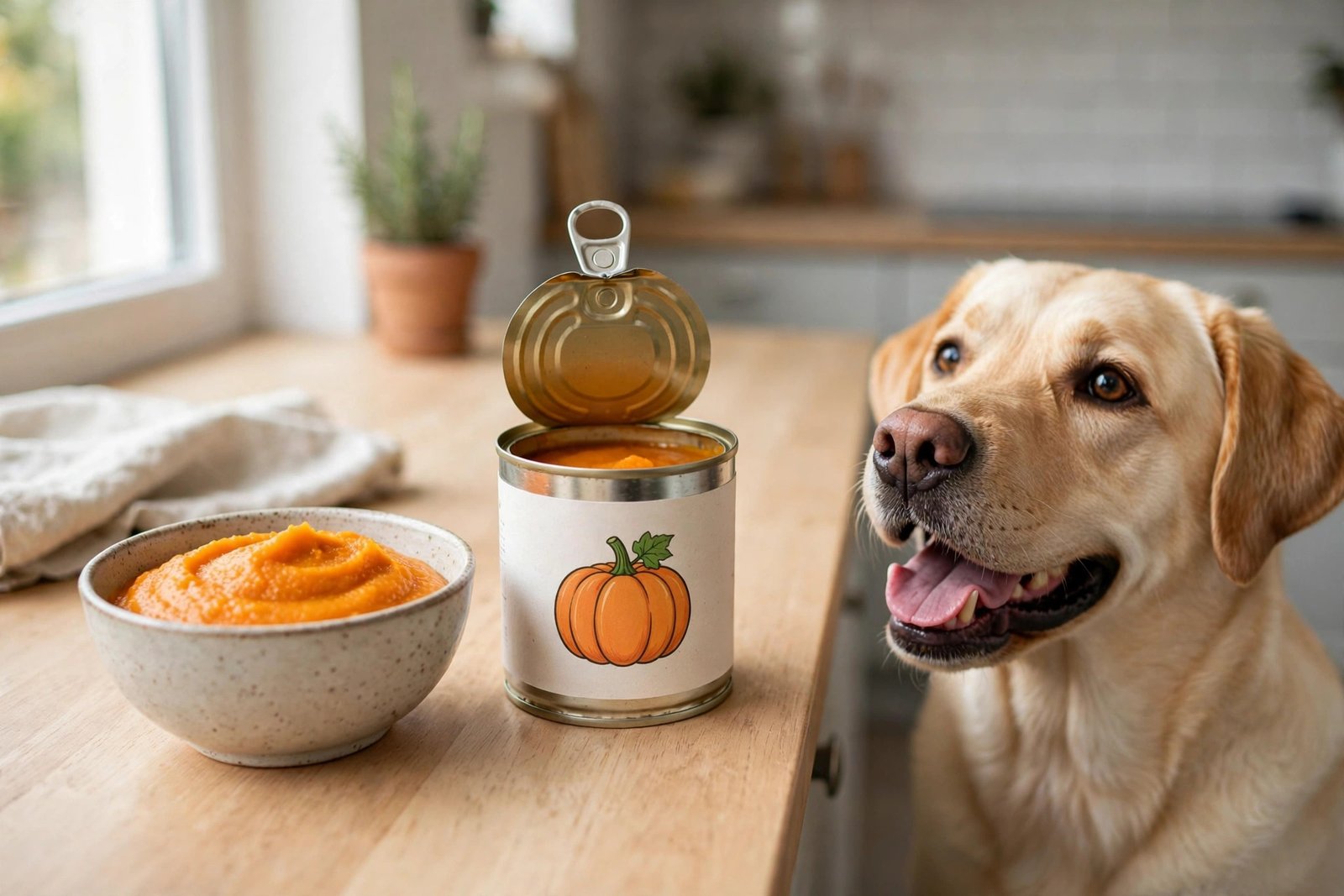
Plain pumpkin earns its reputation honestly. It is high in fiber, gentle on digestion, and vets often suggest a spoonful for dogs with mild stomach upsets. Plain cooked pumpkin and 100% pure canned pumpkin — the can that lists pumpkin and nothing else — are the safe versions. The trouble starts the moment that pumpkin becomes a dessert.
A typical pumpkin pie stacks four problems on top of the good ingredient. Sugar and fat, in amounts that can upset a dog’s stomach in one sitting and, in sensitive dogs, trigger pancreatitis, a painful inflammation that needs a vet. Spices, above all nutmeg, which contains a compound called myristicin that is toxic to dogs; the small amount in one slice is unlikely to poison a large dog on its own, but it is one more risk on a plate that already has several. Butter and cream in the crust and filling, which add fat a dog’s gut did not ask for. And in sugar-free or “light” pies, the sweetener xylitol, which can drop a dog’s blood sugar fast and damage the liver — xylitol is the ingredient that turns a stolen bite into a genuine emergency.
Canned pie filling deserves its own warning, because it causes the most confusion in the kitchen. A can of pumpkin pie filling looks almost identical to a can of pure pumpkin, but it is already sweetened and spiced. If you are setting aside pumpkin for your dog while you bake, check the label first: it must say 100% pumpkin, with no added sugar, salt, or spice. When in doubt, do not serve it.
My Dog Already Ate Some Pie. What Now?
First, do not panic, and do not try to make your dog vomit at home unless a vet tells you to. How worried you should be depends on three things: how much was eaten, whether the pie was sugar-free, and how your dog is acting now.
A single licked crumb of ordinary pie, from a healthy adult dog, usually means watchfulness, not a midnight vet run. Expect a possible upset stomach — soft stools, a bit of gas, a skipped meal — and keep water available. A full slice, a sugar-free pie of any amount, or any pie eaten by a small dog, a puppy, or a dog with a sensitive gut is a different story: call your vet or an animal poison helpline promptly and tell them the pie type, the amount, and your dog’s weight. Xylitol signs, like weakness, wobbliness, vomiting, or collapse, are an emergency — go now, do not wait to see if it passes.
While you wait for advice, keep the pie out of reach so there is no second helping, note the time and the amount as best you can, and watch for vomiting, diarrhea, restlessness, or unusual tiredness over the next few hours. Most pie incidents end with an upset stomach and a lesson about counter surfing. The ones that do not are almost always the sugar-free kind, which is why that label check matters so much.
The Dog-Safe Thanksgiving Treat Instead
Your dog does not need to sit out Thanksgiving. The trick is to make their treat from the same good ingredient, without the dessert parts. A spoonful of plain pumpkin is the simplest version, and most dogs treat it like a delicacy anyway.
If you want to go one step further, mix plain pumpkin with a little xylitol-free peanut butter and oat flour, roll it flat, cut small shapes, and bake until firm. Cool them fully before serving, and keep the portion small — treats of every kind should stay under about a tenth of your dog’s daily calories. Start with a teaspoon for a small dog and a tablespoon or two for a large one if pumpkin is new to them, because even a good fiber source can loosen stools when it arrives in a big, sudden dose.
Set the treat aside before the meal starts, in your dog’s own bowl, and serve it while everyone else eats pie. Dogs care far more about eating at the same time as the family than about what is in the bowl, and a dog with its own plate is a dog that is not begging under the table.
The Rest of the Thanksgiving Table, in One Pass
Pumpkin pie is rarely the only risk on the table, so here is the quick version for the rest of the meal. Plain, boneless, skinless, fully cooked turkey in a small portion is generally fine. Turkey skin, bones, fat, gravy, and stuffing are not — stuffing and gravy usually carry onion and garlic, and bones can splinter. Plain green beans and plain sweet potato are safe in small amounts; the casserole versions with sugar, marshmallows, and butter are not. Chocolate, grapes, raisins, and raw dough are never foods for dogs, and any dessert made with xylitol stays off limits entirely. If you want the full holiday food list, our US guide to Christmas dinner safety covers the same ingredients in their December versions, and our candy emergency guide is the one to keep for any sugar-related scare. For dogs who get restless while guests are over, our guide to fireworks anxiety has calming routines that work just as well for a noisy house full of visitors.
Frequently Asked Questions
Can dogs eat pumpkin pie filling from a can?
No. Pie filling is sweetened and spiced before it ever reaches the oven, so it carries the same problems as the finished pie. Only 100% pure canned pumpkin, with no added ingredients, is safe.
What about pumpkin spice treats and lattes?
Skip those too. Pumpkin spice blends contain nutmeg, and the treats and drinks built around them add sugar and fat. A dog-safe pumpkin treat is plain pumpkin, not a spiced product.
How much plain pumpkin can I give my dog?
A teaspoon for a very small dog, a tablespoon or two for a medium dog, and up to a few tablespoons for a large dog, as part of a meal, is the usual range. Start small, watch the stools, and ask your vet if your dog has an ongoing gut condition.
Is a tiny taste of pie really that bad?
A crumb licked off the floor is unlikely to cause more than a mild stomach upset in a healthy adult dog, and it is not a reason to panic. It is still not something to offer on purpose, because the risk climbs fast with portion size, and sugar-free pie changes the picture completely.
🎄 Visit Our Etsy Shop — Fukroo
Printable Christmas wall art, gift tags & party games — instant download
Shop on Etsy →



One Comment