

Can Dogs Drink Eggnog? (2026): The Christmas Answer
Quick Verdict: No, dogs should not drink eggnog. It is not one bad ingredient, it is a stack of them: alcohol in most recipes, nutmeg that is toxic to dogs, dairy that many dogs cannot digest, a heavy load of sugar and fat, and raw or undercooked egg in traditional versions. A dog that laps a small amount of plain, alcohol-free eggnog will most likely just get an upset stomach, but a dog that drinks eggnog containing alcohol or a lot of nutmeg needs a vet call right away. Give your dog a festive treat made for dogs instead, and keep the eggnog on the high shelf.
Why Eggnog Is a Stack of Problems, Not Just One
Most “can my dog eat this” questions have a single villain. Chocolate has theobromine, grapes have their own mystery toxin. Eggnog is unusual because nearly every ingredient in the glass is a problem for a dog on its own, and they arrive together.
| Ingredient | Risk for dogs | How urgent |
|---|---|---|
| Alcohol (rum, brandy, bourbon) | Alcohol poisoning: vomiting, disorientation, slowed breathing, collapse | Vet at once, even for a small amount |
| Nutmeg | Myristicin can cause tremors, raised heart rate, hallucinations, seizures | Vet at once if a large amount or pure spice was eaten |
| Dairy (milk, cream) | Many dogs are lactose intolerant: gas, loose stools, vomiting | Usually watch-and-wait, vet if it does not settle |
| Sugar and fat | Stomach upset; large fatty meals can trigger pancreatitis | Vet if vomiting or pain persists |
| Raw or undercooked egg | Salmonella risk in traditional homemade recipes | Vet if diarrhea or lethargy follows |
Alcohol is the sharpest edge. Dogs cannot process alcohol the way people do, and a small dog can be badly affected by an amount that would barely register for a person. Store-bought “non-alcoholic” eggnog is usually alcohol-free, but homemade eggnog almost always contains rum or brandy, and nobody labels a punch bowl. If you did not make it yourself and cannot confirm what is in it, assume it contains alcohol and keep it away from the dog entirely.
Nutmeg deserves its own warning because it is the ingredient people underestimate. Nutmeg contains myristicin, and in dogs it can cause disorientation, tremors, a racing heart, and in larger amounts seizures. The amount of nutmeg in a finished glass of eggnog is usually small, which is why a single lap is unlikely to poison a medium-sized dog — but a dog that gets into the spice jar, or eats a whole nutmeg-dusted dessert, is in different territory. Vets often cite around a teaspoon of ground nutmeg as a worrying amount for a medium dog, and far less for a small one.
What About Alcohol-Free Eggnog?
This is the question that follows, and the honest answer is: still not a good idea, just a less dangerous one. Take the alcohol out and you still have cream, sugar, and nutmeg, plus raw egg in traditional recipes. A dog that drinks a little alcohol-free eggnog will probably get nothing worse than a gurgly stomach and loose stools for a day. That is not a reason to offer it — there is nothing in eggnog a dog needs, and every ingredient is either useless or mildly harmful to them.
Dairy is the quietest problem in the glass. Most adult dogs produce little lactase, the enzyme that digests lactose, so milk and cream often mean gas and diarrhea even in dogs who seem fine with a bit of cheese. A rich, creamy drink is a much bigger dairy load than a cheese cube. Dogs with sensitive stomachs, pancreatitis history, or diabetes are the worst candidates of all: the fat and sugar together are exactly what their condition does not want.
The store-bought versus homemade distinction matters for one reason only: eggs. Commercial eggnog is pasteurized, so the salmonella worry mostly disappears. Traditional homemade eggnog often uses raw eggs whisked in, which carries a food-poisoning risk for dogs just as it does for people. If your dog got into homemade eggnog, mention the raw egg to your vet along with the alcohol question, because it changes what they watch for.
My Dog Already Drank Some. What Now?
First, work out two things: did it contain alcohol, and roughly how much did the dog drink? Those two facts decide everything else, so check the carton or ask whoever made it before you do anything else.
Call your vet or an animal poison helpline right away — the ASPCA Animal Poison Control number is 888-426-4435, and the Pet Poison Helpline is 855-764-7661 — if any of these apply: the eggnog contained alcohol, your dog drank a large amount, your dog is small, elderly, or has diabetes or pancreatitis, or your dog is showing symptoms like vomiting, wobbliness, disorientation, tremors, or unusual sleepiness. Do not try to make your dog vomit at home unless a professional tells you to.
If it was a small lap of plain, alcohol-free eggnog by a healthy adult dog, watchfulness is usually enough: keep water available, feed normally at the next meal, and watch for vomiting or diarrhea that does not settle within a day. Take the glass out of reach, because a dog that liked the first taste will go back for the glass the moment nobody is looking. That is how most Christmas eggnog incidents happen — not a deliberate treat, but an unattended glass at dog-nose height on a coffee table.
What to Give Instead (So the Dog Still Gets a Christmas Moment)
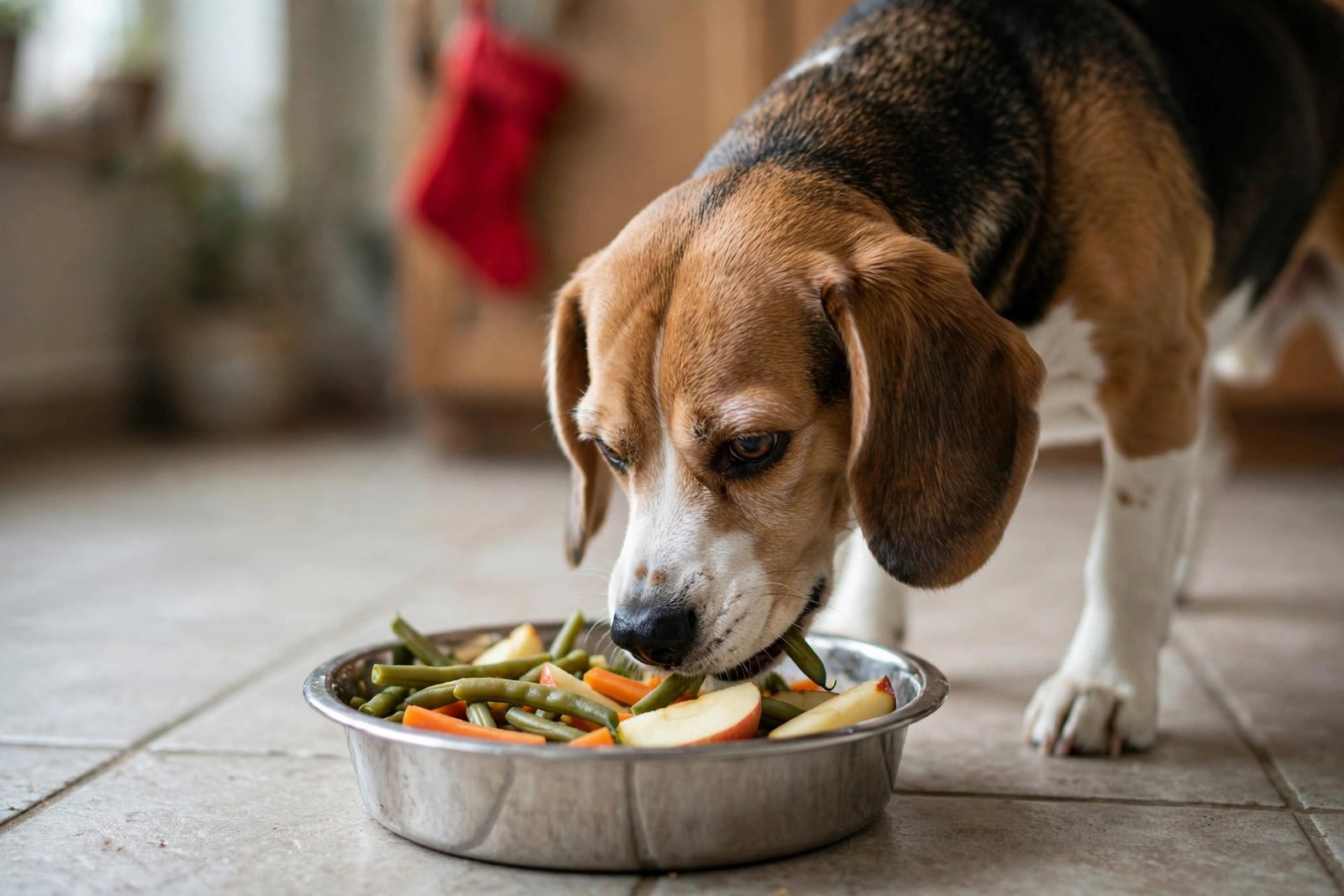
The dog does not want eggnog. The dog wants to be included, and that is easy to arrange without a risky drink. A small bowl of plain, dog-safe festive foods — a few pieces of plain cooked turkey, steamed green beans, carrot sticks, apple slices — makes a proper Christmas plate, and our Christmas dinner guide lists exactly which table foods are safe and which are not.
If you want something drink-like, plain water in a special bowl is genuinely enough for most dogs, and a frozen treat made from plain pumpkin puree or dog-safe broth gives them something festive to work at. Our cranberry sauce guide follows the same logic — the plain berry is fine, the sugary sauce is not — and the turkey guide covers the main course. The pattern across all of them is the same: plain and simple is safe, dressed-up and spiced is where the trouble lives.
For guests, the kindest move is a sentence before the party starts: “Please don’t feed the dog from your glass or plate — there’s a treat jar by the door.” Most people are relieved to be told, because nobody wants to be the person who made the dog sick at Christmas.
Frequently Asked Questions
Can dogs have a tiny sip of eggnog?
A tiny sip of alcohol-free eggnog is unlikely to seriously harm a healthy adult dog, but it is not recommended — the sugar, fat, dairy, and nutmeg offer nothing good, and a sip teaches the dog to beg for the next glass. Keep eggnog as a human-only drink.
Is store-bought eggnog safer than homemade for dogs?
Safer in one way only: it is pasteurized, so the raw-egg risk is gone, and most store-bought eggnog is alcohol-free. It still contains dairy, sugar, fat, and nutmeg, so it is still not a dog drink. Always check the label for alcohol before assuming it is alcohol-free.
What are the signs of alcohol poisoning in dogs?
Vomiting, wobbliness or disorientation, unusual sleepiness, slowed breathing, and in severe cases collapse or seizures. These can come on quickly, so do not wait to see if they pass — call your vet or a poison helpline at once.
Can dogs eat nutmeg in other Christmas foods?
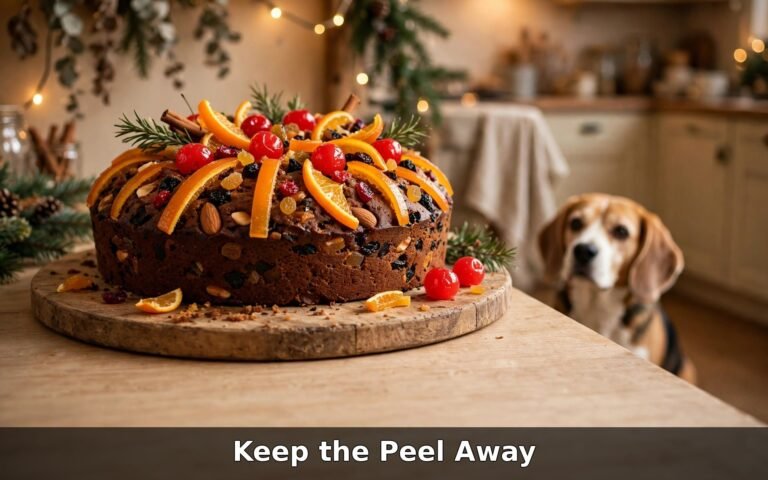
Nutmeg is best kept away from dogs in all its forms, including gingerbread, fruit cake, and spiced desserts. Small amounts baked into a finished food are less risky than pure spice, but no Christmas dessert needs to be shared with a dog — give them a treat made for dogs instead.
For the rest of the Christmas table, see our guides to what dogs can eat at Christmas dinner, cranberry sauce, and turkey — and for the treat side of the season, our Christmas dog treats guide sorts the safe options by type.
🎄 Visit Our Etsy Shop — Fukroo
Printable Christmas wall art, gift tags & party games — instant download
Shop on Etsy →



2 Comments