

Can Dogs Eat Panettone? (2026): The Honest Answer
Disclosure: This guide is general information, not veterinary advice. If your dog has eaten panettone, call your vet — do not wait for symptoms. US helplines: ASPCA 888-426-4435, Pet Poison Helpline 855-764-7661.
Short answer: no, dogs should not eat panettone. The classic Italian Christmas loaf is built on exactly the ingredients that make Christmas baking dangerous for dogs — raisins or sultanas in most recipes, a lot of sugar and butter, candied peel, and sometimes chocolate chips. There is no safe amount of the raisin kind. If your dog has already eaten some, skip to the what-to-do section below — the first hours matter more than the rest of this article.
Quick Verdict: Panettone is a no for dogs — classic, chocolate-chip, and filled versions alike. The raisins alone make it a vet call, and the sugar, butter, and candied peel make even a raisin-free slice a bad idea. Keep the loaf up high, out of reach, and give your dog a proper dog treat instead. If your dog ate panettone, call your vet or a poison helpline straight away: ASPCA 888-426-4435, Pet Poison Helpline 855-764-7661.
What Is Actually in Panettone?
Panettone is a tall, domed sweet bread from Milan, traditionally eaten at Christmas. A classic loaf is made from flour, eggs, butter, sugar, yeast, and candied citrus peel, studded through with raisins or sultanas. Modern versions add chocolate chips, fillings, and glazes. It is light, sweet, and rich — and every part of that description is a problem for a dog.
The reason panettone keeps appearing on vet warning lists is not the bread itself. Plain baked bread is not toxic to dogs. The problem is what bakers put into panettone: a single slice can carry a dozen raisins, and raisins are the ingredient vets worry about most at Christmas. The rest of the loaf — sugar, butter, candied peel — is not poisonous in the same way, but it is a recipe for vomiting, diarrhoea, and in some dogs pancreatitis.
| Ingredient | Risk for dogs | How serious | What to do |
|---|---|---|---|
| Raisins / sultanas | Can cause kidney failure; no safe dose is known | Severe — vet call immediately | Call vet or helpline at once |
| Chocolate chips | Theobromine poisoning; dark chocolate worst | Severe — vet call immediately | Call vet or helpline at once |
| Sugar & butter | Vomiting, diarrhoea; pancreatitis risk | Moderate — watch closely | Small amounts: monitor; large amounts: call vet |
| Candied peel | Very sugary; citrus oils irritate stomachs | Low to moderate | Monitor; call vet if symptoms start |
| Raw or rising dough | Yeast ferments in the stomach, makes alcohol and gas | Emergency | Vet or emergency clinic immediately |
| Xylitol (some fillings) | Dangerous blood-sugar drop, liver failure | Severe — vet call immediately | Call vet or helpline at once |
The Raisin Problem, in Plain Terms
Raisins, sultanas, and currants — the dried forms of grapes — can cause kidney failure in dogs, and nobody knows exactly why, or how much it takes. That uncertainty is the danger. Vets have seen dogs become seriously ill after a handful of raisins, and there is no dose you can count as safe. The effects can be delayed by hours or even days, so a dog that looks fine on Christmas evening can be in trouble by Boxing Day.
This is why the answer is a flat no rather than a “small piece is fine”. A slice can easily hide ten or fifteen raisins in the crumb, and you cannot pick them out — they are baked in. The same warning covers our other Christmas bakes: stollen, mince pies, Christmas cake, and Christmas pudding.
Classic vs Chocolate-Chip vs Pandoro: Is Any Version Safe?
Short version: no. Classic panettone has the raisins. Chocolate-chip panettone swaps one problem for another — chocolate contains theobromine, which dogs cannot process, and dark chocolate is the worst of it. A chocolate panettone can carry both chocolate and raisins at once.
Filled panettone — cream, custard, or chocolate spread piped through the middle — adds fat and sugar on top of everything else, and some sugar-free fillings use xylitol, which is extremely dangerous to dogs even in tiny amounts. If a filling lists xylitol, birch sugar, or E967, keep it far away from the dog.
Pandoro, the star-shaped cousin of panettone from Verona, is often suggested as the safer option because it traditionally has no raisins and no candied peel. It is safer in that one respect — no dried fruit — but it is still a rich, buttery, sugary loaf. Pandoro is “less bad”, not “safe”, and it is not something to feed on purpose.
What Happens If Your Dog Eats Panettone
What happens depends on how much was eaten, what was in it, and the size of the dog — which is why the vet call matters. The usual early signs of raisin trouble are vomiting, diarrhoea, lethargy, loss of appetite, and abdominal pain, often starting six to twelve hours after eating. Kidney trouble shows up later: drinking more water, urinating less, and a dog that becomes quiet and weak.
What to Do Right Now If Your Dog Ate Panettone
Do these in order, and do not skip the call. One: take the panettone away and work out what your dog ate — which kind, roughly how much, and when. Two: call your vet, your vet’s out-of-hours service, or a poison helpline straight away — in the US, the ASPCA Animal Poison Control Center on 888-426-4435 or the Pet Poison Helpline on 855-764-7661 (a fee may apply). Tell them your dog’s weight, what was eaten, and how long ago. Three: follow their instructions exactly. They may ask you to bring the dog in, or they may advise monitoring at home — that decision is theirs, not yours.
Four: do not try to make your dog sick at home unless a vet tells you to. Five: keep fresh water available and the dog somewhere calm and warm. Six: watch for vomiting, diarrhoea, lethargy, loss of appetite, unusual thirst, or changes in urination over the next 24 to 72 hours — raisin effects can be delayed. If any of those signs appear, call the vet again immediately. Chocolate adds restlessness, a racing heart, and tremors; a large fatty meal can trigger pancreatitis. None of these are things to watch and wait on.
The Plain-Bread Confusion
People get confused about panettone because plain bread is fine for dogs in small amounts. A bit of plain white or wholemeal bread as an occasional treat is not a problem for most dogs. But panettone is not plain bread — it is bread with raisins, sugar, butter, and candied peel baked into it, and the additions are the whole problem.
Raw dough deserves its own warning. Raw panettone dough — or any raw bread dough — is a veterinary emergency. The yeast keeps fermenting in the warm stomach, producing alcohol and gas, which can cause bloat and alcohol poisoning. If your dog gets into rising dough, that is an emergency vet visit. Keep dough out of reach, in a closed oven or a high cupboard, while it rises.
A Dog-Safe Alternative: Spiced Pear and Oat Bites
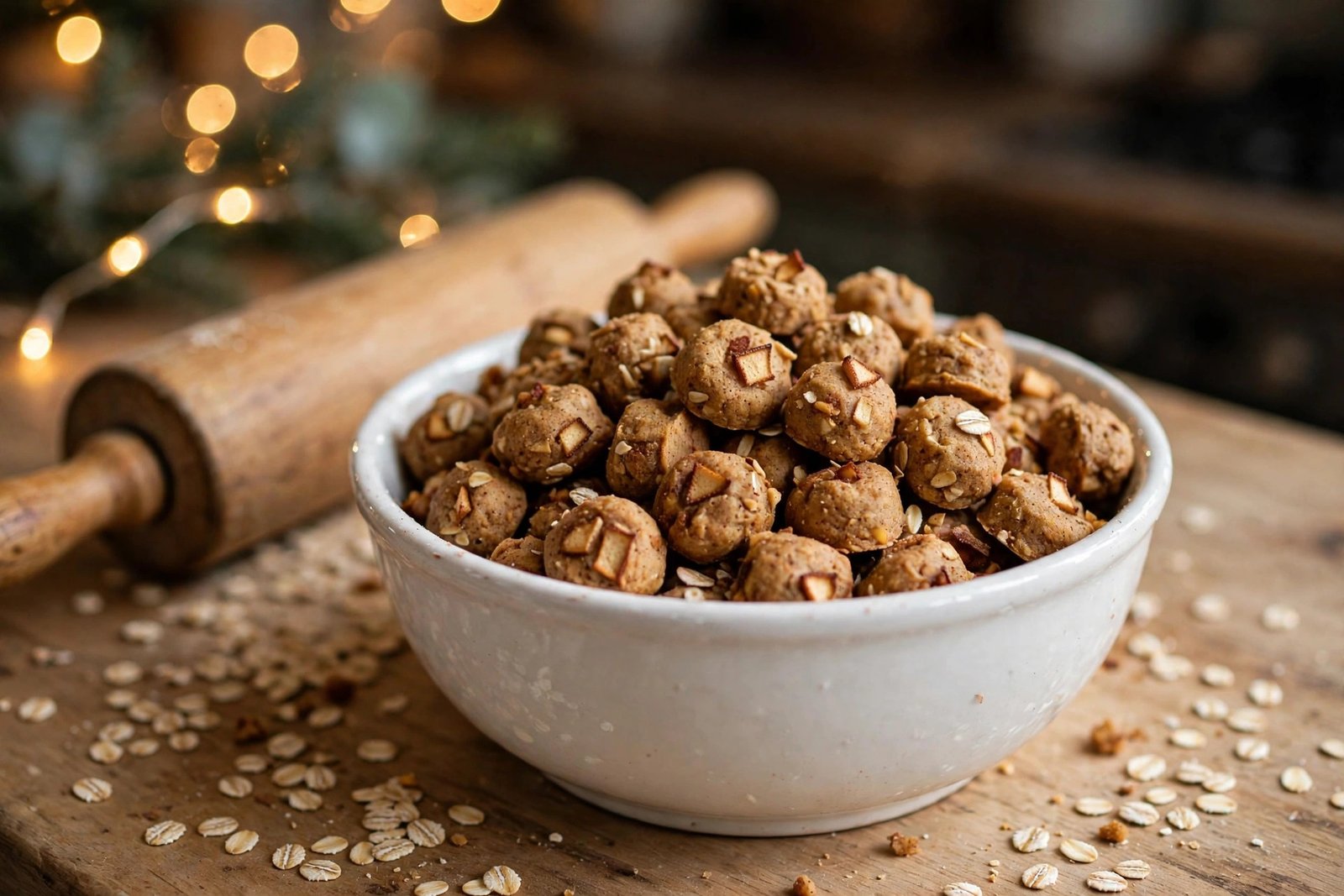
Your dog does not need panettone — it needs something of its own while the humans eat theirs. These spiced pear and oat bites take about half an hour. Mix one cup of oat flour, one grated pear with the core removed, one egg, and a pinch of cinnamon — cinnamon is fine for dogs in small amounts; nutmeg is not, so leave it out entirely. Roll the mix into small balls, flatten them slightly, and bake at 175°C (350°F) for about 20 minutes until firm. Let them cool completely before serving.
Give one or two as a treat, not a meal — treats should stay under a tenth of your dog’s daily food. Store the rest in a sealed tub in the fridge for a few days, or freeze them. If your dog has a food allergy or a condition that limits what it can eat, check the ingredients with your vet first.
Frequently Asked Questions
Can dogs eat panettone?
No. Classic panettone contains raisins or sultanas, which can cause kidney failure, plus a lot of sugar and butter. Chocolate-chip and filled versions add chocolate and sometimes xylitol.
What should I do if my dog ate panettone?
Take the panettone away, work out how much was eaten and when, then call your vet or a poison helpline straight away — ASPCA 888-426-4435 or Pet Poison Helpline 855-764-7661 in the US. Do not try to make your dog sick at home unless a vet tells you to.
How much panettone is dangerous for a dog?
There is no known safe amount. Raisin toxicity has no clear dose threshold, and even a small amount has caused serious problems in some dogs. Any amount of raisin panettone is a vet call.
Is chocolate panettone worse than classic panettone?
Yes, usually. Chocolate panettone can carry both chocolate and raisins, so your dog faces two risks at once. Call the vet either way — do not try to rank the risk yourself.
Can dogs eat pandoro instead?
Pandoro is less risky than panettone because it traditionally has no raisins, but it is still a rich, sugary, buttery loaf. It is not safe to feed on purpose.
Is there a dog-safe panettone alternative?
Yes — bake a simple dog treat with the same festive feel and none of the risk. The spiced pear and oat bites in this article use oat flour, pear, egg, and a pinch of cinnamon, with no nutmeg, no raisins, and no chocolate. Check the ingredients with your vet first if your dog has allergies.
Disclosure: This guide is general information, not veterinary advice. If your dog has eaten panettone, call your vet or a poison helpline straight away — ASPCA 888-426-4435, Pet Poison Helpline 855-764-7661. If your dog has allergies or a medical condition, check any new food with your vet first.
For the rest of the Christmas food-safety picture, see our guides to stollen, mince pies, Christmas cake, and Christmas dinner. And when the humans are done with the panettone, the dog deserves something of its own — our best Christmas dog treats guide is the place to start.
🎄 Visit Our Etsy Shop — Fukroo
Printable Christmas wall art, gift tags & party games — instant download
Shop on Etsy →


