

How to Choose the Best Christmas Dog Treats (2026): Pick by Treat Type, Not by the Box
This guide sorts Christmas treats the way a dog experiences them: by type. Soft treats for training and old teeth, crunchy biscuits for dogs who like to work at something, dental chews that earn their keep, single-ingredient chews for sensitive stomachs, and advent calendars, which are a December-long promise worth thinking through before you buy.
Quick Verdict: Match the treat to the dog, not to the season. Soft, small treats suit puppies, seniors, and training. Crunchy biscuits suit dogs who chew happily and have healthy teeth. Dental chews are the best everyday December pick for most adult dogs. Single-ingredient chews are the safest bet for sensitive stomachs. Keep all treats to around a tenth of your dog’s daily calories, read the ingredient list before the front of the bag, and skip anything with chocolate, xylitol, raisins, or rawhide, no matter how festive it looks.
The Five Treat Types, Honestly Compared
| Treat type | Best for | Watch out for |
|---|---|---|
| Soft training treats | Puppies, seniors, training sessions, hiding pills | Easy to overfeed; calories add up fast |
| Crunchy biscuits | Healthy adult teeth, stocking fillers, everyday rewards | Too hard for worn teeth; festive shapes can hide poor ingredients |
| Dental chews | Daily December habit, dogs who gulp their food | Size matters — a chew that is too small is a choking risk |
| Single-ingredient chews | Sensitive stomachs, allergy-prone dogs, long chewing | Rich chews can upset stomachs in large amounts; always supervise |
| Advent calendars | The daily ritual, gift-giving, multi-dog households | 24 days of extras; check every window’s ingredients first |
Soft Treats: Small, Smelly, and Surprisingly Easy to Overdo
Soft treats are the work horses of December. They break in half without crumbling, they smell strong enough to hold a distracted dog’s attention during a house full of guests, and they are kind to puppy teeth and older mouths. If you are training a new puppy through its first Christmas, a pocket of small soft treats is worth more than any toy.
The catch is the calorie count. Soft treats are dense, and because they are small, nobody counts them properly. Ten “tiny” treats through a busy afternoon can be a full extra meal for a small dog. Decide the day’s treat budget in the morning, put that many in a jar, and when the jar is empty, the treats are done.
Crunchy Biscuits: The Stocking Classic, With One Condition
Crunchy biscuits are the default Christmas dog treat for a reason. They keep well, they come in every festive shape imaginable, and most dogs enjoy the satisfying crunch. For a healthy adult dog, a crunchy biscuit is a perfectly good daily treat, and a bone-shaped biscuit in a stocking is a tradition worth keeping.
The condition is the teeth. A dog with worn, cracked, or missing teeth should not be crunching hard biscuits, however much they want to. Watch how your dog eats one: if they drop it, chew on one side, or leave crumbs everywhere, the biscuit is too hard for them. Our guide to dental chews for dogs covers softer options that still give a dog something to work at without the same risk.
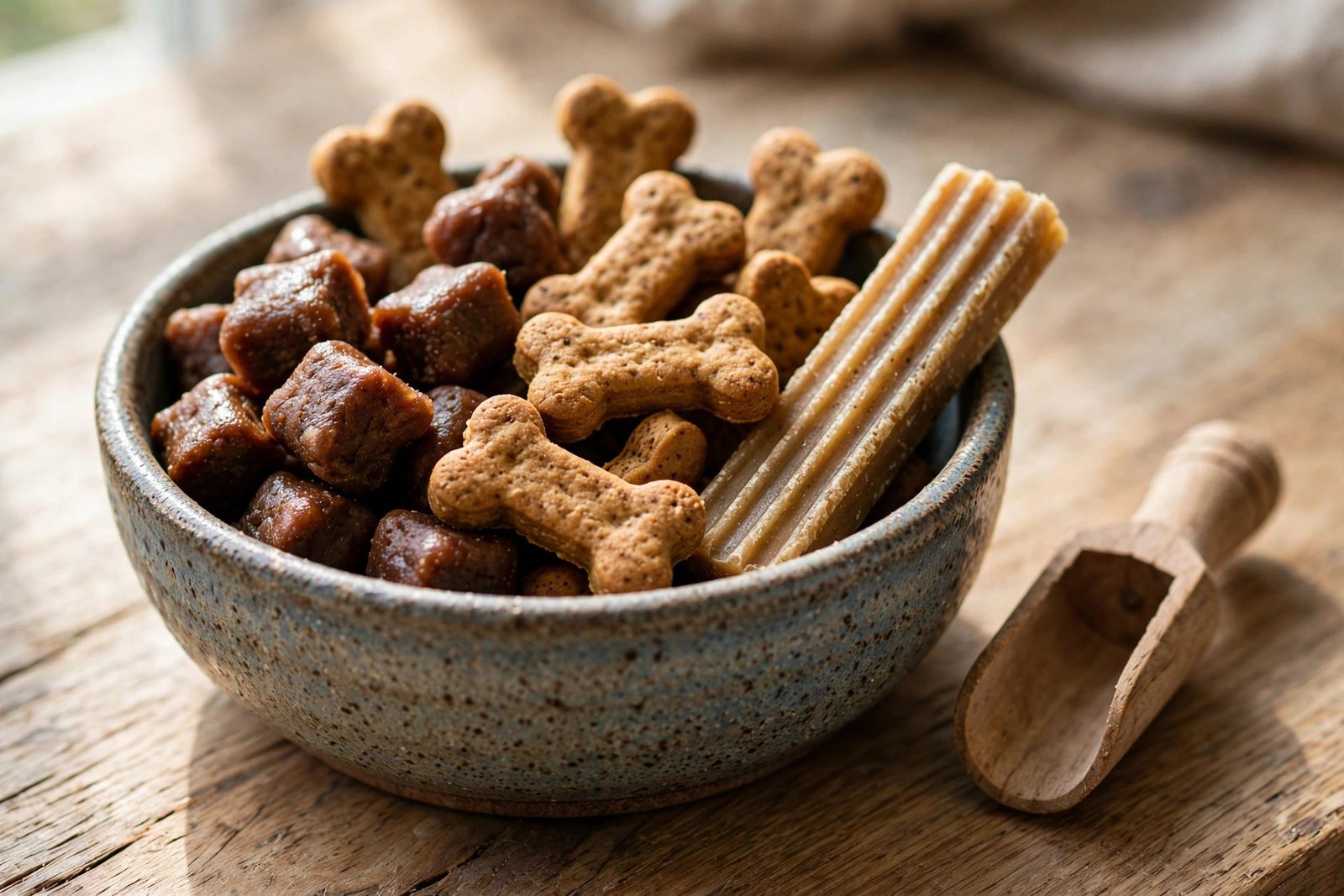
Ingredient-wise, crunchy biscuits are where festive packaging does its worst work. A bag shaped like a Santa sack can hide fillers, artificial colors, and sugar. Flip the bag over: the first ingredient should be something you recognize as food — a meat, a grain, a vegetable — not a syrup or a color.
Dental Chews: The December Pick That Earns Its Keep
If I had to pick one treat type for the whole of December, it would be a dental chew. Dogs chew them slowly, which keeps a restless dog occupied while guests are around, and the chewing action helps clean teeth at a time of year when dogs are getting more extras than usual.
Size is the whole game here. A dental chew must be matched to your dog’s weight, and when in doubt, size up — a chew that is too small gets swallowed in two bites by an enthusiastic dog, which defeats the purpose and adds a choking risk. Supervise the first few, and take the chew away once it gets small enough to swallow whole.
Single-Ingredient Chews: The Sensitive-Stomach Answer
Some dogs cannot eat a normal treat bag without consequences. Wheat, chicken, or a long list of additives can set off itching, loose stools, or ear trouble, and December — when well-meaning relatives hand out mystery treats — is the worst month for it. Single-ingredient chews, made from one thing and nothing else, take the guesswork out.
These chews last longer than biscuits, which makes them good for dogs who need an occupation during a busy evening, but richness is the trade-off. Start with a small piece, watch the results for a day, and build up. And keep them out of reach between sessions — a dog who finds the whole bag will not pace itself.
Advent Calendars: A Lovely Ritual, If You Read Every Window
A dog advent calendar is one of my favorite December traditions, and also one of the easiest to buy badly. Twenty-four days of treats sounds delightful until you realize you have committed your dog to 24 days of extras on top of an already treat-heavy month. Before you buy, check what is actually behind the windows.
The practical fix is to treat the calendar as the treat budget, not an addition to it: on calendar days, the window treat replaces the usual treats. For multi-dog households, get one calendar per dog or skip it, and if your dog has allergies, only buy a calendar whose full ingredient list you can read before December 1st.
What to Skip, No Matter How Festive It Looks
Some Christmas treats should never reach a dog. Chocolate in any form is toxic. Anything sweetened with xylitol (also listed as birch sugar) is an emergency, not a treat — call your vet at once if a dog eats it. Raisins, currants, and mince pies are toxic too, and they hide in festive baked goods. Rawhide shaped like candy canes or wreaths is not the digestible treat it appears to be; it swells in the stomach and can block the gut.
Then there are the treats that are not dangerous, just poor value: enormous tubs of brightly colored biscuits with more dye than nutrition. If a treat’s main selling point is its shape, it is selling to you, not to your dog. Dogs do not care whether a biscuit is shaped like a tree.
The December Calorie Budget (The Part Everyone Forgets)
The danger is rarely one treat, it is the pile: a biscuit from you, a chew from a guest, a stolen bit of turkey, a calendar window — by evening the dog has eaten a second dinner. Vets generally suggest keeping treats to around a tenth of daily calories, and December is the month that rule matters most.
Three habits make it workable. First, cut your dog’s regular meals slightly on heavy treat days rather than adding treats on top. Second, tell guests the rule before they arrive — “one treat, and only from this jar” saves more stomachs than any remedy. Third, keep a treat jar by the door with a fixed daily amount, so visitors reach for that instead of improvising from the table.
Pros and Cons, Without the Sales Talk
Soft treats: easy to eat, great for training and seniors, easy to portion. Calories sneak up fast, and cheap ones can be mostly filler.
Crunchy biscuits: keep well, classic stocking filler, good for healthy teeth. Too hard for worn teeth, and festive bags can hide poor ingredients.
Dental chews: occupy a dog, help teeth, a solid daily habit. Must be sized right and supervised until you know how your dog handles them.
Single-ingredient chews: simplest for sensitive stomachs, long-lasting. Rich in large amounts, and never an unsupervised chew.
Frequently Asked Questions
How many Christmas treats can my dog have in a day?
Keep all treats — festive or not — to around a tenth of your dog’s daily calories, and count everything: training treats, calendar windows, and anything a guest hands over. On a heavy day, trim the regular meal a little to make room.
Are gingerbread-flavored dog treats safe?
Dog treats made for dogs, with dog-safe ingredients, are a different thing from human gingerbread, which often contains nutmeg and too much sugar and fat. Check the ingredient list on the dog treat itself, and never give a dog actual gingerbread from the baking tray.
What treats are safe for a dog with a sensitive stomach at Christmas?
Single-ingredient treats with an ingredient your dog already tolerates, introduced one at a time and in small amounts. If your dog has a diagnosed allergy, stick to what your vet has already cleared and treat guests’ offerings as off limits.
Can puppies have Christmas treats?
Yes, in puppy-sized portions, and soft treats suit them best. Skip hard chews and anything small enough to swallow whole, and remember a puppy’s stomach is less forgiving than an adult dog’s — new treats one at a time, never a whole festive assortment at once.
For the rest of the holiday season with your dog, see our guides to Christmas toys matched to chewer type, Christmas gifts for dog owners, and what to put in a dog’s stocking — and before the big meal, read what dogs can and cannot eat at Christmas dinner.
🎄 Visit Our Etsy Shop — Fukroo
Printable Christmas wall art, gift tags & party games — instant download
Shop on Etsy →




8 Comments