

How to Choose the Best Dog Water Fountain for Fresh, Flowing Water (2026)
I used to top up my dog’s water bowl every morning and call it done. Then one evening I ran my finger along the inside of the bowl and felt it: a slick, greenish film clinging to the plastic. That slime has a name — biofilm — and it was floating in the water my dog had been drinking all day. That was the night the humble water bowl lost my trust.
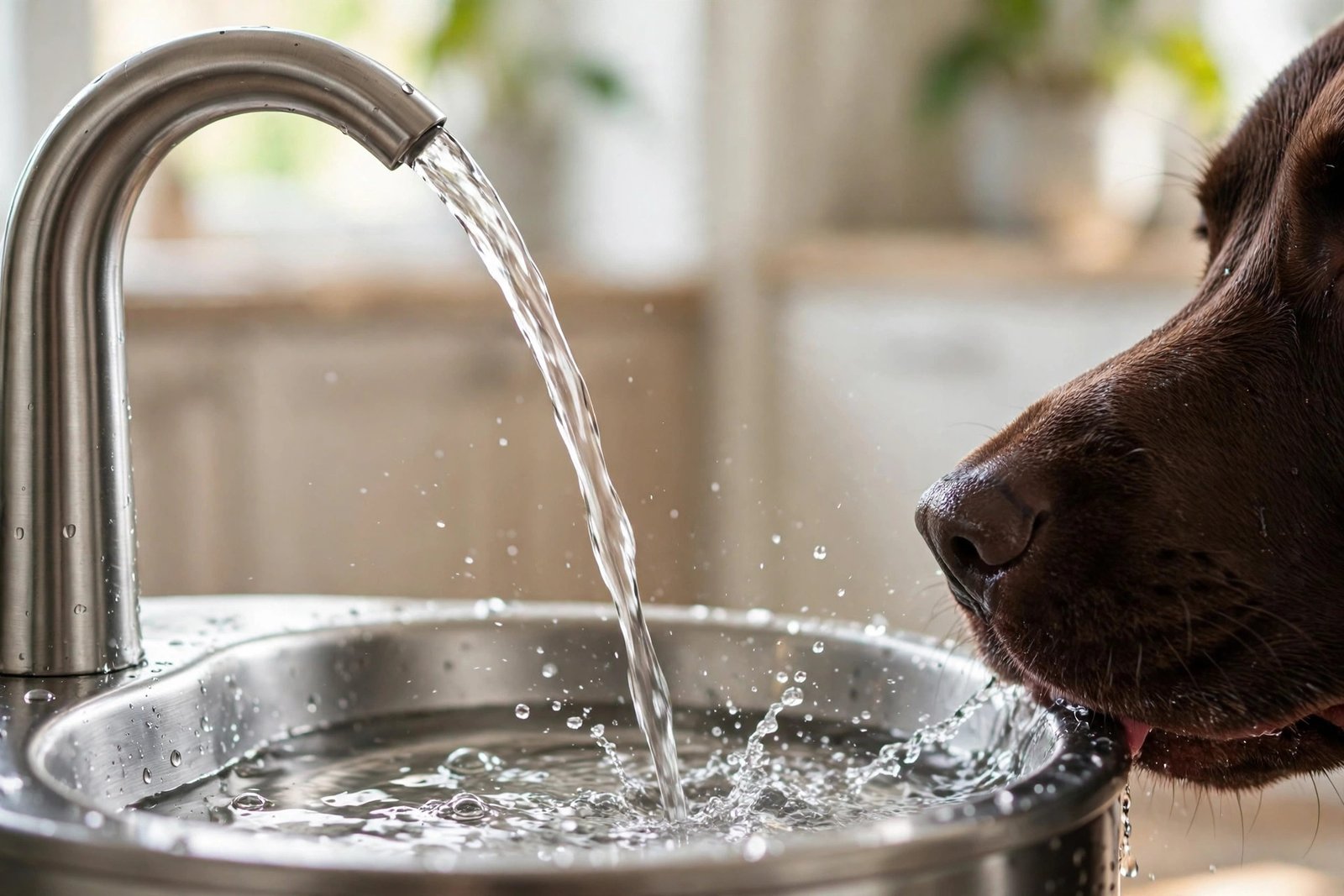
Dogs are wired to distrust still water. In the wild, stagnant water means mosquitoes, algae, and bacteria, while moving water is usually safe. It’s the same instinct that sends a dog past a full bowl to drink from a running tap or a garden hose. A dog water fountain leans into that instinct: the pump keeps water circulating, filtered, and oxygenated, so it stays fresher for longer. I switched two years ago, and the bowl started emptying instead of slowly turning into a science experiment.
Quick Verdict
The 10-second answer: Start with a stainless steel gravity-flow fountain. Steel resists the biofilm slime that colonizes plastic, the parts are dishwasher-safe, and it doesn’t develop the scratches where gunk hides. Pair it with a carbon filter, swap the filter on schedule, and give the whole thing a weekly scrub. Ceramic is the elegant runner-up — heavy, stable, and just as clean, though it can chip. Big multi-tier fountains suit multi-pet households but demand the most cleaning discipline. If you take one thing from this guide: material matters more than features.
Why Your Dog Trusts Running Water More Than a Bowl
Put a dog between a bowl that’s been sitting since morning and a dripping faucet, and the faucet wins nearly every time. Moving water reads as fresh to a dog’s nose and tongue — it carries more oxygen, smells cleaner, and the motion catches their attention. That’s why picky drinkers often drink more reliably from a fountain. There’s a practical upside too: constant circulation slows the bacteria and algae that make standing water smell funky by afternoon, and the filter grabs the hair and crumbs that would otherwise just float there. (Wondering how much they should be drinking? We break down the simple 1-ounce-per-pound rule in our guide to how much water a dog should drink a day.)
The Hygiene Case: Why Stainless Steel Wins
Here’s the thesis of this guide: plastic harbors biofilm; steel barely does. Plastic bowls develop that slimy coating fastest — pet-care publications routinely cite lab testing that found plastic bowls carrying far more bacteria than steel ones, and the reason is simple: plastic scratches. Every scratch is a tiny canyon where bacteria hide from a casual rinse, and dishwasher heat warps cheaper plastic, giving the slime even more to grip.
Stainless steel is smooth and non-porous, so biofilm has nowhere to anchor. The parts survive the dishwasher without warping, it doesn’t absorb odors, and it won’t leach anything into the water on a sunny countertop. Steel isn’t magic — skip cleaning for a month and even steel gets grimy. But week to week, it’s simply the easiest material to keep genuinely clean, which is the entire point of a fountain.
One more angle: some dogs react to plastic bowls with chin acne or irritation around the muzzle. If your dog is already dealing with skin flare-ups — we have a whole guide on soothing shampoos for itchy skin and hot spots — swapping plastic for steel is one more small thing you can control. Ceramic is the other clean option: a well-glazed surface is every bit as hygienic as steel, and the weight stops enthusiastic drinkers from shoving it across the floor. The trade-off is fragility — drop it on tile and it’s done.
Picking the Right Size: Capacity by Dog
The most common fountain mistake isn’t the material — it’s buying too small. A pump that runs dry burns out, and an undersized reservoir means constant refilling, which defeats the purpose. Match capacity to the dog:
| Dog Size | Weight Range | Minimum Fountain Capacity | Refill Rhythm |
|---|---|---|---|
| Toy | Under 15 lb | Half gallon | Every 3–4 days |
| Small–medium | 15–40 lb | 1 gallon | Every 2–3 days |
| Large | 40–80 lb | 1.5–2 gallons | Every 2 days |
| Giant or multi-pet home | 80 lb+ / 2+ animals | 2+ gallons | Every 1–2 days |
These are minimums for convenience, not survival — a smaller fountain you refill daily works fine, but you’ll hate the chore. Multi-pet homes should size up one level beyond the biggest dog’s needs; two medium dogs drain a one-gallon fountain fast. And in winter, indoor heating speeds evaporation, so err generous. Oversized just means fewer refills; undersized means a dead pump.
The Three Fountain Types That Matter
Search for dog water fountains and you’ll drown in options. Ignore the noise — nearly everything on the market is a variation of three basic designs. Pick the type that fits your dog and your cleaning tolerance, and the choice gets simple.
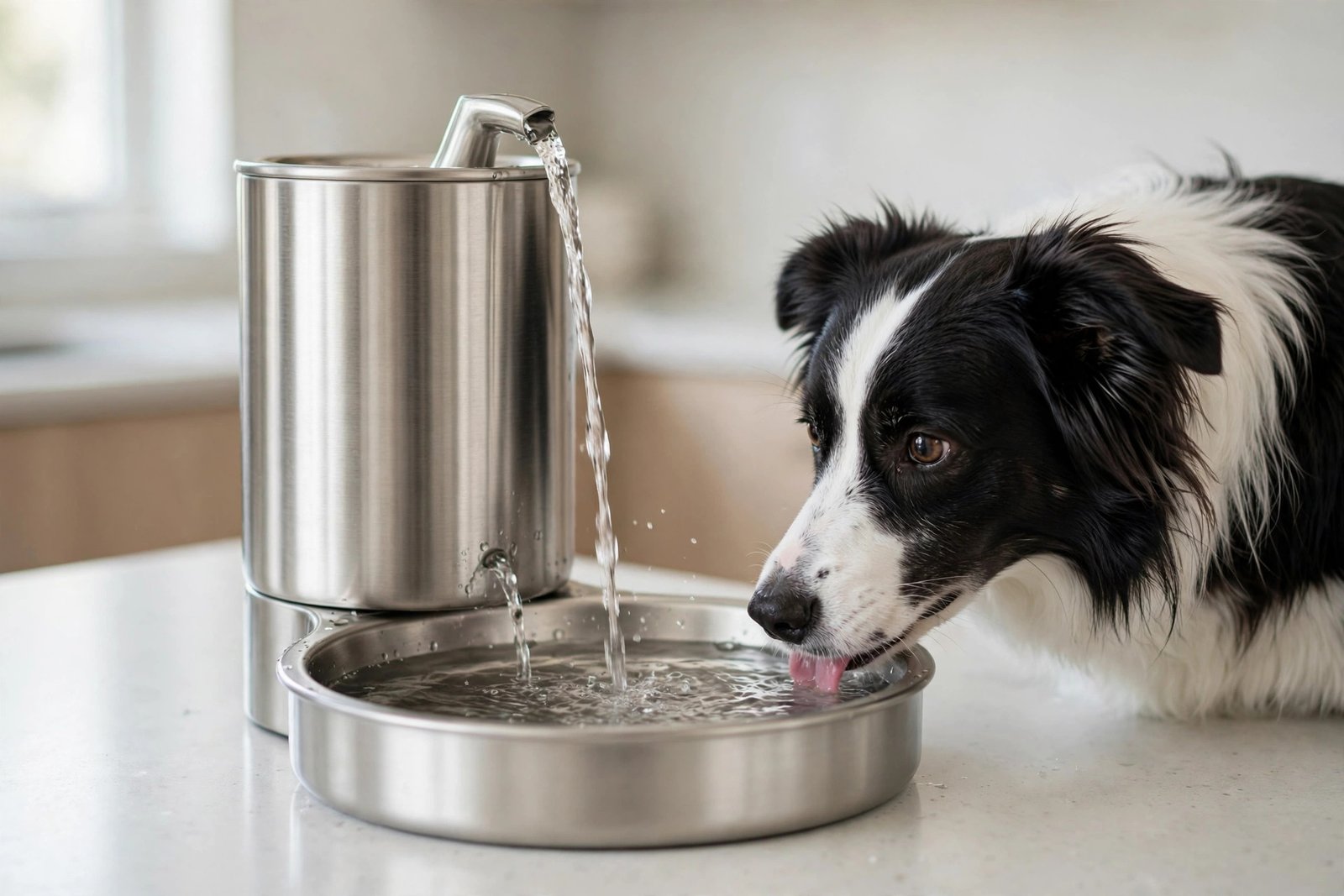
1. Stainless Steel Gravity-Flow Fountain
The workhorse: a brushed-steel spout pours a steady stream into a wide basin, driven by a submersible pump with a carbon filter tucked inside. This is the type I’d hand to nine out of ten dog owners.
Pros: most hygienic material; dishwasher-safe parts; nearly indestructible; suits any kitchen.
Cons: pump noise varies — check real owner feedback on hum; replacement filters are an ongoing cost; steel shows water spots with hard tap water.

2. Ceramic Flower Fountain
The looker: a glazed ceramic basin with a gentle bubbler in the center. Cats adore this style, small-to-medium dogs take to it quickly, and it doesn’t look like lab equipment sitting in your kitchen.
Pros: heavy and tip-proof; non-porous glazed surface; ceramic muffles pump vibration, so it runs noticeably quiet.
Cons: breakable; heavier to lift for cleaning; smaller capacities, so a poor fit for giant breeds or big multi-pet homes.

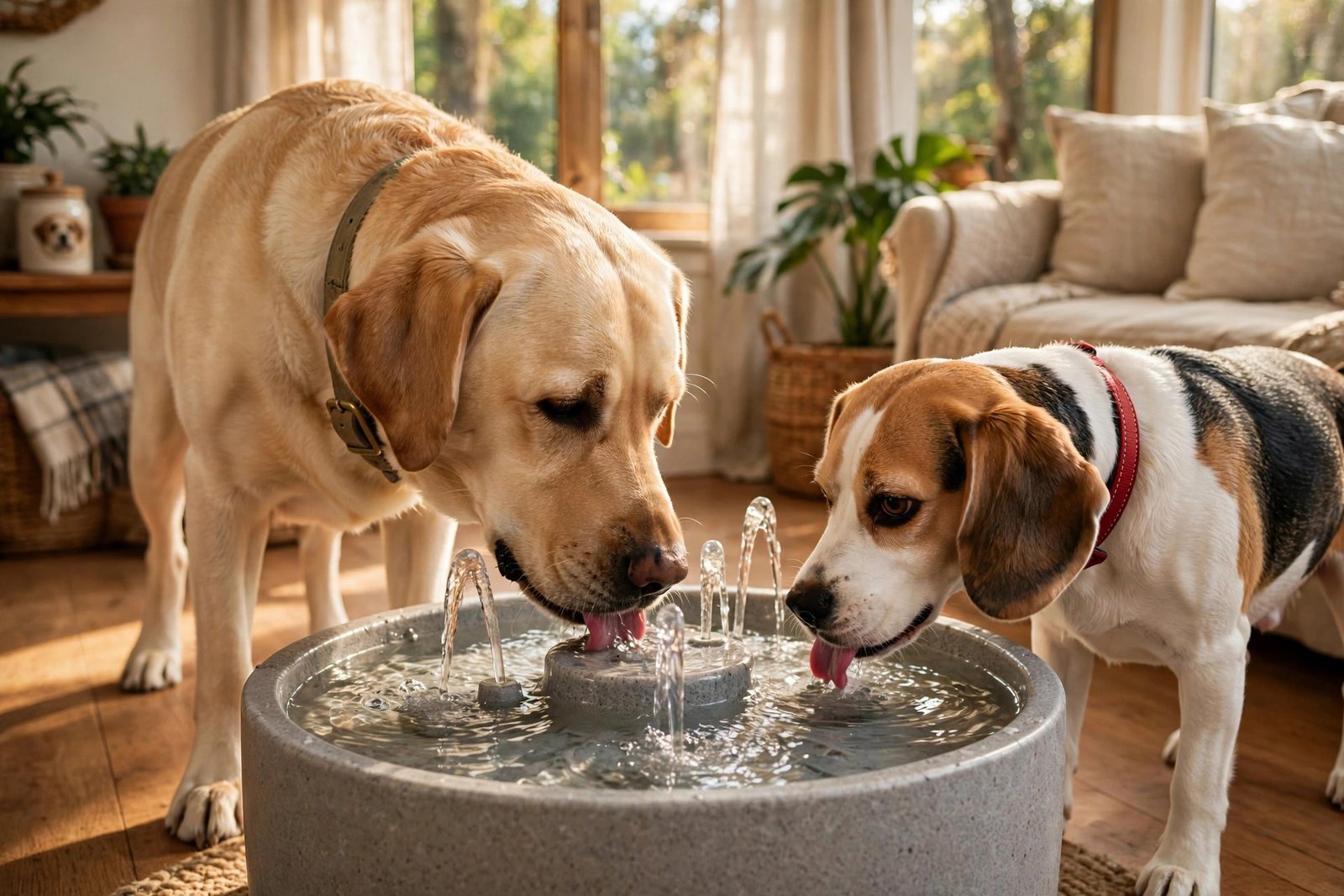
3. Large Multi-Tier Fountain
The crowd-pleaser: water cascades down two or three tiers into a big reservoir, giving several animals drinking spots at different heights. Built for the multi-pet household where one bowl was never going to cut it.
Pros: biggest capacities; multiple drinking points suit different-sized dogs side by side; the cascade sound encourages hesitant drinkers.
Cons: most parts to scrub; biggest filter load; takes up real floor space — measure first.
Side-by-Side Comparison
| Design | Best For | Cleaning Effort | Noise Level | Capacity |
|---|---|---|---|---|
| Stainless steel gravity-flow | Most dog owners; hygiene-first buyers | Low — dishwasher-safe parts | Low hum; varies by unit | Small to very large |
| Ceramic flower | Style-conscious homes; cats + small dogs | Medium — hand-wash, heavier to lift | Very low — ceramic dampens vibration | Small to medium |
| Large multi-tier | Multi-pet households; big drinkers | Highest — many parts, big filter load | Low hum plus gentle cascade | Large to extra-large |
Filters, Noise, and the Cleaning Ritual
Every fountain has a filter, and every filter is a recurring commitment. Most use two stages: a foam pre-filter that catches hair and crumbs, and a carbon filter for taste and odor. The honest math: filters need replacing every few weeks, and the cost adds up. Factor it in like printer ink — a cheap fountain with proprietary, hard-to-find filters is no bargain.
Noise is the other thing manufacturers oversell. “Whisper-quiet” is marketing copy; what you’ll actually hear is a low pump hum plus moving water. Two tricks keep it genuinely quiet: never let the water drop below the minimum line (a thirsty pump gurgles), and set the fountain on a mat to absorb vibration. The sound fades into background within a day — though your dog will absolutely notice it, which is a feature, not a bug.
Cleaning is non-negotiable. My ritual: weekly full disassembly — everything but the pump gets a hot soapy scrub or dishwasher run, the pump impeller gets checked for trapped hair, and hard-water scale gets a white-vinegar soak. Ten minutes, tops. Skip it and you’ll meet the biofilm again — filters catch debris, but they don’t replace scrubbing.
One warning for heavy-shedding homes: the foam pre-filter is the first casualty. If your house produces tumbleweeds of fur — and if that’s a constant battle, our guide on why dogs shed so much will help you manage the source — rinse the pre-filter weekly. A clogged pre-filter starves the pump and shortens its life. I clean the fountain the same morning I wash the dog bed; pairing the chores is the only way they both get done. Here’s our schedule for how often you should wash a dog bed if you want to sync them too.
Frequently Asked Questions
Do dogs really drink more from a fountain than from a bowl?
Many do, though it’s not a law of nature. Fresher-tasting water plus the appeal of movement wins over plenty of reluctant drinkers — I’ve watched it happen in my own kitchen. A dog who already drinks plenty won’t double their intake, and that’s fine; the hygiene upgrade alone justifies the switch.
Are plastic fountains unsafe?
Not unsafe — just harder to keep clean. Plastic scratches, scratches harbor bacteria, and heat warps cheap plastic, making it worse. If you already own one, disciplined weekly cleaning keeps it serviceable. When replacement time comes, that’s the moment to upgrade to steel or ceramic.
How often do I need to change the filter?
Every two to four weeks as a rule of thumb, but your house sets the real schedule. Multiple pets, heavy shedding, and hard water all shorten filter life. Watch for reduced flow, a faint smell, or a discolored carbon pad — when in doubt, change it early. A fresh filter is cheap insurance for the pump.
Can my cat and dog share one fountain?
Yes, and plenty of households do. Size it for the biggest drinker, and place it where both animals are comfortable approaching — cats dislike feeling cornered. The ceramic flower style is a particular hit with cats, while the bigger steel and multi-tier designs handle a large dog’s capacity needs. Just keep the cleaning schedule honest, because two species means twice the debris.
My dog is scared of the fountain. What now?
Don’t force it. Run it unplugged for a few days so it works like a regular bowl, and let your dog drink on their terms. Then plug it in for short sessions with treats nearby and let curiosity take over — most wary dogs come around within a week. If yours never accepts it, there’s no shame in going back to a bowl: a clean steel bowl beats a fountain your dog won’t touch.
Once the fountain is humming, the next question is how much your dog should actually drink each day. We mapped the 1-ounce-per-pound rule — plus a weight-based table and the factors that shift it — in our guide to how much water a dog should drink a day. Read that, size the fountain right, and the refilling mostly takes care of itself.
Keep the fresh-water streak going — our sister sites have your back.
🎄 Visit Our Etsy Shop — Fukroo
Printable Christmas wall art, gift tags & party games — instant download
Shop on Etsy →




One Comment