
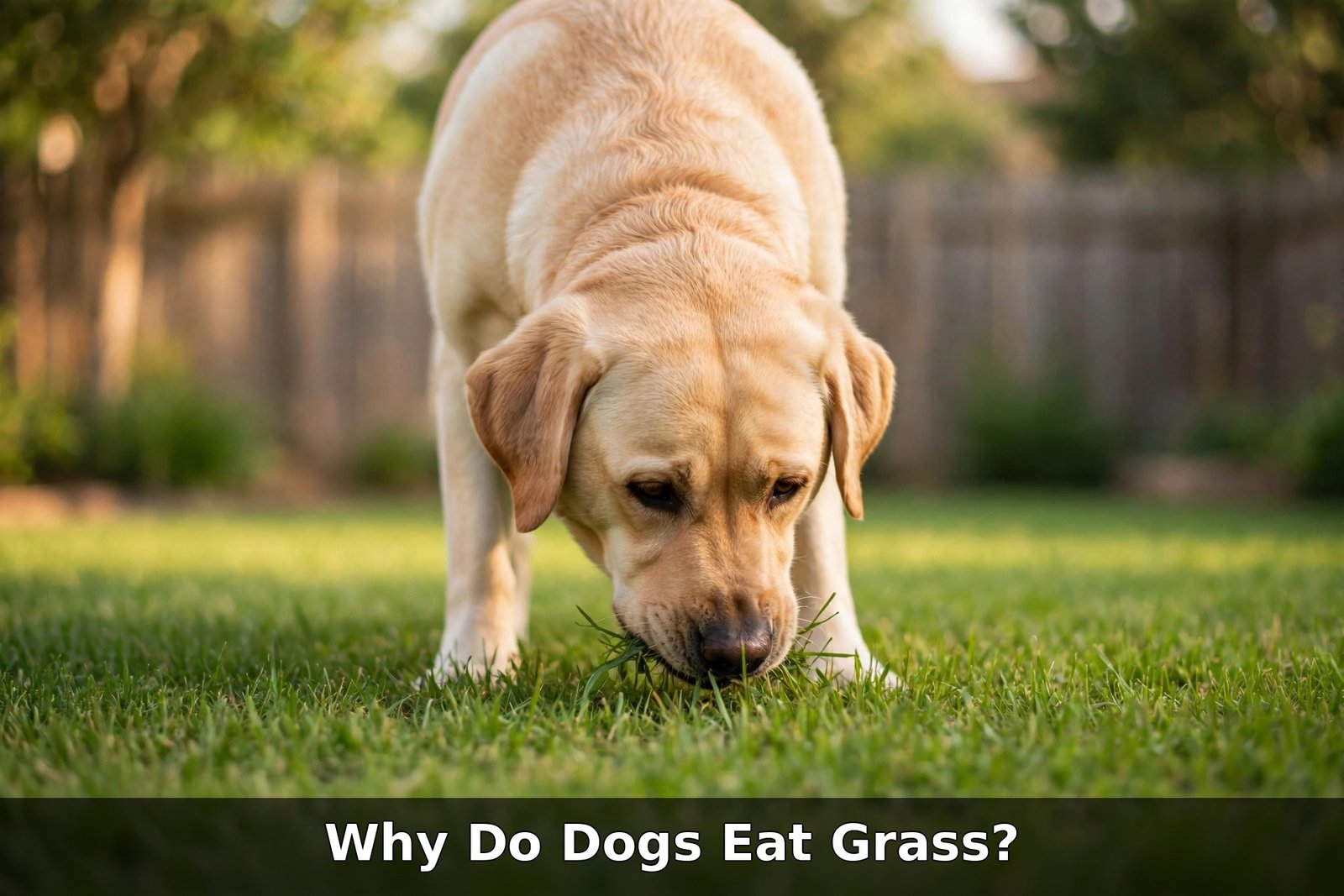
Why Does My Dog Eat Grass? (2026): The 3 Grazing Patterns
It’s one of the strangest things dogs do. You’re walking across a sunny patch of park, and your dog stops dead, lowers her nose, and starts munching grass like a tiny cow. Is she sick? Hungry? Just weird? The truth is, grass-eating isn’t one behavior — it’s several, and telling them apart is the only thing that actually matters.
Quick Verdict
Most grass-eating is harmless and normal. But how your dog eats grass tells the real story: a relaxed grazer is fine, a frantic grazer is often nauseous, and a new grass obsession deserves attention. Unproductive retching with a swollen belly is an emergency — skip the internet and go to the vet. Everything else, read on.
Why do dogs eat grass at all? Nobody can give you one definitive answer, because dogs do it for more than one reason. The best framing I’ve found comes from watching the pattern — three distinct grazing styles that point at three different things. Let’s walk through them.
Pattern 1: The Relaxed Grazer
This is the dog who stops mid-walk, picks a nice tuft, chews it thoughtfully, and carries on like nothing happened. No rushing. No gagging. Just grazing.
Relaxed grazers are almost always fine. Many do it before meals, which hints at something many vets quietly agree on: dogs are opportunistic omnivores with leftover instinct. Wild canines ate plant material regularly, so a little nibbling may simply be an old habit expressing itself.
There’s also the fiber theory: grass contains roughage, and dogs on highly processed diets might seek a bit of it out. No conclusive proof, but it lines up with what many owners notice — dogs on varied diets seem to graze a little less. If your dog is calm, eats normally, and has solid stools, file this under “dogs being dogs.”

Pattern 2: The Frantic Grazer
This one looks completely different, and it’s the one that makes owners panic. The dog dashes to a patch of grass and gulps it down fast — barely chewing, head low, almost desperate. Often alongside drooling, lip-licking, or that unmistakable “something’s wrong with my tummy” posture.
Grass usually causes the vomit, not the other way around. The popular myth says dogs eat grass to make themselves throw up, as if they’re self-medicating. The actual sequence is usually reversed — a dog who already feels queasy eats grass because it’s there, and the rough blades irritate the stomach lining, which then triggers vomiting.
One episode of grass-gulping followed by a single vomit, with a dog who bounces straight back to normal, is generally nothing to worry about. Stomachs have off days. But watch for repeats — and dogs who also lick their paws a lot may share the same underlying gut or sensitivity issues, so overlapping patterns are worth noting.
Pattern 3: The New Obsession
This is the one people miss. Your dog never cared about grass before. Now, suddenly, every walk becomes a salad bar. Something changed — and the change is the clue. Common triggers:
- Diet change. A new food — or an old food gone stale — can leave a dog seeking something different.
- New environment. Moving house, new walking route, a neighbor’s especially lush lawn. Novelty invites exploration, and dogs explore with their mouths.
- Boredom. An under-exercised dog turns everything into entertainment. The fix is usually more exercise and mental stimulation, not more rules.
- Digestive discomfort. Gassiness, mild constipation, or low-grade nausea can drive repetitive grazing. If the new habit comes with soft stools or appetite changes, mention it at your next vet visit.
A new obsession lasting more than a week or two is your cue to look at what’s different in your dog’s life — and to talk to your vet if you can’t pin it down.
The Lawn-Chemical Problem Nobody Warns You About
The grass itself is rarely the problem. What’s on the grass is. Autumn is prime time for this: lawns get their final seasonal treatments right about now, and those treatments are genuinely dangerous for grazing dogs:
- Pesticides and herbicides. Weed killers and bug sprays leave residues on blades for days. A grazer will ingest them directly.
- Fertilizers. Those green granular pellets look interesting to dogs, and fertilizer exposure causes real digestive upset.
- Slug and snail pellets. Common in autumn gardens. Highly toxic to dogs.
- Moldy patches and leaf mold. Fallen leaves that sit damp for weeks grow mold, and some mold spores irritate a dog’s gut.
Practical rule: if a lawn has been treated recently, keep your dog off it entirely. Read the labels on anything you apply to your own garden — many products state a “keep pets off for X hours/days” window for good reason. If you ever suspect your dog has eaten treated grass and starts drooling or acting lethargic, call your vet rather than waiting it out.
Parasites: The Other Reason to Stay Vigilant
Grass is shared territory — other dogs, wildlife, and rodents all pass through it. Where there’s grass, there’s a chance of intestinal parasites from contaminated ground. This doesn’t mean every grazer gets worms; it means the habit is one more reason to keep parasite prevention current rather than letting it lapse.
If your dog grazes regularly, ask your vet about staying on an appropriate prevention schedule for your area. And if grazing comes with weight loss, a dull coat, or visible changes in stool, those are vet-visit triggers, not wait-and-see signs. For the practical side, our guide to flea and parasite prevention at home covers what you can do between appointments.

When to Call the Vet: The Trigger List
I’m not a vet, and this article isn’t a diagnosis. But vets agree on red flags that turn “dog ate grass” from a shrug into a phone call:
- Unproductive retching with a swollen or tight belly — this can signal bloat (gastric dilatation-volvulus), which is a genuine emergency. Minutes matter.
- Repeated vomiting (more than once or twice) or vomiting that won’t stop
- Grass-eating combined with lethargy, loss of appetite, or refusing water
- Diarrhea lasting more than a day, or any blood in stool or vomit
- A frantic grazing pattern that returns daily for a week or more
- Signs of chemical exposure: excessive drooling, tremors, difficulty breathing, collapse
Anything on that list deserves a professional opinion, full stop. A vet can rule out blockages, infections, and allergies far faster than home observation can.
The Fiber Question: Does Grass Fill a Dietary Gap?
This comes up constantly in owner forums, so let’s give it a fair hearing. Grass contains fiber, and fiber helps digestion — that’s true for dogs too. Some dogs on very simple, highly processed diets do seem to graze more, and owners sometimes report the habit easing when meals get more varied.
That said, grass isn’t a meaningful fiber source — a mouthful of blades is a snack, not a supplement. If you suspect your dog’s digestion needs support, the useful levers are dietary: adequate fiber in meals, consistent feeding times, and how fast food goes down. Dogs that inhale their meals tend to have more digestive grumbling overall. If that’s your dog, a slow-feeder bowl is one of the simplest fixes around — it won’t stop grazing directly, but calmer mealtimes often mean calmer stomachs.
Mouth Health Deserves a Mention Too
Quick side note: dogs who mouth and chew on everything — grass included — also benefit from keeping their teeth in good shape. Chewing is how dogs self-clean their mouths to a degree, and dental chews designed for dogs give that chewing instinct a healthier outlet than random lawn grass.
Can You Stop a Dog From Eating Grass?
You can reduce it, but honestly, most of the time you don’t need to. A relaxed grazer on a safe lawn isn’t a problem to solve. If it’s excessive, a few things genuinely help:
- “Leave it” training. The most reliable tool. Practice with treats before you need it on grass.
- More enrichment. Boredom grazers drop the habit fast when walks get more interesting: new routes, sniff time, puzzle toys.
- Check the diet. If grazing ramped up after a food change, the food change is the prime suspect. Talk to your vet before switching again.
- Safe zones. Know which lawns in your routine are chemical-free — ask neighbors rather than assume.
- Skin and itch check. Some dogs graze and chew when their skin bothers them — allergies show up in odd ways. If your dog scratches a lot, look into itchy-skin care alongside the grazing.
Frequently Asked Questions
Why does my dog eat grass every morning?
Many dogs graze before breakfast, when their stomachs are empty. If it’s calm nibbling and your dog eats normally afterward, it’s almost certainly harmless. Frantic gulping is a different story; that can signal overnight nausea.
Is it safe for my dog to eat grass?
Plain, untreated grass in small amounts is generally safe. The real risks are lawn chemicals (pesticides, herbicides, fertilizers, slug pellets), moldy patches, and parasites from contaminated ground. Know your lawns.
Does eating grass mean my dog is sick?
Usually not. Occasional, relaxed grazing is normal dog behavior. It becomes a health question when the pattern changes — frantic gulping, a brand-new obsession, or grazing alongside vomiting, lethargy, or appetite changes.
Why does my dog eat grass and then vomit?
The common sequence: the dog already felt queasy, ate grass, and the rough blades irritated the stomach enough to trigger vomiting. Grass usually causes the vomit; it rarely means your dog was “trying” to vomit. One episode with a quick recovery is normal. Repeated episodes deserve a vet visit.
Should I stop my dog from eating grass?
Not necessarily. If the grass is untreated and your dog is a relaxed grazer, there’s little reason to intervene. Reserve “leave it” for frantic gulping, treated lawns, and unfamiliar areas.
Can grass-eating mean my dog has worms?
Grazing alone doesn’t diagnose parasites. But since grass can be contaminated where other animals have been, regular grazers have one more reason to keep parasite prevention current. Weight loss, dull coat, or stool changes alongside grazing are vet-visit triggers.
We also covered the paw-licking habit — another common behavior with a hidden meaning — if your dog does both, the two guides pair well together.
🎄 Visit Our Etsy Shop — Fukroo
Printable Christmas wall art, gift tags & party games — instant download
Shop on Etsy →


