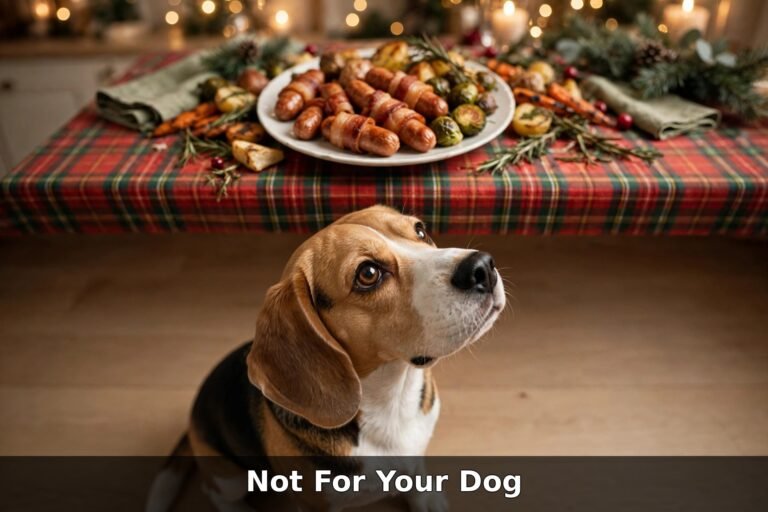
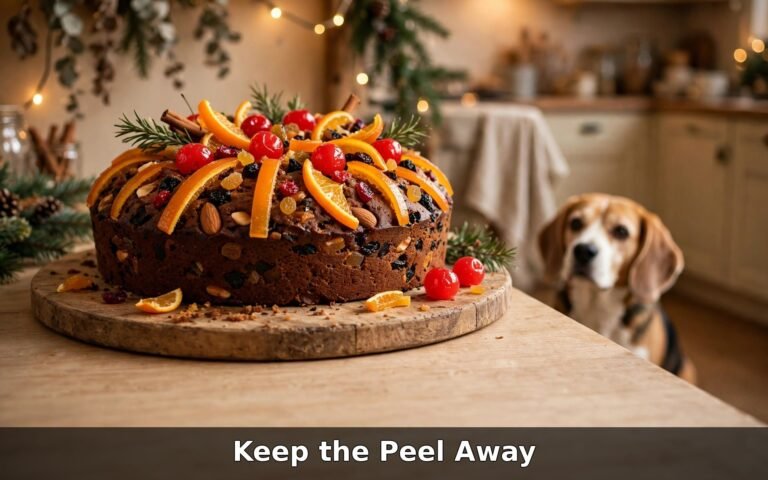
Can Dogs Eat Stollen? (2026): The Honest Answer
Disclosure: This is general information, not veterinary advice. If your dog has eaten stollen, call your vet or a poison helpline straight away — ASPCA Animal Poison Control Center 888-426-4435 or Pet Poison Helpline 855-764-7661 — even if your dog looks fine. Never try to make your dog sick at home unless a vet tells you to.
Stollen is one of the most tempting Christmas bakes for a dog. The smell of butter, spice and dried fruit drifts across the room, and an unattended slice on a coffee table can disappear in seconds. So is it harmless if a dog grabs a piece?
It is not harmless. Stollen packs more separate risks into one slice than almost any other Christmas bake — and some do not show symptoms for a day or more. Here is the honest answer, ingredient by ingredient, and what to do if your dog already ate some.
Quick Verdict: No — dogs should not eat stollen. The raisins and sultanas alone can cause kidney failure, and most stollen also contains rum, marzipan, candied peel, and a lot of butter and sugar. If your dog ate any, call your vet or a poison helpline now.
What Is Stollen, Exactly?
Stollen — Christstollen, if you want the full German name — is a traditional German Christmas loaf that has become a regular on British and American Christmas tables too. It is a rich, dense yeast bread, folded around dried fruit and nuts, often with a ribbon of marzipan through the middle, brushed with butter and dusted with icing sugar. Some versions are soaked in rum or brandy. It keeps for weeks, which is why it sits on the sideboard all through December, within reach of a determined dog.
And because it is bread, people assume it is safe in a way cake is not. It is not — the danger is everything folded into it.
What Is Inside Stollen — and Why Each Part Matters
| Ingredient | Found in | Risk for dogs |
|---|---|---|
| Raisins, sultanas, currants | Nearly every stollen | Kidney failure; no safe amount |
| Rum or brandy | Many traditional recipes | Alcohol poisoning |
| Marzipan / almonds | Marzipan stollen | High fat and sugar; stomach upset |
| Candied peel | Most stollen | Sugar, citrus oils |
| Butter and sugar | The whole loaf | Fatty; can trigger pancreatitis |
| Raw yeast dough | Rising dough | Bloat and alcohol poisoning |
The Raisins Are the Real Problem
Everything else in stollen is unpleasant for a dog. The raisins are the part that can kill one. Grapes, raisins, sultanas, and currants can cause sudden kidney failure, and nobody knows why some dogs are affected by a handful while others eat more and seem fine. Veterinary guidance is blunt: there is no known safe amount, and dried fruit is believed to be more toxic than fresh grapes.
That is what makes stollen worse than plain bread. A single thick slice can hold dozens of raisins and sultanas, and a dog that grabs a whole loaf has eaten far more than any safe guess would allow. Symptoms do not arrive at once: vomiting and diarrhoea usually start within 6 to 12 hours, but kidney damage can take 24 to 72 hours to show. By the time a dog looks ill, the damage may already be done — so call the vet when it happens, not when the dog looks ill.
I have covered the same raisin science in our mince pies guide and our Christmas cake guide, so I will not repeat it here. The point for stollen is simple: if it has dried fruit in it, it is off the menu.
Rum, Marzipan, Candied Peel and All That Butter
Rum is the second risk, and it is easy to miss. Plenty of stollen recipes soak the dried fruit in rum before baking, and some brush the loaf with it. Baking does not burn all the alcohol off, and dogs are far more sensitive to alcohol than people are — a small dog that eats a rum-soaked slice can become wobbly and drowsy. If you buy stollen, check the label: rum, brandy, or any spirit is reason enough to keep it away from the dog.
Marzipan is the sweet almond paste through the middle of many stollen loaves. Almonds are not classed as toxic to dogs the way macadamias are, but marzipan is mostly sugar and almond oil — dense, fatty, and hard to digest. A dog that eats a thick marzipan centre gets a huge hit of fat and sugar, which can mean vomiting, diarrhoea, and pancreatitis. Candied peel adds more sugar and citrus oils. And the loaf is brushed with butter and dusted with sugar, so even a “plain” piece is still a rich, fatty mouthful a small dog’s gut does not need.
The Hidden Danger: Raw Dough Left Rising
Here is the risk most owners never think about: it happens before the stollen is even baked. If you make stollen at home, the raw yeast dough sits rising in a warm kitchen for an hour or more — and a dog that eats it is in serious trouble. The yeast keeps fermenting in the warm stomach, producing alcohol and carbon dioxide. The dough swells, the stomach bloats, and the dog can develop alcohol poisoning too. It is a veterinary emergency, full stop.
Keep rising dough in a closed oven or a high cupboard, never on a low counter — and the same goes for the finished loaf while it cools.
My Dog Ate Stollen — What Do I Do Now?
Do not panic, but do not wait either. First, work out what the dog ate and how much. Second, call your vet or one of the poison helplines listed at the top and bottom of this guide, and tell them the dog’s weight, what it ate, and when. Third, follow exactly what they say: they may ask you to bring the dog in, watch it at home, or come back for kidney blood tests over the next two or three days.
Do not try to make your dog sick at home unless a vet tells you to — it can cause more harm than good, including choking. Do not give it milk, bread, or home remedies to “soak it up.” Do not assume a small piece is fine because the dog looks normal: with raisin poisoning, looking normal for the first few hours means nothing. Keep fresh water available, and watch for vomiting, diarrhoea, loss of appetite, lethargy, or drinking and weeing much more or much less than usual. Any of those signs means the vet, now, not tomorrow.
A Dog-Safe Alternative: Spiced Apple and Oat Bites
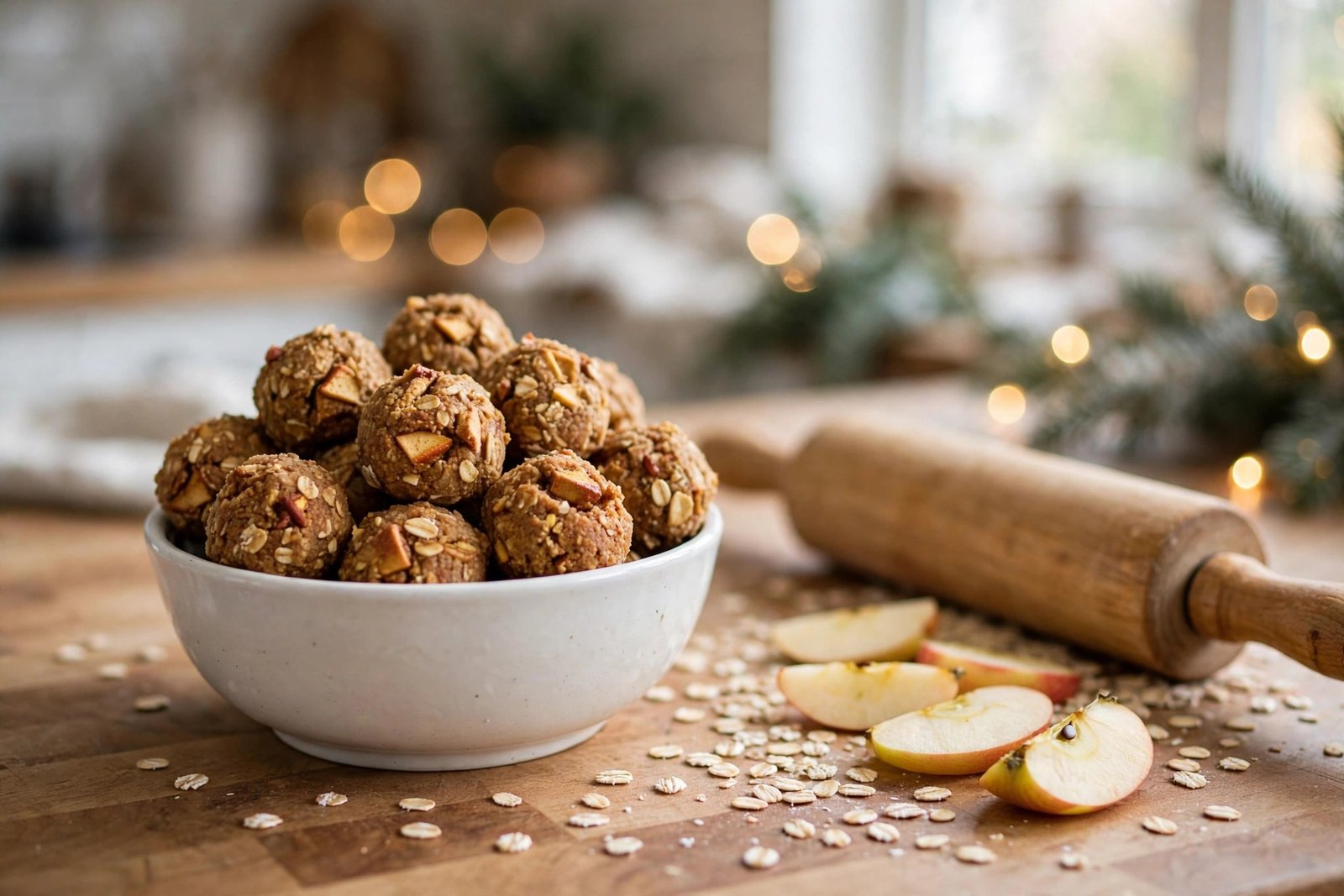
Here is the swap I make every year: while the stollen bakes for us, I bake a small tray of apple and oat bites for the dog. Mash one ripe banana, stir in a cup of rolled oats, half a cup of grated apple (no core, no pips), one egg, and a pinch of cinnamon — no nutmeg, no sugar, no butter, no dried fruit. Roll into small balls, flatten slightly, and bake at 180°C for about 20 minutes until firm. Cool completely before serving, and keep them to one or two a day.
They smell festive, they look the part in a little Christmas tin, and the dog gets its own bake instead of staring at ours. That is the whole trick with Christmas food and dogs: the dog does not need our food, it needs its own version of the celebration.
Frequently Asked Questions
Can dogs eat stollen?
No. Stollen contains raisins, sultanas, or currants, which can cause kidney failure, and most recipes also add rum, marzipan, candied peel, and a lot of butter and sugar. There is no safe amount and no safe variety.
What should I do if my dog ate stollen?
Call your vet or a poison helpline straight away — ASPCA Animal Poison Control Center 888-426-4435 or Pet Poison Helpline 855-764-7661 — and tell them your dog’s weight, how much it ate, and when. Do not wait for symptoms and never try to make your dog sick at home unless a vet tells you to.
How much stollen is dangerous for a dog?
There is no known safe amount — a small dog can be badly affected by a few raisins, and a big dog can eat more and still be at risk. Treat any amount as a reason to call the vet.
Is marzipan bad for dogs?
Marzipan is not classed as toxic the way raisins are, but it is very high in fat and sugar, so it can cause vomiting, diarrhoea, and pancreatitis — especially in a small dog or one with a sensitive stomach.
Can dogs eat the plain bread part of stollen?
No — there is no plain part. The dried fruit, rum, and butter are mixed through the whole loaf, so even a piece that looks fruit-free has been in contact with them. Plain white bread is a different food, and it is still only an occasional small treat.
Is there a dog-safe stollen alternative?
Yes — bake the dog its own festive loaf. The spiced apple and oat bites in this guide use banana, oats, grated apple, egg, and a pinch of cinnamon, with no raisins, no nutmeg, no sugar, and no alcohol. They keep for a few days in an airtight tin.
Disclosure: This guide is general information, not veterinary advice. If your dog has eaten stollen or any food containing raisins, call your vet or a poison helpline straight away — ASPCA Animal Poison Control Center 888-426-4435 or Pet Poison Helpline 855-764-7661 — even if your dog looks fine. Never try to make your dog sick at home unless a vet tells you to.
For more of the Christmas season with your dog, see our guides on whether dogs can eat mince pies, Christmas cake, and Christmas pudding, and what dogs can eat from Christmas dinner. And if your dog needs a present rather than a pudding, our Christmas dog gift box guide is a safer place to start.
A box of Christmas dog treats made for dogs is a far better gift than anything off the human table — and it keeps the stollen safely on your plate, not theirs.
🎄 Visit Our Etsy Shop — Fukroo
Printable Christmas wall art, gift tags & party games — instant download
Shop on Etsy →