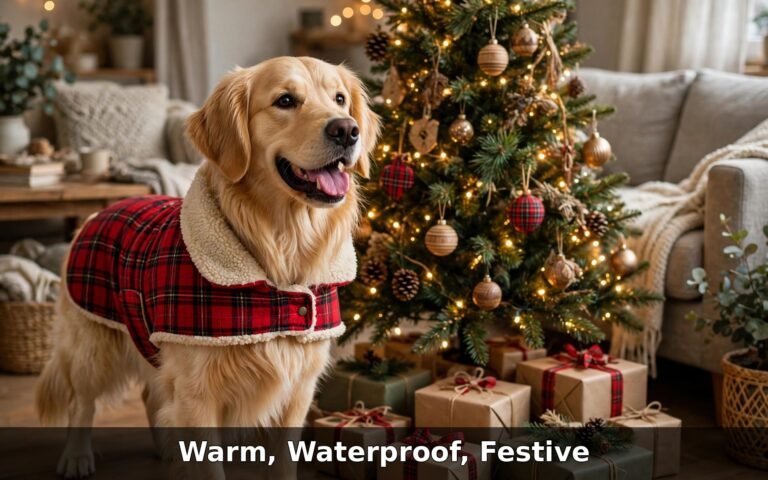
How to Choose the Best Christmas Dog Lead (2026): Reflective, Strong & Festive
December walks often mean crowded Christmas markets, wet pavements and darkness by mid-afternoon. A thin, flat lead chosen because it matches a collar can be hard to grip and almost invisible to drivers in those conditions.
The honest truth about Christmas dog leads: the festive print is the least important thing about them. December walks happen in the dark, in crowds, on wet pavements. A lead has to hold, be seen, and give you control when it matters — get those three right and the holly pattern is a bonus.
Quick Verdict: The best Christmas dog lead is a strong, reflective lead in the right length for where you walk, with a solid metal clip and a comfortable grip. Pick reflective stitching for dark December evenings, a shorter lead for markets and crowds, a longer one for quiet streets. Skip thin ribbon leads, plastic clips, and anything where the festive print is the only selling point.
What a Christmas Dog Lead Actually Is
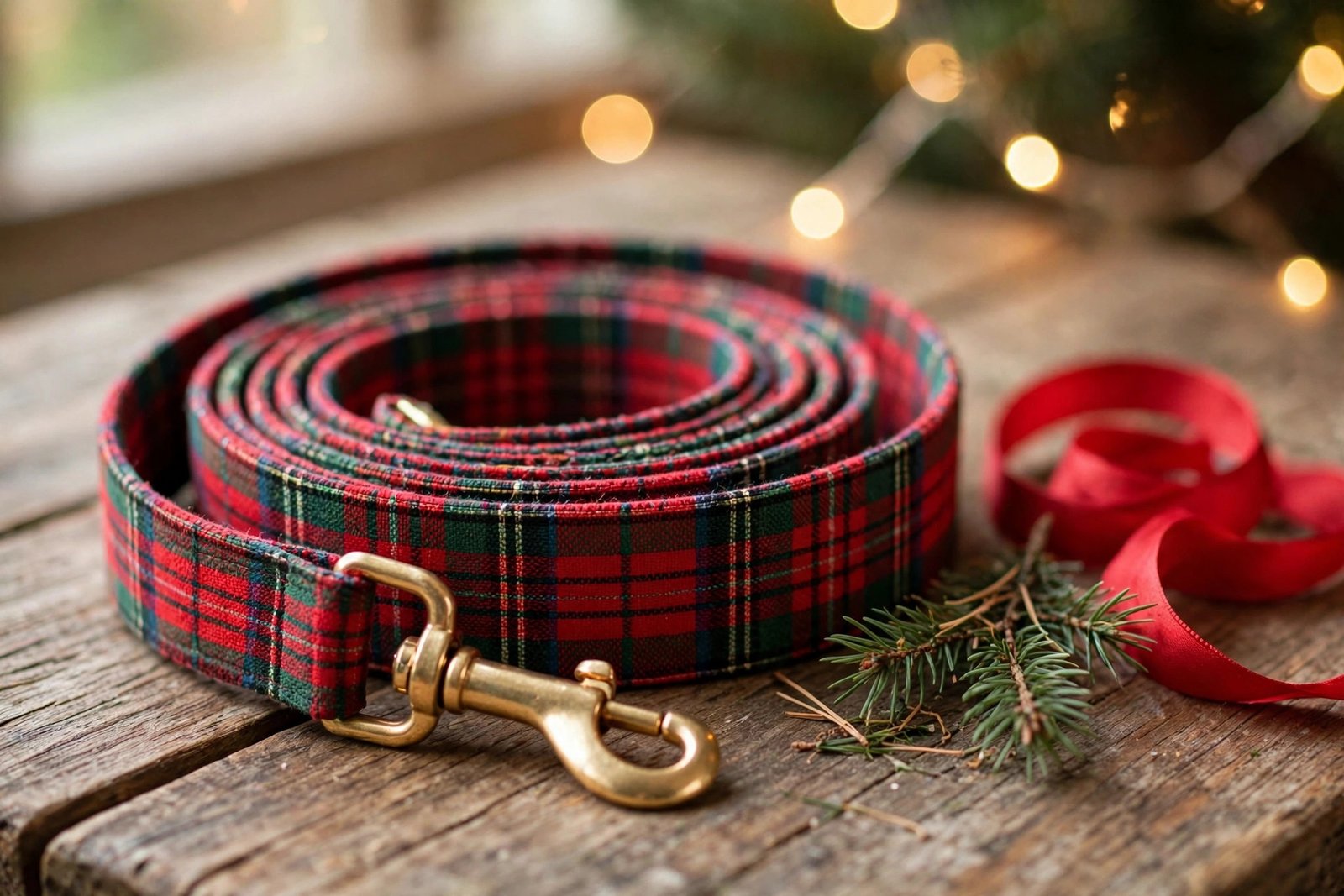
A Christmas dog lead is a normal dog lead with a seasonal design — tartan, holly, snowflakes, reindeer, or a candy-cane stripe. Nothing about how it works changes, and your dog does not care about the pattern — what changes is the look, and sometimes the materials.
There are five broad kinds: flat woven for everyday use, rope for strong pullers, reflective for dark evenings, padded-handle for long walks, and a matching collar-and-lead set bought as a gift. The right one depends on your dog’s size, how hard it pulls, and where you walk in December.
The 5 Kinds of Christmas Dog Lead, Compared
| Lead type | What it is | Best for | Watch out for |
|---|---|---|---|
| Flat woven lead | Flat nylon or cotton webbing | Everyday walks; calm dogs | Thin versions fray fast |
| Rope lead | Thick braided rope | Strong pullers; big dogs | Heavy; soaks up rain |
| Reflective lead | Reflective thread through the webbing | Dark December evenings; roadside walks | A thin reflective stripe is not enough |
| Padded-handle lead | Soft padded grip, traffic handle | Long walks; owners with sore hands | Padding holds water |
| Matching set | Collar and lead, same print | A gift | Collar and lead quality often differ |
Reflective Stitching: The Feature That Earns Its Keep
December is dark. In the UK the sun sets before four in the afternoon, and in much of the northern US it is gone by half past four. A dark lead on a dark coat on a dark pavement is invisible to a driver until the headlights catch it — if they catch it at all.
Reflective stitching fixes that, but only if there is enough of it. Look for reflective thread running the full length on both sides, not a single thin stripe on one edge. Hold it up to a light and turn it: the whole lead should catch the light. A lead that reflects only when it hangs exactly right is a lead with a reflective decoration, not a reflective lead.
Length: Short for Markets, Longer for Quiet Streets
Length is the choice people get wrong most often, because they buy one lead for every walk — and a lead that suits a quiet country lane is wrong for a Christmas market.
For crowds, markets, and busy pavements, a lead of about four feet — roughly 120 centimetres — is the sweet spot. It keeps your dog close in a crowd, and still gives the dog room to sniff. Some leads add a second, shorter handle near the clip — a traffic handle — so you can pull your dog in tight while a crowd passes. If you walk anywhere crowded in December, that second handle is worth having.
For quiet streets and parks, a six-foot lead — about 180 centimetres — gives your dog room to move and sniff without you having to follow every step. Longer than that and the lead drags on wet pavements, tangles in the dog’s legs, and wraps round lamp posts.
Hardware and Material: The Parts That Fail First
Leads do not usually fail in the middle. They fail at the clip, at the stitching where the handle meets the webbing, and at the ring where the clip attaches — check all three before you buy, and again every few weeks once the lead is in use.
The clip should be solid metal — brass or stainless steel — with a spring that snaps shut firmly. Press it open and let go: it should close with a clean click. Plastic clips, painted clips that chip, and clips with a loose, wobbly gate are all a no.
Material matters too. Nylon webbing is the workhorse: strong, light, and it dries fast after a wet walk. Cotton feels nicer in the hand but soaks up rain and stays damp. Rope is strong and comfortable to hold, but heavy for small dogs and it holds water like a sponge. Whatever the material, check the stitching: tight, even, and doubled at the handle and the clip. Loose threads at either end are the first sign the lead is on its way out.
Width follows the dog: about 20 millimetres suits most medium and large dogs, narrower for small dogs, and the full 25 millimetres with a matching clip for very large, strong dogs.
Matching the Lead to Your Dog’s Harness and Coat
A Christmas lead rarely works alone — most dogs in December wear a harness, a coat, or both, and the lead has to work with them, not against them.
With a harness, the clip matters more than the print. A back-clip harness suits most dogs, and any standard lead clips on fine. A front-clip harness needs a lead that does not twist, because a twisted lead pulls the front ring sideways — rope twists less than flat webbing, which is one reason pullers often end up on rope.
With a winter coat, check the fit before the walk, not during it. A thick coat changes where the harness sits, and a harness that was snug in October can be loose over a coat in December — and a loose harness plus a strong lead is how dogs slip out. Our guide to the best Christmas dog harness covers the fit in detail, and our best winter coat for dogs guide covers coats that work with a harness rather than against it.
One more pairing: wet paws and wet leads. A padded handle helps, and so does a lead that dries fast — nylon over cotton. If your dog comes home with muddy paws every time, our best dog boots for winter guide is worth a look too.
When a Christmas Lead Is the Wrong Buy
Not every dog should have a festive lead. Puppies in the chewing phase will chew through a fabric lead in minutes — for a puppy, a plain, cheap, replaceable lead is the honest choice. Dogs that pull hard enough to drag their owner need a proper no-pull setup first; a festive print does not fix pulling. And if the lead is a gift, check it the way you would check one you bought for yourself: gift sets are where the weakest leads hide, a beautiful collar paired with a lead whose clip is painted plastic and whose stitching is single-row. Press the clip and look at the stitching before you wrap it.
Pros and Cons of a Christmas Dog Lead
Pros: it makes the December walk feel festive; a reflective lead genuinely makes dark walks safer; a good lead lasts well past Christmas; and a matching set makes a lovely gift.
Cons: the print is the selling point, not the quality — cheap leads hide behind festive designs; thin ribbon leads fray fast; plastic clips fail without warning; a lead bought for looks may be the wrong length; and a festive lead does not fix pulling.
Frequently Asked Questions
What is the best lead for a dog at Christmas?
A strong, reflective lead in the right length for your walks, with a solid metal clip. Flat woven nylon suits most dogs, rope suits strong pullers — and reflective stitching matters more than the festive print.
Should a Christmas dog lead be reflective?
Yes — in December, most walks are in the dark. Look for reflective thread running the full length on both sides, not a single thin stripe.
What length lead is best for a dog?
About four feet (120 centimetres) for crowds and markets, about six feet (180 centimetres) for quiet streets and parks. A shorter traffic handle helps in crowds.
Rope lead or flat lead — which is better?
Rope suits strong pullers and big dogs because it is comfortable to hold and twists less. Flat suits most dogs, dries faster, and is lighter for small dogs — but rope soaks up rain.
Can I use a Christmas lead all winter?
Yes, if it is well made — the print is seasonal, the lead is not. Wash it when it gets muddy, check the clip and stitching every few weeks, and retire it the moment the clip loosens.
How do I match a lead to my dog’s harness?
Check the clip fits the harness ring easily and the lead does not twist the harness sideways. With a front-clip harness, rope twists less than flat webbing. Check the harness fit over a winter coat before the walk.
For the rest of the December walking picture, see our guides to the best Christmas dog harness, the best winter coat for dogs, the best dog boots for winter, and our best Christmas dog gift box guide if the lead is a present.
🎄 Visit Our Etsy Shop — Fukroo
Printable Christmas wall art, gift tags & party games — instant download
Shop on Etsy →