
Why Does My Dog Dig? (2026): The Pattern Decoder
My own turning point came with a rescue terrier who dug exactly one hole, in exactly one corner, every single afternoon. I filled it, he redug it, and we went around in circles until I finally sat and watched him properly. He was not digging randomly. He was digging at the roots of a shrub where mice ran, and he stopped the week the shrub came out. I had been solving the wrong problem for a month.
Quick Verdict: Most digging falls into one of six patterns: boredom, prey hunting, cooling off, escaping, burying treasure, or breed instinct. Fence-line holes are the urgent ones, because they are an escape risk. Random holes across the yard usually mean boredom or fun, and those respond best to more exercise, enrichment, and a legal digging spot, not to scolding. Punishing a dog after the fact teaches nothing, because the dog cannot connect your anger to a hole it dug an hour ago.
Read the Pattern Before You Try a Fix
| Pattern | Likely Reason | First Move |
|---|---|---|
| Holes along the fence or gate | Escape, or something exciting on the other side | Secure the fence today; supervise yard time |
| Random holes all over the yard | Boredom, fun, or under-exercise | More walks, play, and food puzzles |
| One spot, dug again and again | Prey underground, or a buried treasure | Check for pests; block that spot |
| Shallow pit, dog lies in it | Cooling off, or making a comfy nest | Shade, water, and a cool resting place |
| Digging only when left alone | Anxiety or separation distress | Shorter alone time; vet or behaviorist if severe |
| Digging at bedding, sofa, or blankets | Nesting instinct, comfort, or settling to sleep | Usually harmless; give a scratch-proof blanket |
Watch for one week before you change anything. Note where each hole is, what time it appears, whether the dog is alone or with you, and what happens next. Does the dog lie in the hole, bark at the fence, or trot off proudly with a bone? That little log is worth more than any generic tip list, because two dogs digging in the same garden can be solving completely different problems.
The Six Reasons, in Plain Terms
1. It is fun, and the dog is bored. This is the most common reason, and the least mysterious. Digging feels good: it smells interesting, it takes effort, and it produces a result. A dog left alone in a yard for hours, especially a young or high-energy dog, will invent a job, and digging is a ready-made one. The fix is not less yard time. It is more of everything else: longer walks, training games, sniff walks, food puzzles, and play that tires the brain as well as the legs. A tired dog digs less, and a bored dog digs more, almost without exception.
2. Something is living down there. Terriers, dachshunds, and many hounds were bred to hunt animals that live underground, and they can hear and smell rodents, moles, and insects we never notice. If the digging clusters around tree roots, shrubs, or one particular bed, prey is the likeliest story. Removing the attraction humanely, trimming back dense cover near the house, and blocking that specific spot usually helps more than any training. You cannot train a terrier out of a nose it was bred with.
3. The dog is hot, or wants a den. Soil a few inches down is cooler than the surface on a hot day, and dogs know it. A dog that digs a shallow pit and then lies in it is regulating temperature, not destroying your lawn on purpose. Shade, fresh water, a paddling pool, or access indoors on hot days removes the need. The same instinct explains bedding digging: circling and scratching before lying down is an old den-making habit, and in most dogs it is completely harmless. A sturdy blanket they are allowed to rearrange saves your sofa.
4. The dog wants out. Fence-line digging is the pattern to take seriously. A dog tunneling under a fence can reach a road, another dog, or a lost-dog poster within minutes. Secure the boundary first, before any training: bury wire mesh or concrete edging along the fence line, check gates, and do not leave an escape-prone dog unsupervised in the yard while you work on the cause. If the trigger is a neighbor’s dog, a cat, or children on the other side, reducing the view through the fence helps too.
5. The dog is burying treasure. Dogs bury bones, toys, and chews for later, and dig them up again with great ceremony. This is caching, and it is normal, even if your garden ends up looking like a construction site. Giving the dog a designated digging area, or simply accepting one corner as the treasure zone, is usually easier than fighting the instinct. Dogs that cache a lot are often the same dogs that destroy toys out of frustration, so if chewing and digging arrive together, our guide on why dogs destroy every toy explains the shared cause.
6. Anxiety, or a breed doing its job. Digging that happens only when the dog is left alone, especially alongside barking, pacing, or house soiling, can be separation distress rather than boredom. That needs a slower, kinder plan: shorter absences built up gradually, a calm departure routine, and professional help if the distress is severe. Our separation anxiety checklist helps separate ordinary boredom from real distress. And some breeds simply dig more: dachshunds, terriers, huskies, and beagles top most lists, and for them the goal is redirecting the instinct, not erasing it.
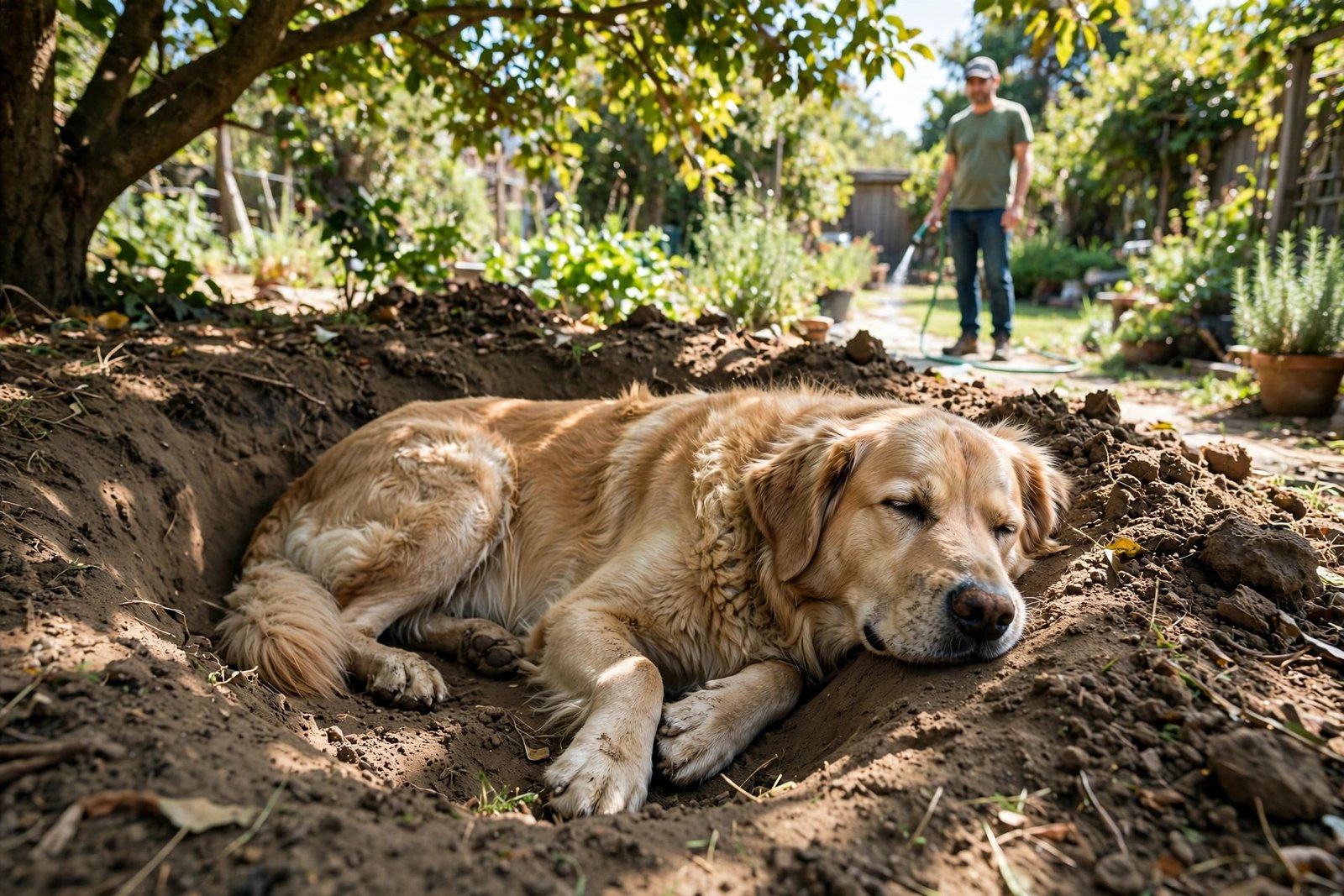
Give Digging a Legal Home: The Digging Pit
The single most effective trick for chronic diggers is not stopping digging. It is moving it. Pick a corner of the garden, loosen the soil, mix in some sand so it digs easily, and bury treats, toys, and chews there at first. When your dog digs in the pit, praise it. When your dog digs elsewhere, calmly interrupt and redirect to the pit, without anger and without a long lecture. Most dogs learn the deal within a week or two, because the pit is easier to dig and it pays off.
Keep the pit interesting by rotating what is buried in it, and keep it in shade if you can, so it doubles as a cool spot. A child’s sandpit with a lid works well for small dogs, and it keeps the area tidy when it rains. The pit will not fix fence-line escape digging on its own, and it will not fix anxiety digging, but for boredom and breed-instinct diggers it changes the whole conversation from a daily argument into a game with rules.
For the rest of the garden, a few practical defenses help while the new habit forms. Flat stones or wire mesh buried just under the soil in flower beds make digging uncomfortable without harming the dog. Supervision matters most in the first two weeks: a dog that practices the old habit unsupervised will keep it. And if digging arrives with other destructive behavior, enrichment is usually the missing piece, so our puzzle toy guide and our escape-proof crate guide cover the two ends of that problem, play and safety.
What Not to Do
Do not punish a dog for a hole you found later. Dogs do not connect a scolding now with digging an hour ago, no matter how guilty they look. That guilty look is a response to your tone, not a confession. Do not fill holes with the dog’s own waste as a deterrent, a tip that still circulates online: it is unhygienic, it teaches nothing, and it can make a dog dig elsewhere instead. And do not reach for harsh chemical deterrents around a garden your dog eats from, digs in, and rolls in. If a product is not safe for a dog to lick, it does not belong in the soil.
One more caution: sudden, intense digging in a dog that never dug before, especially alongside restlessness, appetite changes, or pain signs, deserves a vet conversation first. Most digging is behavioral, but a new behavior in an older dog, or digging paired with other changes, is worth ruling out medically before you start a training plan.
Frequently Asked Questions
Will my dog grow out of digging?
Some puppies dig less as they mature and get more exercise, but breed-instinct and prey-driven digging often stays. The realistic goal is usually less digging, in approved places, not zero digging forever.
Is digging a sign my dog is unhappy?
Not necessarily. Happy, healthy dogs dig for fun. Digging becomes a welfare flag only when it arrives with other distress signs: pacing, barking when left alone, loss of appetite, or destructive behavior indoors.
How do I stop digging under the fence?
Secure the fence physically first, with buried mesh or edging, and supervise yard time until the habit breaks. Then work on the cause: more exercise, less unsupervised time, and blocking the view or sound that triggers the escape attempts.
Does a digging pit really work?
For boredom and instinct diggers, yes, surprisingly well. It works because it does not fight the instinct. It gives the instinct a place, a reward, and a rule, and most dogs prefer easy digging that pays off to hard digging that gets interrupted.
🎄 Visit Our Etsy Shop — Fukroo
Printable Christmas wall art, gift tags & party games — instant download
Shop on Etsy →