Why Does My Dog Destroy Every Toy? (2026)
The toy lasted eleven minutes. I know because I timed it. A friend had just handed me this “extra tough” plush duck for her beagle, and before I’d finished my coffee the duck had been gutted on the living room rug — squeaker extracted and laid beside the carcass like a surgeon showing off. The beagle sat in the middle of the crime scene wagging her tail, utterly pleased with herself.
If you’re reading this, you’ve got a version of that dog. Here’s what most articles won’t tell you: the shredding isn’t random, and it isn’t about the toy. It’s a message — when it happens, where it happens, and what gets destroyed tell you the cause, and the fix follows fast.
Quick Verdict
Most dogs destroy toys out of boredom — chewing is self-rewarding and fills empty hours. But destruction can also signal separation anxiety, prey drive, teething, or pain. Check this first: does the shredding start within 30 minutes of you leaving the house? If yes, think anxiety, not boredom — the fix is completely different. And if your dog swallows the pieces instead of spitting them out, read the safety section first. That’s the one scenario that can become an emergency.
The “Superchewer” Myth (And What’s Actually True)
Pet brands love the word “superchewer.” It sounds like a diagnosis — some dogs are simply built to destroy, and you just need the magical indestructible toy. I’ll be honest: it’s mostly marketing.
Jaw strength varies, sure. But I’ve watched dainty terriers reduce “tough” toys to confetti in minutes, and 90-pound shepherds carry the same plush duck around like it’s made of glass. Strength isn’t destiny. Motivation is.
The honest version: destruction is almost always a behavior problem wearing a product costume. Dogs shred because they’re bored, anxious, overstimulated by squeakers, teething, or hurting — and a toy is the nearest outlet. A tougher toy helps, but only after you know the why.
The Destruction Diagnostic: Three Questions
Answer three questions — WHEN it happens, WHERE it happens, WHAT gets destroyed — and the pattern names the cause. Each cause has a different fix.
| Cause | When | Where / What | Tell-tale sign |
|---|---|---|---|
| Boredom | Any time; worse on low-activity days | Toys left out; anything available | Everything gets equal treatment — opportunistic |
| Separation anxiety | Within ~30 minutes of you leaving | Doors, windows, your belongings | Panic companions: drooling, pacing, barking |
| Prey drive | During active play, often with you watching | Squeaky or plush toys — squeaker hunted first | The “shake and kill”: thrashing the toy side to side |
| Teething | Constant (puppies under ~7 months) | Anything at mouth height: shoes, furniture legs | Cold or frozen things calm them instantly |
| Pain / dental issues | Sudden change in an adult dog | Chews oddly — one side of mouth, avoids hard toys | Bad breath, bleeding gums, flinching at the muzzle |
Boredom: The Number-One Shredder
This is behind most toy carnage. A border collie or lab was designed to work all day; now they get a twenty-minute walk and eleven hours of staring at a wall. Of course they invent projects.
Chewing is self-rewarding: it releases calming endorphins and passes time. A bored dog with a plush toy isn’t being bad — they’re self-medicating a dull afternoon. The giveaway is randomness: whatever’s available gets shredded, whenever it’s available.

The fix isn’t more toys. It’s more brain work: fifteen minutes of sniff-walking tires a dog out more than forty minutes of forced marching. Serve food from puzzles instead of bowls. Do ten-minute training sessions — learning is exhausting. And rotate the toys: half away for a week, then swap, so “new” toys get played with.
If boredom is your dog’s pattern, a puzzle toy does double duty — it entertains and it can’t be gutted. Our guide to the best dog puzzle toys for bored dogs is built exactly for this: toys that make a dog think instead of shred.
Separation Anxiety: Destruction as a Distress Signal
This one looks different. The anxious dog doesn’t care about toys — they’re boring when you’re panicking. They go for exit points and your scent: door frames, window sills, the pillow you slept on. And it happens fast, usually within half an hour of you leaving. One cheap camera shows you the truth within a day.
The critical reframe: this isn’t spite. Dogs don’t do revenge. A dog shredding your door frame is having a panic attack, not filing a complaint — and punishing them afterward can’t work, because they can’t connect your anger to something that happened hours ago.
What helps: graduated alone-time training (two minutes, return calmly, build up), boring departures with no big goodbyes, and a food-stuffed chew left before the panic peaks. Severe cases need a vet or a certified separation-anxiety trainer, not tougher toys. If the pattern fits, read our breakdown of the signs of separation anxiety in dogs to confirm it first.
Prey Drive: Your Dog Is a Hunter in a Living Room
Some dogs don’t shred randomly — they perform surgery. Squeaker located, extracted, presented. Then the stuffing. Then the carcass is abandoned. The violent side-to-side shake is the “kill shake,” an ancient piece of hunting software. Terriers, hounds, and herding breeds run it hardest, but any dog can have it.

You can’t train prey drive out — it’s wiring, not misbehavior. But you can give it a legal outlet. A flirt pole (a giant cat-teaser for dogs) satisfies the whole sequence — search, chase, grab, shake — in five minutes. Teach “take it” and “drop it” so tug rewards self-control. When your dog presents a murdered toy, trade for a treat instead of chasing them. And stop buying squeakers for these dogs: for a prey-driven shredder, a squeaker isn’t a feature — it’s a target. Squeakless plush or solid rubber lasts dramatically longer.
Teething and Pain: When Chewing Means Something Hurts
Puppies chew. That’s biology. Baby teeth fall out between 12 and 16 weeks, adult teeth settle in around 5 to 7 months, and the whole process aches. Frozen carrots, wet frozen washcloths, and rubber teething toys genuinely help — cold numbs the gums. This phase ends. (It doesn’t feel like it at 2 a.m. with a puppy gnawing your bed frame, but it ends.)
More worrying: a sudden change in an adult dog. A five-year-old who’s always been gentle with toys and suddenly tears them apart — or avoids hard chews they used to love — may be telling you their mouth hurts. Bad breath, bleeding gums, or flinching at the muzzle all mean a vet visit, not a new toy. If tiny teeth are also finding your hands and feet, our guide on how to stop puppy biting hands and feet covers the redirection that works.
When Shredding Turns Dangerous: Swallowed Pieces
Most toy destruction is a mess problem. This is where it can become a medical one. There’s a big difference between a dog that shreds and spits — stuffing scattered like snow — and a dog that shreds and swallows.
⚠️ The Blockage Risk, Plainly Stated
Swallowed squeakers, rubber chunks, wads of stuffing, and especially rope or string can lodge in the stomach or intestines. Blockages are surgical emergencies — they can cut off blood supply to sections of bowel within hours, and rope or string can saw through intestinal walls as the gut tries to move them.
Get to a vet or emergency clinic if you see: repeated vomiting or retching, appetite loss, lethargy, a painful or bloated belly, straining to poop, or no stool at all. Don’t wait to “see if it passes,” and don’t try home remedies to induce vomiting unless a vet specifically tells you to.
Prevention: supervise shredders, bin toys the moment they start coming apart, and if your dog is a known swallower, stuffed plush shouldn’t be in the house at all. Solid rubber is the only honest option for these dogs.
What Actually Works: Tougher Toys and a Tired Brain
You’ve diagnosed the why. Now match the toy to the chew style, not the marketing: dedicated shredders get solid natural rubber (stuff-and-freeze kind — nothing to gut); bored dogs get food-dispensing puzzles and snuffle mats, because a dog working for dinner isn’t working on your sofa; prey-driven dogs get squeakless toys plus a flirt pole for the chase instinct; teething puppies get freezable rubber and frozen carrots.
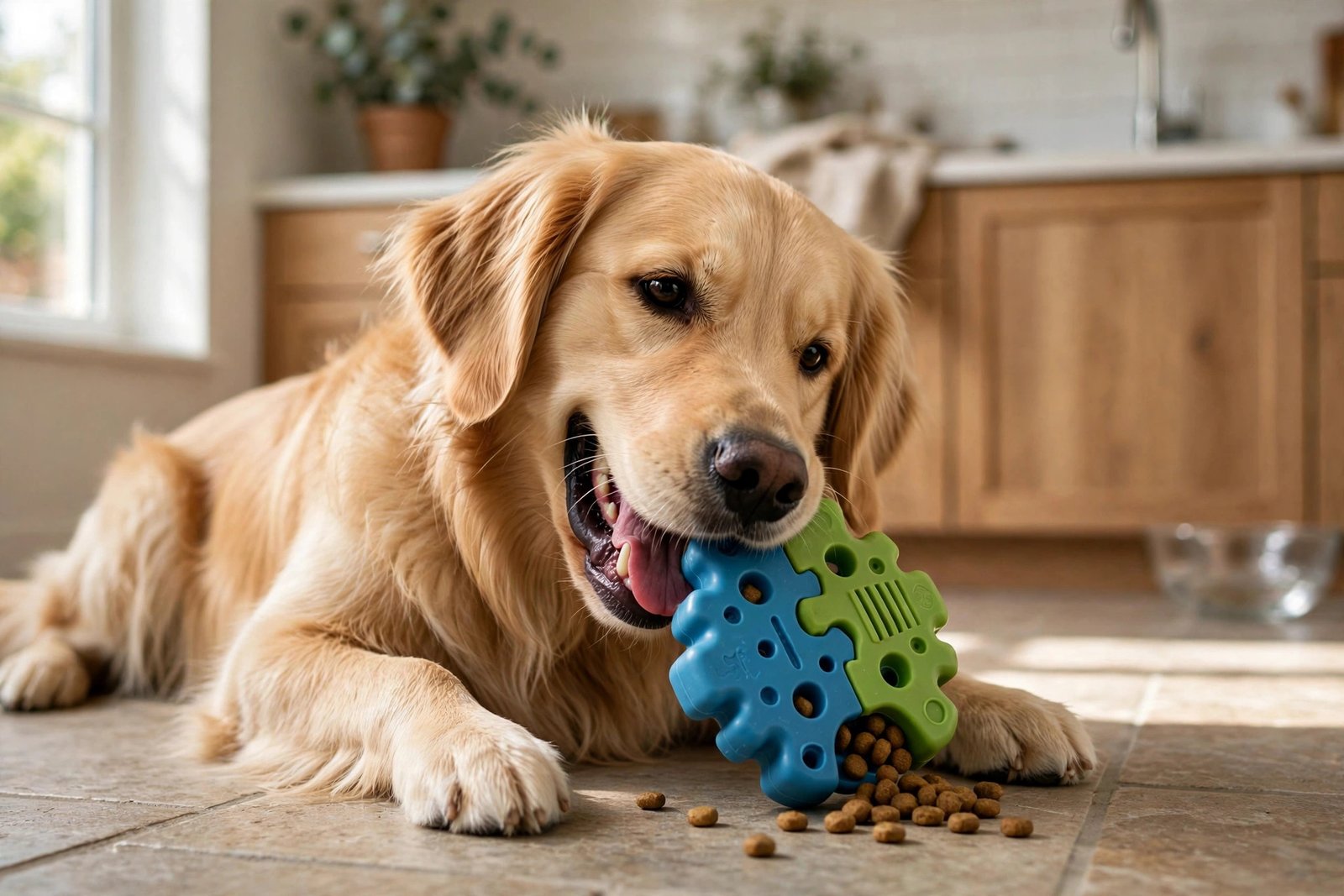
One honest note: no toy is truly indestructible — what exists are toys dramatically harder to destroy, and picking the right tier for your dog’s chew style is what saves money. We broke it all down earlier today in our best indestructible dog toys for aggressive chewers guide, so you can buy the right armor for your shredder instead of guessing. Pair that with puzzle toys that tire out bored dogs, and remember: fifteen minutes of training or sniff work beats any rubber compound.
Frequently Asked Questions
Why does my dog destroy every toy except balls?
Balls have no parts — no squeaker to extract, no stuffing to pull — so the “dissect the prey” sequence never triggers. Useful intel: your dog is probably prey-driven rather than bored.
Is it normal for puppies to destroy toys?
Completely. Teething puppies chew everything to explore and soothe sore gums. Redirect to proper chew toys, keep valuables out of reach, and know the intense phase usually fades by 7 months.
Does my dog destroy things because it’s mad at me for leaving?
No — dogs don’t do revenge. It’s panic or boredom, and the target tells you which: your belongings and exit points mean anxiety; random toy shredding means boredom.
Are “indestructible” dog toys really indestructible?
Honestly? No. Given enough time and motivation, any dog can destroy any toy. These toys offer a much longer lifespan and safer failure — solid rubber tears into dull chunks instead of stringy hazards. Match the tier to your dog and supervise.
How do I stop my dog from eating toy stuffing?
Remove the opportunity: no more stuffed plush for a known swallower — switch to solid rubber. Teach a rock-solid “drop it” with high-value trades. If your dog already swallowed a lot of stuffing, watch for vomiting, appetite loss, or lethargy and call your vet.
🎄 Visit Our Etsy Shop — Fukroo
Printable Christmas wall art, gift tags & party games — instant download
Shop on Etsy →