

How to Stop Puppy Biting Hands and Feet: The Redirection Method
The first time my sister’s golden retriever puppy drew blood — not real blood, just a scratch thin as a paper cut — she called me in a near panic. “I think my puppy hates me.” It was week two. The puppy was nine weeks old, all paws and needle teeth, and his favorite game was the ankle ambush: she’d walk toward the kitchen and he’d launch at her bare feet like they owed him money. Every attempt to pet him ended with fingers in a tiny, surprisingly strong jaw.
She did not have an aggressive puppy. She had a normal one. Mouthing hands and feet is one of the most universal puppy behaviors there is — and almost every puppy grows out of it once someone teaches them what teeth are actually for. That someone is you, and the method is beautifully simple: redirection. Every time teeth touch skin, you swap in something legal to chew and reward the swap.
Quick Verdict: the redirection method
Your puppy isn’t being naughty — mouthing is how puppies explore the world and learn bite control. Redirection gives those teeth a legal target: every time teeth touch your skin, calmly swap in a chew toy and reward the puppy for taking it. No scolding, no drama, no punishment. Do it consistently for two to four weeks and most puppies get the message: skin is boring, toys are the fun thing to bite. Details, timelines and troubleshooting below.
Why your puppy is obsessed with your hands and feet
Hands move, feet move. A puppy’s brain is wired to chase small moving things — leftover predator software. Feet are even better: they’re at puppy-face height and dart forward every time you walk. The ankle ambush on the way to the kitchen isn’t defiance; it’s a chase sequence your feet keep starting.
Mouths are how puppies investigate. Like a toddler with their hands, a puppy grabs the world with their mouth. Your hands are warm, smell like you, and are always within reach — of course the puppy wants to taste them.
Teething hurts. Around 12 weeks, baby teeth fall out and adult teeth push through. Sore gums make puppies chew anything with give — and human skin has exactly the wrong amount of give. This is why biting often worsens before it improves: months three to six are peak chew-everything season.
You replaced the littermates. For eight weeks, your puppy learned bite control wrestling siblings — bite too hard, the game stops. Now you’re the playmate, so you teach the same lesson: hard bites end the fun, gentle mouths keep it going.
The redirection method: step by step
This is the whole technique — and it works because it teaches the puppy what to do instead of only punishing what not to do.
Step 1: Keep a toy within arm’s reach at all times. Redirection fails most often because the owner has nothing to redirect to. Station chew toys around the house — sofa, kitchen, your pocket. A rope toy, a puppy-safe rubber chew, anything the puppy already likes. The toy must appear within two seconds of the bite, or the moment is lost.
Step 2: The instant teeth touch skin — freeze. Don’t yank your hand away. Fast movement triggers the chase reflex and turns your fingers into the most exciting toy in the room. Go still. Become the most boring object your puppy has ever met.
Step 3: Offer the toy right at the puppy’s mouth. Wiggle it, squeak it, drag it along the floor — make it the interesting thing. Most puppies switch targets within seconds: the toy is novel, your frozen hand is dull.
Step 4: The moment the puppy takes the toy — throw a party. Warm praise, a silly voice, twenty seconds of actual play. This is the entire lesson condensed into one moment: biting the toy pays; biting skin doesn’t. Puppies repeat what gets rewarded.
Step 5: If the puppy drops the toy and goes back to your hand — end the game. Calmly stand up, turn away, and step out of the room or behind a baby gate for ten to twenty seconds. No scolding, no eye contact, no drama. This is a reverse time-out: the puppy isn’t banished — the fun simply leaves. Return, and try again.
Step 6: Repeat. Then repeat tomorrow. A young puppy may need redirecting twenty times a day in week one — that’s normal; every repetition is one more deposit in the “skin is boring” account. Most owners see clear improvement within two to four weeks. The only real way to break this method is inconsistency: if teeth on skin sometimes gets a toy and sometimes gets a wrestling match, the puppy learns biting is a slot machine. Same response, every time, from every human in the house.
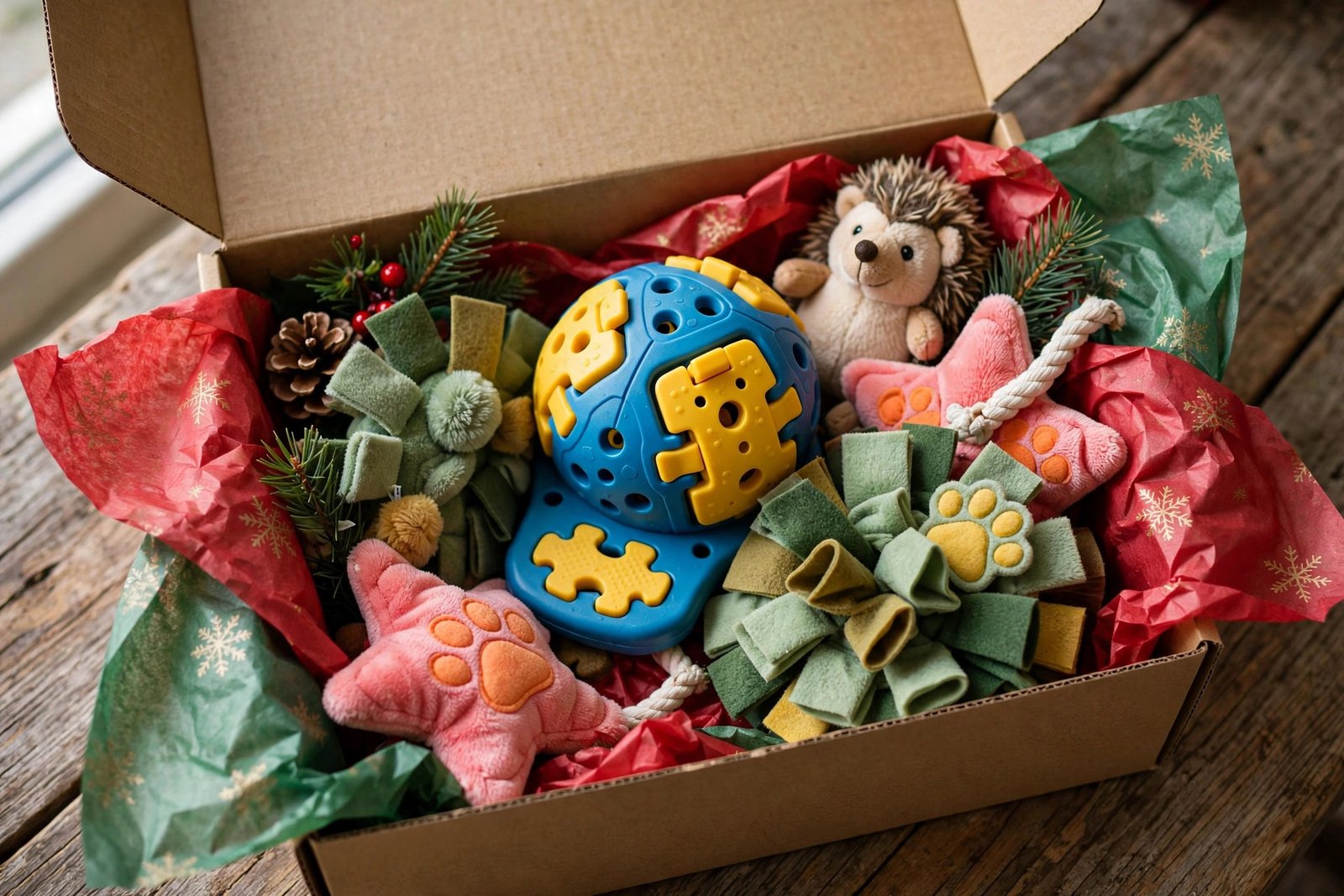
Soothing sore gums: the teething helpers
Redirection handles the training; teething pain is physical. A few things genuinely help:
- A frozen washcloth. Wet, twist, and freeze a clean washcloth. The cold numbs sore gums; the texture satisfies the chew urge. Supervise — remove it once it starts shredding.
- A rope toy soaked and frozen. Same idea, tougher. Great for the 4-to-6-month peak.
- Puppy-safe rubber chews. The hollow stuff-and-freeze kind last longest and occupy a teething puppy for real stretches.
Bite inhibition timeline: what to expect by age
| Age | What’s happening | Your job |
|---|---|---|
| 8–12 weeks | Peak mouthiness — needle-sharp baby teeth; learning how hard is too hard. | Redirect every time. Start reverse time-outs for hard bites. |
| 3–4 months | Teething begins (around 12 weeks). Gums ache; chewing intensifies. | Add frozen chews. Enforce naps — overtired puppies bite hardest. |
| 4–6 months | Peak teething — adult teeth push through; the worst chewing phase. | Double down on chew outlets; don’t relax the rules. |
| 6–7 months | Adult teeth mostly in. Mouthing should be clearly fading. | Gentle mouthing is okay; hard bites are not. Phase out soft mouthing now. |
| 7+ months | Biting should be rare and soft. | Escalating hard biting needs a professional trainer or behaviorist. |
One honest caveat: progress comes in waves, not a straight line. Zoom out and judge the trend over weeks, not days.
What NOT to do: the mistakes that make biting worse
Don’t punish the bite. No nose taps, no muzzle grabs, no shouting in the puppy’s face, no alpha rolls. Fear doesn’t teach gentleness; it teaches the puppy to be nervous around your hands — the exact opposite of what you want. You want hands to mean good things: treats, petting, play with toys.
Don’t make your hands the toy. Hand-chasing games, finger-wrestling, letting the puppy tug your sleeve — all teach one lesson: hands are for biting. Same goes for dangling fingers in a puppy’s face “to test” them. Keep the categories clean: hands are for petting and feeding; toys are for biting.
Don’t skip the naps. Many “aggressive biting” cases turn out to be an exhausted puppy who hasn’t slept since morning. Young puppies need enormous amounts of sleep; a crate, a chew, and a quiet room fix more biting than any technique.
Don’t expect one good day to mean it’s fixed. Biting fades in waves — good days, bad days, teething surges. If the trend over two to three weeks is downward, you’re winning.
When biting stops being normal: red flags
Normal puppy mouthing is loose and wiggly. The following are different, and they deserve professional eyes:
- Hard bites that bruise or puncture regularly — not puppy nips and scratches.
- A stiff body, hard stare, or growling over food, toys, or resting spots. Playful mouthing is loose and bouncy; guarding is still and tense.
- Biting that escalates past 7 months despite consistent work — harder and more frequent instead of fading.
- Biting aimed at strangers or children, not just family play.
- Any bite that felt meant to hurt. Trust your gut here.
If you see these, start with your vet — pain can cause sudden behavior changes — then a certified professional trainer or veterinary behaviorist. Getting help early is the responsible move, not an admission of failure.
Frequently asked questions
How long does puppy biting last?
Most puppies mouth noticeably less by five to six months and are nearly done by seven to eight months, with consistent redirecting. Teething waves can cause temporary flare-ups — that’s normal, not a relapse.
Should I yelp when my puppy bites me?
Yelping mimics how littermates signal “too hard,” and it works for some puppies. For others it just ramps up the excitement. Try it once: if your puppy pauses and softens, keep it; if they get wilder, drop the yelp and use freeze-plus-redirect instead.
Why does my puppy bite my feet more than my hands?
Feet trigger the chase instinct — moving targets at face height that dart forward every time you walk. Hands get bitten during petting and play instead. Same fix for both: freeze, redirect, reward the swap. Chronic ankle ambusher? Keep a toy in your pocket on the way to the kitchen for a week or two.
Will my puppy just grow out of biting on its own?
Largely, yes — but “growing out of it” without training often means the puppy learns that biting works to get attention. Redirection doesn’t just wait out the phase; it actively teaches the lesson you want the adult dog to keep: teeth belong on toys, not people.
Is gentle mouthing ever okay?
Soft mouthing during play is fine while you’re actively teaching gentleness — praise the soft, redirect the hard. Once the adult teeth are in, phase out even gentle mouthing.
Once the biting calms down, the next phase begins
Conquer the biting around month five or six, celebrate for a week — and then the puppy discovers its voice at 2 a.m. If nighttime barking becomes your new project, our guide on how to stop dog barking at night takes the same calm, consistent approach.
If your puppy’s mouthiness spikes when you leave the house — chewing, whining, distress — that may be anxiety rather than teething; see our calming treats for dogs with separation anxiety. And new puppy this Christmas? Christmas gifts for new puppy owners pairs well with a good chew under the tree.
🎄 Visit Our Etsy Shop — Fukroo
Printable Christmas wall art, gift tags & party games — instant download
Shop on Etsy →




One Comment