How to Stop Dog Hair Getting in the Washing Machine & Dryer
As an Amazon Associate, Furveko earns from qualifying purchases made through links on this page, at no extra cost to you. See our Affiliate Disclosure.
This post may contain affiliate links, including Amazon Associates links (tracking ID furveko-20). If you buy through a link on this page, Furveko may earn a small commission at no extra cost to you. It never changes which products we recommend.
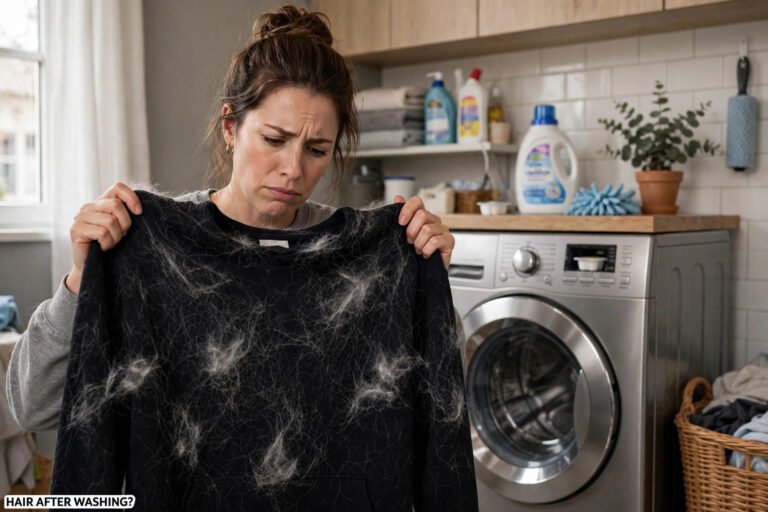
I pulled a black jumper out of the washing machine last winter and held it up to the window. It looked like it had been dipped in fur — and I’d washed it on its own. The machine itself was the accomplice: every cycle left a film of hair inside the drum, and whatever went in next picked it up like a magnet.
Here’s the part nobody tells new dog owners: the washing machine doesn’t remove hair the way you’d expect. Wet hair clings, and tumbling lifts hair off one item and presses it onto everything else. The good news is the fix is a short sequence, and most of it costs nothing.
Quick Answer
To remove dog hair in the washing machine and keep it out: de-hair clothes before loading, toss a silicone laundry hair-catcher into the wash, add wool dryer balls in the dryer, and clean the drain-pump filter every few months. Hair that never enters the machine is hair you never have to remove.
Why the Washer Makes It Worse
Dry hair brushes off. Wet hair doesn’t. In the wash, water mats loose fur onto fabric instead of rinsing it away, and the drum’s action turns one hairy dog blanket into a fur transfer service for the whole load. The dryer does the opposite — heat and tumbling loosen hair and throw it into the lint filter — which is why the washing machine is the villain of this story and the dryer, played right, is the hero.
Winter makes it worse. Dogs drop their lighter coats when the heating comes on, dry indoor air builds static so hair clings harder, and we wash more heavy layers. Not a crisis, just physics and a dog.
1. Shake and Brush Everything Before It Goes In
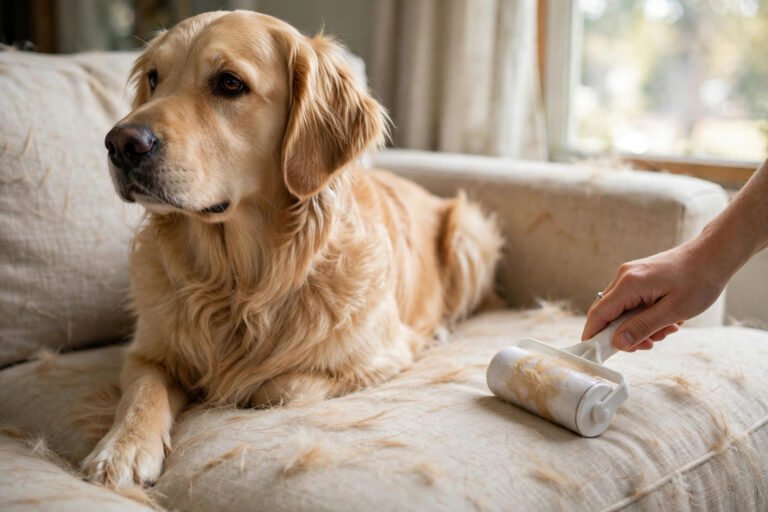
The highest-leverage step, and it takes two minutes. Take hairy items outside, shake them hard, then run a damp rubber glove over the fabric — pull it across and hair gathers into rolls you peel off. A lint roller works too, though for a dog blanket you’ll burn through it in three strokes.
Be ruthless about the pre-load. The dog’s own bedding and throws should be shaken and vacuumed before washing, the same five-minute prep our guide on how often to wash a dog bed recommends — it protects the machine’s filter and stops hair migrating from bed to clothes. And if the daily clothing battle is your real problem, our routine for removing dog hair from clothes pairs well with everything below.
Honest limit: pre-shaking catches most loose hair, not all of it. Embedded hair stays put until the dryer helps.
2. Toss a Silicone Laundry Hair-Catcher in the Wash
You’ve seen these: small silicone discs or balls you throw into the drum with the laundry. Their soft, grippy surface collects loose hair as the load tumbles, and you rinse them off after the cycle.
They won’t make a husky blanket pristine, but buyers consistently report visibly less hair on dark fabrics — two or three per load outperform one alone.
You can find more help in our dog hair and home cleaning collection. For now, search “silicone laundry hair catcher” and favour ones with plenty of verified reviews from pet owners — that’s your real-world proof they survive a dog house.
3. Let the Dryer Do the Heavy Lifting
The dryer is where wet, clinging hair finally gives up. Heat loosens the bond, tumbling throws it off, and the lint filter collects it. Two cheap additions make it better.
Wool dryer balls — three or four per load. They keep clothes separated so hot air reaches everything and lifts hair off, and they reduce static, half the battle in winter. Owners often notice slightly faster drying as a bonus.
Dryer sheets — the anti-static kind. Static is why hair clings to freshly dried jumpers even after the filter did its job; one sheet per load cuts that cling meaningfully. Go unscented or lightly scented in a dog house — heavily scented sheets can bother a sensitive dog’s nose.
Empty the lint filter after every load. A clogged filter dries slower, costs more energy, and stops collecting anything.
4. Try the Dryer-First Trick for Hairy Loads
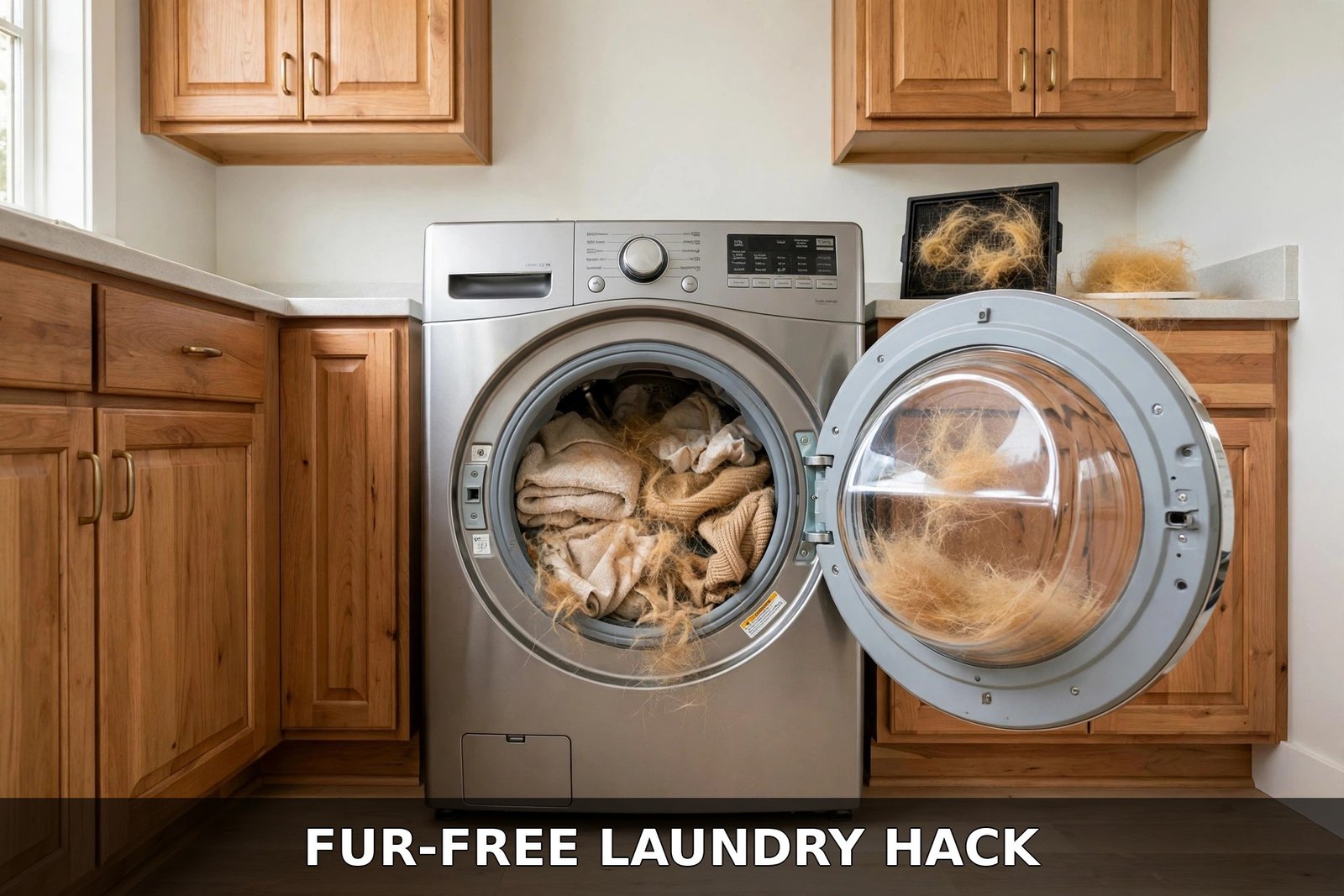
A trick washer-repair forums quietly swear by, and it works: for a badly hairy load, run it in the dryer on no heat (air fluff) for ten minutes before washing. No heat means no set-in stains. The dry tumbling knocks loose hair into the lint filter while it’s still brushable. Then wash normally, dry normally.
It adds ten minutes, but for a dog-blanket load the difference is striking — you’ll empty a visible wad from the lint filter before the wash, and that’s hair that would otherwise have re-landed on everything.
5. Don’t Cram the Machine
Overloading multiplies the hair problem. Clothes need room to move so water rinses hair away instead of grinding it back into fabric. A drum stuffed to the door just tumbles hair from item to item in a closed loop. If the dog bed covers alone fill the machine, they get their own cycle. Period.
6. Wipe the Drum and Seal After Dog Loads
After washing anything properly doggy, open the door and wipe. Hair collects where the rinse doesn’t reach: the rubber door seal (lift the folds, you’ll see it) and the bottom of the drum. A damp microfibre cloth takes thirty seconds, and this is the cheapest insurance that your work shirts stay work shirts.
Protecting the Machine
So far it’s been about keeping hair off clothes. Here’s the machine side — and it matters more than the lint filter on the door. Every front-loader has a drain-pump filter, usually behind a small access flap at the bottom front. It catches coins, buttons, and hair that made it through the drum. Ignore it for two years in a dog house and you get slow draining, musty smells, and a pump working overtime.
With a shedding dog, check it every three to four months. Put a towel or shallow tray under the flap first — water comes out. Pull out the wad of hair, rinse the filter, put it back. Five minutes once you’ve done it once. Your manual shows the flap’s location if you can’t spot it.
Two more habits. Run an empty hot maintenance wash monthly — it flushes detergent residue and trapped hair from hoses and seals. And leave the door and detergent drawer ajar between washes so the inside dries. Trapped moisture plus trapped hair is where musty smells come from.
Nothing here will “ruin” a healthy machine — they’re built for this — but neglected filters and seals shorten appliance life. Small habits, big difference over years.
A Soft Bridge: When These Tricks Aren’t Enough
Be honest about where you are. If you’re shaking, pre-drying, and wiping seals, and your black trousers still come out furry — the right product matters more than more technique. Some households (double-coated breeds, two dogs, a dog that naps on the laundry pile) simply produce more hair than process can handle.
That’s where laundry-specific gear earns its place: dedicated pet hair remover balls for laundry, machine-safe hair catchers built for heavy-shedding homes. You can find more in our dog hair and home cleaning guides. Most of it starts on the furniture anyway: our guide to removing dog hair from carpet tackles that ground zero directly.
Frequently Asked Questions
Can dog hair ruin a washing machine?
Not directly — machines are built for laundry, and hair alone doesn’t break anything. The realistic risks are slow draining from a clogged drain-pump filter and musty smells from damp hair trapped in the seal, both preventable with the filter checks and seal wipes above.
Do laundry hair-catcher balls actually work?
They help, with honest expectations. Silicone laundry hair-catchers collect a visible amount of loose hair in the drum and reduce hair on dark clothes noticeably. They don’t eliminate the problem alone — pair them with pre-shaking clothes and using the dryer. In a heavy-shedding household they’re one part of a routine, not a magic fix.
What about the drain-pump filter?
Every front-loader (and many top-loaders) has a drain-pump filter behind a small flap near the bottom of the machine. It catches hair that gets through the drum. In a dog household, check it every three to four months: towel down, open the flap, pull out the hair, rinse the filter. Five minutes, and it prevents slow draining and musty smells. Your manual shows the exact spot.
How often should I clean the washing machine filter with a shedding dog?
The lint filter: after every load. The drain-pump filter: every three to four months. Wipe the rubber door seal after dog-blanket loads. Monthly empty hot maintenance washes flush everything else. That’s the complete routine.
Why is there more dog hair in winter laundry?
Two reasons: dogs drop their lighter coats when indoor heating starts, so there’s simply more loose hair around — and dry winter air builds static, which makes hair cling far more aggressively than humid summer air. Wool dryer balls and dryer sheets both fight the static half of the problem, which is why they matter most from November to March.
Cleaning note: general home laundry and appliance care — not veterinary or technician advice. If your machine shows persistent drainage problems or error codes, call the manufacturer’s service. If your dog is shedding dramatically more than usual, that’s worth a vet visit rather than a laundry routine.
🎄 Visit Our Etsy Shop — Fukroo
Printable Christmas wall art, gift tags & party games — instant download
Shop on Etsy →