How to Get Pet Hair Out of Laundry (Before, During & After the Wash)
This article contains affiliate links. If you buy through a link on this page, Furveko may earn a small commission at no extra cost to you. It never changes which products we recommend.
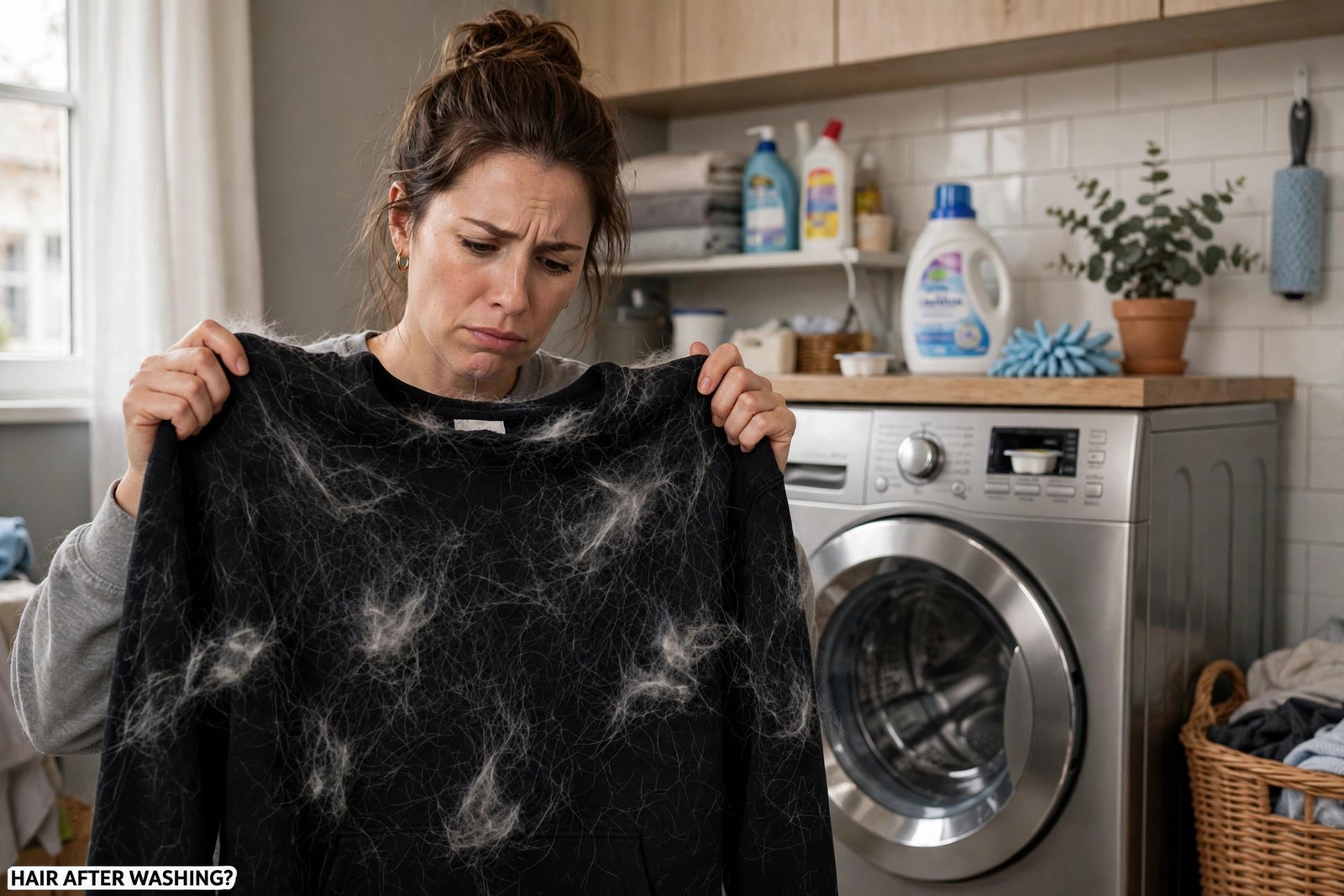
You pull a favourite black jumper out of the machine, hold it up, and it is still wearing a fine coat of hair. You have not washed the hair out; you have washed it in. The washing machine lifts loose hair, floats it around the drum, and lets it settle evenly over everything. Laundry hair has to be handled in three stages, and the wash is only the middle one.
Quick Answer
Shake each item outside and roll the worst pieces, then run the dry load in the tumble dryer on no-heat for ten minutes before washing. During the wash add a reusable laundry hair catcher. After drying, finish dark items with a roller or slightly damp rubber glove while folding.
Why the Washing Machine Spreads Hair
Loose dry hair is held by static and friction. Water changes the grip, hair floats and resettles, and dark clothes show every strand. The dryer does the opposite: tumbling knocks hair loose and the lint trap catches it. Use the dryer first while everything is dry, and let the washer deal only with dirt.
Stage 1: Before the Wash
Shake everything outside
Give each item a real snap of the fabric at the door or balcony. Bedding, throws and dog towels carry the bulk of the load.
Roll the worst offenders
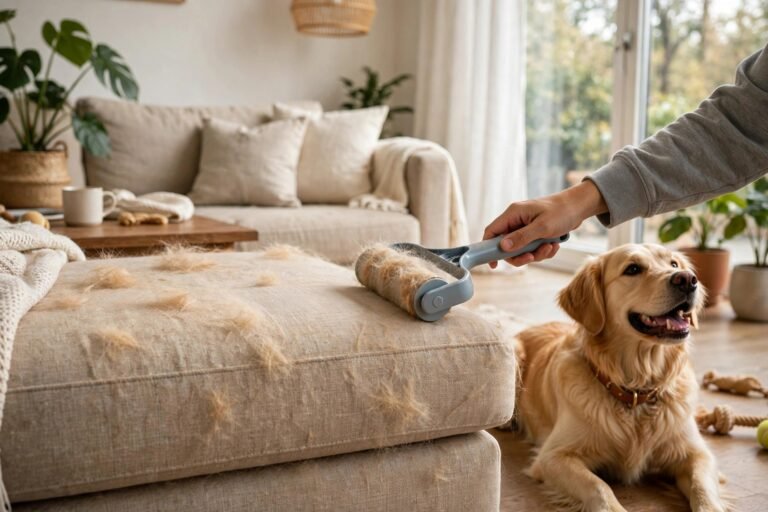
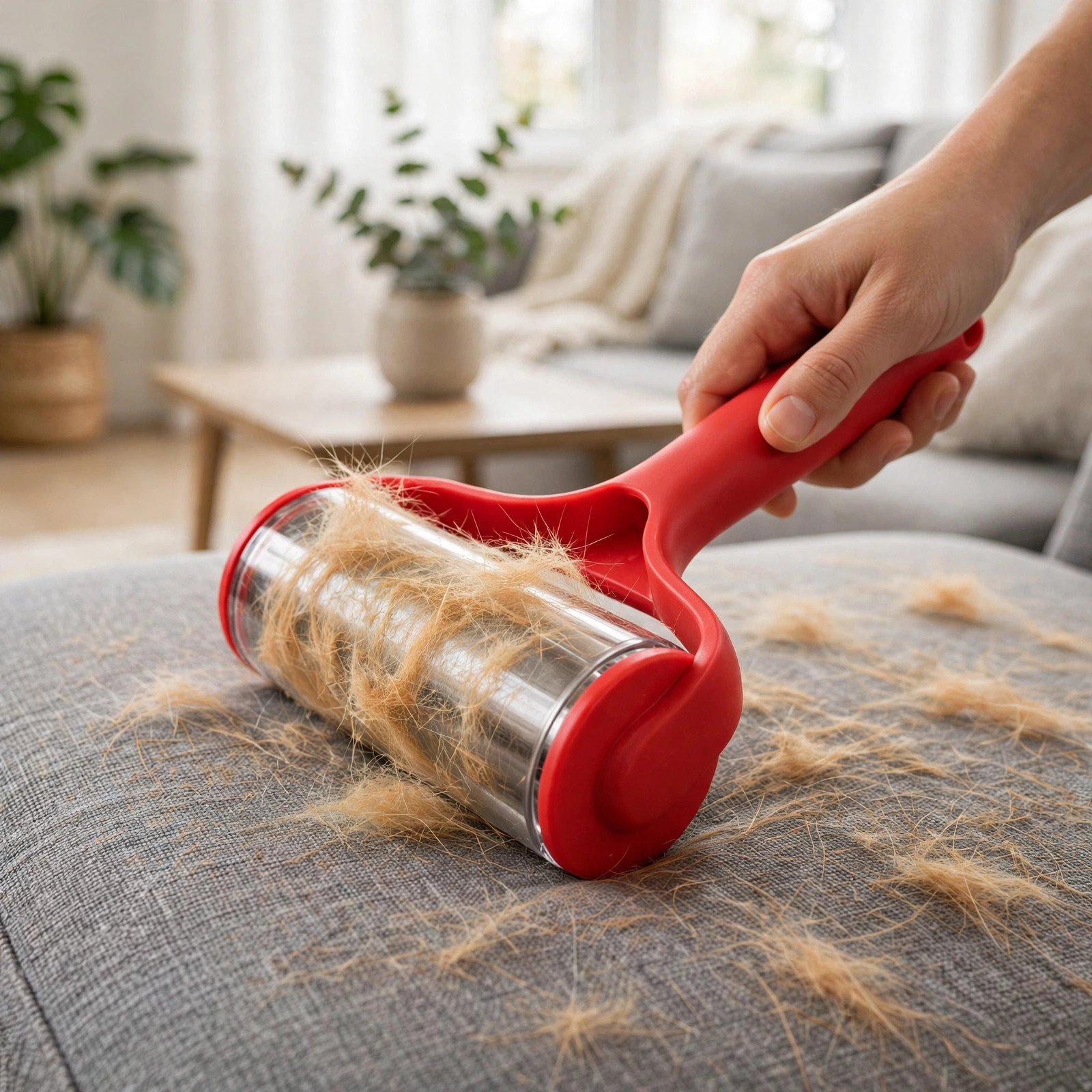
Anything black or worn out deserves thirty seconds. The ChomChom is quick because it needs no peeling or refills.
ChomChom Roller
Short back-and-forth strokes send hair into its chamber, with no sticky sheets to peel.
The ten-minute dryer-first trick
Put the dry load in the dryer on no-heat or air-fluff for about ten minutes before washing. Tumbling shakes hair loose while clothes are dry and the filter catches it. Clean the filter, then wash as normal.
Stage 2: During the Wash
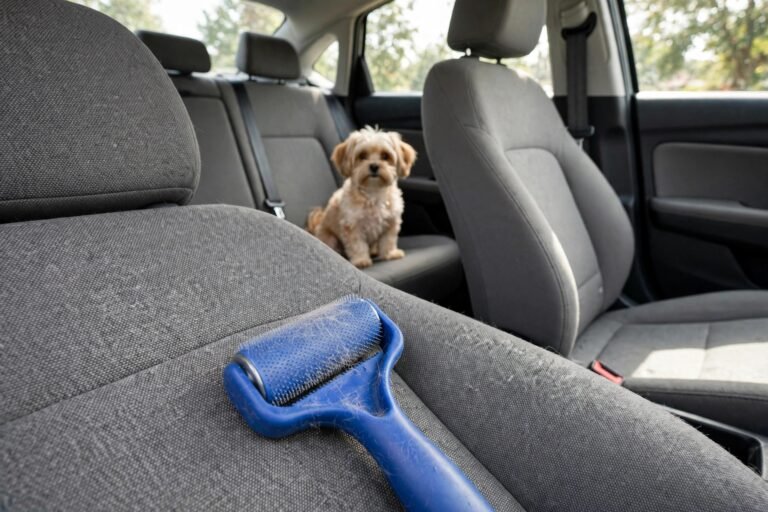
Laundry pet hair catchers
Tacky flexible discs dropped into the drum collect loose hair instead of letting it resettle. They work best as a second line of defence on a load already de-haired dry.
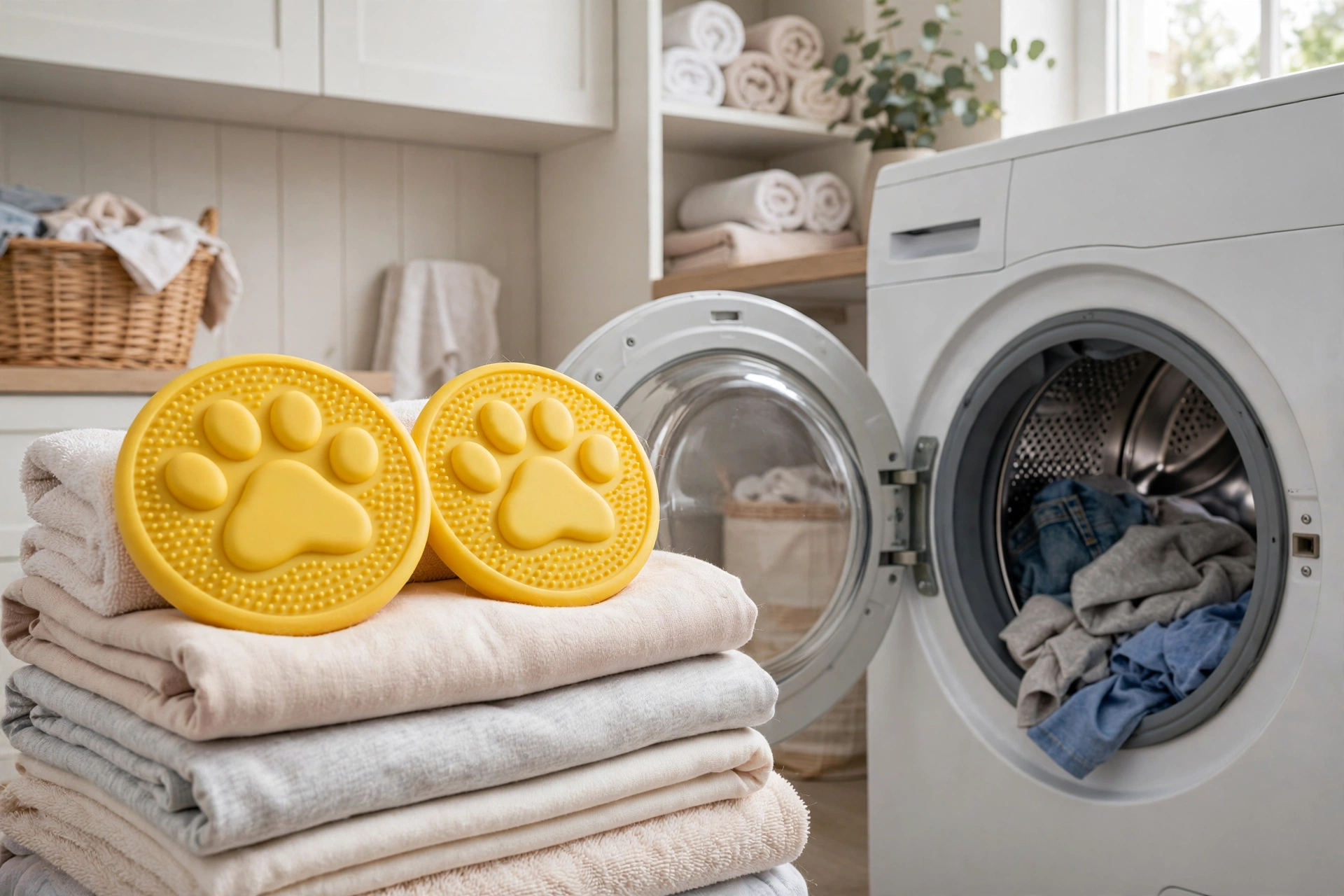
FurZapper 2-Pack
Drop the discs in the drum to catch floating hair during the wash, then peel or rinse them clean.
Wool dryer balls and the vinegar myth
Dryer balls help after washing by separating layers and knocking loosened hair toward the lint filter. Vinegar only softens fabric slightly; it does not dissolve or pull off hair.
Stage 3: After the Wash
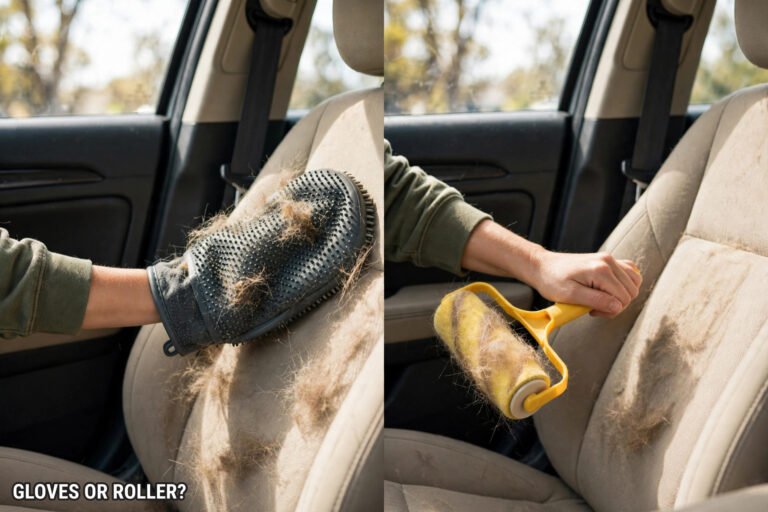
A roller over black clothes while folding takes seconds. For larger surfaces, slightly damp rubber gloves ball hair up under your palms. Clean the dryer lint filter after every load.
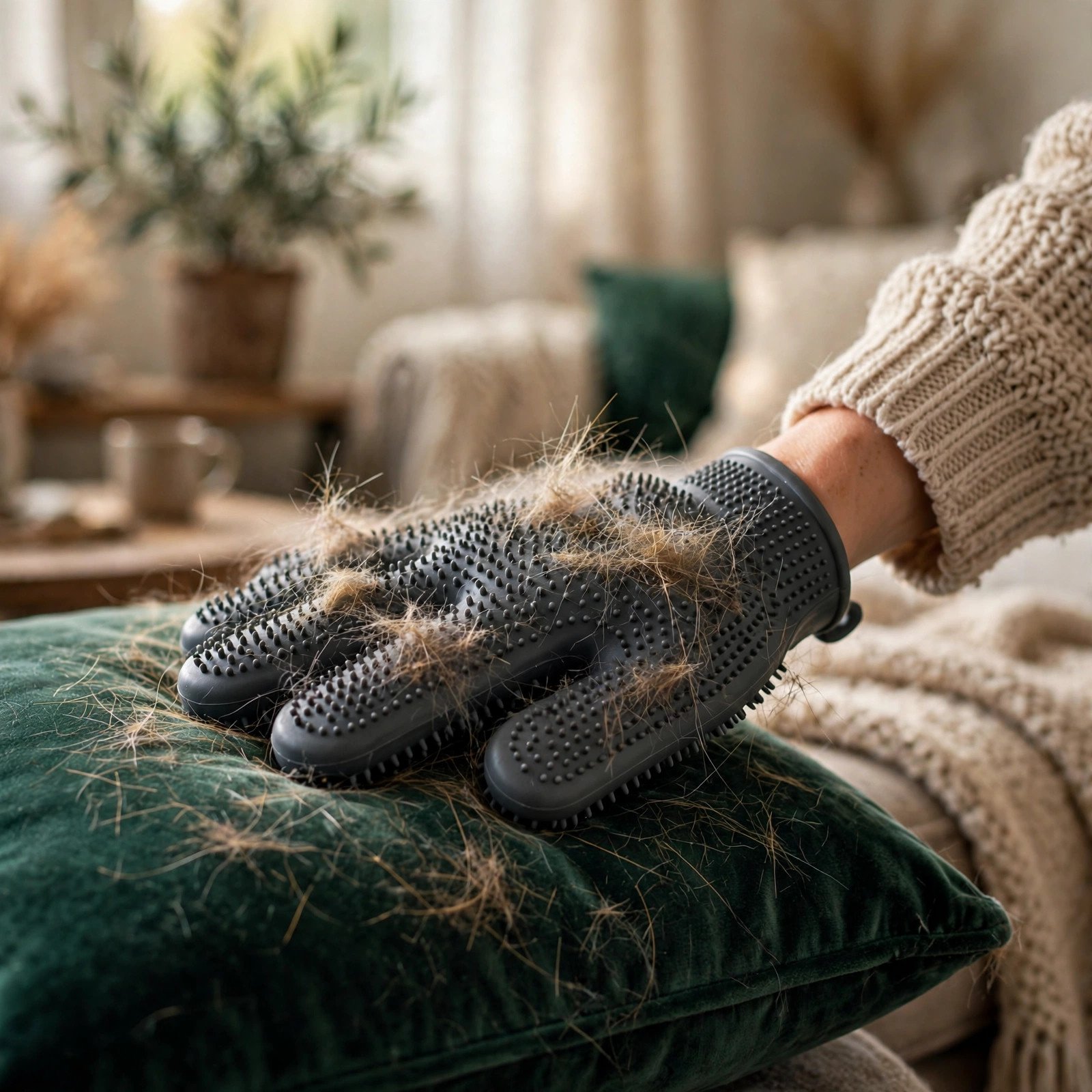
Pet Hair Removal Gloves
Useful on laundry, cushions and car seats for a quick finishing pass.
Fabric-by-Fabric Tips
Black cotton: shake, roll, dryer-first, then roll while folding. Fleece and flannel: dryer-first matters most. Synthetics: turn inside out. Bedding and dog blankets: always their own load. Delicates: gentle glove pass and catchers in the drum.
Common Mistakes
Do not wash the dog blanket with clothes, do not go straight to the wash, do not overload the drum, and clean the machine filter regularly. Sticky rollers are a finish, not a whole strategy.
Frequently Asked Questions
Can I just wash clothes twice?
No. A second wash redistributes what the first left. One prepared wash beats two unprepared ones.
Does the dryer-first trick damage clothes?
On no-heat it simply tumbles dry clothes; check delicates labels.
How many hair catchers do I need?
Two for a full load, one for a small load.
Why is there still hair after all three stages?
Usually a rushed shake-and-roll stage or a full lint filter.
The Routine, Summarised
Shake outside, roll dark items, ten dry minutes in the dryer, wash with a catcher, dry, then roll or glove dark pieces as you fold. Dog blankets always wash alone.