
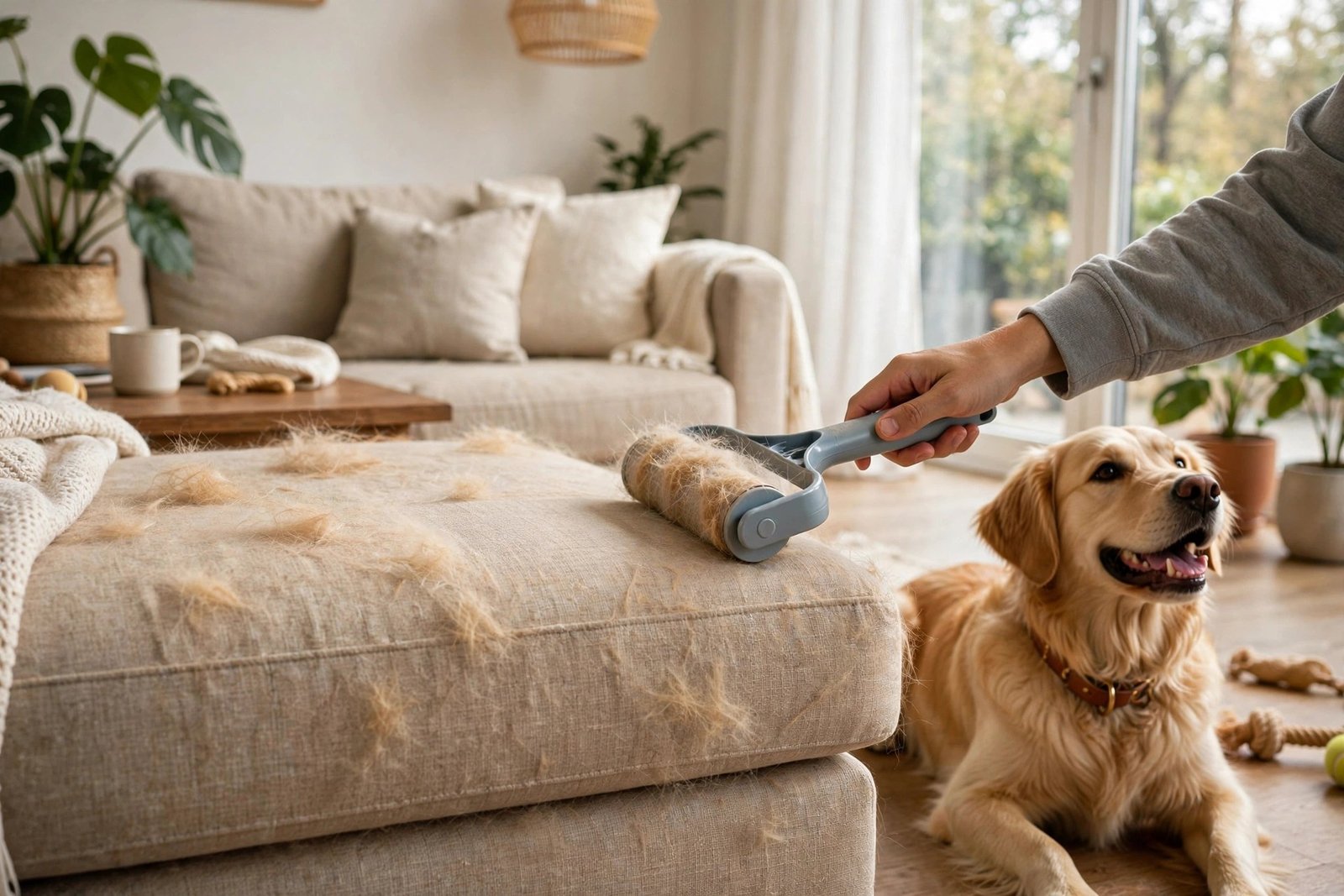
How to Remove Dog Hair from a Couch: The 3-Step Routine
This article contains affiliate links. If you buy through a link on this page, Furveko may earn a small commission at no extra cost to you. It never changes which products we recommend.
You know the moment. A friend texts that they are five minutes away, you glance at the couch, and it looks like your dog has been renting it out while you were at work. Hair on the seat cushions. Hair worked into the seams. A faint furry outline exactly where he always naps.
Most of us react the same way. We grab whatever is closest — a sticky roller, the vacuum, even a damp hand — and start attacking the worst bits. Ten minutes later the couch looks a bit better, but the hair is still in the weave, the cushions are unevenly clean, and you are already tired of the job before next week rolls around.
Removing dog hair from a couch gets much easier once you stop treating it like one big chore and start working in an order. Loosen it first. Lift it second. Vacuum last. That sequence, matched to your fabric, is the whole secret — and once you have done it twice, it takes less time than making coffee.
Quick Answer
In a rush? Here is the short version.
Work in three passes. First, rake seams, corners and your dog’s favourite spot with a firm rubber tool like the Analan Mini Pet Hair Remover or a rubber broom to loosen hair that is stuck in the fabric. Second, roll or wipe the flat cushions with a ChomChom Roller on woven fabric, or a Gonzo sponge on velvet and delicate pile. Third, run a vacuum upholstery tool over everything to pick up the fine hair and dander you have freed.
Do that once a week, with a two-minute tidy in between, and most sofas stay guest-ready even in shedding season. The rest of this guide walks through each step, what to change for different fabrics, and the small mistakes that make the job take twice as long.
What You’ll Need
You do not need a cupboard full of gadgets. Most homes get by with two or three of these, chosen for their couch fabric rather than bought all at once.
| Tool | Best for | When to use |
|---|---|---|
| ChomChom Roller | Flat woven cushions and backrests | The main rolling pass on fabric sofas |
| Analan Mini Pet Hair Remover | Seams, corners and embedded hair | First pass, and anywhere hair is ground in |
| FURemover rubber broom | Large cushions, chaises and rugs | Big weekly clean-ups and loose surface hair |
| Gonzo sponge | Velvet and delicate fabrics | Gentle wiping where rollers feel too rough |
| Rubber gloves | Leather, odd shapes and quick fixes | Light cleaning, arms and between cushions |
| Vacuum upholstery tool | Finishing and fine dander | Final pass on every fabric type |
If you are picking just one to start with, choose the roller for a fabric sofa or the sponge for velvet, and add the mini detailer later if seams are your problem area. For a side-by-side look at which tool suits which couch, our Best Pet Hair Remover for Couch guide compares them in one place.
The 3-Step Routine That Actually Works
Think of this less as deep cleaning and more as a rhythm. Each step does one job, and skipping straight to the vacuum — the mistake almost everyone makes — asks one tool to do all three.
Step 1: Loosen the hair that is stuck
Surface hair is the easy part. The stubborn stuff is hair that has worked its way into the weave, along seams, and into the corners where the seat meets the back. That hair has to be loosened before anything can lift it.
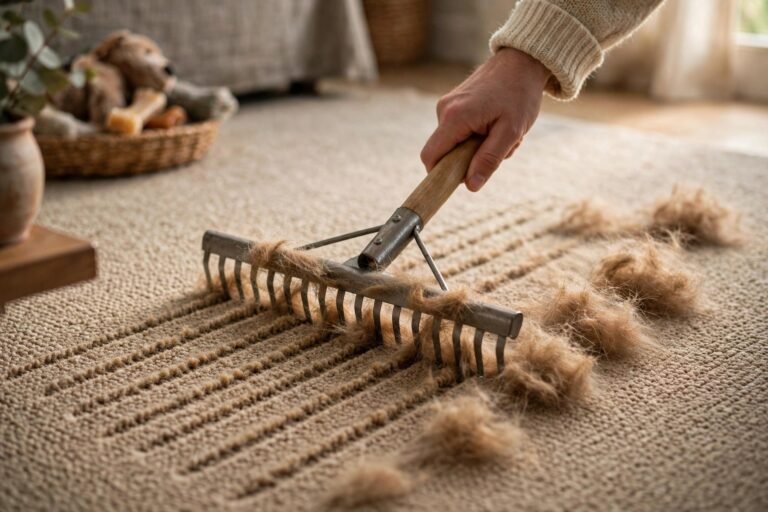
Run the Analan Mini Pet Hair Remover along seams and edges with short, firm strokes in one direction. You will see hair gathering into little lines as the rubber edge rakes it free. Work your dog’s favourite cushion properly here; it always holds more than it looks like. On larger areas — a chaise end, big seat cushions — the FURemover rubber broom does the same job faster, pulling loose hair into clumps with its rubber bristles.
Rubber gloves work here too if that is what you have. Put them on, run your hands over the fabric with a bit of pressure, and the hair balls up under your palms. A very light mist of water on the gloves can help on stubborn patches, but keep it light — you want damp, not wet.
Step 2: Lift the hair off the cushions
Now clear the flat areas. On standard woven fabric, the ChomChom Roller earns its keep: short back-and-forth strokes over each cushion, then the backrest, emptying the chamber into the bin as it fills. Work in sections rather than wandering over the whole sofa, or you will keep re-rolling clean fabric while missing the bad corner entirely.
On velvet or very delicate upholstery, swap the roller for the Gonzo sponge. Wipe in one direction with gentle pressure and lift the gathered strands off by hand. It is slower than rolling, but it treats the pile kindly, which matters on fabric that shows every mark.
Do not rush this step with long, sweeping passes. Short strokes grip hair better because the tool keeps changing direction and pressure, and that is what actually pulls strands free instead of sliding them around.
Step 3: Vacuum what is left behind
Finish with a vacuum upholstery tool — the small flat head, not the main floor brush. Go slowly over each cushion, then along seams and under the cushion edges where loose hair drifts. This pass is not about the visible hair; you have already handled most of that. It picks up the fine strands, dust and dander the first two steps loosened.
Pull the cushions off once in a while and vacuum underneath as well. It is mildly horrifying the first time, and then strangely motivating, because you can see exactly why the weekly routine matters.
That is the whole routine: rake, roll, vacuum. Five to ten minutes for a standard three-seater once it is familiar.
How to Clean by Fabric Type
The routine stays the same, but pressure and tool choice change with the fabric. When in doubt, always test a tool on a hidden spot first — the back of a cushion or a low corner nobody sees — before working on the visible areas.
Woven fabric
Cotton and polyester woven sofas are the most forgiving. They take the full routine well: the mini detailer on seams, the ChomChom Roller on cushions, the broom if the sofa is large. Hair hides deepest where the weave is textured, so give linen-look and tweed-style fabrics an extra loosening pass before you roll.
Velvet
Velvet holds hair inside its pile, and stiff edges can disturb that pile if you press hard. Stick to the Gonzo sponge with light, one-direction wipes, and rubber gloves for the arms. Skip the firm detailer on the visible faces of velvet cushions, however tempting the seams look. Patience beats pressure here.
Microfibre
Microfibre sits in between — tougher than velvet, smoother than woven fabric. The ChomChom Roller works well on it, and lightly dampened rubber gloves are often surprisingly effective for a midweek refresh. Avoid soaking microfibre during cleaning; too much water can leave marks as it dries.
Leather
Leather is the easiest surface of all once you respect the finish. Hair does not embed, so it mostly wipes away. A soft roller or slightly damp rubber gloves are usually enough, finished with a quick once-over using the vacuum’s soft upholstery tool. Test any new tool or product on a hidden area first, keep pressure light, and never use abrasive edges or stiff brushes on leather — finishes vary a great deal and can scratch or dull.
Common Mistakes That Make It Worse
Starting with the vacuum. A vacuum alone glides over embedded hair, especially on velvet and textured weaves. You end up passing over the same cushion six times and still seeing hair. Loosen first, and the vacuum suddenly works.
Scrubbing in circles. Circular scrubbing tangles hair deeper into fabric and can rough up delicate pile. Short strokes, mostly in one direction, gather hair into lines you can actually remove.
Reaching for sticky rollers for the whole sofa. Sticky sheets are fine for a jacket before you leave the house. Over a full couch they lose grip fast, cost a fortune in refills over a year, and never touch the hair inside the seams.
Waiting until it looks terrible. By the time a couch looks obviously furry, much of that hair has been pressed into the fabric by weeks of sitting. A short weekly session is far less work than a heroic monthly one.
Forgetting the cushions’ undersides. Hair migrates. If you only clean what you see, the hair tucked under cushions and along the frame works its way back out within days.
How to Stop Hair Taking Over in the First Place
Cleaning well helps, but prevention is what keeps the routine down to a few minutes.
Use a throw where your dog actually lies. Dogs have a favourite spot, and it rarely moves. A washable throw or blanket over that cushion catches most of the hair before it reaches the upholstery. Shake it outside every few days and wash it weekly. It is a far cheaper habit than re-covering a sofa.
Brush the dog, not just the couch. Five minutes of brushing two or three times a week removes loose hair at the source, and most dogs settle into it happily once it becomes routine. You will notice the difference on the couch within a fortnight, particularly during spring and autumn shedding.
Keep a weekly rhythm. Pick a day and keep it light: full three-step routine once a week, and a two-minute roller pass over the favourite cushion in between if guests are coming. Attach it to something you already do — after vacuuming the floor, say — and it stops feeling like a separate chore.
Keep one tool within reach. A roller living in a drawer upstairs will not get used. One kept by the sofa will. Convenience quietly beats every other system.
Frequently Asked Questions
What is the fastest way to get dog hair off a couch before guests arrive?
Run rubber gloves over the cushions to ball up surface hair, follow with the ChomChom Roller in short strokes, and skip the vacuum unless you have time. Two or three minutes handles the visible hair; do the full routine another day.
Will a vacuum alone remove dog hair from a couch?
It removes surface hair and fine dust well, but it struggles with hair woven into fabric or velvet pile. Loosening with a rubber tool first makes the same vacuum noticeably more effective, because it finally has loose hair to pick up.
How do I get hair out of couch seams and corners?
That is detailer territory. The Analan Mini Pet Hair Remover is made for it — drag an edge firmly along the seam and the hair lines up where you can lift it away. Rubber gloves also work well for folding your fingers right into the gaps.
How often should I clean dog hair off the couch?
A two-minute pass every few days stops hair from embedding, and one full rake, roll and vacuum routine a week keeps on top of it for most dogs. Heavy shedders during moulting season may need the full routine twice a week for a few weeks.
Can I use the same tools on clothes and car seats?
Mostly, yes. Rubber gloves and the mini detailer move between couch, car seats and clothes happily, and the sponge works on coat fabric too. Keep the broom for the home, where its size makes sense.
Final Verdict
You do not need a stronger vacuum or a cupboard of gadgets to win the couch hair battle. You need an order: loosen what is stuck, lift what is loose, vacuum what remains — and a tool that suits your fabric doing each job. Once that clicks, the chore shrinks from a Saturday project to something you finish while the kettle boils.
If you would like help choosing which tool to buy first for your particular sofa — fabric, velvet or leather — the Best Pet Hair Remover for Couch guide breaks the options down with honest pros and cons for each. Pair the right tool with the three steps above, keep a throw on your dog’s throne, and the next time a friend is five minutes away, the couch will not be the first thing you panic about.
One Comment