How to Choose the Best Deshedding Tool for Huskies: Undercoat Rakes That Actually Work (2026)
There’s a special kind of despair only husky owners understand. You vacuum the couch on Sunday, brush the rug on Monday, and by Wednesday your black leggings look like a sheepdog costume. It’s not that you aren’t trying — it’s that the brush in your hand was never built for this job.
Here’s what took me embarrassingly long to learn: a husky’s shedding problem lives almost entirely in the undercoat — that dense, cottony layer of fluff hiding under the sleek outer guard hairs. Most brushes, including the popular slicker brushes sold at every pet store, glide right over the guard hairs and barely touch the undercoat. They look busy. They accomplish almost nothing. Twice a year, when the coat “blows,” that undercoat lets go in handfuls, and suddenly your house is a snow globe.
This guide is about the three tool types that actually reach the undercoat on a husky — what each one does, when to use it, and the mistakes that make shedding worse. No gimmicks, no miracle claims. Just what works.
Quick Verdict
Best overall: A stainless undercoat rake — long, rounded teeth that slide past the guard hairs and pull out dead undercoat without scratching skin. This is the workhorse every husky owner should own first.
Best for quick daily touch-ups: A blade-style deshedder — fast at skimming loose hair off the top layers during heavy shedding weeks, though it needs a light hand.
Best during coat blow: A deshedding shampoo at bath time — loosens the packed undercoat so your tools pull out more with less effort.
If you only buy one thing, make it the undercoat rake. Everything else in this guide supports it.
Why Huskies Laugh at Normal Brushes
A husky wears two coats at once. The outer guard hairs are long, straight, and water-resistant — they shed a little all year. Underneath sits the undercoat: short, incredibly dense, soft as dandelion fluff. The undercoat is insulation, and the dog replaces it wholesale twice a year, usually in spring and fall. Breeders call it “blowing coat,” and a single blow-out can last three to six weeks.
Cheap brushes fail because their pins are too short and too soft. A standard slicker brush’s pins bend against the guard hairs and never reach the fluff underneath — you get a pile of guard hairs on the brush and a false sense of progress while the undercoat sits there, matting and waiting to fall out on your furniture. Pin brushes have the same problem: too shallow.
There’s also a second reason shedding can look worse than it should, and it has nothing to do with your brush: stress, diet changes, and seasonal shifts can all crank up the volume. If the hair loss ever comes with bald patches or constant scratching, that’s a vet question, not a grooming one — our guide on why dogs shed so much walks through the difference between normal seasonal shedding and something worth checking.
The 3 Tool Types That Actually Reach a Husky Undercoat
Every working husky grooming kit boils down to three tools. They do different jobs, they complement each other, and none of them costs a fortune.
1. Stainless Undercoat Rake — the workhorse
An undercoat rake looks a little intimidating — a row of long, blunt metal teeth set in a handle — but it’s the single most effective tool for a husky. The teeth are long enough to sink through the guard hairs into the undercoat, and rounded enough that they don’t scratch or cut. Short, gentle strokes pull out the dead fluff in satisfying clumps while the healthy topcoat stays put.
Best for: the twice-weekly (or more) sessions that keep a husky’s coat — and your house — under control, especially during coat blow.
Pros:
- Reaches the undercoat that slicker brushes can’t touch
- Gentle on skin when used with light, short strokes
- Works on wet or dry coat; doubles as a dematting aid
Cons:
- Slower than blade tools — a full session takes 10–15 minutes
- Cheap versions have sharp, poorly finished teeth — quality matters here
2. Blade-Style Deshedder — the quick daily pass

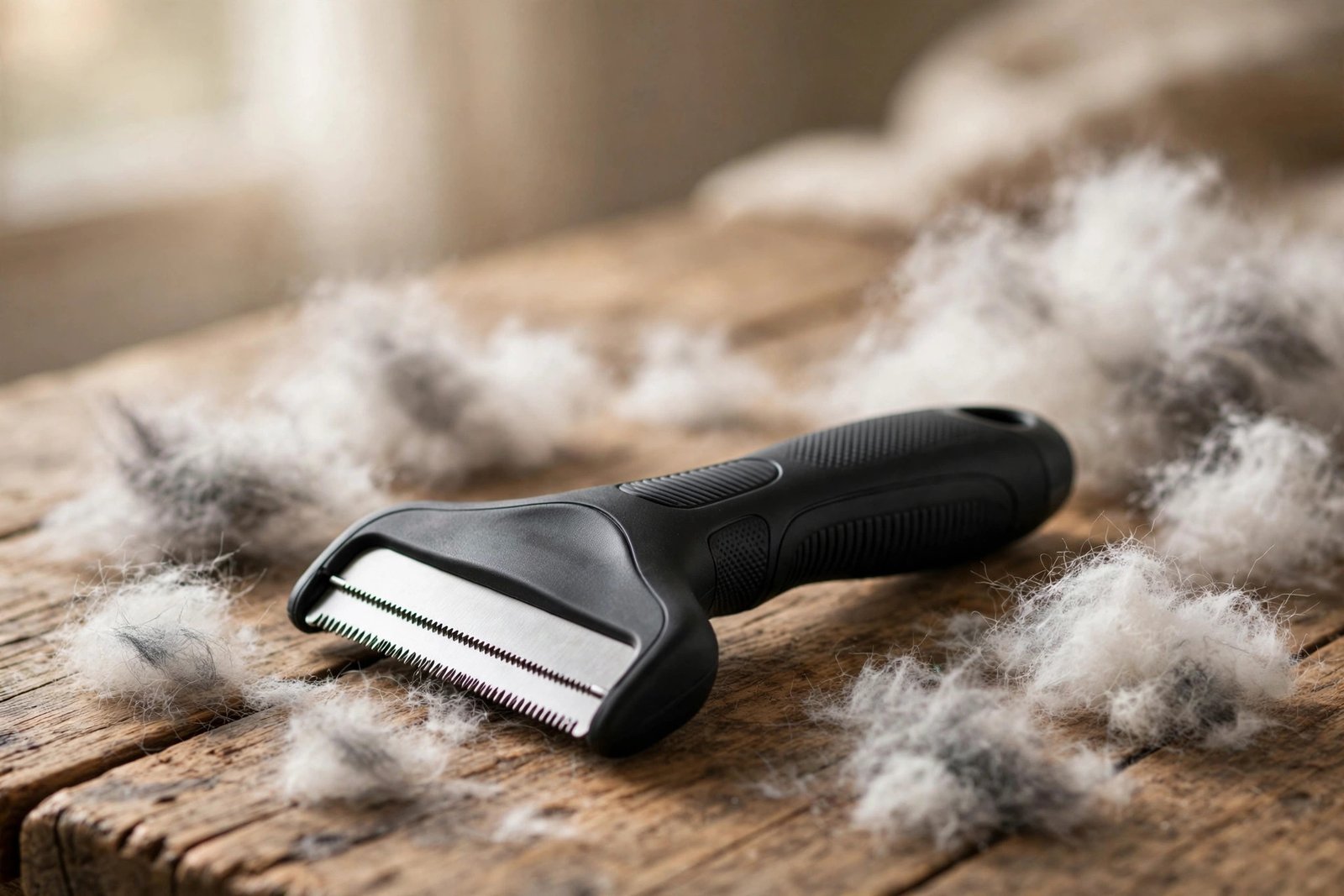
Blade-style deshedders use a fine serrated metal edge to skim loose hair off the top layers of the coat. They’re fast — one pass collects a shocking amount of hair — which makes them great for the daily two-minute touch-ups that keep tumbleweeds off the hardwood during the worst weeks of coat blow.
The trade-off is that the edge is, well, an edge. It works on the coat surface, so it can’t replace a rake for deep undercoat removal, and pressing too hard or using it on the same spot repeatedly can irritate the skin. Light pressure, follow the direction of hair growth, keep it moving.
Best for: quick daily maintenance between deeper rake sessions; also handy on furniture-adjacent areas like the dog’s belly and haunches where loose hair collects.
Pros:
- Very fast — collects a lot of loose hair in minutes
- Compact and easy to keep by the door for daily use
- Affordable; most options are budget-friendly
Cons:
- Surface-level — doesn’t reach deep packed undercoat
- Too much pressure or overuse can irritate skin
3. Deshedding Shampoo — the coat-blow secret weapon
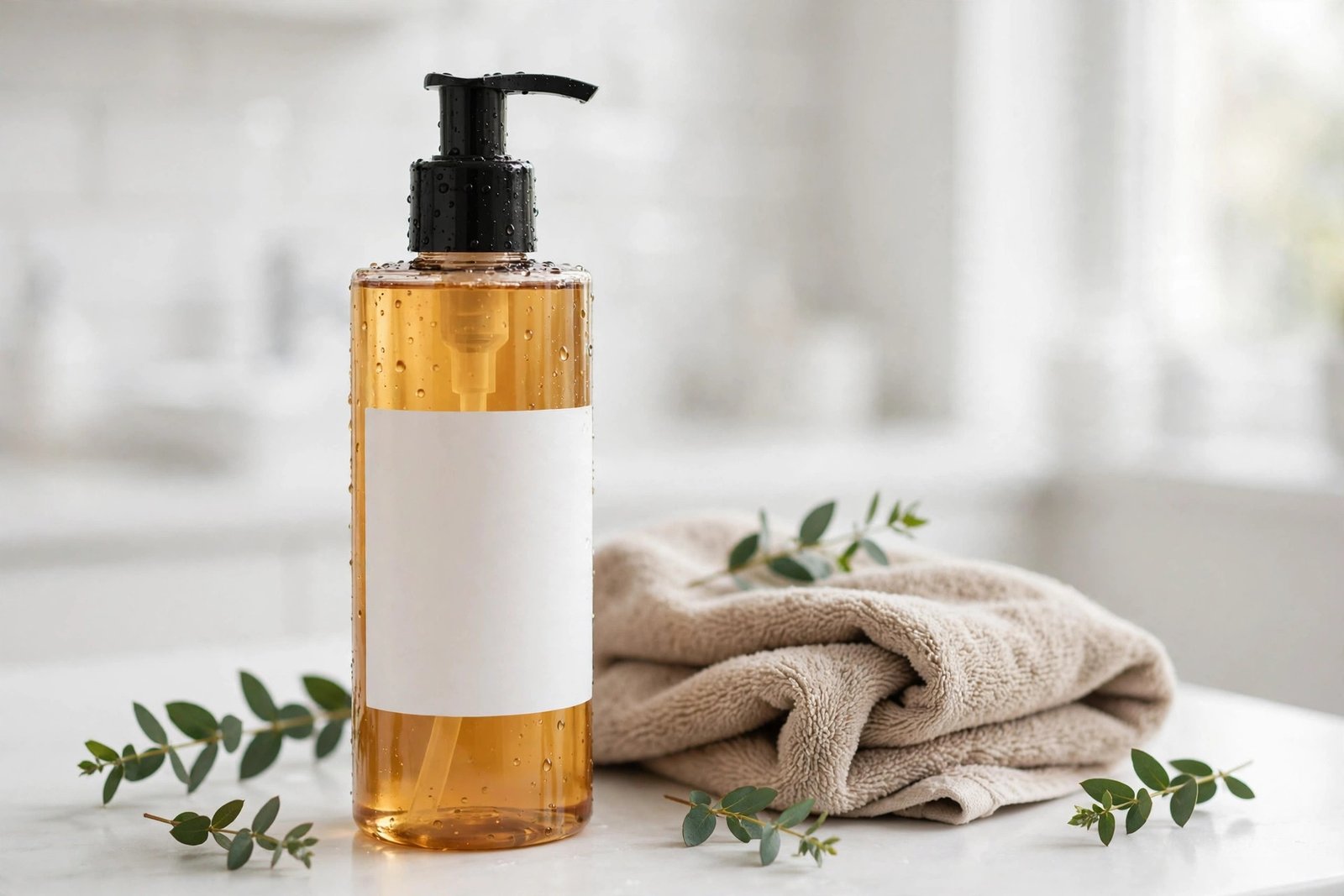
Nobody talks about shampoo as a deshedding tool, but husky owners who’ve lived through a spring blow-out know: a warm bath with a deshedding formula loosens the undercoat like nothing else. These shampoos use conditioning agents that help dead undercoat release from the skin, so when you rake the coat afterward, far more comes out with far less effort.
Timing matters. One bath right as the coat starts blowing — when you first notice tufts lifting on the haunches — is worth a week of dry brushing. Over-bathing, on the other hand, strips the natural oils that keep the coat healthy, so keep it to the blow-out and the occasional muddy-paw emergency.
Best for: jump-starting a coat blow; loosening packed undercoat before a rake session.
Pros:
- Loosens dead undercoat dramatically — makes tools work better
- Conditions the coat so brushing pulls less and the dog tolerates more
Cons:
- Not a standalone solution — you still have to brush afterward
- Overuse dries the skin; it’s a sometimes tool, not a weekly one

Comparison: Rake vs Blade vs Shampoo
| Tool type | Best for | How often | Watch out for |
|---|---|---|---|
| Undercoat rake | Deep undercoat removal — the core tool | 1–2x/week normally, 3–4x/week during blow-out | Poorly finished teeth can scratch; buy quality |
| Blade deshedder | Fast daily surface hair removal | A few minutes daily during heavy shedding | Light pressure only; don’t overwork one spot |
| Deshedding shampoo | Loosening packed undercoat at bath time | Once per coat blow (plus mud emergencies) | Over-bathing strips coat oils |

How Often to Deshed a Husky (Without Overdoing It)
The honest answer depends on the season. During a coat blow — those 3-to-6-week stretches in spring and fall — plan on three to four short sessions a week, ten to fifteen minutes each. Off-season, once a week is plenty. Short and regular beats one heroic hour-long session every time; dogs learn to tolerate (and some genuinely enjoy) a routine, but they hate a marathon.
Technique matters more than force:
- Work in sections — start at the shoulders, move toward the tail, and do one side at a time. The haunches and neck hold the most undercoat.
- Follow hair growth with short, gentle strokes. Never rake against the grain or yank.
- Use the rake for depth, the blade for speed — rake first to pull the undercoat, then a quick blade pass to collect what’s sitting on the surface.
- Stop if the skin looks pink — that means too much pressure or too many passes on one spot.
One more thing people forget: the bed. A freshly deshedded dog sleeping on a fur-caked bed just re-coats itself overnight. Washing the dog bed on a real schedule is part of the shedding battle, not a separate chore.
4 Mistakes That Make Husky Shedding Worse
1. Shaving the husky. This is the big one. The double coat regulates temperature in both directions — it insulates against cold and heat. Shaving it off doesn’t stop shedding (the undercoat keeps growing), ruins the coat’s texture, and can grow back patchy or never fully recover. Huskies should essentially never be shaved except for medical reasons.
2. Brushing with the wrong tool forever. If you’ve been faithfully slicker-brushing for months and the house is still buried, the tool isn’t working — it’s not a discipline problem. Switch to a rake and you’ll see the difference in one session.
3. Over-bathing. A bath loosens the undercoat beautifully, but every bath also strips oils. More than once a month or so (outside blow-out season) and you’ll get dry, flaky skin — which causes more shedding, not less.
4. Skipping the floors. Even perfect grooming leaves some hair. During blow-out, pair your routine with a vacuum built for the job — a budget robot vacuum for pet hair running daily does more for your sanity than any brush. If you’re choosing between vacuum styles, this robot vs cordless comparison breaks down which one actually keeps up with a shedding husky.
Frequently Asked Questions
Does a husky ever stop shedding?
Not really. Huskies shed lightly year-round and heavily twice a year during coat blow. The goal isn’t zero shedding — it’s managing it so your home stays livable.
How long does a husky coat blow last?
Typically three to six weeks, most commonly in spring (shedding the winter coat) and fall (shedding the summer coat). Indoor dogs with steady temperatures can blow a little out of sync with the seasons.
Can I shave my husky to stop shedding?
No — and please don’t. Shaving damages the double coat, disrupts temperature regulation, and doesn’t stop the undercoat from growing back. It often grows back worse.
What’s the best brush for a husky puppy?
Start a puppy with the undercoat rake used very gently, in short sessions with treats — the goal at that age is building a positive routine, not removing volume. Save the blade-style tools for the adult coat.
Does diet affect how much a husky sheds?
A poor diet can make shedding worse and the coat dull, while good nutrition (especially adequate omega fatty acids) supports a healthy coat. But diet won’t fix a coat blow — that’s hormonal and seasonal. Brush the dog; feed the dog well; accept the fluff.
🎄 Visit Our Etsy Shop — Fukroo
Printable Christmas wall art, gift tags & party games — instant download
Shop on Etsy →