

How Often Should You Bathe Your Dog? (2026 Guide)
Many owners bathe their dog every week or two, simply because they love the fresh-bath smell. Often the result is the opposite of what they want: white flakes across the back, itching and a dull coat no brushing can fix.
Over-bathing strips the natural oils from a dog’s skin, and most dogs need far fewer baths than their owners think. This guide covers an honest bathing schedule by coat type, the over-bathing warning signs, and what to do between baths.
Quick Verdict
Most healthy adult dogs do best with a bath every 4 to 8 weeks, adjusted by coat type: short smooth coats every 6–12 weeks, double coats every 6–10 weeks, curly coats every 3–6 weeks, oily breeds every 1–2 weeks, and hairless breeds about weekly. Over-bathing strips protective oils and causes flaky, itchy skin — a wipe-down or good brushing handles most between-bath freshness.
The Short Answer: There’s No Single Number
Most healthy adult dogs need a bath roughly every four to eight weeks. But a beagle and a poodle have about as much in common, coat-wise, as a rain jacket and a sweater — so treat that range as a starting point. Three things set the real schedule: coat type (the big one), lifestyle (a pond-swimming farm dog needs more baths than an apartment pug), and skin health (vet-prescribed medicated baths override everything). And “rolled in something unspeakable” is a bathing emergency — the schedule goes out the window and you wash the dog.
Puppies: bathe only when actually dirty, every four to eight weeks at most, with a gentle puppy shampoo. A young puppy’s skin is still building its oil balance — warm water, quick and positive, so bath time stays a treat instead of a trauma.
The Coat-Type Bathing Schedule
Find your dog’s coat type and you’ve found the schedule.
| Coat Type | Example Breeds | Typical Schedule | Why |
|---|---|---|---|
| Short, smooth | Beagle, boxer, dachshund, pug | Every 6–12 weeks | Low-maintenance coat; brushing handles most dirt |
| Double coat | Golden retriever, husky, labrador, German shepherd | Every 6–10 weeks | Dense undercoat self-regulates; baths mostly for odor and mud |
| Curly / continuous growth | Poodle, bichon frise, doodle mixes | Every 3–6 weeks | Hair traps dirt and mats without regular washing and clipping |
| Naturally oily | Basset hound, cocker spaniel, shar-pei | Every 1–2 weeks | Overactive oil glands; the rare dogs that need frequent washing |
| Hairless | Chinese crested, Xoloitzcuintli | About weekly | Exposed skin collects oil and grime; a skincare routine, not a dog bath |
Missing on purpose: a row for “smells a bit doggy.” A healthy dog smells like a dog — not a reason to bathe more. Strong, sour, or new smell? Investigate (skin infection, ear trouble, dental issues cause more stinky-dog complaints than dirt) — don’t mask it with baths.
Breaking It Down by Coat Type
The Short-Coat Dog
Beagles, boxers, pugs — the wash-and-wear crowd. Sleek coats shed dirt easily; a weekly rubber-mitt brush-out plus the occasional wipe-down covers nearly everything.
Best schedule: every 6–12 weeks, or when visibly dirty.
Watch out: skin sits close to the surface — harsh shampoos and hard scrubbing irritate fast.
The Double-Coat Dog
Goldens, huskies, labs, shepherds — frequent bathing works against this remarkable coat. The undercoat regulates temperature and repels light dirt; what these dogs need is thorough brushing to clear dead undercoat. Blowing coat everywhere? Reach for the brush, not the tub — I covered what helps in my piece on why dogs shed so much.
Best schedule: every 6–10 weeks; rinse twice as long as you lather.
Watch out: never shave a double coat to “reduce bathing” — it ruins insulation and can grow back patchy.
The Curly-Coat Dog

Poodles, bichons, doodle mixes grow hair, not fur — it doesn’t shed out, so dirt stays trapped until you deal with it. These dogs earn the frequent end of the range, every three to six weeks, with brushing between baths. A matted coat can’t be washed clean, so brush first, bathe second, every time.
Best schedule: every 3–6 weeks, plus brushing between.
Watch out: bathing a matted dog tightens mats like felt — de-mat or clip first.
The Oily-Coat Dog
Basset hounds, cocker spaniels, shar-peis — the exception to every “bathe less” rule here. They produce extra skin oil, smell musty faster, and their folds trap moisture. Every one to two weeks with an oil-control dog shampoo is reasonable. If oiliness suddenly worsens or skin reddens despite baths, see your vet — seborrhea and infections are common in these breeds.
Best schedule: every 1–2 weeks.
Watch out: dry skin folds thoroughly after every bath — trapped moisture breeds hot spots.
The Hairless Dog
Chinese cresteds and xolos play by different rules — with no coat, oils sit on bare skin and collect grime. Weekly baths with a gentle soap-free cleanser are the norm, often followed by dog-safe moisturizer. And outdoors, only dog-formulated sunscreen — human sunscreen ingredients can be toxic to dogs.
Best schedule: about weekly.
Watch out: exposed skin sunburns and chaps — moisturize and protect, don’t just wash.
Signs You’re Bathing Too Often
Over-bathing doesn’t announce itself dramatically — it creeps up. Watch for:
- Dry, flaky skin — white specks like dandruff; the oil barrier stripped away.
- Itching with no fleas — dry skin itches, scratching damages the coat, tempting another bath. Break the cycle.
- Dull, brittle coat — over-washed fur loses its natural sheen and tangles easily.
- The smell getting worse, not better — stripping oils can make glands overcompensate, so the dog smells stronger between baths.
Seeing these signs? Stretch the interval, switch to a gentler moisturizing shampoo, and give the skin a few weeks. But persistent itching or redness can also mean allergies or infection — my guide to shampoos for itchy skin and hot spots covers home care, and if it doesn’t ease within a couple of weeks, see your vet. Don’t diagnose skin from a blog post, including this one.
The Human-Shampoo Trap
Your shampoo sits around pH 5.5, matched to human skin. A dog’s skin runs about 7.0 to 7.5 — noticeably more alkaline — so human shampoo disrupts their protective skin barrier, drying skin and dulling the coat. One wash is harmless; repeated use causes the flaking and itching people then try to fix with more baths.
The fix is simple: a dog-formulated shampoo matched to their pH — oatmeal-based is the safe default for normal skin. For already-itchy dogs, shampoos made for itchy skin and hot spots calm irritation rather than just cleaning. And rinse thoroughly — residue irritates skin just as surely as the wrong pH.
The Between-Bath Freshness Routine

The secret that stretched my dog’s baths from every two weeks to every two months: most “he needs a bath” moments are wipe-down moments. A damp cloth or pet-safe wipe handles muddy paws and outdoor funk in three minutes, no oil-stripping. Keep wipes by the door and it becomes automatic.
Brushing is the underrated other half: it removes loose hair and dander, distributes natural oils (that’s the shine), and lets you spot lumps, ticks, or skin changes early. Short coats: rubber mitt weekly. Double coats: undercoat rake in shedding season. Curly coats: slicker brush against mats. Five minutes a few times a week beats a monthly bath.
Two more wins: rinse muddy paws in a basin of plain water instead of bathing the whole dog, and keep ears clean — floppy ears especially, since ear odor drives much of overall dog smell. If it persists despite all this, that’s information: check with your vet.
Bath Day Done Right
On bath day: lukewarm water (hot strips oils and can scald belly skin), brush before water (it tightens tangles into mats), cotton balls loosely in the ears, rinse twice as long as you lathered — residue is the top cause of post-bath itching — then dry thoroughly. A damp undercoat in a cool house smells musty and invites hot spots.
Do
- Lukewarm water, dog-formulated shampoo
- Brush tangles out before the water goes on
- Rinse until water runs completely clear
- Dry coat and skin folds fully
- Treats, calm voice, no rushing
Don’t
- Human shampoo, dish soap, scented body wash
- Bathing a matted coat
- Water poured into ears or eyes
- Leaving a thick undercoat damp
- Extra baths chasing a “fresh smell”
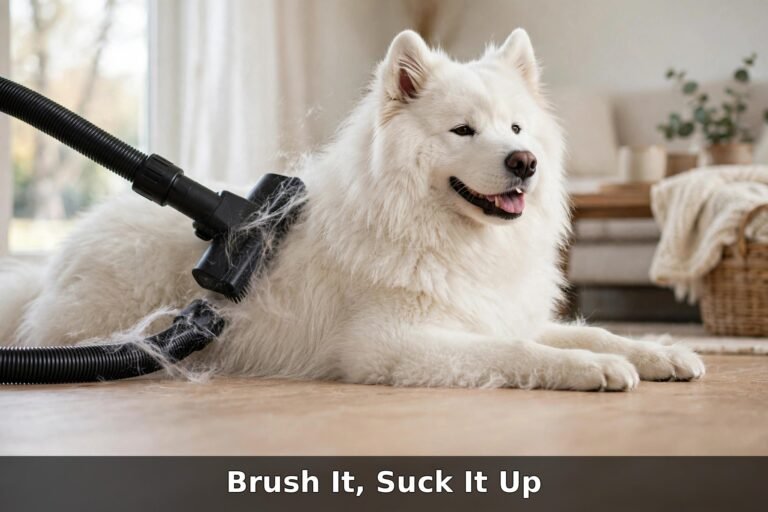
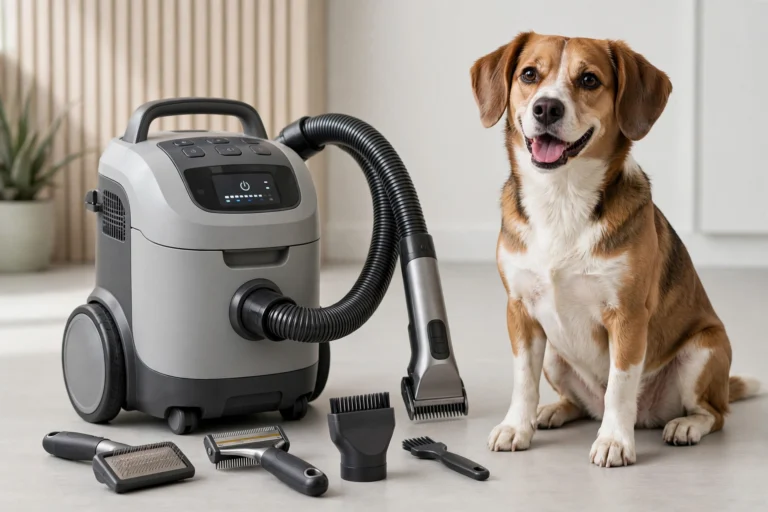
One last thought: a bath releases a blizzard of loose hair — the perfect moment for a grooming vacuum, which brushes and collects shed hair as you go. My grooming vacuum guide breaks down how they work, worth a read if bath day ends with hair on every surface you own.
Frequently Asked Questions
Can you bathe a dog too much?
Yes — one of the most common grooming mistakes. It strips the oils that protect skin and shine the coat, causing dryness, flaking, and itching. Bathing more often than the coat type needs and seeing those signs? Stretch the interval.
How often should you bathe a puppy?
Only when actually dirty, no more than every four to eight weeks. Gentle puppy shampoo, lukewarm water, short and positive, dry them well — puppies chill fast.
How often should you wash a double-coated dog like a husky or golden retriever?
Every six to ten weeks. The undercoat self-regulates — these dogs need brushing far more than baths. Never shave a double coat; it destroys the coat’s insulation.
My dog smells between baths — should I bathe him more?
Usually not. Try wipe-downs, regular brushing, and ear cleaning first — ear odor drives much of overall dog smell. Strong, sour, or suddenly worse smell? Skip the extra bath and see your vet; infections and dental issues need treatment, not shampoo.
Is it okay to bathe my dog every week?
For most dogs, no — weekly baths dry normal coats over time. Exceptions: hairless breeds need weekly washing, and oily breeds do fine at every one to two weeks. Otherwise, weekly is too much unless your vet prescribed medicated baths.
Find your dog’s coat type in the table, set the schedule, and let brushing and wipe-downs carry the weeks between. My dog’s flakes cleared up within a month of fewer baths — no products, no vet visits. Sometimes the best grooming advice is the simplest: wash less, brush more.
🎄 Visit Our Etsy Shop — Fukroo
Printable Christmas wall art, gift tags & party games — instant download
Shop on Etsy →

One Comment