Why Is My Dog Shedding So Much? (Normal vs Too Much)
A quick note before we start: this is general owner information, not veterinary advice. If your dog’s shedding comes with skin changes, itching, or bald patches, your vet is the right first call — we’ll flag exactly what to watch for below.
You brush your dog on Monday and by Wednesday the couch looks like it grew its own coat. Hair on your clothes, hair in the car, a furry tumbleweed rolling across the kitchen floor. At some point most owners stop mid-vacuum and think: is this actually normal, or is something wrong?
The honest answer: shedding itself is healthy. Every dog sheds — even “non-shedding” breeds lose hair, just less of it. What matters is the pattern: how much, how fast it changed, and what the skin underneath looks like.
Quick Answer
Most heavy shedding is normal — especially during spring and fall coat changes, in double-coated breeds, and when puppies lose their first coat. Shedding needs a vet visit when it comes with bald patches, red or sore skin, constant scratching, a strong smell, or a dull coat that breaks easily.
Is it normal for my dog to shed this much?
Usually, yes. Shedding is how a dog’s coat renews itself: old or damaged hairs fall out so new ones can grow in. A healthy coat cycles all year, which is why you’ll always find some hair around the house no matter what you do.
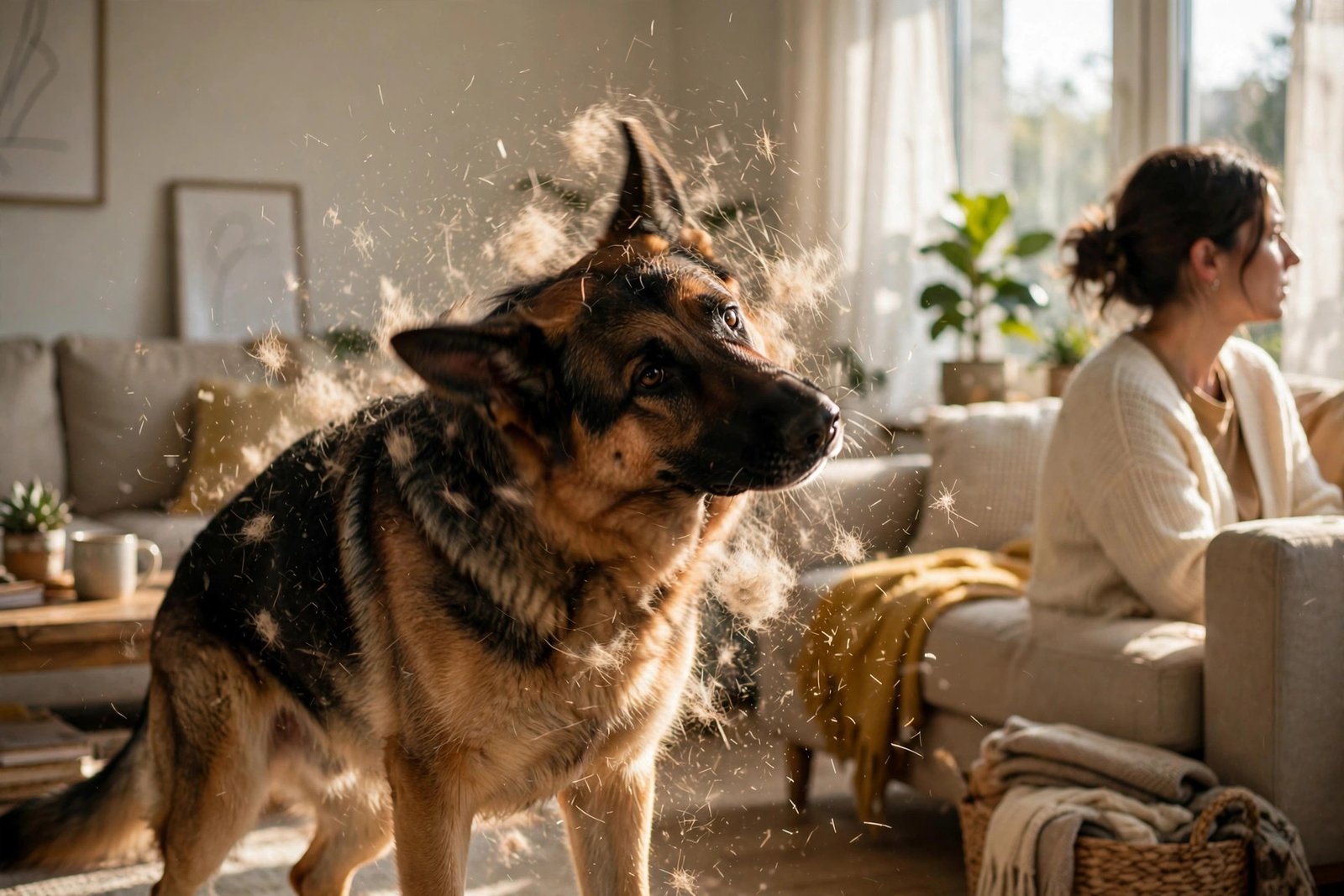
What’s “normal” varies enormously. A German Shepherd in full coat-blow can fill a bag with undercoat in one brushing session, while a Poodle might leave almost nothing on the furniture all month. Both can be perfectly healthy. The useful question isn’t how much hair is in your vacuum — it’s whether the amount has changed for your dog, and whether the skin and coat still look good. A normal shedder’s coat stays full and even, the skin underneath is calm, and you can’t see skin through the coat.
Why is my dog shedding so much all of a sudden?
When owners say shedding “came out of nowhere,” it’s usually one of these ordinary triggers:
Seasonal coat change. Most dogs shed heaviest in spring (losing the thick winter coat) and again in fall (making room for it). Daylight drives this more than temperature, which is why indoor dogs still blow their coats on schedule. Expect two to four weeks of serious hair, then a taper.
Breed and coat type. Double-coated breeds — Huskies, German Shepherds, Goldens, Labradors, Corgis, Pomeranians — shed more by design, dropping undercoat in clumps rather than single hairs. Curly and single-coated breeds (Poodles, Bichons, Maltese, most Doodles) shed far less visibly because loose hair stays trapped in the coat until brushing.
Puppy coat change. Puppies are born with a soft, single-layer coat that gets replaced by the adult coat, usually between four and twelve months. It can look alarming — suddenly thin or wispy in places — but it’s a normal milestone as long as the skin looks healthy.
Ageing. Senior dogs often have slower coat turnover, so hair comes out in bigger drifts and regrows more slowly. The coat may look thinner overall even though nothing is wrong.
Stress and big changes. A house move, a new pet, boarding, fireworks season — stress can trigger a delayed shed a few weeks later. Female dogs may also shed heavily after a heat cycle or puppies, when hormone shifts push a lot of hair out at once.
Heating and indoor living. Central heating and mostly-indoor life can blur the seasonal pattern into steadier, year-round shedding. Not harmful — just less predictable.
When should I worry about my dog’s shedding?
Hair on the floor is rarely the emergency. The warning signs live on the skin and in how your dog feels. Book a vet visit if you notice:
- Bald patches or thinning spots where you can see skin, especially if they’re spreading or scaly
- Red, sore, crusty, or flaky skin, or small bumps under the coat
- Constant scratching, licking, or chewing at the same areas — feet, base of tail, armpits, belly
- A strong or musty smell from the skin that bathing doesn’t fix
- Hair that snaps or pulls out in chunks with barely any pressure, or a suddenly dull, lifeless coat
- Weight change, low energy, or increased thirst alongside the hair loss
These can point to common issues such as allergies, parasites, skin infections, or hormone-related conditions — all worth diagnosing properly rather than guessing. Home remedies can’t diagnose or cure any of these, and this article isn’t a substitute for a vet visit. If the skin looks angry or your dog looks miserable, don’t wait weeks to see whether it settles.
What can I do at home to help with shedding?
You can’t stop healthy shedding — and you shouldn’t want to, because that coat renewal is doing its job. What you can do is control where the hair ends up: on the brush, not on every surface you own. Three habits make the biggest difference:
Brush on a schedule, not a whim. Little and often beats the occasional marathon. Double-coated breeds do well with a thorough undercoat brush-out once or twice a week, more during coat-blow. Curly and single coats need regular brushing to free trapped hair before it mats. Start slowly with puppies and nervous dogs, keep sessions calm and short — five relaxed minutes twice a week beats twenty stressful minutes once.
Feed a complete, good-quality diet — and keep it consistent. Coat condition reflects what’s happening inside, and a balanced diet with enough protein and healthy fats supports a normal coat. There’s no miracle supplement: if your dog eats a complete food and looks well, extra products rarely change shedding. A persistently dull coat is a conversation for your vet, not a shopping trip.
Keep a loose-hair routine for the house. Sensible bathing intervals (over-bathing can dry the skin), a quick weekly brush-out, and washable throws on favourite sleeping spots all reduce the drift. For furniture, our step-by-step guide on how to remove dog hair from a couch walks through the loosen-lift-vacuum routine that clears fabric properly instead of pushing hair around.
How do I keep dog hair off my couch and clothes?
The winning strategy is a small routine repeated, not one heroic clean. Hair you remove from the dog never reaches the sofa, so brushing first always pays off. Then work the house in layers.
For upholstery, a weekly pass with a proper remover lifts far more than a standard vacuum brush alone — our comparison of the best pet hair removers for couches breaks down which tool suits fabric, velvet, and leather. For clothes, car seats, and quick once-overs before guests arrive, a reusable option saves a fortune in sticky refills; we tested the top picks in our guide to the best reusable lint roller for dog hair.
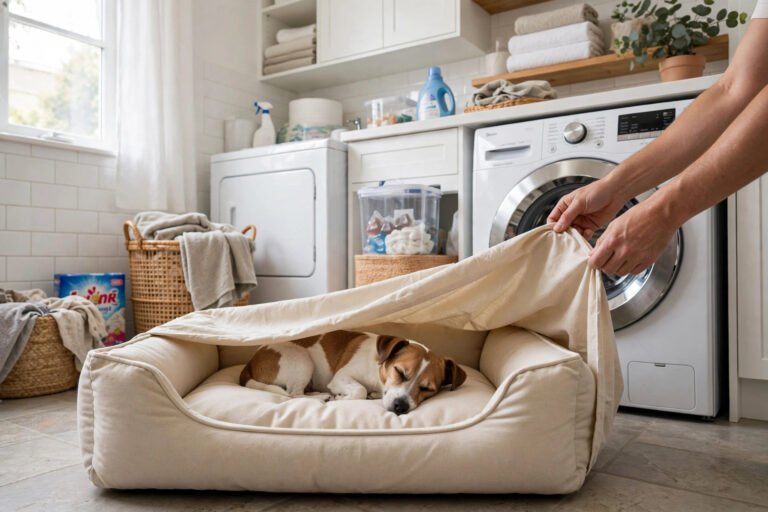
Washable throws on your dog’s favourite cushion are the unsung heroes — shake them outside, wash weekly, and the sofa underneath stays presentable. More routines like this live in our dog hair and home cleaning guides, covering carpets, bedding, and laundry too.
What is the easiest way to live with a shedding dog?
Accept the rhythm, then manage it. Heavy weeks arrive twice a year with most breeds; schedule bigger brush-outs and couch cleans for those windows and the rest of the year feels easy. Most owners land on a simple combo: a regular brush-out, one good furniture tool, and a throw where the dog actually sleeps.
Start with the furniture side — it’s where shedding bothers people daily. Our best pet hair remover for couch guide compares the main tool types side by side, so you can pick for your fabric and be done with it.
Frequently asked questions
How much shedding is too much for a dog?
Shedding is likely too much when you can see skin through the coat, find bald patches, or notice redness, scabs, or heavy scratching. If the coat looks thinner than a month ago in photos, or hair comes out in chunks when you stroke your dog, book a vet check rather than waiting.
Do certain dog breeds shed more than others?
Yes — breed is one of the biggest factors. Double-coated breeds like German Shepherds, Huskies, Labradors, Goldens, and Corgis shed heavily, especially in spring and fall. Curly breeds such as Poodles, Bichons, and Maltese shed far less visibly, though no dog is truly 100% non-shedding.
Why is my dog shedding so much in winter?
Indoor heating and artificial light blur the seasonal cycle, so many house dogs shed steadily all year instead of in two big waves. A winter increase is also normal for some dogs. Worry only if it comes with itching, bald spots, or skin changes.
Can diet affect how much my dog sheds?
A complete, balanced diet supports normal coat health, and poor nutrition can mean a dull coat and more loose hair. But diet tweaks don’t switch off healthy shedding, and no food or supplement can cure shedding caused by a medical issue — persistent problems belong with your vet.
How often should I brush a heavy-shedding dog?
For double-coated breeds, one or two thorough brush-outs a week is a solid baseline, increasing to every other day during spring and fall coat-blow. Short, calm sessions work best: brushing removes loose hair on your terms instead of letting it land on the furniture.
Should I shave my dog to reduce shedding?
Generally no. Shaving doesn’t stop shedding — the shorter hair still falls out — and double coats often grow back unevenly and lose their insulating quality. Vets and groomers usually advise against it unless there’s a medical or matting reason. Brushing out loose undercoat is the safer fix.
Found this helpful? The routines above link to our full hair-management guides — and if your dog’s shedding ever comes with skin changes, your vet should be the next stop, not the internet.