
DIY Dog Advent Calendar Ideas: 24 Days of Treats, Toys & Fun (2026)
My dog learned the sound of our advent calendar doors two years ago. By December 5th, he’d sit by the little wooden house on the mantel at breakfast time, tail drumming the floor, staring at door number 5 like it owed him money. A DIY dog advent calendar isn’t really about the dog’s sense of time — it’s about yours. Twenty-four tiny moments of joy in a chaotic month.
Below: three build methods that actually work (one takes twenty minutes), 24 filler ideas split between treats, toys and activities so December doesn’t become a stomach-ache month, size adaptations for Chihuahuas to Great Danes, and the safety rules that matter. No craft degree required.
Quick Verdict: DIY or buy ready-made?
Go DIY if your dog has allergies, is fussy, is on a weight plan, or destroys everything in reach — you control every filling, portion and size. Buy ready-made if you’re short on time or had this idea on December 3rd. The sweet spot: DIY the container once (reusable for years), and from year two it costs almost nothing to refill. You never wonder what’s inside door 17.
Method 1: The muffin tin calendar (20 minutes)
The one I recommend to anyone who says “I’m not crafty.” Drop a treat or small toy into each cup of a 12-cup muffin tin (use two tins, or reuse one for days 13–24), cover each cup with tissue paper held by a rubber band, number them 1–24 with a marker. The “door” is satisfying to punch through, the tin survives drool and the dishwasher, and cleanup takes seconds. Not the prettiest mantel piece — but dogs don’t care about mantel aesthetics.
Best for: small and medium dogs, first-timers, small flats. For large dogs, use a jumbo tin so portions aren’t comically small.
Method 2: Numbered kraft paper bags (the photogenic one)
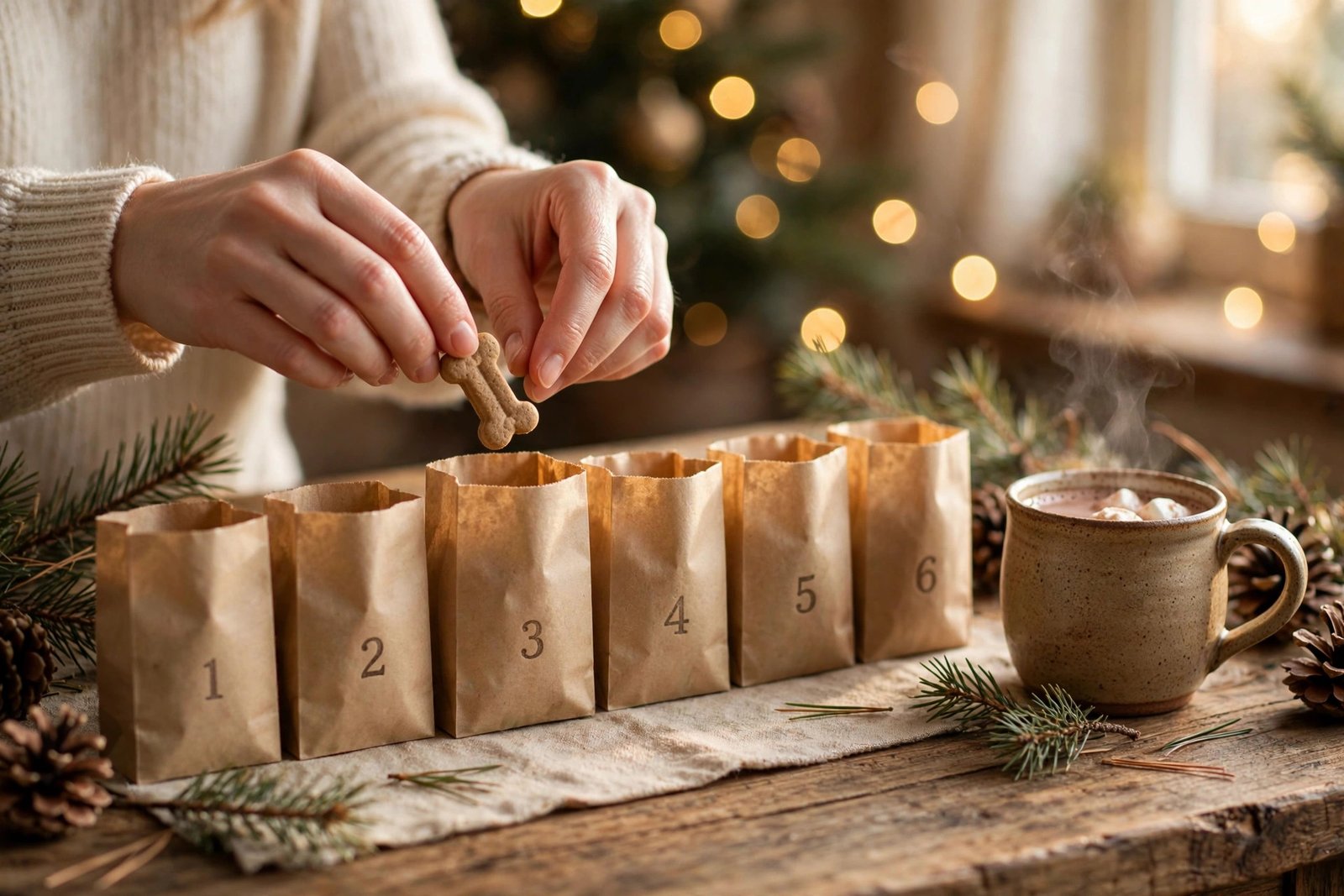
Twenty-four small kraft bags, numbered with a marker, pegged to a ribbon with mini clothespins like a garland — or tucked into a basket if wall space is tight. This is the version that gets photographed. It looks great on a mantel, costs almost nothing, and chewed bags are replaceable.
Hang it where your dog can’t reach unsupervised. Twenty-four days of treats in one grab is a vet visit waiting to happen, and most dogs learn to nose a bag off its peg by day three.
Best for: multi-dog homes (one color-coded garland per dog), the classic Christmas look.
Method 3: The wooden box (the heirloom)
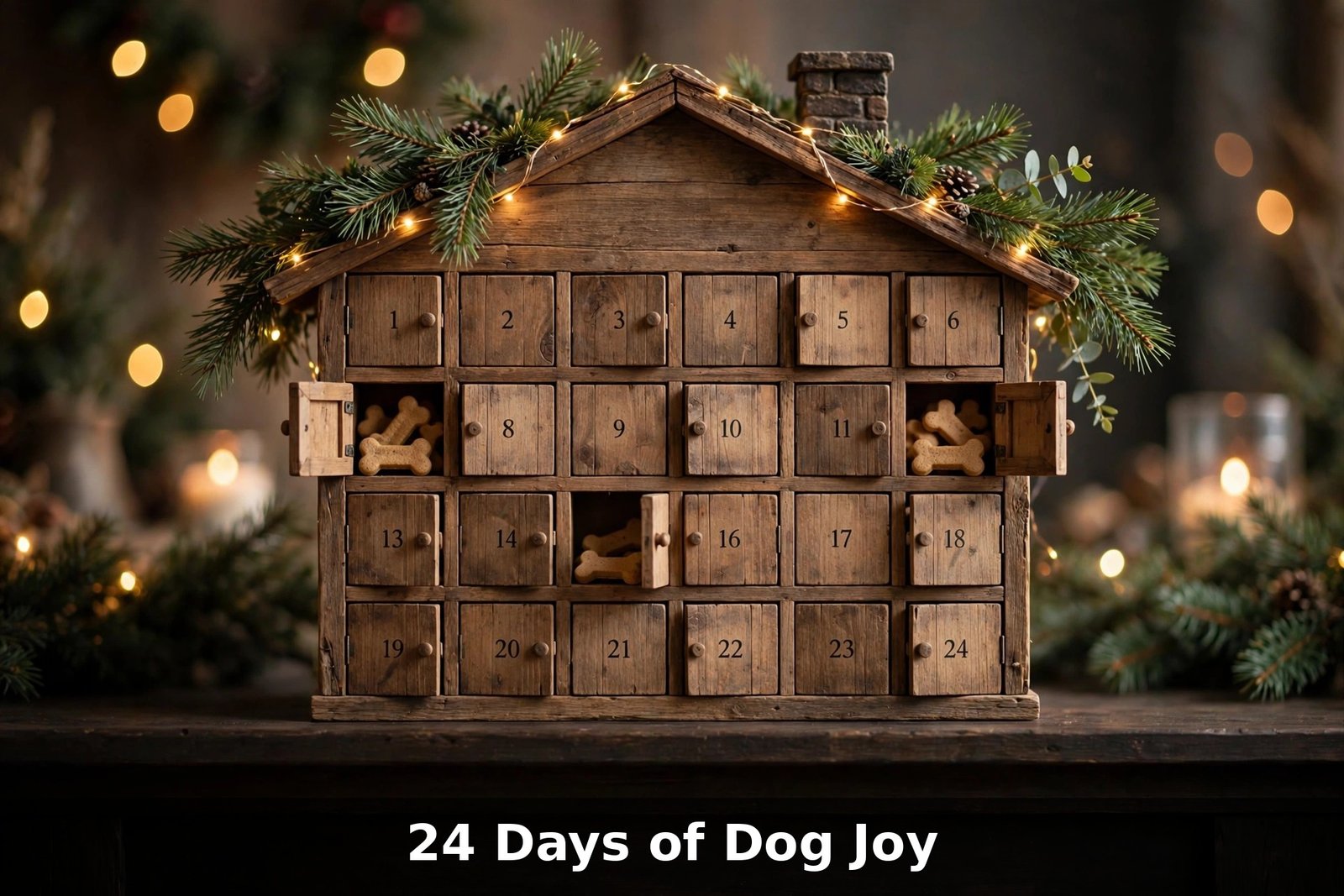
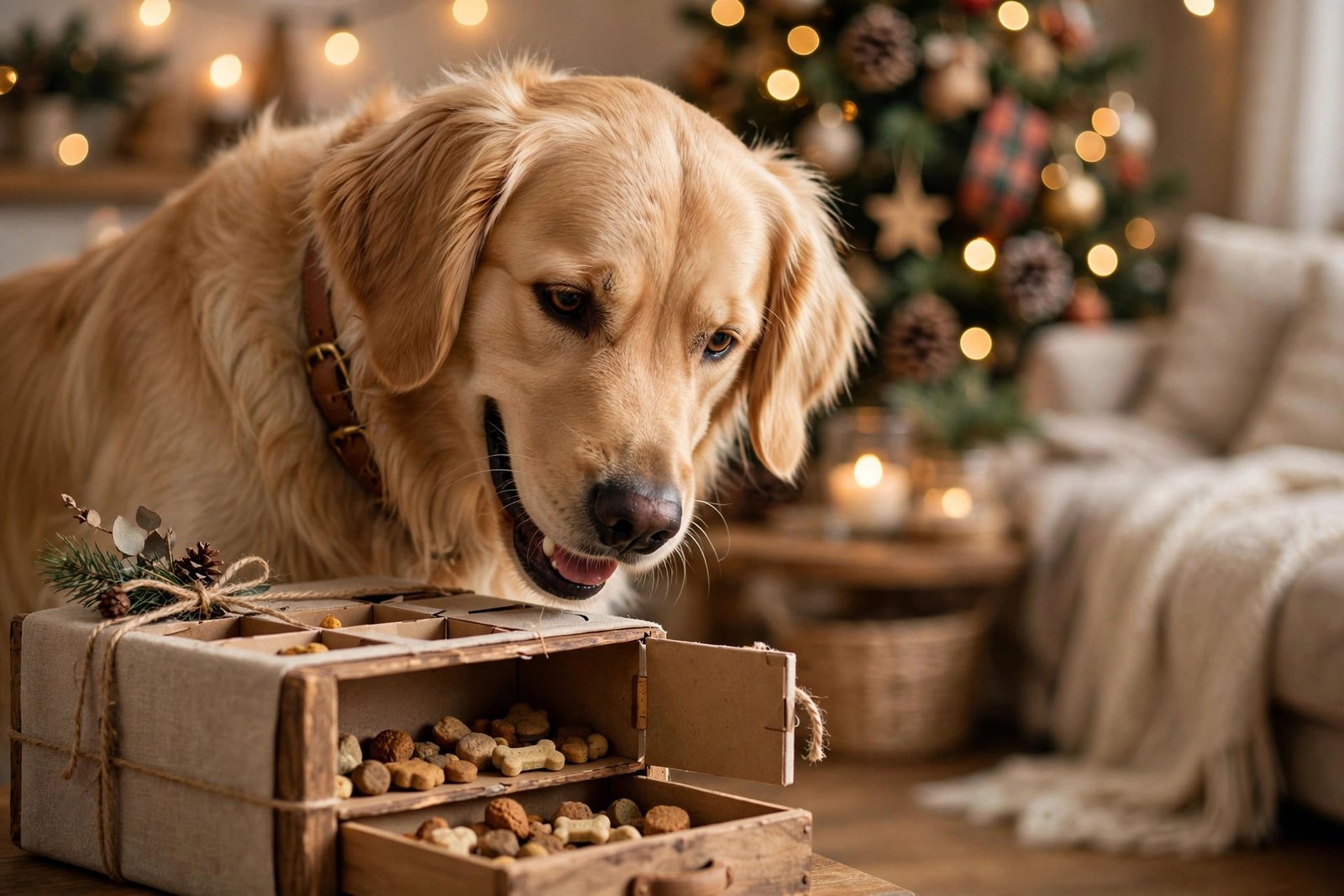
A small wooden chest with 24 tiny drawers — craft shops sell them unfinished, or repurpose an old cutlery organizer. Sand, stain or leave rustic, fill, number. Drawers stay shut until you open them, nothing dangles, nothing chews through — but budget an hour of setup and eleven months of storage.
Best for: power chewers, homes with kids, anyone building a tradition rather than a one-off.
| Method | Build time | Reusability | Dog-proofing | Best for |
|---|---|---|---|---|
| Muffin tin | ~20 min | High — dishwasher-safe | Medium — store out of reach | Beginners, small/medium dogs |
| Kraft paper bags | ~45 min | Medium — bags replaceable | Low — hang high | Multi-dog homes, classic look |
| Wooden box | ~1 hour | Very high — years | High — drawers stay shut | Power chewers, long-term tradition |
24 filler ideas: treats, toys and activities
The secret is variety. Twenty-four identical biscuits is boring — and for many dogs, 24 rich treats in a row means an upset stomach. Split the doors into thirds: eight treat days, eight toy or chew days, eight activity days. Your dog stays excited because it genuinely doesn’t know what’s coming.
Treat days (8 doors)
Training-treat size only — you’re adding to the daily ration, not replacing it.
- Frozen blueberries — two or three; most dogs love the cold pop.
- A lick of xylitol-free peanut butter on a spoon — check the label twice; the wrong jar can genuinely hurt a dog.
- Homemade pumpkin-oat biscuits — plain canned pumpkin, oats, an egg; twenty minutes in the oven.
- Freeze-dried chicken pieces — the good stuff, not a whole meal.
- Baby carrots — crunchy, cheap, treated like treasure.
- Plain cooked turkey or chicken — skin off, no seasoning, no bones.
- Apple slices (no seeds) — sweet, crunchy, seasonal.
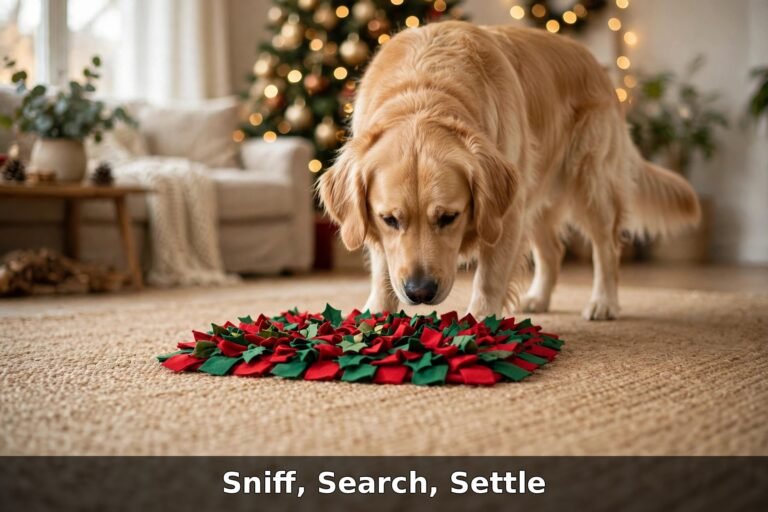
- Kibble as a game — scatter a handful in a snuffle mat behind the door instead of handing it over.
Toy and chew days (8 doors)
A toy day is a rest day for the stomach — alternate with treat days.
- A new squeaky toy — cheap ones are fine; twenty minutes of joy is plenty.
- A rope tug toy — plus five minutes of actual play. The play is the point.
- A tennis ball with a bell inside — the sound drives some dogs gloriously mad.
- A yak cheese chew piece — lasts ages, occupies a chewer.
- A festive bandana or collar charm — for dogs that tolerate dressing up.
- A crinkle toy — different texture, different excitement.
- A snuffle ball — stuff it with kibble for a double-door day.
- A long-lasting dental chew — December is hard on teeth with all the extra treats.
Activity days (8 doors)
My favorite doors — the ones my dog actually remembers. A folded note in the compartment; the “gift” is something you do together.
- Extra-long walk — the long route, the good park, no rushing.
- Teach a trick — spin, high-five, that party trick you’ve been meaning to try.
- Car ride to see the lights — dogs love a window-down evening.
- Bake dog treats together — you bake; they supervise and quality-control the floor.
- New sniff spot — a trail or park they’ve never been to. Novel smells beat novel treats.
- Playdate — their best dog friend, an hour at the park.
- Photo shoot — festive bandana, tree lights, ten minutes of treats-for-posing.
- Christmas Eve: the big one — a brand-new plush toy and a quiet evening. The perfect night for a Christmas Eve box for your dog, the bigger gift moment the calendar has been building toward.
Size adaptations: small, medium and large dogs
Small dogs (under 10kg): shrink every portion — half a training treat per door, tiny toys, nothing swallowable whole. A Yorkie’s whole daily treat allowance is about a tablespoon. Prefer the muffin tin or kraft bags; deep wooden drawers hide tiny treats too well.
Medium dogs (10–25kg): the easy group — standard treat sizes, all three methods fit, filler ideas slot straight in.
Large dogs (25kg+): go bigger on compartments — a standard muffin cup looks like an insult to a Labrador. Avoid small round treats (choking risk) and never leave the calendar where a big dog can help itself to all 24 days at once. They will. Every large-dog owner reading this is nodding.
Safety rules — read before filling a single door
- No xylitol, ever. Also sold as “birch sugar” — in some peanut butters and sugar-free goods, fatal to dogs even in small amounts. Check every label.
- No chocolate, grapes, raisins, macadamia nuts, onions or cooked bones. Human advent calendars are for humans — never let your dog “share” yours.
- Portion control is the whole game. Twenty-four treat days can mean weight gain and stomach trouble — that’s why a third of these doors are toys and activities. Ease off meals on heavy treat days.
- No small parts. Buttons, beads, tiny bells — if it would worry you with a toddler, worry with a dog.
- Keep the calendar out of reach. Hang it high, shelf it, close the cupboard. A dog alone with 24 days of treats eats 24 days of treats.
- Know your dog’s allergies. The whole point of DIY is control — skip chicken, wheat, dairy, whatever your vet flagged.
Make it a tradition, not a one-off
After Christmas: empty perishables, wipe the tin or box, fold kraft bags flat into a labeled envelope, and store everything with your Christmas decorations so you find it next November. I keep a note in the box — “day 12: hated the carrots, loved the squeaky ball” — so next year’s calendar is better. Three years in, mine is basically a greatest-hits album for my dog.
Frequently asked questions
What can I put in a dog advent calendar?
Three categories: small treats (training biscuits, freeze-dried meat, dog-safe fruit and veg), toys and chews (squeaky toys, rope tugs, dental chews), and activity notes (extra walks, trick training, car rides). Mixing all three keeps December interesting and calories in check.
Can my dog have a human advent calendar instead?
No. Human calendars contain chocolate (toxic to dogs) and some contain xylitol/”birch sugar” (can be fatal in tiny amounts). A dog-specific calendar — DIY or store-bought — is the only safe option.
What foods must never go in a dog advent calendar?
Chocolate, xylitol/birch sugar, grapes, raisins, macadamia nuts, onions, garlic, alcohol, cooked bones, caffeine. Stick to dog-made treats or plain dog-safe foods like pumpkin, carrots, apple slices (no seeds) and plain cooked chicken.
How do I adapt a calendar for small vs large dogs?
Small dogs: shrink every portion, tiny toys, nothing swallowable. Large dogs: bigger compartments and bigger treats (small round ones are a choking risk), and be extra careful about placement — a big dog can reach and empty the whole calendar unsupervised.
How far in advance should I build it?
Build the container in early to mid-November, fill it the last weekend of November, and add perishables (fresh fruit, homemade biscuits) in the final few days. Homemade biscuits keep about two weeks in an airtight tin; freeze a batch if you bake early.
Not the DIY type? There’s an honest middle ground
A ready-made dog advent calendar with handmade dog cookies is a perfectly good option — the natural-ingredient ones from pet bakeries are genuinely decent, and some come in reusable fabric or wooden designs you can refill yourself next year. That’s the sweet spot: buy it once for zero craft time, then DIY the fillings from year two and take control of portions and ingredients.
And while you’re in full Christmas-dog mode, spare a thought for the humans — our guide to Christmas gifts for dog owners covers presents for the dog-obsessed people in your life. They deserve a door of their own.
🎄 Visit Our Etsy Shop — Fukroo
Printable Christmas wall art, gift tags & party games — instant download
Shop on Etsy →




One Comment