
How to Choose the Best Calming Dog Bed for Separation Anxiety (2026)
As an Amazon Associate, Furveko earns from qualifying purchases made through links on this page, at no extra cost to you. See our Affiliate Disclosure.
My friend’s terrier mix, Pickle, used to lose his mind every time she picked up her car keys — barking, scratching at the front door, and once, a chewed windowsill. Somewhere between the white-noise playlists and the frozen peanut-butter toys, someone told her a calming dog bed would fix it. It didn’t fix Pickle’s anxiety. But once she stopped expecting a miracle — right size, right spot, right routine — his settle-down time after she left got noticeably shorter.
That’s the honest story of calming dog beds for separation anxiety. They’re not cures, but they’re one of the most underrated tools in a real anxiety plan. This guide covers the four bed types worth knowing, why the round shape works, the sizing mistake almost everyone makes, and how to fit the bed into a routine that genuinely helps.
Quick Verdict
A round raised-rim donut cuddler bed is the best starting point for most anxious dogs — the high rim suits the curling posture dogs use to self-soothe. Size by sleep style, not the breed chart: watch how your dog sleeps, measure nose to tail, and add a few inches. Machine-washable is non-negotiable — anxiety and accidents go together. And be honest with yourself: a bed supports a separation-anxiety plan, it doesn’t replace training and professional help. Pair it with calming treats for dogs with separation anxiety and, for serious cases, your vet or a certified behaviorist.
Why the Round Shape Actually Calms Dogs

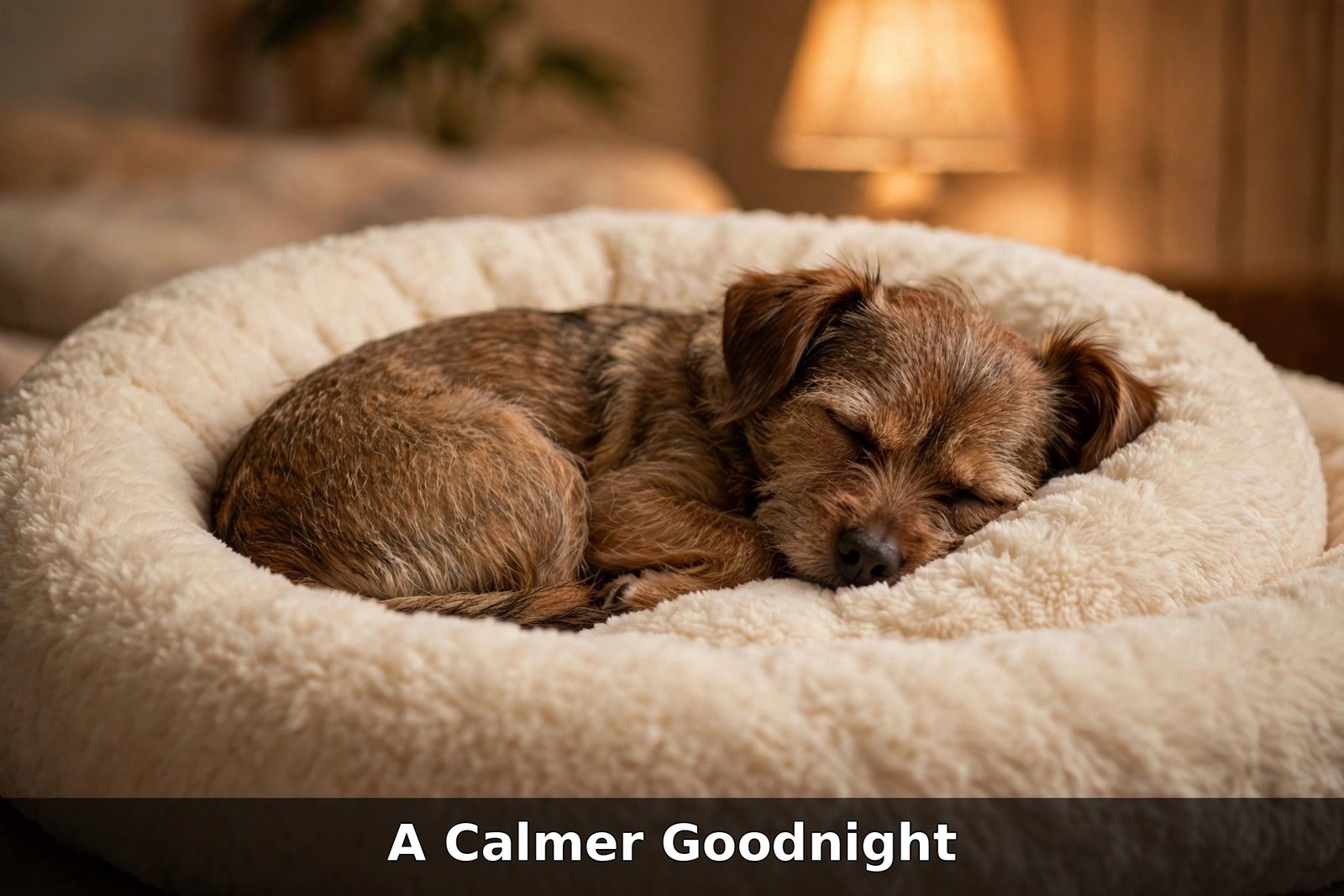
The donut shape dominates this category for a real reason, not a marketing one. Dogs are den animals by instinct: they curl into a tight ball to sleep — nose tucked toward tail, belly protected, heat conserved. That curled posture isn’t just comfortable; it’s self-soothing. Dogs curl tighter when uneasy and sprawl out when they feel safe.
A round bed with a raised rim works with that instinct. The rim is a chin rest, it mimics being nestled against a packmate, and it blocks drafts and light — closer to a den, further from a stage. It won’t switch off separation anxiety by itself, but it lowers the dog’s baseline arousal at rest, so your departure routine and training land on a calmer dog.
The 4 Calming Bed Types Compared
Not all “calming” beds are the same thing. Here’s the side-by-side view before we look at each one closely.
| Round Donut Cuddler | Donut with Headrest Pillow | Memory-Foam Base | Self-Warming Lounge | |
|---|---|---|---|---|
| Best for | Curlers — dogs that sleep in a ball | Chin-rest sleepers | Seniors, large breeds, joint issues | Cold sleepers, short-coated dogs |
| Sleep style | Curler | Curler or side sleeper | Any — flat, stable base | Sprawler or curler |
| Head support | Good — rim all around | Best — dedicated pillow bump | Varies — check rim height | Modest — low bolsters |
| Washability | Good if cover is removable | Good if cover is removable | Cover only — foam stays dry | Good if cover is removable |
| Watch for | Sprawlers outgrow it fast | Pillow flattens in cheap builds | Heavy — not a travel bed | Too warm for hot sleepers |
The Round Raised-Rim Donut Cuddler
The demand-leader style — a round, high-walled nest in shaggy faux fur. The long fibers feel like fur against a packmate, and the raised rim runs all the way around. For a dog that sleeps curled nose-to-tail, start here. Look for dense, springy rim filling — cheap ones go pancake-flat in a month, and a flat rim is just a round mat.
Best for: dedicated curlers and anxious nesters.
Watch out: sprawlers will hang off the edges; measure first.
The Donut Bed with Headrest Pillow

Same donut idea, but one rim section is built up into a proper pillow bump — a headrest for dogs that always sleep with their chin on something. If your dog’s favorite position is “chin on your foot,” this is the bed version of that. It suits side-sleepers too. Caution: the pillow compresses first, so check the filling is genuinely dense, not just fluffy-looking.
Best for: chin-on-everything sleepers and side sleepers.
Watch out: the headrest bump flattens first in soft builds.
The Self-Warming Lounge Sleeper

A heat-reflective layer inside the pad bounces your dog’s own body warmth back at them — warm with no plug or battery. The rectangular shape suits sprawlers better than a donut, and short-coated or senior dogs tend to claim these fast. Honest trade-off: in a warm house it can be too much — and it reflects heat, it doesn’t generate it, so it won’t warm a cold room on its own.
Best for: cold-seeking sleepers, short coats, seniors.
Watch out: too warm for hot sleepers; not a heater.
The memory-foam-base calming bed is the orthopedic option — a dense foam base with a calming-style rim on top. For seniors, large breeds, or dogs with joint stiffness, the supportive base matters more than the nest shape: pain keeps dogs restless, and restlessness reads as anxiety. If your older dog circles and can’t settle, consider the joints before blaming nerves.
Sizing by Sleep Style: The Mistake Everyone Makes

The number-one sizing error: buying by the breed weight chart and ignoring how the dog actually sleeps. The chart tells you what the manufacturer guessed. The sleeping posture tells you the truth.
Curlers sleep in a tight ball. They fit a donut beautifully — measure nose to tail while curled, then add a few inches. Sprawlers sleep flat out, legs extended — a donut frustrates them; they need a rectangular lounge. Measure nose to extended paw.
The method: wait until your dog is genuinely asleep (not the polite “I’m resting” pose they do when watched), then measure. Do it twice — the deep-sleep sprawl is often bigger than the light-doze curl. Between sizes, size up: a roomy bed still nests, but a cramped one gets abandoned.
Washability: Non-Negotiable for Anxious Dogs
Anxiety and accidents travel together — drool, extra shedding, the occasional accident, that stressed-dog smell in the fabric. A calming bed that can’t be washed properly has a short, sad life.
- Removable, machine-washable cover — the most important feature after size. The whole cover should zip off and survive a real wash cycle.
- A waterproof liner underneath protects the filling from the accidents you find after work. Wet filling goes lumpy and starts to smell.
- Brush out faux fur after drying. Long fibers mat down in the wash; a quick brush keeps the bed plush instead of tired-looking.
- Wash on a schedule, not on a crisis — monthly for most dogs, more for heavy droolers. Dogs use beds that smell clean.
Where to Put It: Placement Is Half the Battle
- Where the dog already settles. If they always lie in the hallway corner, the bed goes there — not where it looks nice in your photos.
- Quiet corner, not high traffic — the calmest spot in the house, away from the front door’s noise, but not isolated like exile.
- Not right at the exit. Tying the bed to the door you leave through links it to the most stressful moment of their day. A few steps away is better.
- Build a ritual around it: bed + a long-lasting chew or calming treat, in the same order every time you leave. The ritual teaches the dog that bed-time predicts good things. Our calming treats guide pairs well with this step.
On crates: some anxious dogs settle beautifully in a crate with their bed inside; others panic harder when confined. Our crate vs. free-roam guide walks through how to tell which camp your dog is in.
The Honest Truth: What a Bed Can and Can’t Do
A calming bed can lower your dog’s resting arousal, give anxious nesting a proper outlet, and anchor a departure routine. Real, observable benefits — Pickle’s settle time genuinely improved. What it can’t do: cure true separation anxiety. A dog that injures themselves escaping or panics at the jingle of keys needs a desensitization plan and, for severe cases, a vet or certified behaviorist — sometimes including medication, which is a vet’s call. Not sure how serious it is? Run through our 9-sign separation anxiety checklist first — it covers the camera test that tells anxiety apart from boredom.
Transparency note: this guide has no affiliate links and I don’t sell these beds — just honest type-by-type advice, because the wrong type in the wrong size is money wasted.
The Honest Pros and Cons
Pros
- Round rim suits the curling posture dogs use to self-soothe
- Anchors a consistent departure routine
- Gives anxious nesting a proper outlet
- Washable options handle anxiety accidents
- Memory-foam types double as joint support
Cons
- Won’t cure true separation anxiety on its own
- Wrong size or type gets ignored entirely
- Cheap rims go flat fast — density matters
- Power chewers destroy plush beds unsupervised
- Self-warming types run too hot for some dogs
Frequently Asked Questions
Do calming dog beds actually work for separation anxiety?
They help as one layer of a plan — a proper nest lowers resting arousal and anchors a departure routine. They don’t cure clinical separation anxiety, which needs training and sometimes veterinary help. Expect support, not miracles.
What size calming bed should I get?
Size by sleep style, not the breed chart. Measure your sleeping dog nose-to-tail (curlers) or nose-to-extended-paw (sprawlers), add a few inches, and size up when between sizes.
Can you wash a calming dog bed?
Only buy one with a removable, machine-washable cover — ideally with a waterproof liner underneath. Brush out faux fur after drying so it stays plush.
My dog chews beds — is a calming bed a waste?
For an unsupervised power chewer, yes — plush becomes stuffing confetti. Work on the chewing first, supervise bed time, and consider a tougher bed style until the chewing phase passes.
Donut or rectangular — which is better for anxiety?
Depends on sleep style: curlers do best in a donut, sprawlers need rectangular. Watch your dog sleep for a few nights — the posture answers it for you.
Pick the type that matches how your dog sleeps, size it to the sleeping dog, keep it washable, place it in their chosen quiet corner, and build the departure ritual around it. Do that, and the bed earns its place. And if the signs point past mild anxiety, the separation anxiety checklist helps you decide when to bring in your vet.
🎄 Visit Our Etsy Shop — Fukroo
Printable Christmas wall art, gift tags & party games — instant download
Shop on Etsy →




2 Comments