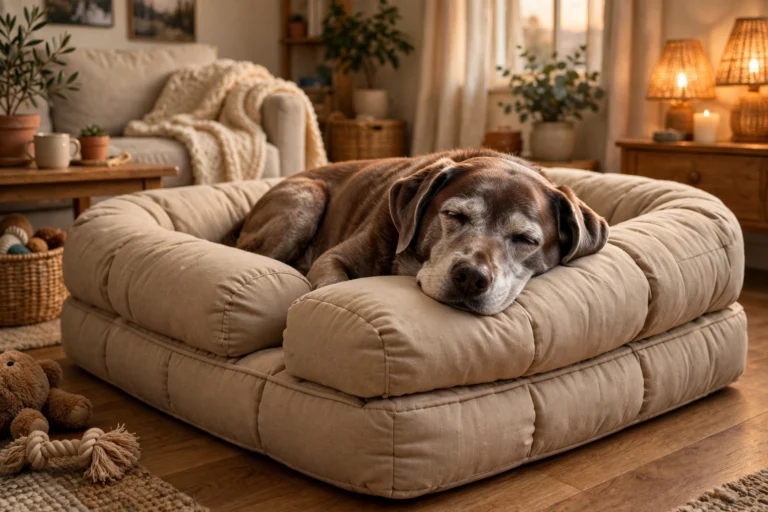
Why Does My Dog Sleep So Much? (2026): What’s Normal, What’s Not
Many owners have a day when their dog seems to sleep through everything: skipping the usual backyard patrol, ignoring a favourite toy and only lifting their head at the sound of the treat jar. It is natural to wonder whether that much sleep is normal.
It turns out the answer is usually reassuring, but not always. Dogs sleep a lot more than people do, and the range of “normal” is wider than most owners expect. Still, there are real warning signs worth knowing, and the difference between a healthy sleeper and a dog who needs a vet visit often comes down to one thing: change.
Quick Verdict
Most healthy adult dogs sleep 12–14 hours a day, and puppies and seniors sleep even more. If your dog is bright, hungry, and playful during their waking hours, long naps are almost certainly fine. Call your vet when sleep comes with a sudden change — a dog who used to bounce at the door and now barely lifts their head, or one who’s hard to wake, has lost their appetite, or seems dull even when awake. The pattern matters more than the hours.
What’s Normal? It Depends on Age First
Age is the single biggest factor in how much a dog sleeps. A puppy’s brain is still wiring itself up, and sleep is when much of that learning gets filed away. Senior dogs, meanwhile, tire faster and recover more slowly, so they bank more rest. Healthy adults sit in the middle — but even there, the range is wide.
| Life stage | Typical daily sleep | What it usually looks like |
|---|---|---|
| Puppy (under 1 year) | 18–20 hours | Short bursts of wild energy, then crashing hard |
| Adult (1–7 years) | 12–14 hours | A long night’s sleep plus several daytime naps |
| Senior (7+ years, varies by size) | 14–18 hours | Longer, deeper rests; slower to get moving |
These are typical ranges, not prescriptions — individual dogs vary, and that’s fine. A healthy adult who sleeps 15 hours isn’t automatically a concern, just as one who sleeps 11 isn’t automatically restless. What you’re really watching for is your own dog’s baseline shifting.
Breed and size nudge the numbers too. Big, laid-back breeds like mastiffs and greyhounds are famously champion nappers, while smaller, high-drive breeds like border collies and terriers often sleep less — though they’ll still surprise you by dozing through a rainy afternoon.
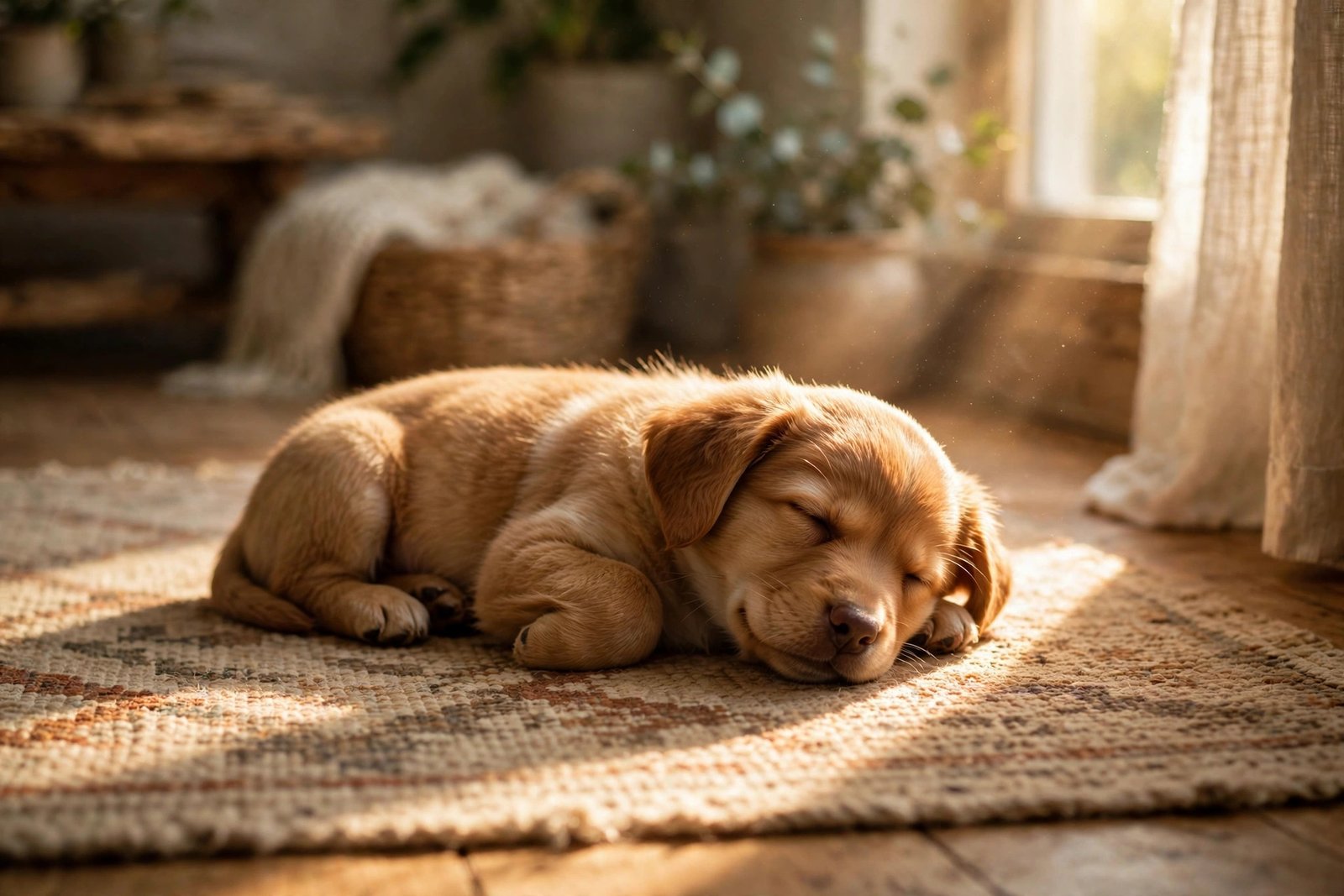
The 6 Everyday Reasons Dogs Sleep So Much
1. They’re just built that way
Dogs sleep in shorter cycles than we do and spend more of the day in light, easily interrupted sleep. That half-doze on the rug, one ear cocked toward the kitchen, counts as rest for them even if it doesn’t look like deep sleep to us. On top of that, dogs are polyphasic sleepers — they naturally split their rest across the whole day rather than doing it all at night. So a dog who “sleeps all day” is often just doing what dogs have always done.
2. Age is doing its thing
Puppies can fall asleep mid-play, sometimes literally mid-step, and that’s completely normal — their bodies are growing fast and their brains are processing a flood of new experiences. At the other end of life, older dogs sleep more because their joints ache, their stamina drops, and their bodies need longer to recover from an ordinary walk. If your senior dog is napping more but still enjoys meals, greetings, and short outings, age is the most likely explanation. A supportive bed in a warm, draft-free corner can make those longer rests more comfortable, and if stiffness seems to be part of the picture, our guide to choosing an orthopedic bed for a senior dog walks through what actually helps.
3. They’re bored
This one catches a lot of owners off guard. A dog with nothing to do will sleep — not because they’re tired, but because there’s nothing else on offer. Dogs who spend long stretches alone in a quiet house, with the same toys and the same four walls, often default to napping the hours away. The giveaway is what happens when something interesting shows up: a bored dog perks right up for a walk, a visitor, or a game. If your dog sleeps all day but turns into a different animal the moment the leash appears, boredom is a strong suspect. A midday walk, a new sniffing route, or a short training session can shift the balance.
4. The weather changed
Hot summer days make most dogs drowsy — they can’t sweat the way we do, so lying still in the shade is how they stay cool. Cold, grey winter days have the opposite effect on us but a similar one on them: less daylight, fewer outings, and more time curled up indoors. Seasonal shifts in sleep are normal as long as appetite, drinking, and bathroom habits stay steady. Watch the extremes, though — heavy panting or drooling on a hot day may mean overheating, not a lazy nap.
5. They’re recovering
A big hike, a long play session at the dog park, a busy weekend with visitors, or a recent vet visit can all leave a dog extra sleepy the next day. Bodies recover during sleep, and dogs are no exception. One or two days of heavier rest after something strenuous is expected. What isn’t expected is a dog who never bounces back, or seems wiped out by things that used to be easy.
6. Their routine changed
Dogs are creatures of habit, and a disrupted routine can throw their sleep patterns off in either direction. A house move, a new baby, a family member leaving for college, a change in your work hours, or a new pet in the home can all lead to more sleeping — sometimes from stress, sometimes just from adjusting. Anxious dogs in particular may retreat to a quiet spot and sleep more when the household feels unsettled. If the change lines up with a stressful event, you may find our guide to the signs of separation anxiety in dogs useful for telling ordinary adjustment apart from something that needs attention.

When to Worry: The Vet-Visit Checklist
Long sleep alone rarely means trouble. Sleep plus any of the following is your cue to call the vet:
- A sudden change. Your dog’s sleep jumped noticeably in a short period, with no obvious cause like a big walk or a heatwave.
- Lethargy when awake. They don’t just sleep a lot — they’re dull, slow, or uninterested even during the hours they’re up.
- Difficulty waking. You have to work to rouse them, or they seem groggy and disoriented when they do wake.
- Appetite or drinking changes. Eating much less (or suddenly much more), drinking far more water than usual, or refusing favorite treats.
- Vomiting, diarrhea, or bathroom changes. Any digestive upset that arrives alongside the extra sleep.
- Pain signals. Whimpering when lying down or standing, limping, reluctance to jump or climb stairs, or a new sensitivity to touch.
- Weight or coat changes. Unexplained weight loss or gain, or a coat that’s gone dull or patchy.
None of these alone is a diagnosis, but together with a sleep change, they’re exactly the pattern vets want to hear about early. Possible medical reasons a vet may want to rule out include thyroid issues, diabetes, infections, pain from arthritis, and heart problems. I won’t guess at which one fits your dog, because that’s genuinely the vet’s job, and guessing wrong helps nobody.
What to Track Before You Call the Vet
A vet’s first questions will be about patterns, so a few days of simple notes can make the visit far more useful than a vague “he sleeps a lot.” Jot down roughly how many hours your dog sleeps, when the change started, whether appetite and water intake changed, how their energy looks during waking hours, and anything unusual — limping, coughing, accidents in the house, or a change in stool. A short video of how they move and rest can help too; a few lines in your phone’s notes app will do.
Frequently Asked Questions
Is it normal for my dog to sleep 16 hours a day?
Often, yes. Puppies and seniors regularly sleep 16–18 hours, and some large, calm breeds do too. What matters most is how your dog acts while awake — alert, hungry, and interested in walks and play means the sleep is very likely just their normal rhythm.
Do dogs sleep more in winter?
Many do. Shorter days and fewer outings mean less stimulation. As long as eating, drinking, and energy stay roughly normal, a winter uptick in napping is nothing to stress about.
Should I wake my dog up?
Generally, let sleeping dogs lie — especially puppies, who need their rest for healthy growth. The exception is if you’re worried about a medical issue and need to check whether they’re unusually hard to rouse; in that case, note what you find and tell your vet.
Can boredom really make a dog sleep all day?
Absolutely. A dog with little to do will nap away the hours, and the test is simple: offer something fun. If they light up for a walk, a game, or a puzzle feeder, boredom — not illness — is the likely driver. Adding enrichment to the day usually fixes it.
When should I call the vet about my dog sleeping too much?
Call when extra sleep comes with a sudden change, lethargy while awake, difficulty waking, appetite or vomiting changes, or any sign of pain. If you’re unsure, call anyway — vets would far rather reassure you over the phone than see a problem late.
A Softer Landing for Long Naps
If your dog is a champion sleeper and their vet is happy with their health, the kindest thing you can do is make those long rests genuinely comfortable. A quiet corner away from foot traffic, a bed that supports their joints, and a consistent daily rhythm of walks, meals, and play will do more for their sleep quality than anything fancy. And if your dog’s naps seem tied to worry when you leave the house, a calming bed designed for anxious dogs can be one small piece of a calmer routine — alongside the training and reassurance that actually move the needle.
🎄 Visit Our Etsy Shop — Fukroo
Printable Christmas wall art, gift tags & party games — instant download
Shop on Etsy →