Why Is My Dog Scared of Fireworks? (2026): The 9-Day Bonfire Night Plan
Bonfire Night falls on Thursday 5 November this year, which means if you are reading this in late October, you have about nine days. That is the most important sentence in this article, because almost everything that genuinely helps a fireworks-fearful dog needs to be in place before the first bang, not improvised during it. Nine days is not enough to cure a noise phobia. It is exactly enough to set up a safe den, trial any vet-prescribed support, rehearse the routine, and stop the night from making the fear worse.
Fireworks season is no longer one night. Between Bonfire Night, Diwali, New Year’s Eve, and every back-garden display in between, a nervous dog can be on edge for weeks. That is why this guide is built as a countdown, not a list of tips to read while your dog is already shaking under the sofa.
Quick Verdict: Dogs fear fireworks because the bangs are loud, sudden, unpredictable, and impossible to locate, which triggers a genuine fight-or-flight response. With nine days to go, do four things now: build a den your dog already loves, book a vet chat if the fear is severe, plan to be home and settled before dark, and rehearse the night once. Comforting your dog during fireworks does not reinforce fear, and punishing fear makes it worse.
Why Fireworks Hit Dogs So Hard
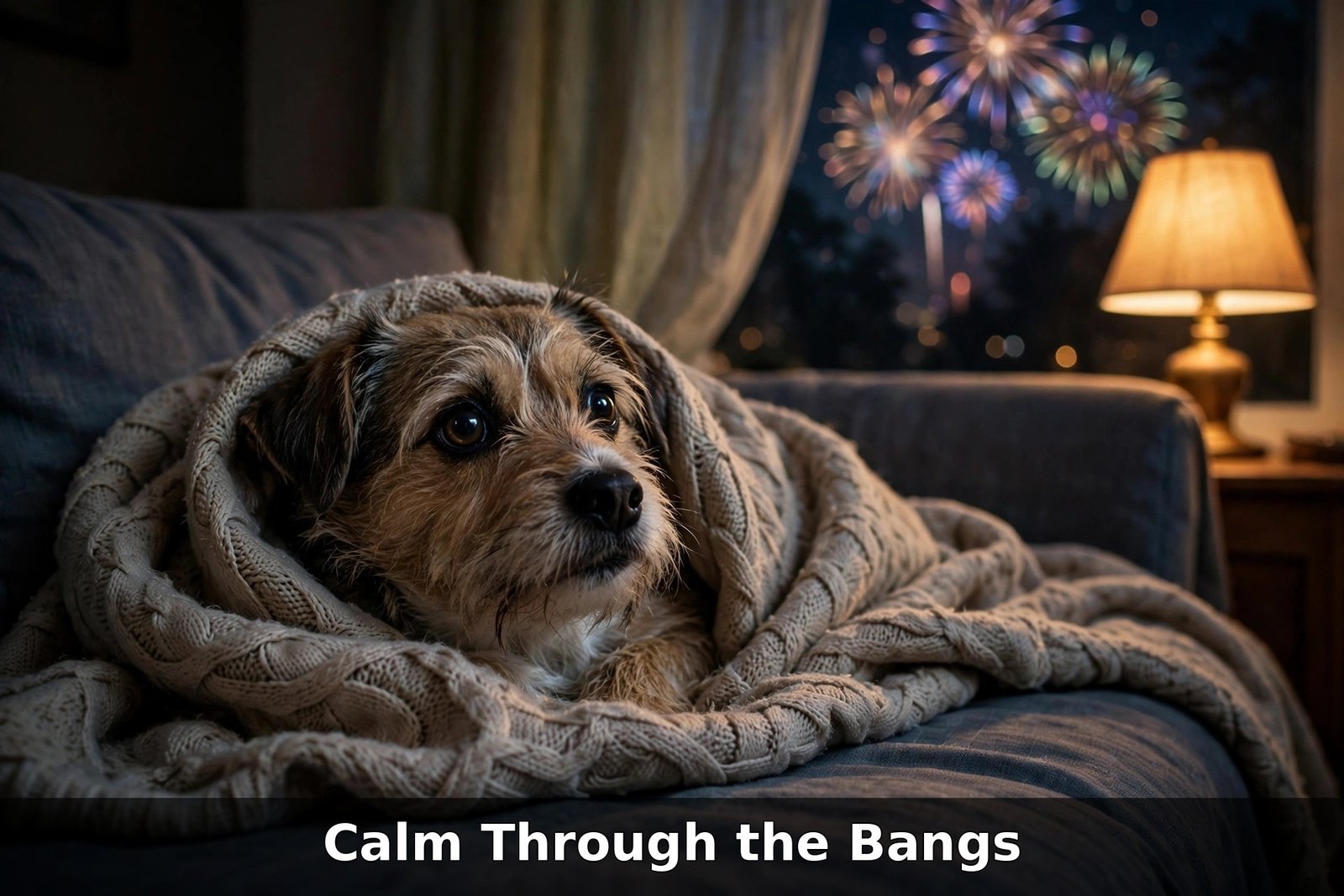
It is not just the volume, though dogs do hear far more sensitively than we do. It is the combination: a boom with no warning, no visible source, no pattern to predict, plus flashes, ground vibrations, and acrid smoke. A thunderstorm at least announces itself with pressure changes and distant rumbling. A firework goes from silence to explosion in a second, and the next one may come three seconds or thirty seconds later. Unpredictability is what keeps the stress response switched on.
Once the response fires, it does not switch off when the noise stops. Adrenaline spikes first, then the slower stress hormone cortisol rises behind it and can stay elevated for hours, which is why a dog that seemed fine by bedtime is still clingy, restless, or off its food the next morning. Repeat that across a whole season and the dog’s baseline creeps up and stays there. This is also why fear often gets worse year after year: each season teaches the dog that the bangs predict danger, and nothing in the experience teaches safety.
Some dogs are more vulnerable: dogs with poor early socialization to sounds, dogs that had one bad fireworks experience, older dogs whose hearing or cognition is changing, and dogs that already struggle with separation anxiety or thunder. If your dog is already noise-sensitive, our guide on why dogs fear thunder explains how the same fear logic works with storms.

The 9-Day Plan: What to Do and When
| When | Action | Why It Matters |
|---|---|---|
| 9–7 days out | Build the den; book the vet chat if fear is severe | Den must feel safe before the night; many prescribed medicines need trialing on a calm day first |
| 6–4 days out | Rehearse: evening routine, sound masking, long-lasting chews | Rehearsal reveals what your dog actually uses, while there is still time to change it |
| 3–1 days out | Walk early, feed early, settle early; check fences and microchip | A tired, fed dog settles easier; panicked dogs bolt, so escape-proofing is safety-critical |
| On the night | Stay home, curtains closed, lights on, sound masking on | Your calm presence is the single biggest comfort available |
| Next morning | Slow morning, normal routine, check garden before letting out | Firework debris in the garden is a real hazard; cortisol is still elevated |
Build a Den Your Dog Chooses
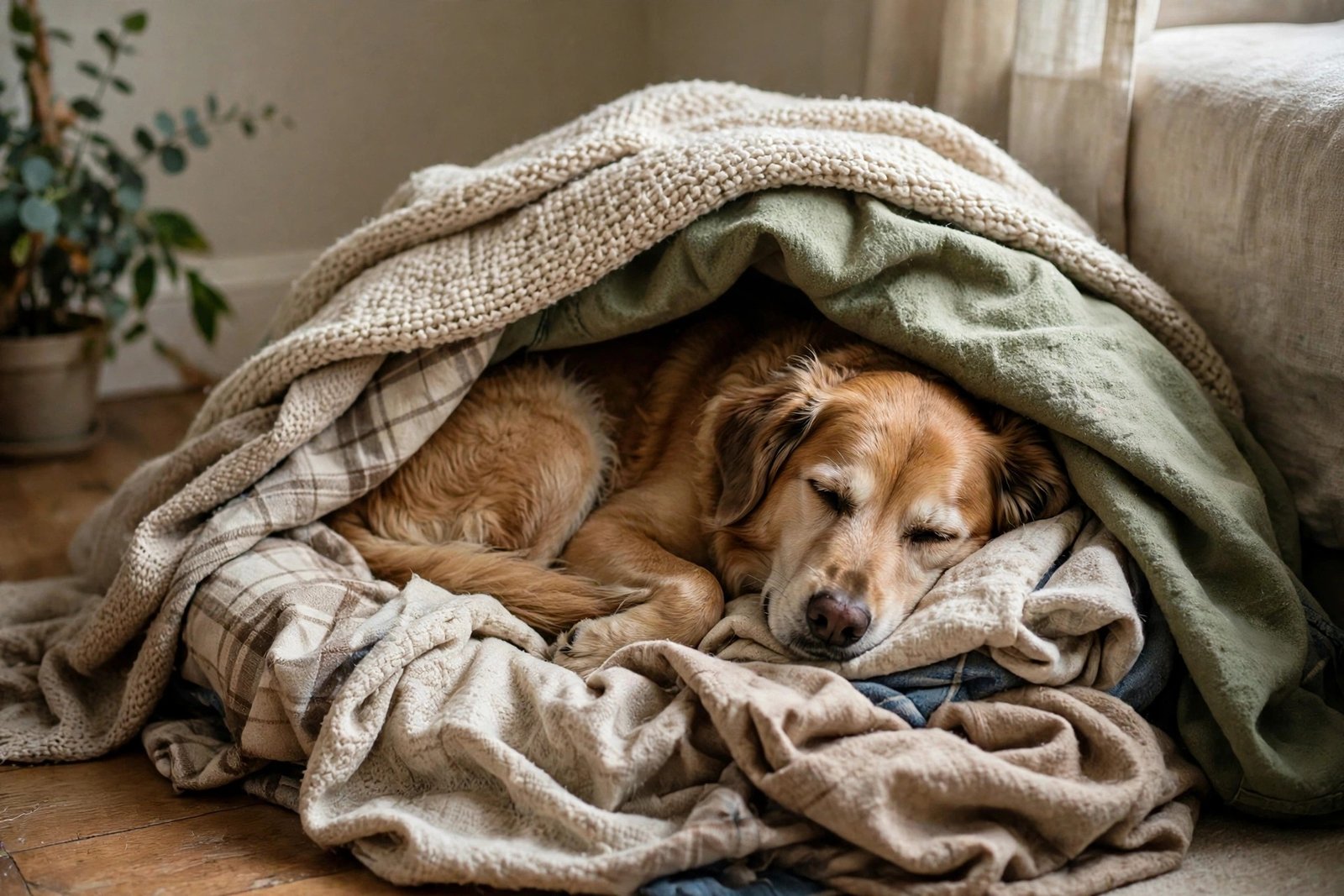
A den is not a punishment corner. It is a covered, cozy spot your dog can walk into freely: a crate with a blanket draped over it and the door open, a corner behind the sofa, a space under the stairs. Put the bed, a worn item of your clothing, and a favorite toy in it, and start feeding treats there now, so that by Bonfire Night it already smells like safety. Dogs that are allowed to choose their hiding spot cope better than dogs that are put somewhere, so if your dog picks the bathroom, let the bathroom be the den.
On the night, close the curtains and windows, switch the lights on so flashes are less startling, and put on music, television, or a dedicated sound-masking track before the bangs start, not after. A long-lasting chew or a frozen lick mat gives a nervous dog something to do with its mouth, which genuinely settles many dogs, but do not force food on a dog too frightened to eat. A dog that will not eat is telling you how scared it is, and that information matters.
What to Do During the Display
Stay home if you possibly can. A dog with a noise phobia that is also left alone is dealing with two fears at once, and that combination is what produces escapes and injuries. Stay calm yourself, because your dog reads your tension faster than any advice column. If your dog comes to you for comfort, give it calmly. The old idea that comforting a frightened dog rewards the fear has been thoroughly debunked: comfort reduces fear, it does not train it. Equally, never punish shaking, hiding, or barking during fireworks. Punishing fear teaches the dog that the scary night also brings scary consequences from you.
Do not take your dog outside during a display, even into a fenced garden, and keep the lead on for any essential toilet trip before dark. Check that doors, windows, and fences are secure, and make sure the microchip details are current, because a panicked dog that bolts is the nightmare scenario of every fireworks season. If your dog also panics when left alone at other times, our separation anxiety signs guide and our calming bed guide cover the longer-term side.
The Honest Truth About Desensitization
Proper desensitization, pairing very quiet firework sounds with good things and raising the volume over weeks, genuinely works for many dogs. Nine days is not weeks. Starting a sound program the week before Bonfire Night and playing sounds at full volume is more likely to sensitize your dog than help. If you want to try gentle sound exposure, keep it very quiet, pair it with treats, and stop the moment your dog shows stress. The real desensitization project starts the week after Bonfire Night, for next year, and that is a plan worth making once this season is over.
For severe cases, talk to your vet sooner rather than later. Prescribed anti-anxiety support exists, it needs to be trialed before the event, and it is not a failure to use it. What does not help is giving a dog a sedative for the first time on the night itself and discovering it makes the dog groggy but still terrified, which is a worse state than fear alone.
Frequently Asked Questions
Should I comfort my dog during fireworks?
Yes. Calm reassurance reduces fear; it does not reinforce it. Sit nearby, speak softly, and let your dog choose whether to hide, lean on you, or settle in its den.
Why does my dog get worse every year?
Because each season can strengthen the association between bangs and danger, and the stress hormones involved take hours to settle. Without a deliberate plan, the pattern repeats and deepens.
Can I walk my dog during fireworks?
No. Keep walks to daylight hours on fireworks days, and do not go out after dark once displays may start. Even a calm dog can bolt at an unexpected bang.
When should I see a vet about firework fear?
If your dog panics, injures itself, refuses food, or takes more than a day to recover, or if the fear is spreading to other noises. A vet can check for medical contributors, discuss behavior support, and trial medication well before the next event.
🎄 Visit Our Etsy Shop — Fukroo
Printable Christmas wall art, gift tags & party games — instant download
Shop on Etsy →