How to Introduce a New Puppy to an Older Dog (2026): The Slow, Safe Way
The car ride home with a new puppy feels like pure joy — until you pull into the driveway and remember the other dog waiting inside. Your older dog has ruled this house for years. Suddenly a tiny, bouncy stranger is about to walk through the front door, and that first meeting can set the tone for months. Done slowly, most dogs settle into a comfortable friendship. Done in a rush, it can create tension that takes far longer to undo.
The rushed version starts with the puppy dumped on the living room rug while the older dog stares and wonders what just happened. The slow version looks almost boring: a walk, some sniffing, separation, and short supervised visits. Boring is exactly what you want — a calm start lets both dogs decide they like each other, rather than forcing it.
Quick Verdict
Introduce a new puppy to an older dog on neutral ground, keep the first weeks heavily supervised and separated, and let the older dog set the pace. Expect the real friendship to take three to four weeks — not one afternoon. One rule above all: the senior dog’s comfort comes first.
Before the Meeting: Set the House Up First
Do the groundwork before the puppy ever crosses the threshold. Give the puppy its own room or penned area, with its own crate, bed, water bowl, and toys. Your older dog keeps the rest of the house, especially their favorite spots. Nothing about their daily life should suddenly shrink the day the puppy arrives.
A baby gate is worth its weight in gold here. It lets the dogs see and smell each other without any pressure to interact, and it gives your older dog an easy escape route. A dog who knows they can walk away rarely feels the need to escalate.
A day or two before the meeting, try a scent swap. Rub a soft cloth on the puppy, leave it near your older dog’s bed, and do the same in reverse. Most dogs will sniff it, yawn, and move on — indifference is exactly the reaction you want. Tire the puppy out a little beforehand with gentle play, and feed both dogs separately first, so hunger adds no edge.
The First Meeting: Neutral Ground and a Parallel Walk
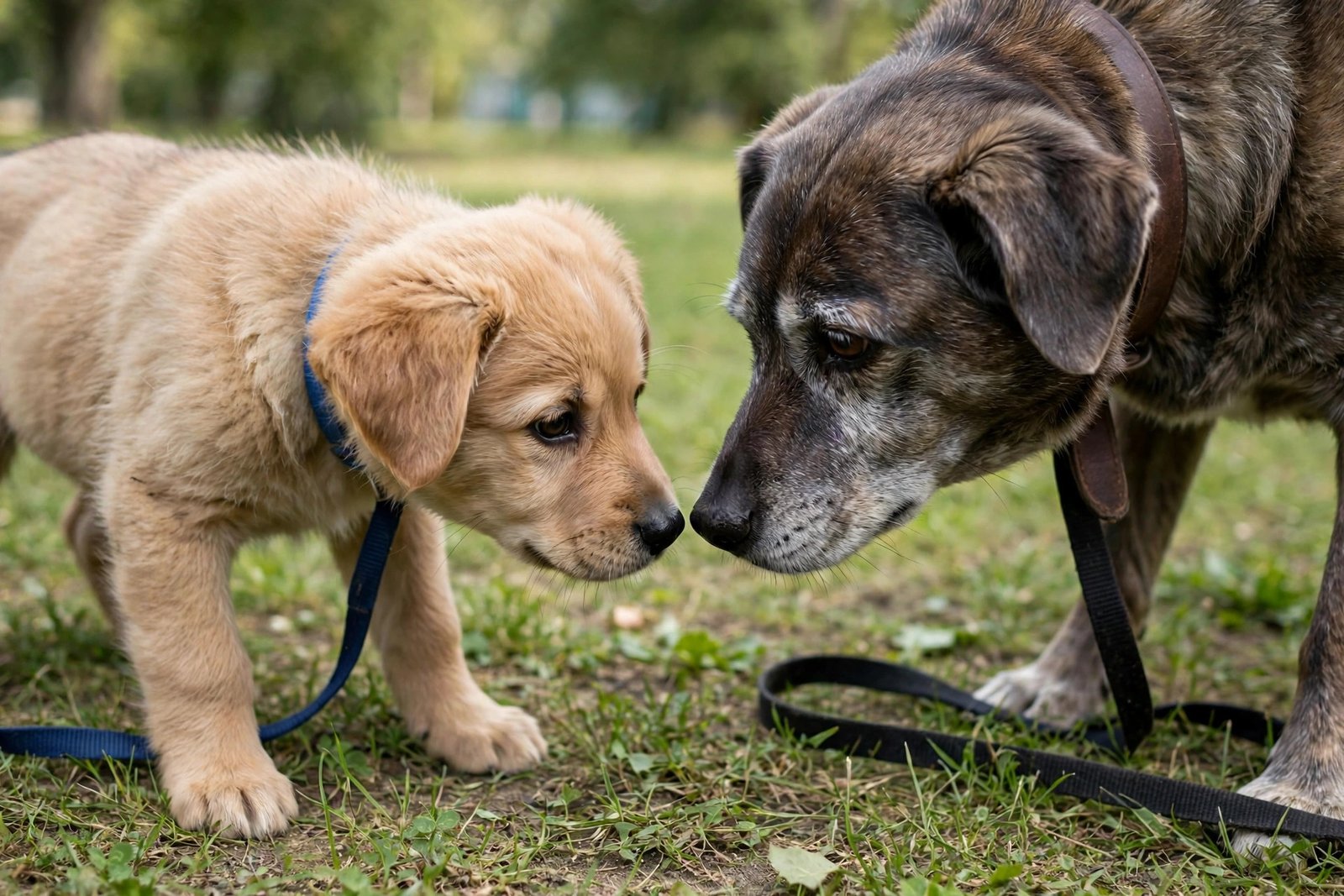
Do not introduce them in your living room — your older dog’s territory, where a first meeting can feel like an invasion. A quiet stretch of sidewalk, a friend’s yard, or a calm corner of a park works far better. Bring a second person if you can, so each dog has a handler.
Start at a distance where both dogs notice each other but stay relaxed — loose leashes, soft bodies. Then walk parallel, in the same direction, with plenty of space between you. Walking side by side lets dogs get comfortable without the pressure of a face-to-face greeting, which is where introductions tend to go wrong.
Close the gap gradually over ten or fifteen minutes, widening it again if either dog stiffens or fixates. When both walk calmly side by side, allow a brief sniff — seconds, not a long nose-to-nose stare — then call them apart cheerfully and reward both. Only then head home together, older dog inside first, puppy straight to its own area.
The First Week at Home: Separate Everything, Supervise Everything
The first week is about management, not friendship. Feed the dogs in separate rooms, or at least on opposite sides of a closed gate. Food is the most common trigger for trouble between dogs who otherwise get along fine, and a puppy bouncing toward an older dog’s bowl is asking for a confrontation. Pick the bowls up between meals, too.
Keep beds, toys, and chews separate too. The puppy will still try to steal the older dog’s favorites — puppies are shameless like that — so keep the good stuff out of reach unless you are watching.
The rule that matters most in week one: never leave them unsupervised together, not even for a quick trip to the kitchen. Use the crate, pen, or baby gate whenever you cannot actively watch them — most bad first-week stories start with “I only left the room for a minute.” Keep sessions short and positive: a few minutes together, calm behavior rewarded for both, then a break. You may also want to read up on how to stop puppy biting hands and feet, because a mouthy puppy is the fastest way to annoy a senior dog who just wants a nap.
Reading Body Language: Calm vs. Stressed
Dogs tell you exactly how an introduction is going. A relaxed dog has a loose, wiggly body, a soft mouth, and a freely moving tail. Play bows are a great sign. So is one dog sniffing and then calmly walking away — that is good manners, not rejection.
Stress looks different: a stiff, frozen body, a hard stare, a closed mouth, a high rigid tail, or raised hackles. Lip licking, yawning when not tired, or turning away are quieter signals. If you see several at once, create space calmly and give everyone a break.
Growling is the signal people handle worst. A growl is a dog saying, “I need more space, please” — communication, not defiance, and it should never be punished. Punishing it removes the warning, not the feeling, and the next warning may be a bite with none at all. When your older dog growls, calmly move the puppy away. That is how trust is built.
The Week-by-Week Plan
Progress is rarely a straight line — some days feel like breakthroughs, the next day the puppy is a menace again. Use this plan as a guide, and slow down whenever either dog tells you to.
| Week | What to Do | What Success Looks Like |
|---|---|---|
| Week 1 | Separate zones, separate meals, short supervised visits, parallel walks daily | Both dogs relax near the gate; no sustained staring or freezing |
| Week 2 | Longer shared time in one room, still supervised; practice calm exits | Older dog stays willingly; puppy responds to interruptions |
| Week 3 | Shared play with breaks, shared walks, brief out-of-sight separations | Play stays loose and bouncy; both dogs can settle in the same room |
| Week 4 | More freedom at home, still separate sleeping and feeding spots | Relaxed routine; older dog sometimes seeks out the puppy |
Notice what never appears in that table: leaving them alone together. Even in week four, unsupervised time is earned gradually — a few minutes while you are in the next room, not a whole workday. Keep separate sleeping spots if that works; many households do, and it prevents most nighttime squabbles.
Protecting a Fragile Senior
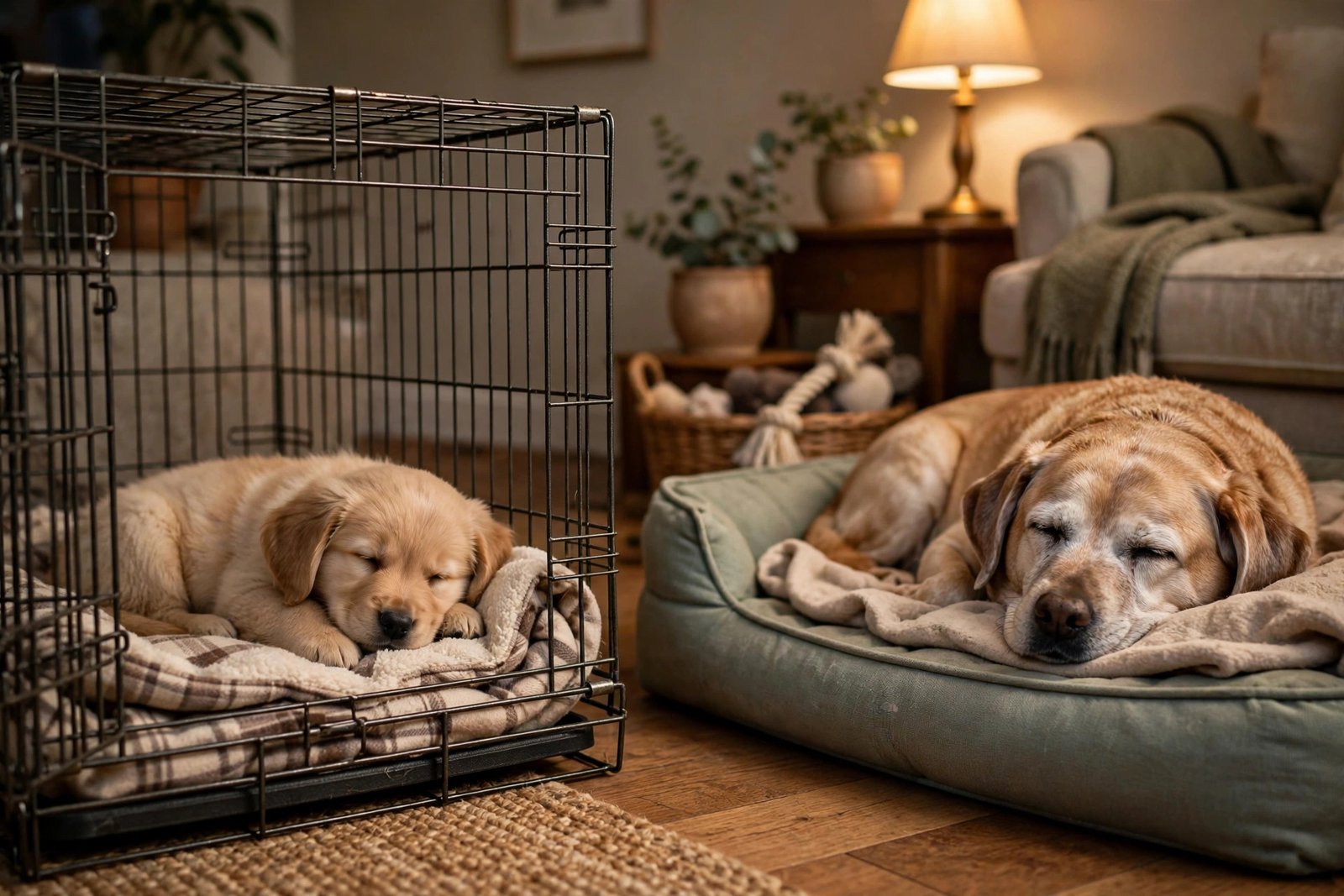
Senior dogs need extra protection. A puppy’s play — full-speed body slams, ear pulling, climbing — can genuinely hurt an arthritic dog or one with bad hips or failing eyesight. An older dog who cannot move away quickly is not being grumpy when they snap; they are defending a body that hurts. Keep the puppy leashed indoors if needed, and always give the senior a puppy-free room to rest — a tired, sore senior has a much shorter fuse.
If your older dog seems anxious rather than just annoyed — pacing, panting, hiding, refusing food — talk to your vet; pain and anxiety often look like behavior problems. And if you see real aggression, like lunging, sustained chasing, or bites that break skin, stop managing it alone and talk to a certified behaviorist. Help early beats undoing months of bad history.
Troubleshooting: When It Gets Bumpy
The older dog growls at the puppy. Normal, within limits. Create space, reward the older dog for moving away calmly, and keep visits shorter. Worry only if it escalates to lunging or snapping with contact, or happens constantly even at a distance.
The puppy will not leave the senior alone. The most common complaint, and almost always a puppy management problem. Interrupt the pestering before the older dog has to, redirect the puppy to a toy or chew, and enforce naps. An overtired puppy is relentless, and a crate here is a nap room, not a punishment.
Resource guarding over food or toys. Go back to full separation for meals and high-value items. Do not try to “teach sharing” by taking things away and giving them back — that usually makes guarding worse.
The older dog seems sad or withdrawn. Keep their routine sacred: same walk time, same cuddle spot, same one-on-one attention, ideally before the puppy gets theirs. A few minutes of undivided time daily does more for a senior’s mood than any treat. If withdrawal lasts more than a couple of weeks, or comes with appetite loss, check with your vet. Our guide to calming treats for dogs with separation anxiety and the crate vs. free roam comparison can also help with the settling-in side.
Frequently Asked Questions
How long does it take for an older dog to accept a new puppy?
Most pairs find a comfortable rhythm in three to four weeks, though a real bond can take months. Tolerance comes first, friendship follows.
Should I let the older dog correct the puppy?
A brief correction — a growl or an air snap with no contact — is normal dog communication. Step in if it becomes intense, repeated, or physical. Manage the puppy so the older dog rarely needs to correct them.
Can the puppy and older dog sleep together?
Not at first. Separate sleeping spots keep nights calm and prevent most nighttime conflicts. If they later choose to share a bed on their own, that is their decision, not a goal to force.
What if my older dog ignores the puppy completely?
Ignoring is actually a fine outcome in the early weeks. It means the older dog is not stressed enough to react. Keep up the short positive sessions and let interest grow at its own pace.
When should I get professional help?
If you see bites that break skin, sustained chasing, escalating guarding, or behavior getting worse after two weeks, talk to your vet or a certified behaviorist sooner rather than later.
A Slower Start Pays Off
The dogs in the best multi-dog homes I know did not become friends in a day. They became friends because someone gave them time, space, and a human who stepped in before things got heated. Spending the first month being careful is a tiny investment for a friendship that could last a decade.
🎄 Visit Our Etsy Shop — Fukroo
Printable Christmas wall art, gift tags & party games — instant download
Shop on Etsy →