Why Is My Dog Scared of the Christmas Tree? (2026): The Calm, Step-by-Step Fix
Disclosure: This guide is general information, not veterinary or behaviourist advice. It explains why dogs fear the Christmas tree and how to help them feel safe again.
Quick Verdict
A dog is usually scared of the Christmas tree because it appeared overnight, smells strange, sparkles, and hums — four new things at once in the middle of the dog’s own living room. The fix is patience, not force: let the dog look from a distance, reward calm behaviour, and move closer over several days. Most dogs settle within a week. If the fear does not ease, a vet or a qualified behaviourist is the next step.
Why Dogs Get Scared of the Christmas Tree
To us, a Christmas tree is a tradition. To a dog, it is a tree that was not there yesterday, suddenly standing in the middle of the room and smelling of pine. Dogs live by routine and by smell, and a tree breaks both at once. The living room is their safe place, and something large and strange has moved into it without asking.
Smell is the biggest part. A real tree gives off pine scent and sap, and a fake tree smells of plastic and dust from the loft. A dog’s nose is thousands of times more sensitive than ours, so a smell we barely notice can fill the whole room for them.
Then there is the light and the movement. Fairy lights twinkle, baubles throw light around the room, and a star on top sways every time someone walks past. Dogs notice movement at the edges of their vision far better than we do, and a tree of moving reflections can feel alive.
Finally, there is the learned part. A dog that once knocked a bauble off and got shouted at remembers, and a puppy meeting its first tree has no reason to trust it.
The Signs Your Dog Is Actually Afraid
Not every dog that looks at the tree is scared of it. Some are curious, some are plotting how to steal a bauble. The difference is in the body, and it is worth learning to read.
| Signal | Fear | Curiosity |
|---|---|---|
| Tail | Tucked tight under the body | Level or wagging loosely |
| Ears | Pinned flat back against the head | Forward, tracking sounds |
| Body | Crouched low, ready to run | Relaxed, weight forward |
| Mouth | Yawning, lip licking, panting | Loose, sniffing the air |
| Behaviour | Hiding, refusing the room, barking at the tree | Sniffing from a safe distance, then moving on |
One sign on its own means little. A yawn can just be tiredness, and a tucked tail can be a cold dog. Two or three signs together, every time the dog sees the tree, is the pattern that matters. A dog that will not enter the room is telling you it feels unsafe.
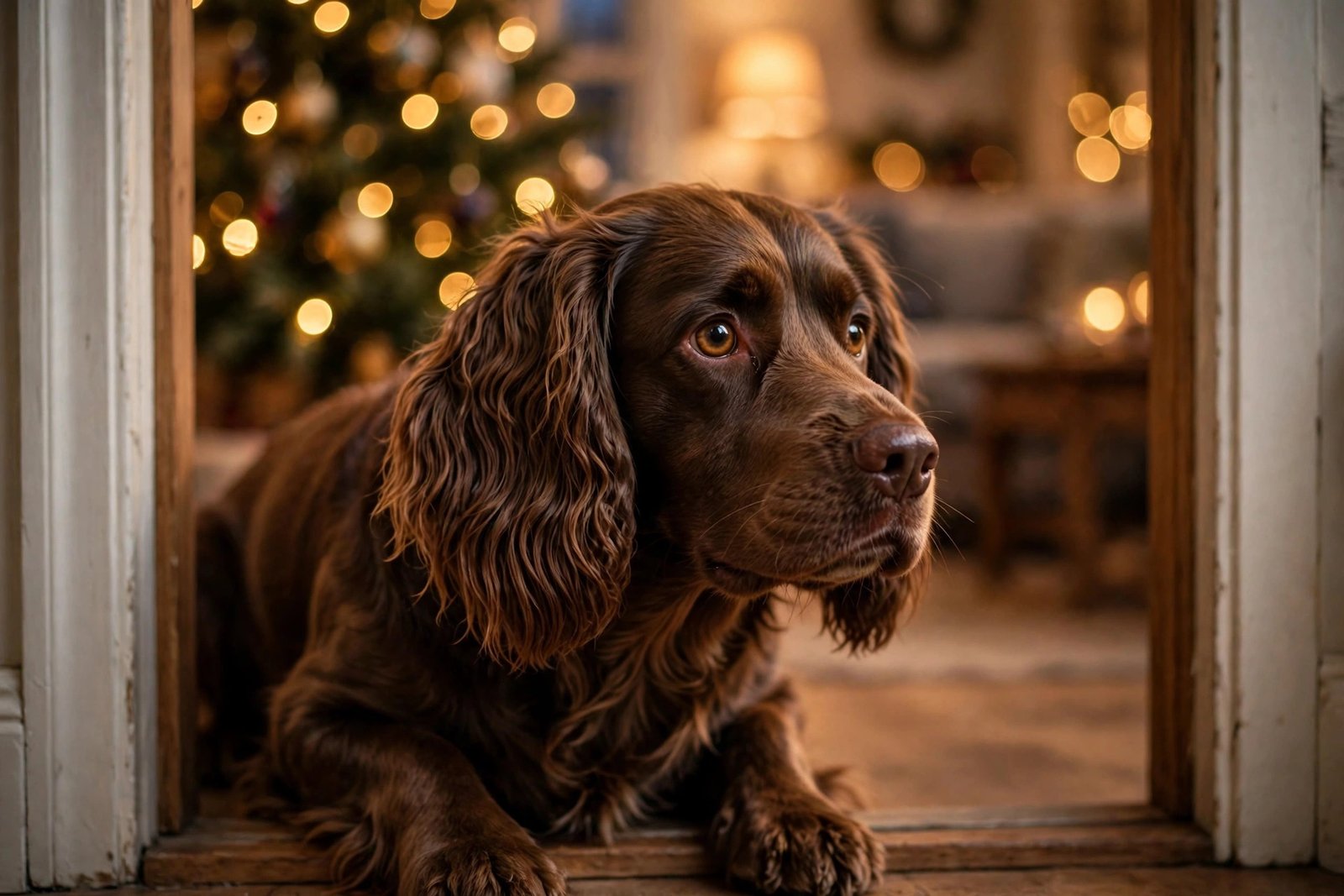
Fear and excitement can look alike, and the tail and ears will tell you which. Our guide to why dogs are scared of thunder covers the same body language in a different setting: low body, pinned ears, and a dog that wants distance.
The Calm Introduction Plan
The plan is slow on purpose. A dog forced to sit next to the thing it fears does not learn the tree is safe — it learns it cannot escape, and that makes the fear worse. The goal is a dog that chooses to come closer, one step at a time.
Day one and two: let the dog look from the doorway. Do not carry the dog into the room, do not lure it with a treat held next to the tree, and do not block the exit. Sit in the room yourself and let the dog decide how close to come. If it stays in the doorway, that is fine; if it comes in and lies down at the far end, that is progress. Reward calm behaviour quietly with a soft word or a treat dropped near the dog.
Day three and four: move the dog’s normal things a little closer. The bed can move a few feet toward the tree, and meals can be served in the same room at a comfortable distance. Play a short game the dog loves, in the room with the tree, so the room starts to mean fun instead of fear. Keep sessions short — ten minutes of calm is worth more than an hour of tension.
Day five to seven: let the dog investigate. Most dogs will sniff the lower branches on their own by now, and that is when the fear starts to fade. Let them sniff, and do not make a fuss. If the dog sniffs and walks away, that is a win. If the dog sniffs and lies down nearby, the tree has become furniture, which is exactly what you want.
What NOT to Do
Never drag a dog to the tree or shut it in the room with the tree. Flooding a dog with the thing it fears does not cure the fear — it teaches the dog its warnings are ignored, and a dog that stops warning may bite without warning. The same goes for punishment: a dog shouted at for barking at the tree learns the tree is scary, and the owner is scary too.
Do not move the tree to “fix” the problem by hiding it — that just moves the fear. The answer is to make this tree safe, not to play hide and seek with it. And do not introduce the tree on the same day as a house full of visitors or a noisy party. One new thing at a time is the rule.
Making the Tree Itself Less Scary
A few small changes to the tree can take the edge off. Put the tree in a sturdy stand that cannot be knocked over, because a falling tree is the one event that can turn mild worry into real fear. Keep the lowest branches clear — no baubles at nose height, no tinsel to pull, and no chocolate decorations on the tree at all.
Choose steady lights over flashing ones. A slow, warm glow is far less startling than a tree that strobes. If the tree plays music or has moving parts, switch those off for the first week. The tree can be festive without being a funfair.
A tree skirt does more than look tidy. It covers the stand, the wires, and the water reservoir of a real tree, so there is less for a nervous dog to chew or drink from. Our guide to the best pet-safe Christmas tree skirt for dogs covers the chew-proof and washable options, and our guide to pet-safe Christmas ornaments for dogs covers shatterproof, felt, and wood options that will not break into sharp pieces if the dog knocks one off.
Give the dog a safe room. A room without a tree, with the dog’s bed, water, and a familiar blanket, where the dog can go whenever it wants and nobody follows it. A dog that knows it can leave will stay longer, and most stop using the safe room within days.
When to Call a Professional
Most tree fear fades in a week. Some does not, and that is the point to get help rather than to push harder. Call your vet or a qualified behaviourist if the dog still refuses to enter the room after a week of calm introductions, if the fear is spreading, or if the dog stops eating or starts hiding for hours. Call sooner if the fear turns into growling, snapping, or self-harm — a frightened dog defending its space needs a professional, not a family debate.
A good behaviourist sees this every December and has a plan that starts where this guide leaves off. A vet check is worth doing too, because pain makes fear worse, and a dog with sore joints or failing eyesight startles more easily. Our guide to the best calming dog bed for separation anxiety covers a safe resting spot that helps anxious dogs settle, and a calm bed in the safe room is a good place to start while you wait for the appointment.
Pros and Cons
Pros: the slow introduction builds real confidence that lasts beyond Christmas; the dog learns the tree is safe instead of just enduring it; the plan needs no special equipment, only patience; the safe room gives the dog control; the same steps work for other new things in the house.
Cons: the plan takes a week or more and cannot be rushed; it needs everyone in the house to follow the same rules; a deeply fearful dog may need professional help too; visitors can undo a day’s progress in an evening.
Frequently Asked Questions
How long before my dog accepts the Christmas tree?
Most dogs settle within a week of calm, daily introductions. Puppies are often faster, sometimes two or three days. Older dogs and rescue dogs can take two weeks or more.
Should I take the tree down if my dog will not enter the room?
Not straight away. Give the calm introduction plan a few days first, and make sure the dog has a safe room. If the dog still will not enter the room after a week, or stops eating, take the tree down or move it to a room the dog does not need, and call a behaviourist. The tree is decoration. The dog is family.
Can puppies be scared of the Christmas tree too?
Yes, and it is very common. A puppy’s first Christmas is a flood of new sights, sounds, and smells, and a tree is the biggest new thing in the room. The same plan works for puppies, usually faster — but keep the lowest branches clear, because a curious puppy will chew anything it can reach.
The Bottom Line
A dog scared of the Christmas tree is not being silly, stubborn, or badly behaved. It is an animal whose safest room changed overnight, asking for time to work out that the change is harmless. Give it that time: let it look from the doorway, reward the calm moments, and move closer over days rather than minutes.
Disclosure: Furveko is an independent guide. This article is general information, not veterinary or behaviourist advice. If your dog’s fear is severe, spreading, or paired with not eating or self-harm, contact your vet or a qualified behaviourist.
The Tree Stays Up — and So Does the Rest of the Family
The dog is settling in and the tree is staying put, so there is time to look at what else the family has going on. JobyRoz has job ideas for the new year, Earnrove covers ways to earn a little extra over the holidays, and Clearove keeps the water at home clean and simple. Furveko is the pet corner of the family, home to honest guides for the dogs we share our homes with.
🎄 Visit Our Etsy Shop — Fukroo
Printable Christmas wall art, gift tags & party games — instant download
Shop on Etsy →