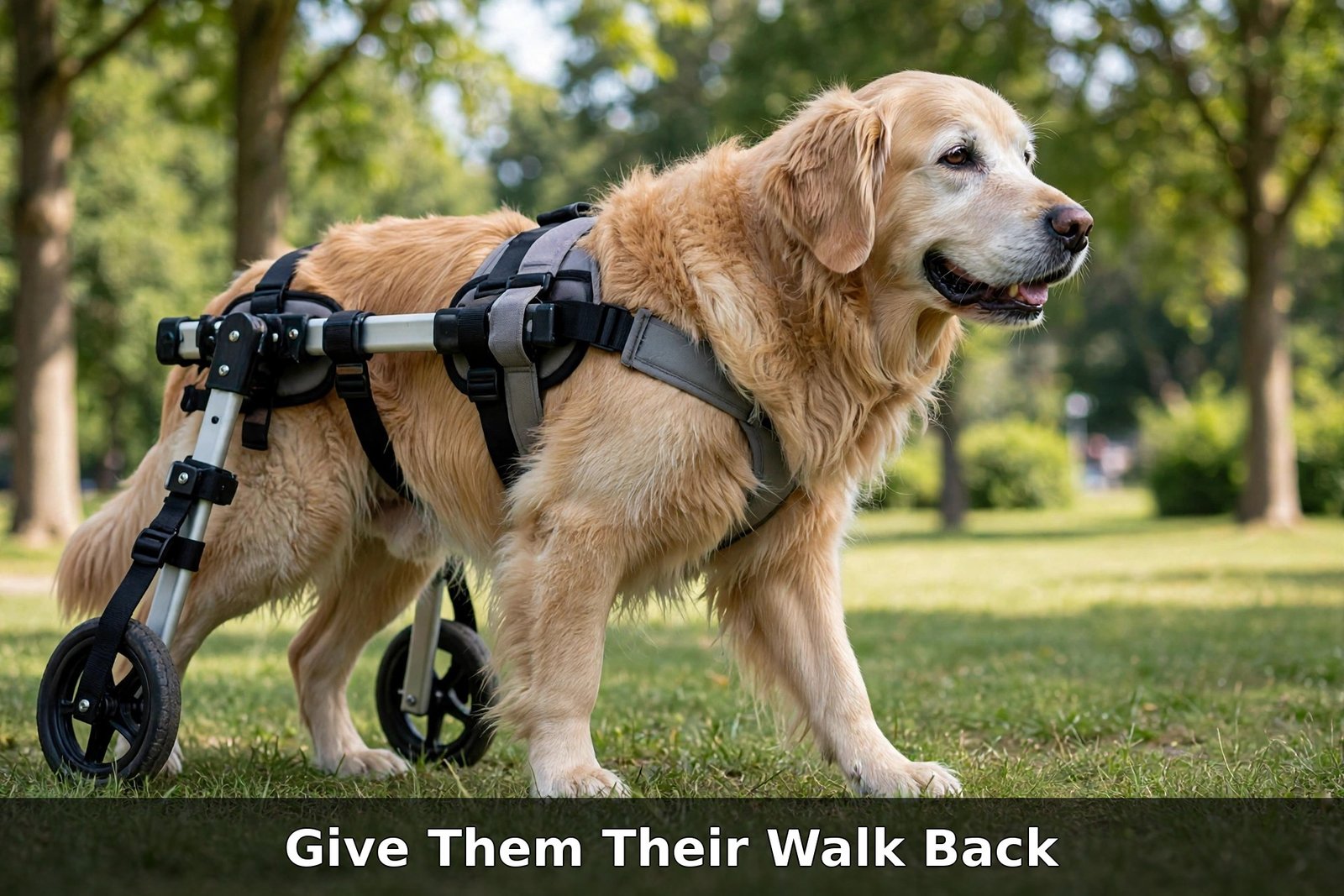
How to Choose the Best Dog Wheelchair for Back Legs (2026): The Fit-First Buyer’s Guide
Watching your dog drag their back legs is hard. One day they are chasing a ball, and the next they are struggling to stand after a nap. You search, you see dozens of carts, and every one claims to be the answer. Here is the honest truth I keep coming back to: the best cart is not the fanciest one. It is the one that fits your dog’s body, matches how much strength they still have, and gets used every day without rubbing, tipping, or exhausting them.
That is why this guide puts fit first. We will cover the two-wheel versus four-wheel choice, the three measurements that matter most, and the details that separate a comfortable cart from one that ends up in the garage, plus a first-week plan to help your dog enjoy the wheels.
Quick Verdict
If your dog can still stand and take some steps, start with a two-wheel rear-support cart. If they cannot bear weight in the back, or they collapse after a few steps, a four-wheel full-support cart is usually kinder. Either way, measure twice, check the harness daily for the first week, and keep early sessions short. A cart supports mobility, it does not fix the underlying condition, and sudden weakness always deserves a vet visit first.
Start With the Real Question: Two Wheels or Four?
The first decision is simple, and it shapes everything else.
A two-wheel cart holds up the back end while your dog powers forward with their front legs. It works best for dogs who still have some back-leg strength, decent front-leg stamina, and good balance. Think of a senior dog with arthritis who can walk but wobbles. These carts are lighter and easier to turn, and dogs often accept them because they still feel like walking.
A four-wheel cart supports the whole body. It suits dogs with very little or no back-leg function, dogs who fatigue fast, and dogs who need help staying upright even when standing still. The trade-off is weight and turning circle. In a small hallway it can feel bulky. Out on a flat path, though, it can give a tired dog their freedom back.
Here is my rule of thumb. If your dog can stand with a little help and take ten steady steps, try two wheels first. If they sink, knuckle badly, or give up after a few steps, do not force it. Four wheels are not a failure, just the right tool for a different stage.
How to Measure: Height, Length, and Width
Most fit problems come from guessing. A cart that is too tall lifts the back too high and strains the spine. One that is too short drags the legs. One that is too narrow rubs the hips raw. Grab a soft tape measure, have a second person steady your dog, and take these three numbers while your dog stands as naturally as possible.
First, rear height: from the floor to the top of the back leg where the hip folds, roughly where a support saddle would sit. Second, body length: from the chest to the base of the tail along the side. Third, width: across the widest part of the hips. Write all three down. An adjustable cart gives room to fine-tune, which matters because dogs shift weight as they gain confidence.
Check the fit by watching, not just by reading a chart. The back should sit level, not tilted up or down. The legs should rest in a natural position, not stretched or bunched. The harness should sit snug with room for two fingers underneath, and there should be no red marks after ten minutes. If you see rubbing on the inner thighs or belly, stop and adjust before the next outing. Sore skin turns a good cart into a refused cart very fast.
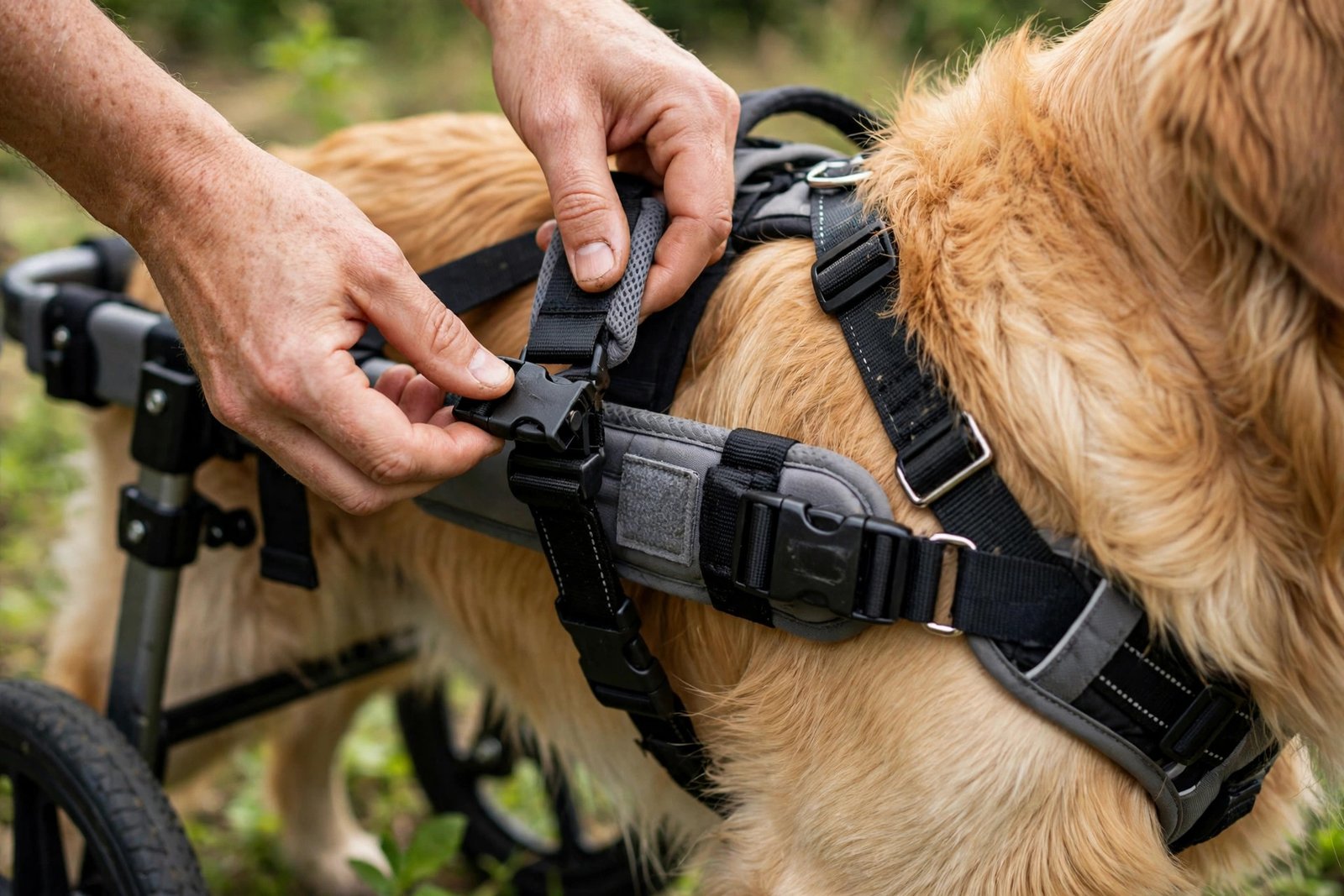
Frame, Harness, and Wheels Compared
Frames usually come in lightweight aluminum or heavier steel. Aluminum is my pick for most daily users because it is easier to lift into a car and less tiring for the dog on longer walks. Steel feels sturdier and may suit a large dog, but the extra weight adds up with daily lifts. Look for smooth welds, no sharp edges, and a frame that folds without tools.
The harness matters just as much as the frame. A wide, padded saddle that spreads weight across the belly and hips beats a thin strap every time. Dogs with sensitive skin need extra padding, and the harness should be washable because it will get dirty. Larger wheels roll better over grass and uneven paths, while smaller solid wheels suit smooth floors. If your walks mix pavements and parks, go bigger than you think you need.
For longer days out, many owners pair a cart with a comfortable stroller for senior dogs, so the dog can ride when they are done walking.
| Cart type | Best for | Watch out for |
|---|---|---|
| Adjustable aluminum rear-support cart | Dogs with partial back-leg strength | Saddle rubbing if sized too tight |
| Four-wheel full-support cart | Dogs with little or no back-leg weight bearing | Bulkier turning in tight spaces |
| Budget steel-frame cart | Short, flat-surface use and trying a cart first | Extra weight on lifts and longer walks |
Adjustable aluminum rear-support cart
A light, two-wheel cart with adjustable height and length. This is the starting point I suggest most often for dogs who can still help themselves along.
Pros: Light to lift, easy to turn, adjustable as your dog’s strength changes.
Cons: Not enough support for dogs who cannot bear back-leg weight at all.
Four-wheel full-support cart
A full-body cart that keeps the dog level and upright, front and back. Best when stamina is low and stability matters more than speed.
Pros: Maximum stability, less front-leg strain.
Cons: Heavier, wider turning circle, harder to store in a small car.
Budget steel-frame cart
A simple, sturdy two-wheel cart in steel. A sensible way to test if your dog accepts wheels before investing in a more refined setup.
Pros: Sturdy feel, simple design, lower upfront cost for a first trial.
Cons: Heavier to carry, less adjustability, can tire small dogs faster.
The Vet-First Rule
I say this plainly because it matters more than any cart feature. If weakness came on suddenly, if your dog is in pain, crying, unable to pass urine, or has open sores, see the vet before you order anything. A cart helps a dog move. It does not diagnose nerve damage, a slipped disc, or an infection, and using a cart over an undiagnosed injury can make things worse. Your vet can tell you if a cart is appropriate right now, or if rest and treatment need to come first.
Even for slow, age-related decline, a quick vet check is worth it. Ask about pain management, weight, and safe exercise limits. A dog in unmanaged pain will hate a cart that a comfortable dog would love. Get the medical side settled, then fit the cart to the dog you actually have.
Your First-Week Training Plan
Day one is not a long walk. It is ten minutes in the garden with treats and praise. Let your dog sniff the cart, reward calm standing, and take it off before they get frustrated. On days two and three, repeat on a flat surface, adding a few steps at a time. Keep sessions to ten or fifteen minutes, two or three times a day, and always end while your dog is still happy.
By day four or five, most dogs start to get it, and you can stretch to twenty minutes on a smooth path. If your dog is panting hard, lagging, or refusing to move, you have gone too far or the fit needs adjusting. Rest days are part of training, not a failure. At home, a supportive orthopedic bed for senior dogs with arthritis helps stiff joints recover between outings.
Common Fit Mistakes to Avoid
The first mistake is buying for the dog you wish you had, not the one in front of you. A cart sized for a younger, stronger dog will not restore that strength. The second is leaving the cart on all day. Carts are for active sessions, not all-day wear. Take it off indoors for rest, check skin after every session, and clean the harness often. The third is skipping car access. If your dog cannot jump in anymore, a dog ramp for cars and SUVs saves your back and their joints on the way to the park.
Finally, do not ignore small signs. A dog who balks or chews at the harness is telling you something. Check for a twisted strap, a wheel catching fur, or a sore spot you missed.
Frequently Asked Questions
Can my dog still go to the toilet in a wheelchair?
Yes, in most rear-support designs the saddle leaves room for toileting, and dogs usually learn quickly. Choose a familiar grassy spot and give them time. If mess is trapped in the harness, the fit or saddle position likely needs adjusting.
How long can my dog stay in the cart each day?
Start with ten to fifteen minutes, then work toward thirty to forty-five minutes a couple of times a day if your dog stays comfortable and keen. Always remove the cart for rest, and check skin after each session.
Will a wheelchair weaken my dog’s legs further?
A well-fitted cart used for sensible sessions does not replace all movement. It supports the weak area so your dog can keep using their front legs and any remaining back-leg function. Your vet can advise on gentle exercises to use alongside cart time.
What if my dog refuses the cart completely?
Do not force it. Go back a step: treats near the cart, then standing in it for a minute, then one or two steps. Rule out pain, rubbing, and a poor fit first, because refusal is often discomfort in disguise. Some dogs need a week of tiny wins before they accept wheels.
When to call the vet: sudden paralysis, severe pain, loss of bladder or bowel control, open sores that will not heal, or swelling around the legs or belly after cart use. A cart supports mobility. It does not treat disease, and these signs need prompt veterinary care.
🎄 Visit Our Etsy Shop — Fukroo
Printable Christmas wall art, gift tags & party games — instant download
Shop on Etsy →