

How to Choose the Best No-Pull Harness for Large Dogs That Pull: Fit Guide + 4 Types (2026)
A strong 85-pound dog can turn a walk into a four-minute sprint: one squirrel, one lunge, and the owner is skiing down the sidewalk while the collar rides up toward the dog’s ears. That is why collars alone are a poor choice for big, strong pullers.
If you own a large dog that pulls, you’ve probably already tried a harness — and it may not have worked. Here’s what most roundup articles won’t tell you: the harness usually isn’t the problem. The fit is. A no-pull harness in the wrong size is just an expensive decoration your dog drags you around in.
Quick Verdict
For most large dogs that pull, a padded dual-clip harness — leash attachments on the chest and the back — is the safest pick. The front clip gently turns your dog toward you when they lunge; the back clip handles calm stretches. But none of it matters if the fit is wrong. Measure your dog’s chest first — the five-minute method below is the most useful part of this guide.
Why Most No-Pull Harnesses “Don’t Work” (It’s the Fit)
Trainers see the same story constantly. Someone buys a recommended harness, their 70-pound shepherd pulls just as hard, and they declare the whole category a scam. Then a trainer loosens one strap, tightens another, and the same harness suddenly works.
Most people size by the weight chart, but dogs don’t come in standard proportions — a deep-chested Boxer and a barrel-chested Bulldog can weigh the same and need totally different sizes. Too loose, and a strong dog shifts the whole harness sideways so the front clip slides under the armpit, where it does nothing. Too tight, and it rubs the armpits raw — and a dog in pain pulls harder, not less.
I treat fit as step zero now. Get it right, and even a basic front-clip design calms most pullers. Get it wrong, and the fanciest harness on the shelf won’t save your shoulder.

The 5-Minute Fit Guide for Strong Pullers
Grab a soft measuring tape (or string and a ruler). Have your dog stand square — four paws down, head up.
1. Measure the girth. Wrap the tape around the widest part of the ribcage, right behind the front legs. This one number matters more than your dog’s weight. Keep it snug enough to slip two fingers underneath, and write it down.
2. Apply the two-finger rule everywhere. With the harness on, slide two fingers under every strap — chest, belly, neck. Two fingers fit? Good. Barely one? Too tight. Your whole hand? Too loose — your dog will back out of it the first time a cat crosses the street.
3. Between sizes? Size up for deep-chested breeds. Labs, shepherds, Boxers, Danes — deep-chested breeds almost always do better in the larger size. The straps have room to take up slack, and the extra space keeps the chest strap off the armpits.
4. Pick a Y-shaped chest strap, not a straight one. Straight horizontal straps sit across the shoulder joints, and on a strong puller that lunges hard, they can restrict natural shoulder movement over time. A Y-shaped front runs along each side of the breastbone and leaves the shoulders completely free. For any dog over 60 pounds that hits the end of the leash hard, the Y wins.
5. Do the wiggle test. Gently twist the fitted harness side to side and try to pull it forward over the head. It should stay centered and resist. If it rotates easily, tighten the belly strap first — that’s what anchors everything.
Recheck weekly for the first month. Straps stretch and weight shifts, and a perfect day-one fit can be sloppy by day thirty. While you’re at it, it’s a good moment for other handling practice — like trimming black dog nails safely, which most big dogs tolerate better when they’re already calm from a gear check.
Front-Clip vs Back-Clip vs Dual-Clip: What Actually Stops Pulling
Front-clip attaches the leash at the chest. When your dog lunges, the leash redirects their momentum sideways, turning their body back toward you. It doesn’t hurt — it just makes pulling physically unrewarding. This is the mechanism that genuinely reduces pulling.
Back-clip attaches between the shoulder blades. Comfortable and fine for dogs that already walk politely — but for a puller, it’s a sled-dog rig that lets them throw full body weight into the lunge.
Dual-clip gives you both. Train on the front clip while you’re working through the pulling phase, then switch to the back clip for relaxed walks once the habit breaks. For large dogs, it’s the most versatile option — one harness that grows with your training.
4 Harness Types for Large Dogs That Pull
No brands, no hype — the four designs that make sense for big, strong dogs, with honest trade-offs.

1. Padded Dual-Clip Heavy-Duty Type
The workhorse. Thick padding across chest and belly, metal hardware, front and back leash attachments. On a 60-plus-pound dog, padding spreads the force of a lunge instead of concentrating it on one thin strap. My first recommendation for most large-dog owners.
Best for: most large pullers, deep-chested breeds, one harness through the whole training arc.
Watch out for: bulk traps warmth on hot days — look for breathable mesh; padded edges rub fast when the fit is off, so confirm armpit clearance.

2. Front-Clip Martingale-Loop Training Type
The minimalist. A slim design with a martingale-style loop at the chest: when the dog pulls, the loop tightens slightly and gives a gentle, even signal; the moment they ease off, it releases. The loop has a fixed limit, so there’s no choke effect. I like it for strong-but-responsive dogs that pull from excitement rather than stubbornness.
Best for: training-focused owners, excitable adolescents, dogs that respond quickly to leash feedback.
Watch out for: minimal padding — not the pick for relentless pullers; slim straps twist out of position if the fit is even slightly loose.
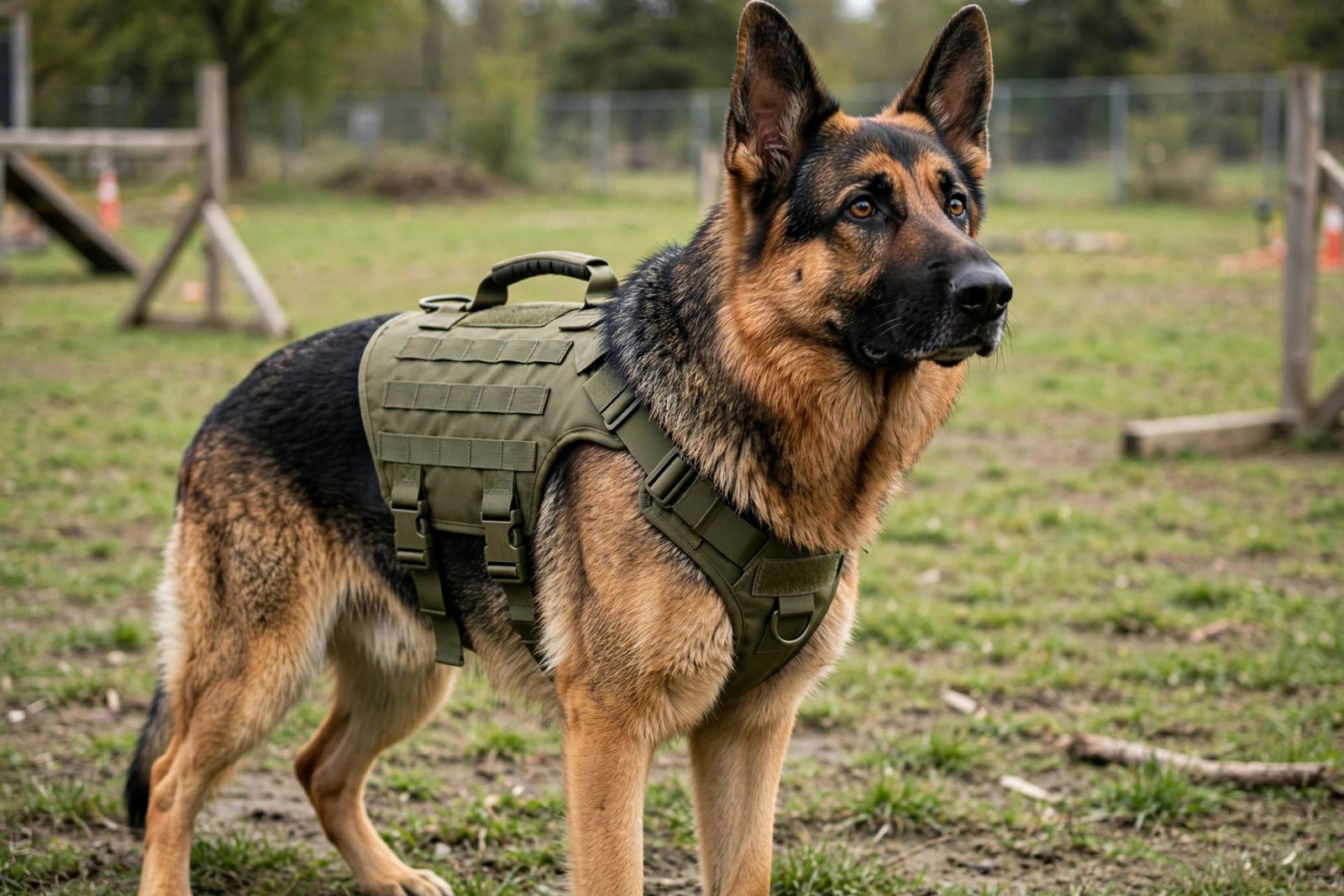
3. Tactical Vest Type With Control Handle
The close-quarters specialist. A vest-style body with a reinforced grab handle on top. The handle is the whole point — crossing a busy street, steadying your dog at the vet, managing a reactive moment — one hand on the handle gives instant, calm control. For genuinely powerful breeds, that handle is worth more than any clip position.
Best for: very strong breeds, reactive dogs, crowded or urban routes, owners who want a grab-and-hold option.
Watch out for: runs warm in hot climates; the handle is for steadying, never for lifting a large dog; check it doesn’t creep over the shoulders on deep-chested dogs.

4. LED-Visibility Type for Night Walks
The after-dark pick. Light strips built into the straps make your dog visible from far off — and on a dark road, being seen matters more than any pulling mechanism. If most of your walks happen before sunrise or after sunset, visibility is a safety feature, not a gimmick. Many of these also carry a front clip, so you get basic pulling control plus the lights.
Best for: night and early-morning walkers, roadside routes, dark-coated dogs that vanish after dusk.
Watch out for: electronics and rain don’t mix — check water resistance; you’ll be charging it, usually over USB; daytime pulling control is average, so pair it with real leash training.
Quick Comparison: The 4 Types Side by Side
| Type | Clip Style | Best For | Watch Out For |
|---|---|---|---|
| Padded dual-clip heavy-duty | Front + back | Most large pullers | Bulk; armpit clearance |
| Front-clip martingale-loop | Front | Responsive, excitable pullers | Minimal padding; needs snug fit |
| Tactical vest with handle | Back + handle | Very strong or reactive dogs | Runs warm; handle isn’t for lifting |
| LED-visibility | Front (usually) | Night walks, dark-coated dogs | Charging; average daytime control |
When a Harness Alone Isn’t Enough
No harness trains your dog. A front clip makes pulling unrewarding, which buys you the calm moments you need to teach loose-leash walking — the teaching part is still on you. The method that works is boring: the moment the leash goes tight, you stop. When your dog turns back or the leash slackens, you move and reward. Repeat for two weeks — most large dogs figure it out fast.
Our guide on how to stop your dog from pulling on the leash walks through that method day by day — it pairs perfectly with any harness type above. And if your puller is still a mouthy youngster, sorting out puppy biting hands and feet at the same time makes training sessions twice as productive.
One honest note for senior strong dogs: an older Lab that still pulls is often dealing with stiffness that makes sudden stops painful. A padded Y-shaped fit matters even more for them, and an orthopedic bed for a senior dog with arthritis does more for recovery than most owners expect. Comfort off the walk improves behavior on it.
Frequently Asked Questions
Does a front-clip or back-clip harness work better for a strong puller?
Front-clip, without question. A back clip lets a strong dog lean full body weight into the pull — the front clip redirects that momentum sideways instead. Once the habit is broken, the back clip is fine for relaxed walks.
How tight should a no-pull harness be?
Snug enough to slide two flat fingers under every strap, but not your whole hand. You should be able to tug the harness side to side without it rotating. Check weekly for the first month — straps stretch and weight shifts.
Are no-pull harnesses good for puppies?
Yes, with two caveats: recheck the fit every couple of weeks as they grow, and pick a lightweight design — a bulky tactical vest on a four-month-old is overkill. Start with a simple front-clip and focus on training.
Can a strong dog escape from a no-pull harness?
A determined dog can back out of almost any harness if the fit is sloppy — fit is the number-one escape cause, not the design. A snug belly strap and properly adjusted neck opening stop the vast majority of escapes. For confirmed Houdinis, a three-strap design with an extra belly strap behind the ribs is the safest shape.
Will a no-pull harness hurt my dog’s shoulders?
A well-fitted Y-shaped harness won’t — it leaves the shoulders free to move. The risk comes from straight horizontal chest straps that press into the shoulders when a strong dog hits the end of the leash. If your dog’s harness has a straight-across chest strap and they pull hard, that’s a genuine reason to switch to a Y-shaped front.
🎄 Visit Our Etsy Shop — Fukroo
Printable Christmas wall art, gift tags & party games — instant download
Shop on Etsy →



2 Comments