How to Choose the Best Grooming Vacuum for Dog Hair (2026)
Every spring, my Samoyed’s annual coat-blowing turns my living room into a snow globe. For years the ritual was identical: brush her on the porch for forty minutes, come back inside wearing a second coat of dog, then spend another twenty minutes chasing the tumbleweeds that escaped the bag. Then a friend at the dog park showed up with what looked like a shop vacuum with a brush on the end — and groomed her entire husky mix in the kitchen without a single tuft hitting the floor.
That’s the promise of the grooming vacuum: you brush the dog, and the loose fur gets sucked straight into a canister instead of onto you, the couch, and your dinner. Here’s the honest version: who they suit, where they fall short, and which type I’d pick for which dog.
Quick Verdict
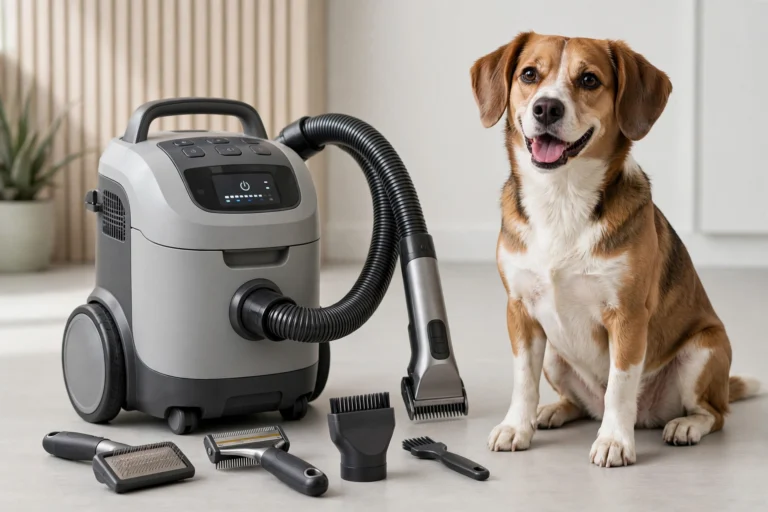
The all-in-one grooming vacuum kit (deshedding brush, clipper, and guards sharing one suction canister) is the best pick for heavy shedders and multi-dog homes — the big bin swallows a full blowout session. The compact 7-in-1 style kit does the same job for one small-to-medium dog in an apartment-friendly size. The vacuum-plus-dryer combo wins on bath day: it dries while you brush, which halves the post-bath circus. None of them is silent, none works on a terrified dog that hasn’t been acclimated, and the bundled clippers on budget kits are the weakest link.
How a Grooming Vacuum Actually Works
The concept is embarrassingly simple once you see it in action. A normal deshedding session has two phases: you pull loose fur out of the coat, and then the fur goes everywhere. A grooming vacuum collapses those phases into one. The brush head is hollow; a hose connects it to a small canister vacuum; as you stroke through the coat, suction pulls the freed undercoat straight down the hose and into the bin.
The surprise for most first-timers is the noise: a low hum, roughly a hair dryer on low. What differs across the three types is capacity, attachments, noise, and whether the unit can also dry your dog after a bath.
The Three Types, Side by Side
| All-in-One Kit | Compact 7-in-1 Kit | Vacuum + Dryer Combo | |
|---|---|---|---|
| Best for | Heavy shedders, multi-dog homes | One small-to-medium dog | Bath-day workflow, curly/long coats |
| Dustbin size | Large — a full blowout session fits | Small — empties mid-session on heavy coats | Medium |
| Attachments | Deshedding brush, slicker, clipper + guards, crevice tool | Similar set, smaller heads | Brush set + dryer nozzle |
| Noise | Low hum; canister sits on the floor | Similar, slightly higher pitch | Louder on dryer mode — the one trade-off |
| Clipper quality | Decent for touch-ups; not pro-grade | Basic — keep expectations modest | Usually brush-focused; clipper optional |
| Footprint | Bigger — needs a shelf corner | Apartment-friendly | Medium |
The All-in-One Grooming Vacuum Kit
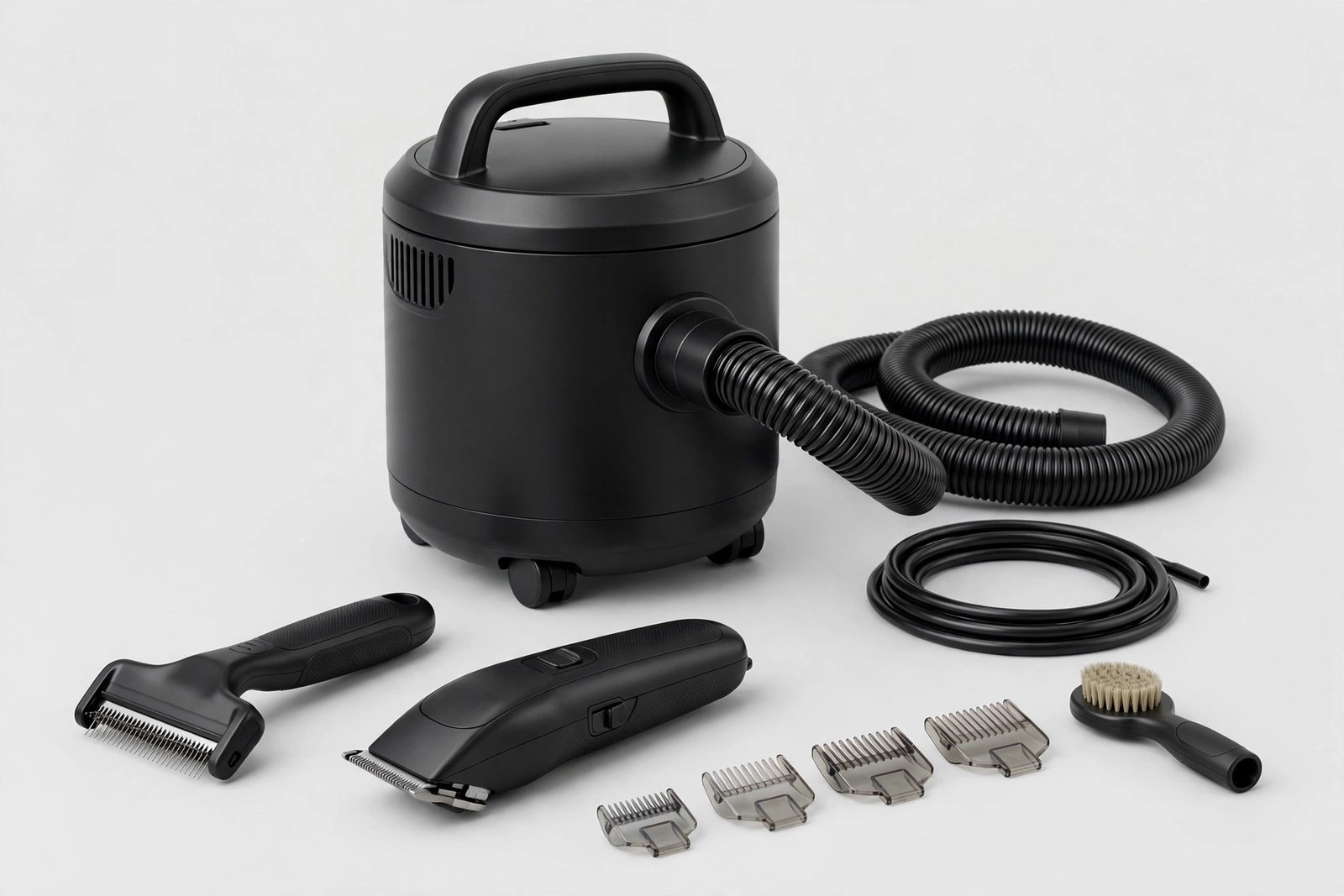
This is the demand leader, and the type I’d recommend to most readers. A full-size canister with a hose long enough to reach a standing dog, a proper deshedding brush head, a slicker brush, an electric clipper with guide guards, and a crevice tool for the sofa afterward. The bin holds a shocking volume of undercoat — I filled most of one on a single spring session with my Samoyed. The clipper handles paw trims, sanitary trims, and evening out a shaggy belly; it won’t replace a groomer’s pro clipper for a full breed cut.
Best for: double-coated breeds, huskies, shepherds, goldens, multi-dog households.
Watch out: the largest footprint of the three — you’ll need a corner to store it.
The Compact 7-in-1 Grooming Vacuum Kit
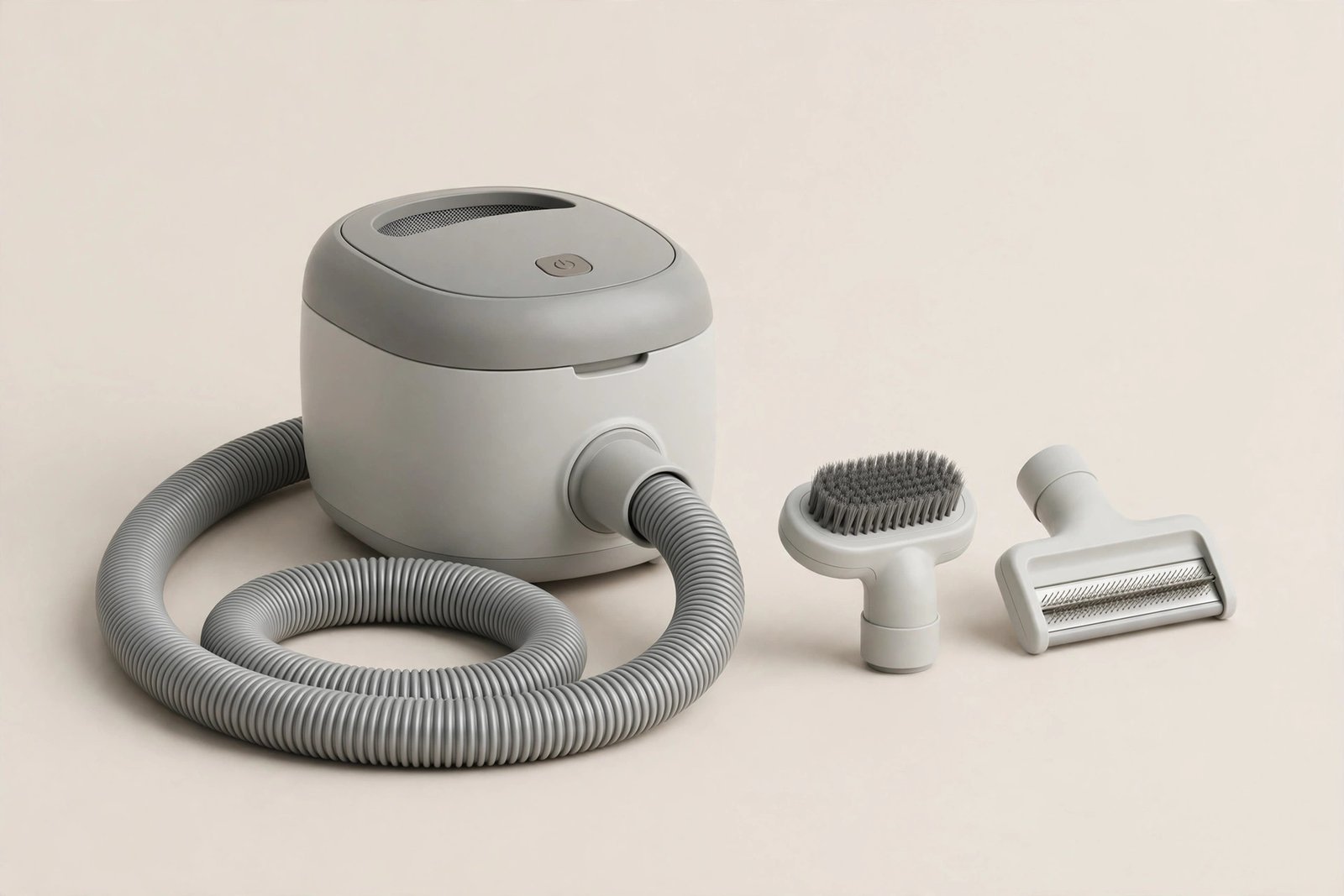
Same idea, smaller everything. The canister is roughly lunchbox-sized, the heads are scaled for one dog, and the attachment set mirrors the big kit in miniature. For a single beagle, cocker spaniel, or shih tzu, this is honestly the smarter buy — you don’t need a big bin for a dog whose entire coat fits in a cereal bowl. On a blowing-out double coat, though, you’ll empty the bin two or three times per session, which breaks the flow. The clipper is the most basic of the three types — fine for a sanitary trim between grooms.
Best for: single small-to-medium dogs, apartment dwellers, light-to-moderate shedders.
Watch out: bin fills fast on heavy coats; budget clipper — don’t expect a full haircut from it.
The Grooming Vacuum + Dryer Combo
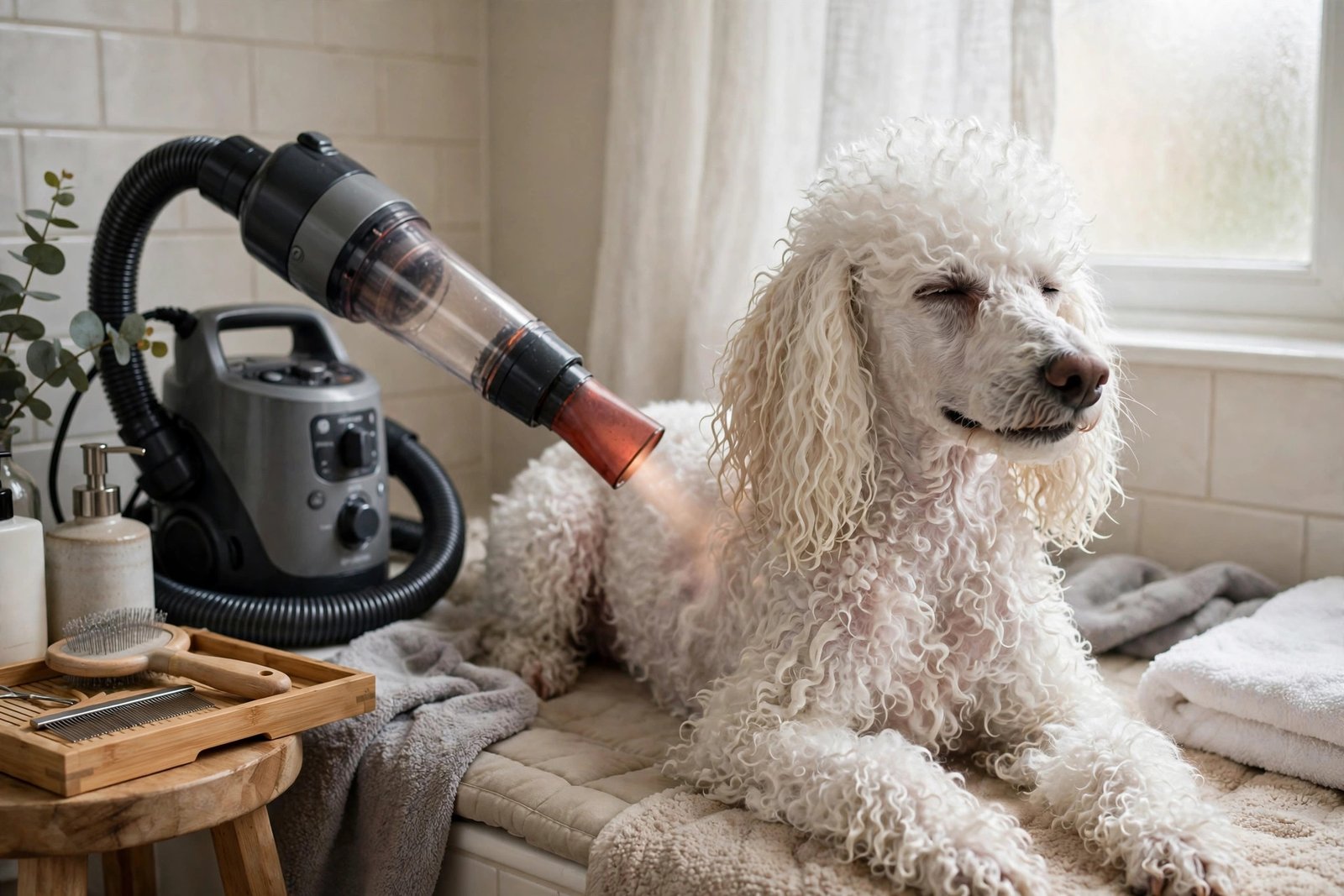
This one solves the other end of the grooming calendar: bath day. A standard grooming vacuum is useless on a wet dog — damp fur clumps in the hose and strains the motor — so you normally wait hours for the coat to air-dry before deshedding. The combo unit adds a warm-air dryer mode to the same canister. You bathe, you dry with the nozzle while brushing, and as soon as the coat is dry you’re already deshedding into the same bin. For poodles and long-coated breeds that mat when they air-dry, this is a genuinely different workflow. The trade-off is noise: dryer mode is the loudest of anything here, so acclimate slowly.
Best for: bath-day routines, curly and long coats, owners who groom at home weekly.
Watch out: loudest option on dryer mode — acclimate slowly; never run suction on a wet coat.
Will My Dog Actually Tolerate It? The Acclimation Protocol
Most dogs can learn to accept it in about a week if you don’t rush. Here’s the protocol a groomer friend gave me — it worked on my noise-sensitive rescue mix in five days:
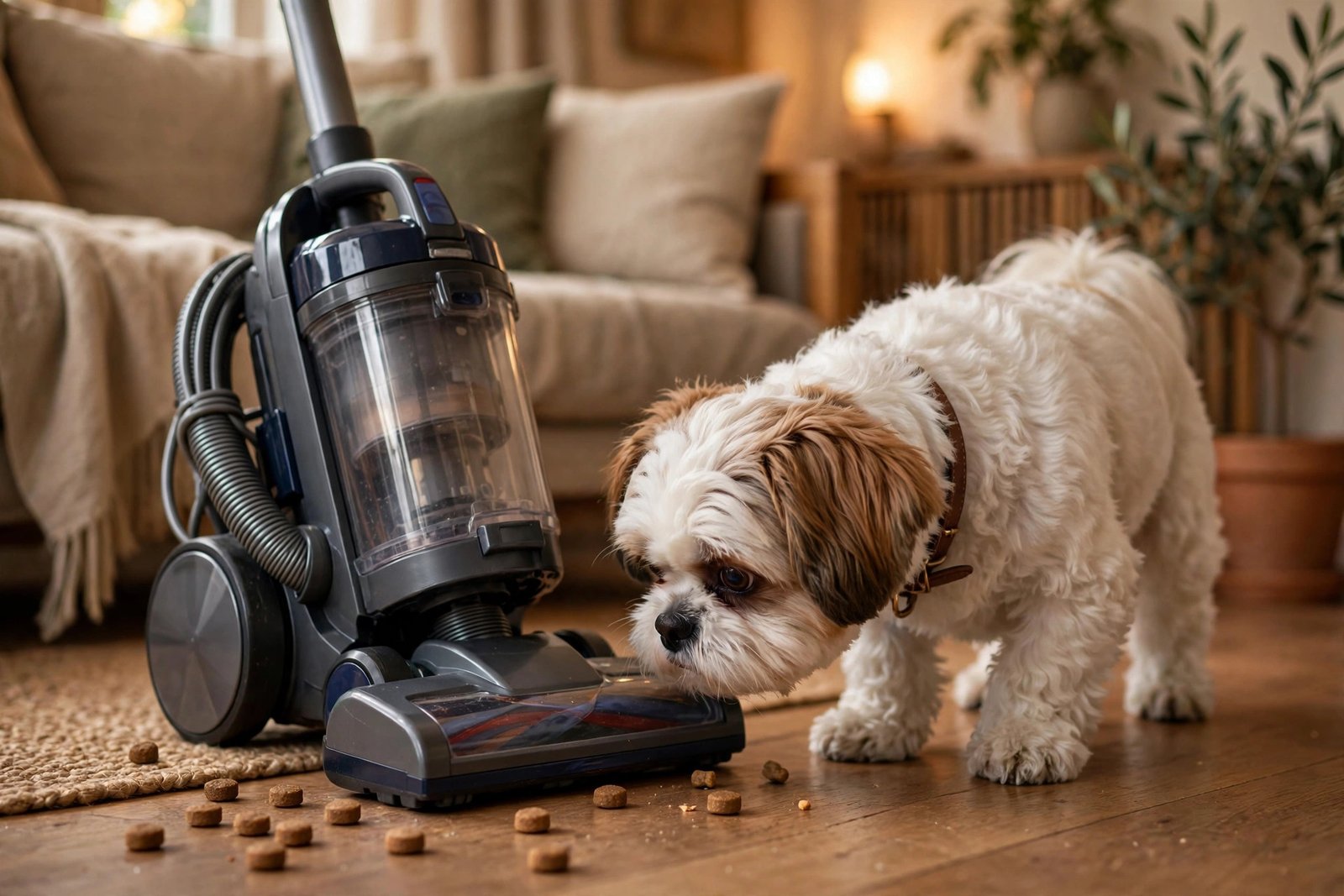
- Day 1–2: furniture, not a machine. Park the unit in the living room, turned off, with treats scattered around it. Let the dog investigate on its own terms.
- Day 3: sound at a distance. Run the vacuum in another room while someone feeds the dog treats. Short bursts — thirty seconds, then off. You’re pairing the hum with good things.
- Day 4: closer, still no contact. Same room, vacuum running, treats flowing. Let the dog approach the hose end on its own. Don’t chase them with it.
- Day 5–7: first strokes. Suction on low, one gentle stroke down the back, treat, done. End every session before the dog wants to leave.
Two hard rules: never hold the brush head on one spot, and never start with the clipper attachment — the vibration is the scariest part. Genuinely noise-phobic dogs may never be candidates, and that’s okay. For a nervous rescue, my guide on calming approaches for anxious dogs pairs well with this protocol.
Which Attachment for Which Coat Type
The attachment set looks generous, but in practice you’ll reach for two heads:

- Double coats (huskies, Samoyeds, shepherds): the deshedding head does 90% of the work. Stroke in the direction of hair growth and stop when the bin stops filling — going past that point just irritates the topcoat. See my husky deshedding guide for coat-blowing season.
- Short smooth coats (beagles, boxers, labs): the rubber or bristle head. Short coats shed constantly but lightly; the softer head keeps the session comfortable.
- Curly and long coats (poodles, doodles, spaniels): the slicker head first for tangles, then the deshedding head. If your dog’s coat mats easily, read why dogs shed excessively — sometimes “shedding” is actually breakage from matting, and the fix is different.
- The clipper with guards: paw pads, sanitary trims, tidying feathering on legs and belly. Keep it away from matted coats — clippers on mats pull, and a pulled dog won’t forgive the machine.
The Honest Pros and Cons
Pros
- Loose fur goes straight into the bin — almost nothing airborne
- One session replaces brushing plus a full-house cleanup
- Allergy-sensitive owners notice the difference immediately
- Clipper guards make between-groom touch-ups genuinely easy
Cons
- Noise-phobic dogs may never accept it — acclimation is mandatory
- Budget clippers are touch-up grade, not pro grade
- Bulkier to store than a brush and a dustpan
- Wet fur clogs the system — never use on a damp coat
Sizing It for Your Dog
- Small dogs (under ~20 lb): the compact kit. A full-size head covers a chihuahua’s entire back in one stroke. Smaller heads, better control.
- Medium dogs: either type works; with two dogs, go all-in-one.
- Large and giant breeds: all-in-one — every bin-emptying break is a chance for a 150-pound dog to wander off.
- Puppies: start with the unit OFF and just the brush head, or even detached from the hose. Make first grooming experiences boring and treat-filled.
- Seniors: low suction, short sessions, soft brush head. Two short sessions beat one marathon.
Maintenance Nobody Tells You About
Empty the bin at two-thirds full — suction drops off past that point. Rinse the filter monthly and let it dry completely before reinserting. Check the hose for clumps after heavy sessions; undercoat compacts in the corrugations and strangles airflow. Oil the clipper blades now and then — a dry blade is why most budget clippers get called “bad.”
What a Grooming Vacuum Won’t Do
- It won’t fix matting. Suction pulls loose fur; mats need dematting tools. Running a deshedding head over mats just hurts.
- It won’t replace bathing. It collects dry, loose coat — it does nothing for the oily or itchy dog. If that’s the problem, start with the right shampoo type, not a vacuum.
- It won’t stop shedding. Shedding is hormonal and seasonal — you’ll just be collecting the evidence more efficiently.
Frequently Asked Questions
Are grooming vacuums safe for dogs?
Yes, used as directed — low suction, moving strokes, never held on one spot. The risk is skin irritation from pressing too hard, not the suction itself.
How loud are pet grooming vacuums?
Most run at hair-dryer-on-low volume; dryer combos are louder. Some noise-sensitive dogs will never be comfortable — that’s a dog decision, not a training failure.
Can I use a grooming vacuum on a wet dog?
No. Wet fur clumps in the hose and strains the motor. Dry the coat fully first — this is exactly why the vacuum-plus-dryer combo type exists.
How often should I groom my dog with the vacuum?
Heavy shedders: once or twice a week, more during spring and fall blowouts. Light shedders: weekly. Stop when the bin stops filling.
Do grooming vacuums work on cats?
Many long-haired cat owners use them successfully on low suction. But cats are less forgiving of a bad introduction — keep sessions to a few minutes and let the cat walk away freely.
🎄 Visit Our Etsy Shop — Fukroo
Printable Christmas wall art, gift tags & party games — instant download
Shop on Etsy →