How to Choose the Best Enzyme Cleaner for Dog Urine in Carpet (2026): The Deep-Clean Guide
I learned this the expensive way, with a puppy, a light carpet, and a bottle of all-purpose cleaner that made the room smell like flowers for an hour and like a kennel again by evening. The fix was not a stronger smell. It was a different kind of cleaning altogether, plus patience I did not want to give it. Once I understood how deep the problem goes, the same stain stopped coming back.
Quick Verdict: For dog urine in carpet, a bio-enzymatic cleaner that is made for pet urine, applied generously enough to soak as deep as the urine did, and left to dry slowly on its own, beats any general stain spray. A ready-to-use spray suits fresh, small accidents. A concentrate suits old, large, or repeat spots, because you can flood the padding without emptying a spray bottle. Scent masking, steam cleaning too soon, and half-hearted blotting are the three mistakes that keep the smell alive.
Why Dog Urine Smell Keeps Coming Back
Fresh urine is mostly water, and water is easy to blot up. The trouble starts as it dries. The liquid carries urea, and bacteria break that down into uric acid crystals. Those crystals bind to carpet fibers and padding, and they do not dissolve in water or in most household cleaners. Heat and humidity wake them up again, which is why a stain that seemed fine in winter can return on the first warm, damp week of spring.
There is a second problem hiding under the first. Dogs can smell what we cannot. If even a trace of urine scent survives in the padding, the spot still reads as a toilet to your dog, and repeat accidents in the same place become more likely. Cleaning the surface while leaving the padding untouched is, from your dog’s point of view, not cleaning at all. That is why so many owners feel they are chasing the same three spots around the house.
The depth question matters more than the brand question. A small puppy puddle on a thin rug over a hard floor is a surface problem. A large accident on thick carpet over thick padding is a deep problem, and it needs a deep treatment. Before you buy anything, press a dry white towel firmly onto the spot and check for dampness or color transfer. If the towel comes up damp long after the accident, the padding is wet, and a light misting of spray will not reach it.
How Enzyme Cleaners Actually Work
An enzyme cleaner is not a stronger soap. It carries living bacteria or their enzymes, which break the proteins and uric acid crystals in urine into smaller pieces that can then be lifted away or evaporate without smell. Think of it less like scrubbing and more like sending in a tiny crew to dismantle the stain from the inside. That crew needs three things: contact with the stain, moisture, and time.
Contact is the part most people short-change. The cleaner must soak to the same depth as the urine. If the urine reached the padding, the cleaner must reach the padding too, which means saturating the spot, not misting it. Moisture matters because enzymes stop working when they dry out, so covering the treated area with a damp towel or a plastic sheet for a few hours helps on big stains. Time is the part nobody likes: enzymes work over hours, not seconds, and the area needs to dry slowly on its own, ideally for a full day.

Picking the Right Type for Your Stain
| Cleaner Type | Best For | Watch Out For |
|---|---|---|
| Ready-to-use enzyme spray | Fresh accidents, small spots, quick response | Too little liquid for deep or old stains; easy to under-apply |
| Enzyme concentrate | Old stains, large areas, repeat spots, padding saturation | Needs diluting correctly; over-wetting a rug with no padding underneath |
| Oxygen-based stain remover | Visible stain color on light carpet, after enzyme treatment | Lifts color but does not break down urine crystals on its own |
| Citrus-scented odor eliminator | Freshening a room after the stain itself is dealt with | Strong scent can mask a surviving stain and irritate a sensitive dog |
The honest rule is simple: buy the enzyme cleaner for the urine, and use anything else only as a second step. An oxygen-based product is genuinely useful for the visible stain left after enzymes have done their work, especially on pale carpet. Used on its own, though, it is like painting over damp: the color improves and the smell waits. Citrus scents are the same story. A pleasant smell is not a clean carpet, and a dog with a sensitive nose may dislike a strong citrus spray more than you do.
The Method That Stops the Smell Returning
Step 1: Blot, never rub. Press clean towels or paper towels onto the spot, stand on them if you need to, and lift the liquid out. Rubbing spreads the urine wider and pushes it deeper, which is the opposite of what you want. For a fresh accident, blotting alone removes a surprising amount before any cleaner touches the carpet.
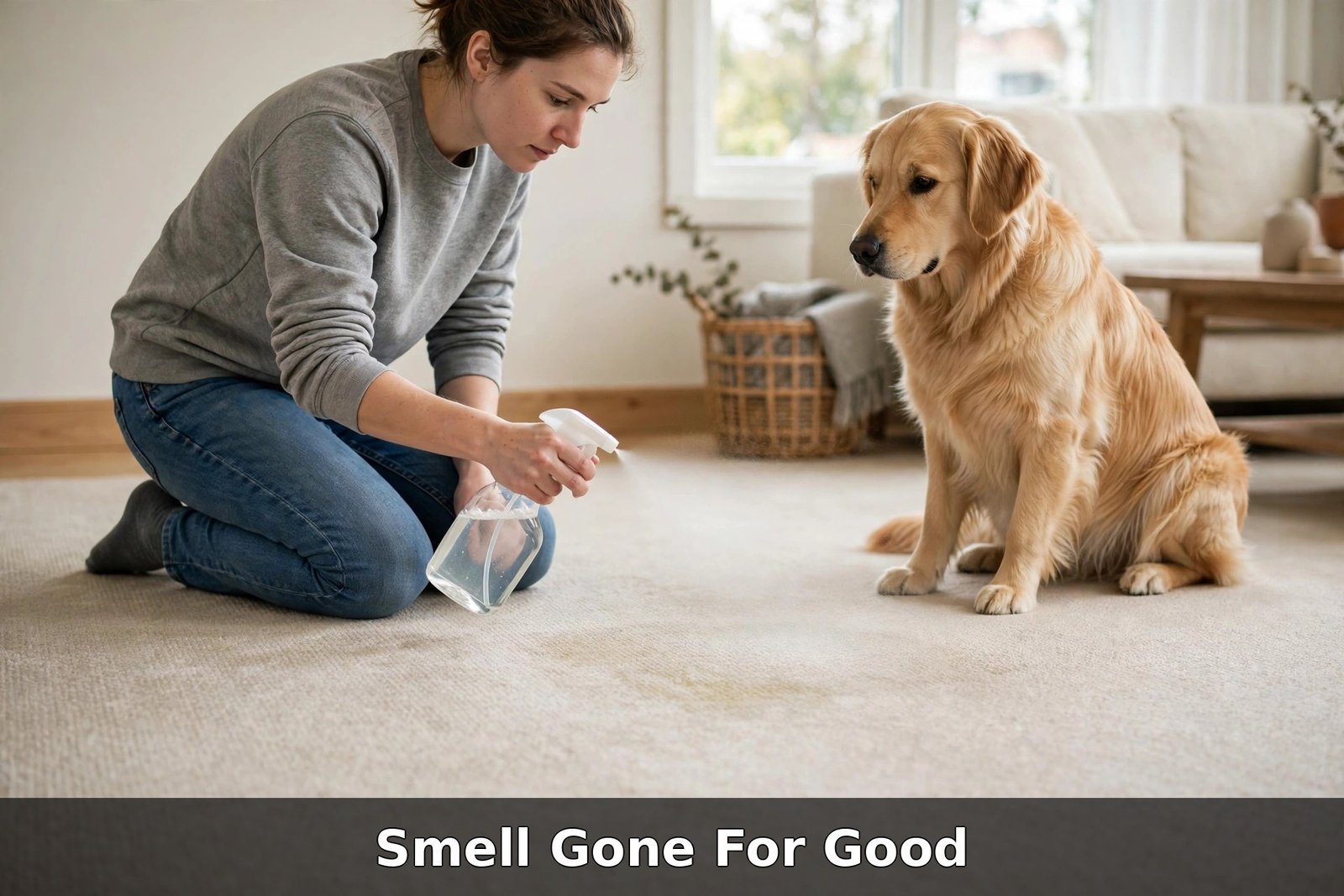
Step 2: Saturate to the depth of the stain. Apply the enzyme cleaner generously, working from the outside of the stain inward so you do not spread it. On carpet over padding, this means the area should feel properly wet through, not just damp on top. A second application after the first has soaked in is better than one timid spray.
Step 3: Give it time, and keep the dog off it. Leave the area alone for at least several hours, ideally overnight, and keep it damp while the enzymes work. This is the hardest step with a dog in the house, but it is also the step that decides whether the treatment works. Block the room, use a baby gate, or treat the stain in the evening when the dog is settling elsewhere.
Step 4: Let it dry slowly, then check with your nose, not your eyes. Do not speed the drying with a heater or a steam cleaner. Heat can set any surviving urine compounds and kill the enzymes mid-job. Once the area is fully dry, get down to carpet level and smell it. If any urine smell remains, repeat the whole process once more before you declare victory. Old stains often need two rounds, and that is normal, not a sign the product failed.
Test any cleaner on a hidden patch first, and keep the room ventilated while it dries.
What About Steam Cleaners and Home Remedies?
Steam cleaning feels thorough, and for general dirt it is. For urine, timing is everything. Steam applied before enzymes have broken down the urine crystals can bond the proteins to the fibers and make the smell permanent, which is why the usual advice is enzymes first, steam later, if at all. If you already steamed a urine stain and the smell stuck, an enzyme treatment can still help, but expect it to take longer and need a repeat.
Home remedies have a similar split verdict. A vinegar solution can help with a fresh accident by neutralizing fresh ammonia smell, and baking soda sprinkled on a dry stain can absorb surface odor. Neither breaks down uric acid crystals in padding, so neither finishes the job on its own. Use them as a first response while you wait for an enzyme cleaner, not as a replacement for one. The same goes for the rest of the house: once the carpet is sorted, muddy paws will keep bringing dirt back in, so our guide to paw care in wet weather and our carpet rake guide for embedded pet hair cover the daily side of keeping floors livable, and our deep-clean carpet routine pairs with this one.
Pros and Cons at a Glance
Pros: breaks down the crystals that cause returning smell; removes the scent marker that draws repeat accidents; safe for most synthetic carpets when used as directed; concentrates are economical for large or repeat stains.
Cons: needs hours, not minutes, and the dog must stay off the area; under-application is the most common failure; not a substitute for toilet training or a vet check when accidents are new or frequent; some formulas do not suit wool or natural-fiber rugs.
Frequently Asked Questions
How long should I leave an enzyme cleaner on dog urine?
Several hours at minimum, and overnight for old or deep stains. The enzymes need the area to stay damp while they work, so do not rush the drying with heat. A full day of slow drying is normal for a stain that reached the padding.
Why does the smell come back when it rains or the heating comes on?
Humidity and warmth reactivate surviving uric acid crystals in the padding. A returning smell means the first treatment did not reach deep enough, not that the stain is permanent. Saturate to padding depth and repeat once.
Can I use an enzyme cleaner on a mattress or sofa?
Yes, in principle, but test first and expect slower drying. Mattresses and sofa cushions hold liquid longer than carpet, and trapped dampness can cause its own problems. For a deep mattress stain, a professional clean is often the safer call.
My dog keeps returning to the same spot. Will cleaning fix that?
Cleaning helps a lot, because it removes the scent marker, but it is only half the answer. Pair a proper enzyme clean with more frequent toilet breaks, a vet check if the accidents are new, and a short period of supervised access to that room until the habit breaks.
🎄 Visit Our Etsy Shop — Fukroo
Printable Christmas wall art, gift tags & party games — instant download
Shop on Etsy →