

Halloween Pet Safety Checklist: Before Dusk, During Trick-or-Treating & After
Halloween night is the one night of the year when your front door becomes the busiest place in the house. Kids in masks, a doorbell that never stops, candy bowls at ankle height, and a pet who has no idea why everything suddenly smells like chocolate and sounds like a party. Most Halloween pet emergencies are not dramatic. They are small, preventable moments: a door left open a second too long, a dropped wrapper, a dog who slipped out while you were handing out candy.
This checklist is built for Halloween night, hour by hour. Work through it in order, and you will cover the risks that actually happen on October 31, rather than a generic list of warnings you have already read somewhere else. It is meant to sit alongside our deeper safety guides, not replace them.
Before Dusk: Set the House Up So Nothing Can Go Wrong
Do this part in the late afternoon, while the house is still quiet. Everything here is easier before the first trick-or-treater arrives.
Check the ID first. Make sure your dog’s collar tag and your cat’s collar tag are on and readable, and that your microchip registration has your current phone number. Halloween is the top escape night of the year, and a found pet with a dead phone number is a pet who spends the night at a shelter. If your pet’s collar has been sitting in a drawer since last summer, put it on now, not at 6 pm when the doorbell starts.
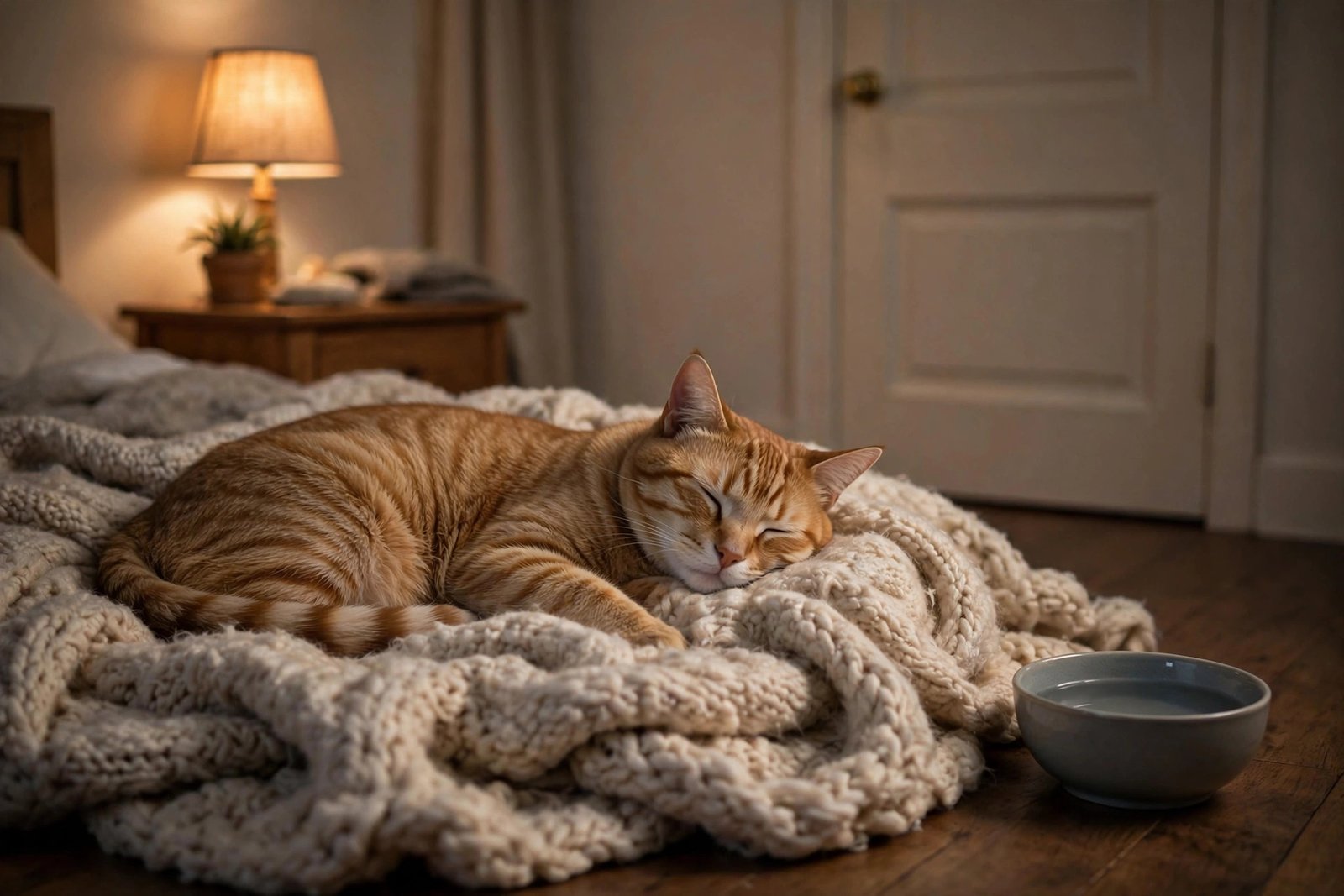
Build the calm room now. Pick one back room, away from the front door, and set it up before dusk: water bowl, a familiar bed, a worn t-shirt that smells like you, a puzzle feeder or a long-lasting chew for dogs, and a hiding spot for cats like a covered bed or an open closet with a blanket inside. Close the curtains so flashing porch lights and costumes do not show through the window.
Lock the candy down. Chocolate, candy with xylitol (often listed as birch sugar), sugar-free gum, and lollipop sticks are all dangerous for dogs and cats, and wrappers alone can block a small gut. Put the candy bowl on a high shelf, never on a coffee table, and keep a lidded bin right next to your handing-out spot for wrappers. Tell every person in the house, including kids, that no candy goes to the pets, not even a tiny piece as a joke. For the full list of what is toxic and what to do if your cat gets into candy, our guide can cats eat Halloween candy covers it in detail.
Do the costume trial early. If your pet is wearing a costume on Halloween night, put it on in the afternoon for ten minutes and watch. A pet who freezes, paws at it, or walks backward is telling you the costume does not fit or feels wrong. Fix it now or drop down to a bandana. Check that nothing dangles near the eyes, nothing is tight around the neck, and your pet can walk, sit, and lie down normally.
Get the evening walk done before dark. Take dogs out for a proper walk and a bathroom break in the late afternoon, while it is still light and quiet. A dog who has already burned off energy and emptied their bladder is much easier to settle in the calm room.
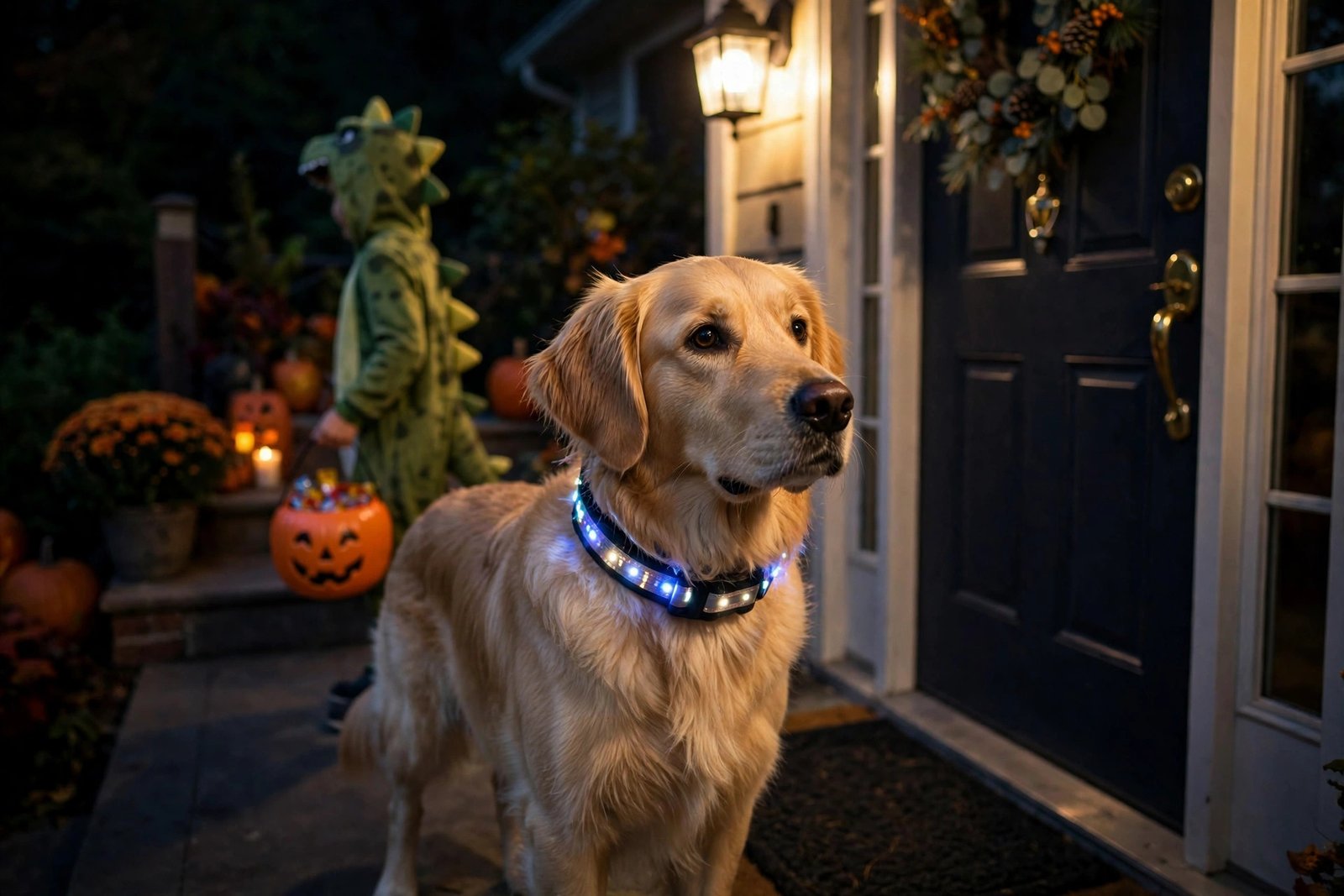
Charge and test anything that glows. If your dog will be outside after dark, a light-up collar or a reflective vest is one of the best safety buys of the season, because drivers see the glow long before they see a dark dog. We are not linking a specific collar here, since we could not verify a matching listing today, but any light-up collar or clip-on light you already own should be charged and tested before dusk, not discovered dead at the curb.
Prep your door routine. Decide now: will you greet trick-or-treaters at the door, or from the porch with the door closed behind you? The porch option is safer, because the front door never stands open while a pet is loose in the house. Put a baby gate across the hallway as a second barrier if you have one.
During Trick-or-Treating: The Busy Hours
This is the stretch where most escapes and candy grabs happen. Keep it boring, and boring is good.
Keep pets behind the barrier. Dogs stay in the calm room or behind the gate, cats stay in the calm room with the door closed. Even a friendly dog can bolt when a screaming ghost appears on the porch, and even a shy cat can slip through legs you did not know were moving. If your dog is joining you outside, they stay leashed the whole time, with a second point of attachment (a harness plus a collar lead, or a leash clipped to both) if they are a known puller or escape artist.
Hand candy out, do not let kids hand it to pets. Kids mean well, and they will offer your dog a gummy bear if they get the chance. A polite line, said early and often, saves the awkward moment: “He is not allowed candy, but he loves a wave.” Keep your dog’s own treats in your pocket so you can reward calm behavior without reaching for the candy bowl.
Watch the doorbell effect. Some dogs bark themselves hoarse at the doorbell, and some cats hide for hours after one loud knock. If your dog is a doorbell barker, try handing candy out from the porch for the first hour and see if the barking drops when the door stays shut. If your cat has already vanished into the calm room, leave them there. Hiding is a coping skill, not bad behavior.
Keep the walk short and lit. If you take your dog trick-or-treating, stick to well-lit streets, keep the walk under an hour, and skip houses with strobe lights, fog machines, or loud sound effects. A dog who is shaking, yawning repeatedly, licking their lips, or pulling hard toward home is done, even if you are not. For more on walking etiquette and route planning, our guide on trick-or-treating with your dog is worth a read before you leave.
Know the candy emergency plan before you need it. If your dog or cat eats chocolate or anything with xylitol, do not wait for symptoms and do not try home remedies you found online. Call your vet or an animal poison helpline right away, and be ready to say what was eaten, how much, and roughly when. Save the number in your phone now.
After the Last Knock: The Wind-Down
Trick-or-treating ends, but the risks do not end with it. The last hour of the night matters.
Sweep the house for wrappers and dropped candy. Walk every room your pet can reach, including the porch, the hallway, and under the sofa, and pick up every wrapper, candy, glow stick, and costume piece. Glow stick liquid is bitter and can make a pet drool and gag, and a swallowed lollipop stick can do real damage.
Take the costume off. Even a pet who loved their costume should be out of it now. Check the skin underneath for redness, rub marks, or damp patches, especially where elastic or seams sat. Offer water and a small snack, and let your pet choose their sleeping spot.
Do a quick body check. Run your hands over your dog after any outdoor time: paws for cuts, ears for debris, coat for burrs. For cats, check that they are eating, drinking, and using the litter box normally. A cat who has not eaten or used the litter box by morning is a vet call.
Reset the house for tomorrow. Put the candy bowl somewhere high and lidded for the whole week, not just on Halloween night, because kids trade candy for days after Halloween. Put the calm-room bed back where it usually lives, and give your pet a normal, boring morning. Routine is the best recovery tool there is.
Halloween Night at a Glance
| Time block | The three things that matter most |
|---|---|
| Before dusk | ID check, calm room set up, candy locked away |
| Before dusk | Costume trial, evening walk done, door routine agreed |
| During trick-or-treating | Pets behind a barrier, no candy from kids, short lit walks |
| During trick-or-treating | Doorbell plan in place, poison helpline number saved |
| After the last knock | Wrapper sweep, costume off, body and skin check |
| After the last knock | Water and rest, candy stored high all week, normal morning |
You can browse the whole seasonal collection on our Pet Halloween hub.
Frequently Asked Questions
Should my pet stay in a separate room all night on Halloween?
For most pets, yes. A calm back room with water, a bed, and something to chew or hide in is safer and kinder than letting them patrol a front door that opens every two minutes. Even social dogs get overstimulated by hours of strangers in costumes.
What should I do if my dog eats chocolate on Halloween night?
Call your vet or an animal poison helpline right away and tell them what kind of chocolate, how much, and your dog’s weight. Do not wait for vomiting or restlessness, and do not induce vomiting yourself unless a vet tells you to. Dark and baking chocolate are more dangerous than milk chocolate, but any chocolate ingestion deserves a call, especially in a small dog.
Is it safe to take my dog trick-or-treating?
It can be, with conditions: a well-lit route, a leash the whole time, a calm dog who is comfortable with crowds and costumes, and a short outing that ends the moment your dog shows stress. Skip it for reactive dogs, fearful dogs, and puppies who have never seen a crowd in costume.
Why does my cat hide for hours after Halloween?
Hiding is how cats cope with noise, strangers, and doorbells. A cat who hides in a closet or under a bed after a loud night is doing exactly what they should do. Leave food, water, and a litter box nearby, keep the house quiet, and let them come out on their own schedule.
Are glow sticks dangerous for pets?
Glow stick liquid is not usually life-threatening, but it tastes awful and can cause drooling, gagging, and vomiting if a pet chews one open. Rinse your pet’s mouth gently with water, offer a small snack, and watch them for a while. If they swallowed pieces of plastic, or if vomiting continues, call your vet.
Quick Recap
Halloween night comes down to three habits: set the house up before dusk, keep a barrier between your pets and the front door during the busy hours, and sweep for wrappers once the doorbell stops. Do those three things and you have covered the escapes, the candy grabs, and the costume problems that actually happen on Halloween night. The rest is bonus, and your pet will thank you with a normal, boring morning.
A note on buy buttons: this checklist carries no buy buttons by design. The light-up collar and reflective gear mentioned above are named by type because we could not verify a matching listing today, so there is no button on those mentions. The advice stands on its own either way.
Disclaimer: this guide is general information, not veterinary advice. If your pet eats something toxic, shows signs of distress, or behaves unusually after Halloween night, contact your veterinarian or an animal poison helpline promptly.
🎄 Visit Our Etsy Shop — Fukroo
Printable Christmas wall art, gift tags & party games — instant download
Shop on Etsy →


4 Comments