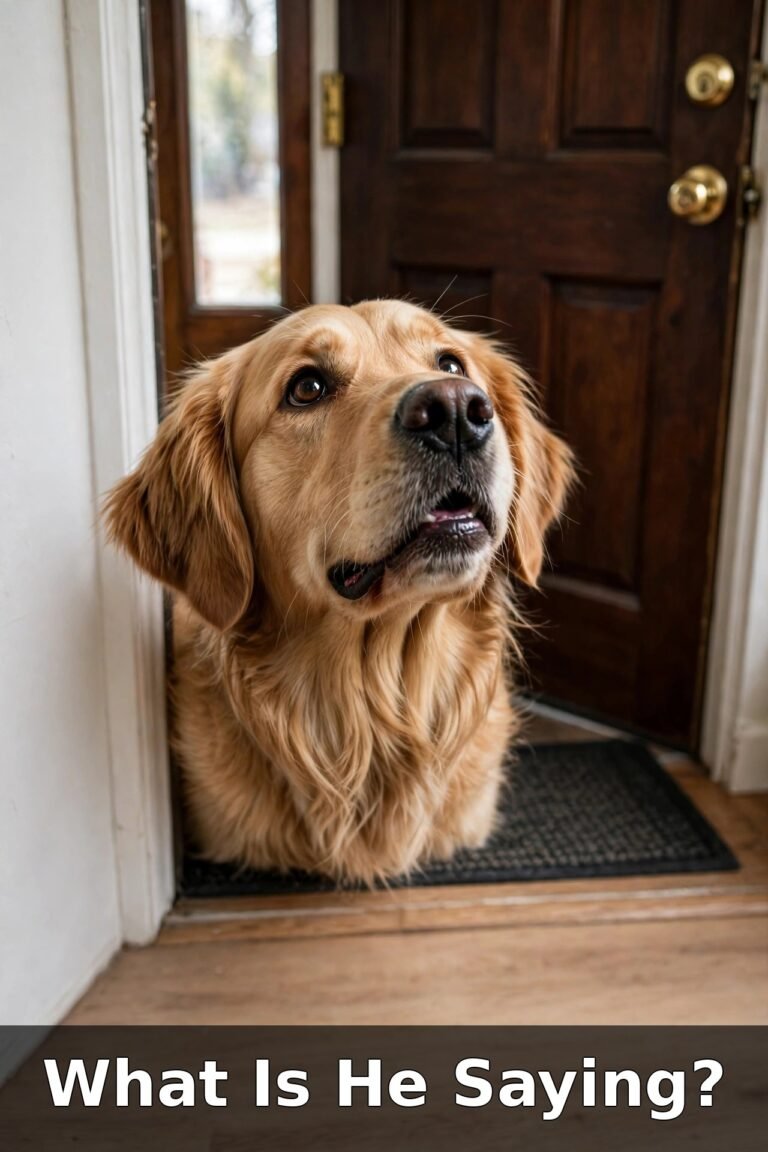
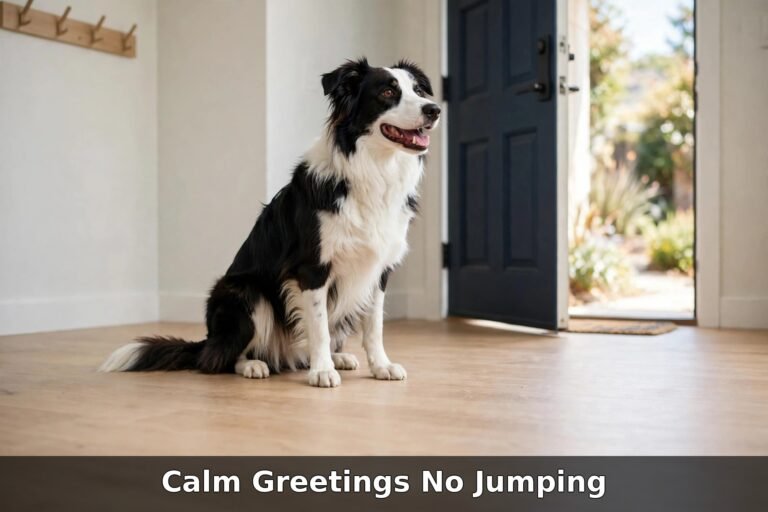
Why Do Dogs Howl? (2026): The 7 Reasons Explained
A siren passes in the middle of the night, and somewhere down the street a dog answers it with a long, rising a-woooo, as if trying to harmonize. Then another dog joins in.
If you own a husky, you know the other version: the “talking back.” You ask him a question and he throws his head back and delivers an entire opinion about it. And if your dog howls at night, there’s a decent chance you’ve found a note on your door from a neighbor that reads something like: Love your dog, but he sings the song of his people at 3am. Please help.
So why do dogs howl? It isn’t random noise, and it usually isn’t distress either. Here are the seven real reasons, plus the night-howl puzzle.
1. They’re Answering Sirens, Music, and High Sounds
This is the one almost every dog owner has witnessed. A siren wails, a fire truck rolls past, your phone alarm hits just the right pitch — and your dog throws his head back and joins in. He isn’t in pain, and he isn’t necessarily even upset. He’s singing along.
Here’s what’s happening: dogs hear frequencies we can’t, and certain sustained high pitches — sirens, bagpipes, your kid’s recorder practice — land in a range that reads to a dog like another canine voice. So your dog answers it the way he’d answer another dog. It’s social. And some dogs are connoisseurs: I know a dachshund who ignores sirens completely but loses his mind over one specific ringtone.
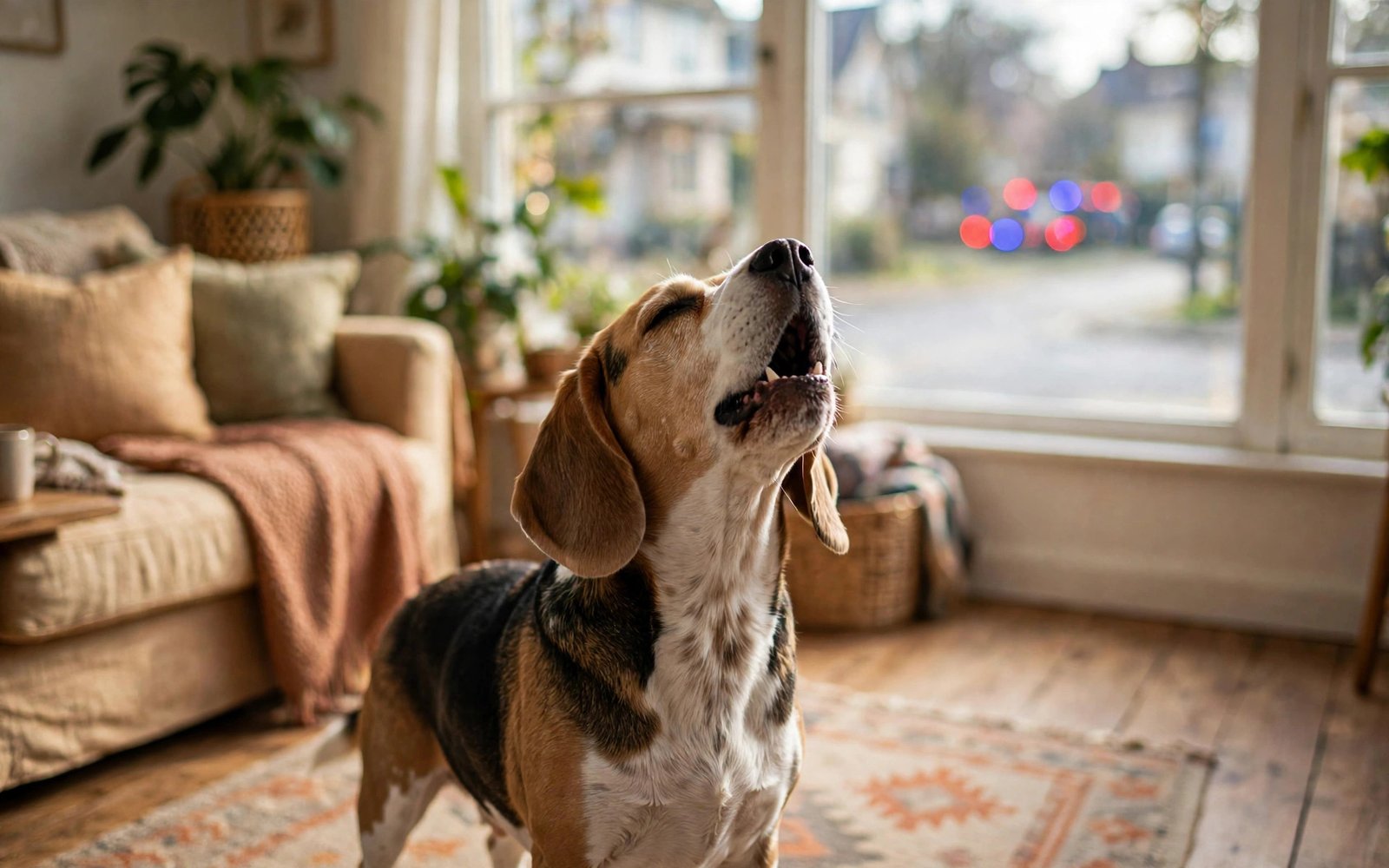
What to do about it: honestly? Usually nothing — it passes when the sound passes. If your dog is extremely reactive, calm desensitization helps: play soft siren sounds during treat time, gradually raise the volume over days, and reward calm behavior. Never yell over the howling to stop it; to your dog, that just sounds like you’re joining the chorus.
2. They’re Talking to Dogs Far Away (Territory Beacon)
Before dogs were couch occupants, their ancestors used the howl as long-distance radio. A wolf pack’s howl says three things at once: here we are, this is our patch, and don’t come closer. Your beagle has inherited the full broadcast system.
This is why one dog howling often sets off a neighborhood chain reaction. Your dog answers the dog across the street, who answers the dog two blocks over, who answers someone’s coonhound three neighborhoods away. Each one is doing a location-and-identity check: here we are, this is our patch.
Territory howls sound a particular way: longer, steadier, usually at dusk or dawn — a confident broadcaster, not a frightened one.
3. They’re Calling the Pack Home — Separation Anxiety
Now we get to the one that matters most for owners: the dog who starts howling when you leave and doesn’t stop. In the wild, a separated pack member howls to regroup — I’m here, where are you? A dog left alone in a quiet house does the same thing.
This is howling driven by separation anxiety in dogs: pacing, drooling, scratching at doors, and vocalizing that starts minutes after you leave and can run for hours. It’s the classic complaint in the neighbor’s note. And it’s genuinely stressful for the dog — he’s not being dramatic; he’s panicking.
The fix here is never punishment. This needs a gradual independence plan (short absences, reward for calm alone-time, enrichment that keeps the brain busy) and, for serious cases, a vet or a certified behaviorist. If your dog’s howling only happens when you’re gone, start with a safe, cozy resting spot — a bed that feels like his place gives anxious dogs somewhere to land instead of pacing the hallway.
4. They Learned It Gets Your Attention
Dogs are superb pattern-matchers, and attention is a powerful paycheck. It usually goes like this: the dog howls once, the owner laughs — that’s attention. The dog howls again tomorrow, the owner gives a treat to quiet him — jackpot. Within a week you’ve trained a howler.
This is the husky specialty. Huskies are vocal anyway, but husky owners often supercharge it — every laugh at the “talking back” is a tiny reward.
The honest fix: stop paying for it. Reward quiet moments generously — the silent sit, the calm settle — and the dog’s economics change.
5. They’re Bored and Under-Stimulated
A bored dog invents a job, and the job is often “make noise until the world responds.” Dogs left alone with nothing to do — no exercise, no puzzle toys, no mental work — howl partly from frustration and partly because a howl reliably makes something happen. Even a neighbor yelling “quiet!” is feedback.
This howling usually comes with a resume of other boredom behaviors: chewing doorframes, digging at the carpet, reorganizing the trash. If the howl is part of a package, you’re not looking at a vocal dog — you’re looking at an unexercised one.
A tired dog is a quieter dog, but “tired” has to include the brain. A two-mile walk plus ten minutes of scent games does more for a howler than a five-mile walk alone.
6. They’re in Pain or Something Feels Wrong
Most howling is communication, habit, or instinct — but new, sudden howling in a dog who doesn’t normally howl is information. A dog who wakes howling in the night, howls when touched in a certain spot, or starts vocalizing out of nowhere can be telling you something hurts.
I can’t diagnose your dog from an article — and no article can. What I can say is the rule every vet I trust follows: a behavior change means a vet visit first, a training plan second.
- Sudden howling in a dog who rarely or never howled before
- Howling combined with limping, appetite loss, panting, or hiding
- Howling when touched, picked up, or moving a certain way
- Restlessness plus howling at night in a senior dog
- Any vocalizing that seems distressed rather than social (whimpering woven in, tense body)
7. It’s Just in Their Blood — Breed Instinct
Some dogs were quite literally built to howl. Sled breeds (Siberian huskies, malamutes) used howling to communicate across long distances in the snow. Scent hounds (beagles, bloodhounds, coonhounds) were selected for a carrying bay that hunters could hear across a field — that famous beagle a-roo is a feature, not a bug.
If you brought home a husky and are now surprised by the howling, that’s a bit like buying a sports car and being surprised by the speed. It was in the brochure. These dogs will howl at joy, at boredom, at dinner being five minutes late — because howling is simply what their breed does.
The realistic expectation: you can manage instinct howling (routine, exercise, training around triggers), but you can’t delete it. Train the “quiet” cue, keep the dog fulfilled, and accept that some serenade comes with the breed.
Why Dogs Howl at Night
Night howling deserves its own section, because “my dog howls at night” is one of the most-searched versions of this question — and it has its own logic.
First, sounds carry farther at night. Cooler air, less wind, no traffic roar — a siren three miles away arrives loud and clear at 2am in a way it never would at 2pm. So your dog isn’t howling more; he’s hearing more worth answering.
Second, loneliness hits harder in the dark. A dog who tolerates being alone in the daytime can feel genuinely isolated in a silent black house. Night howling is often a separation-anxiety howl wearing a midnight costume.
Third, reduced visibility makes dogs uneasy. A dog who hears a strange noise in pitch dark can’t verify it, so the howl becomes a check-in: is everyone okay? A calming dog bed placed where your dog sleeps — familiar scent, bolsters to lean on — can take the edge off this specific unease.
And the moon? Dogs don’t howl at the moon. They howl with their heads raised because that posture carries sound farther — the moon is just a convenient landmark. Bright nights are also when more distant sounds and animals are active, which gives them more reasons to vocalize.
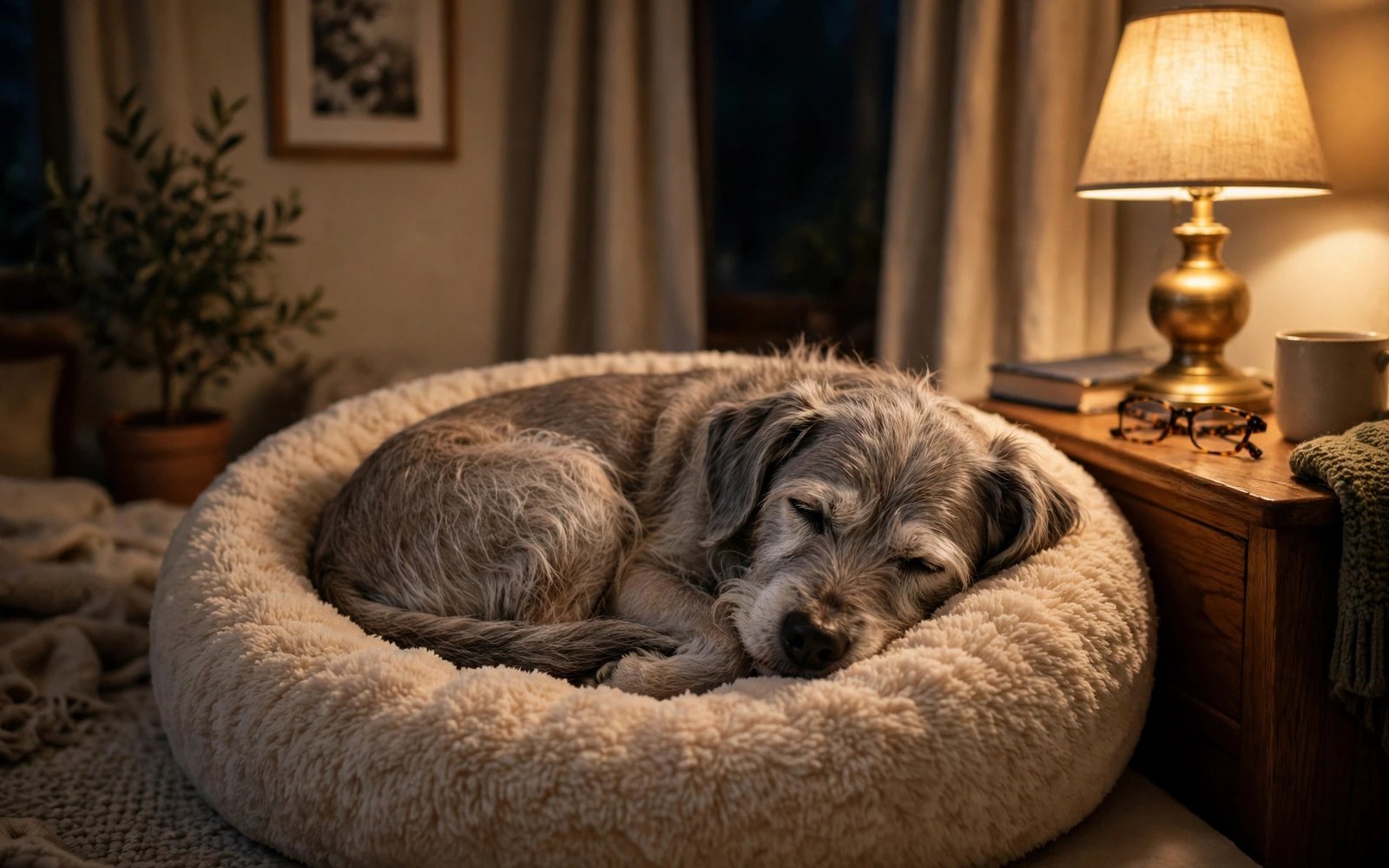
The night routine that works: a solid evening walk, a calm wind-down in the same order every night, and a fan for white noise to blur the 2am siren.
What Actually Helps (and What Doesn’t)
Whatever reason sits behind your dog’s howling, the effective playbook looks similar:
- Enrich the day. Exercise plus mental work — scent games, puzzle feeders, short training sessions. A dog with a full schedule howls less.
- Build a routine. Dogs relax when the day is predictable: same walk times, same feeding order, same bedtime sequence.
- Desensitize specific triggers. Siren-howler? Low-volume recordings paired with treats, built up slowly. This works — but only when the trigger is a sound, not anxiety or pain.
- Get help for anxiety cases. Howling when you leave is a project, not a quirk. A vet or certified behaviorist (CPDT or IAABC) can build a real plan; severe cases sometimes need medication alongside training, which is a vet conversation.
And what doesn’t help: punishment. Yelling, spray bottles, bark collars — these suppress the sound while leaving the reason untouched, and with anxious dogs they reliably make things worse. A dog who howls from panic and gets punished for it learns that his home is unsafe and he’s alone. That’s the opposite of progress.
Dogs who shadow you all day and then howl when you leave the room are telling you one story twice. Our guide on dogs following you everywhere maps that pattern — the daytime cling and the nighttime howl are usually one anxiety, not two problems.
Frequently Asked Questions
Why does my dog howl at sirens?
Sustained high-pitched sounds read to a dog like another canine voice, so he answers. It’s social, not painful — he’s singing along with what sounds like a very distant, very loud dog.
Do dogs howl at the moon?
Not really. They raise their heads to project sound farther, and the moon is simply visible on nights when they’re already howling. Bright nights are also when more distant sounds are active — more reasons to vocalize.
Why does my dog howl at night but not during the day?
Sounds carry farther at night, the house feels lonelier in the dark, and unfamiliar noises are harder to verify by sight. Night howling is often daytime separation anxiety showing up after dark.
Why does my husky howl so much?
Huskies were bred to communicate over long distances by howling — it’s hardwired. Add their dramatic personalities and a talent for learning that howling earns attention, and you get the breed’s famous commentary track.
Is howling a sign my dog is sad?
Sometimes, but not usually. Loneliness and anxiety are two of the seven reasons — the other five are neutral or even happy. Loose, relaxed body language means fine; tense or pacing means something needs attention.
How do I stop my dog from howling?
Match the fix to the reason: enrich a bored dog’s day, desensitize a siren-howler, build a gradual independence plan for separation anxiety, and get a vet check for any sudden new howling. Never use punishment.
🎄 Visit Our Etsy Shop — Fukroo
Printable Christmas wall art, gift tags & party games — instant download
Shop on Etsy →