Why Does My Dog Follow Me Everywhere? (2026): The Shadow Spectrum
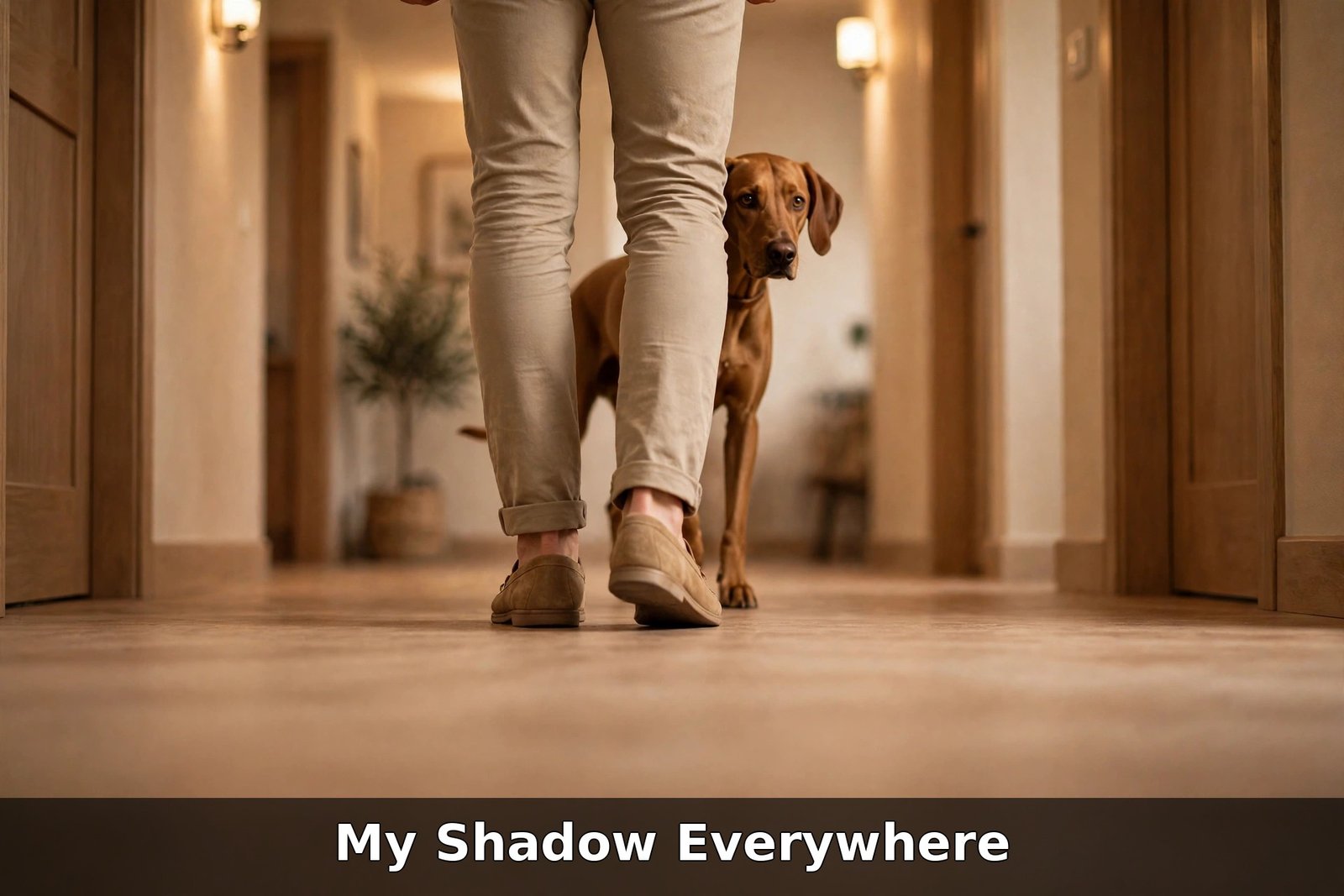
For many owners, bathroom breaks have become a group activity: open the door and the dog is parked on the bath mat, or turn around and find them standing silently right behind you.
If that sounds familiar, you’ve got a shadow dog. And the internet’s answer to “why does my dog follow me everywhere” is usually one of two extremes: “it’s adorable, enjoy it” or “it’s separation anxiety, panic now.” Both miss the middle — and the middle is where most dogs live.
Here’s a better frame: the shadow spectrum — three patterns that look similar but mean very different things.
The Shadow Spectrum: Three Patterns
Most articles about dogs that follow you everywhere conflate three separate things into one blurry explanation. Let’s untangle them.
Pattern 1: The Happy Shadow (Normal Social Following)
This is the dog who trails you with a loose body and zero drama. When you sit, he sighs and flops at your feet. If you close the bathroom door, he might wait outside or just go nap. He can absolutely be alone without falling apart; he simply prefers not to.
The giveaways: interruptible (watches you get up, no panic), relaxed body language (soft eyes, loose wag), settles independently, and no door drama when you leave.
This is companionship, plain and simple. Dogs were bred over thousands of years to read us and stay close. A dog who follows you because he enjoys your company is expressing the most ordinary canine behavior there is. It needs no fixing and no worry — for a lot of us, it’s one of the best parts of having a dog.
Pattern 2: The Anxious Shadow (Stress Following)
The other end of the spectrum. This dog doesn’t just prefer your company — she needs it. She paces behind you, whines when you shift rooms, plants herself in doorways so you can’t leave without stepping over her. Closed doors bring genuine distress: scratching, vocalizing, drooling.
This sits right next to separation anxiety. If this sounds like your dog, the signs of separation anxiety in dogs guide will help you tell mild stickiness from something needing a structured plan. The independence routine below is built exactly for this dog.
Say this clearly: an anxious shadow isn’t a “bad” or “needy” dog. Punishing panic she can’t control only deepens it.
Pattern 3: The Sudden Shadow (Behavior Change)
The one people get most wrong: your dog has been independent for years, unbothered by closed doors — and suddenly he’s glued to you. Everywhere. Including the bathroom. That change is not a training problem; it’s information. In adult and senior dogs, new clinginess can signal pain (arthritis is a common quiet culprit), vision or hearing loss, nausea, thyroid issues, or early cognitive decline. A dog who can’t see or hear well sticks to his human like a lighthouse — you become his orientation system.
The rule is non-negotiable: sudden change means vet visit first, training second. If your dog is older, mention cognitive decline (CCD) — catching it early gives you the most options. Medications can sometimes help with anxiety or cognitive symptoms, but that’s strictly an “ask your vet” conversation. Only once a vet has cleared your dog (or is treating the underlying issue) should you add the plan below.
Breed Plays a Role — But It Doesn’t Decide
Some breeds were built for this: the Vizsla (the “velcro dog”), the Lab, the Golden Retriever, the German Shepherd, the Border Collie, and the Chihuahua — little body, enormous attachment. Working and herding breeds were selected for dogs who constantly check in.
But any dog can be a shadow. Puppies never taught to be comfortable alone, shelter dogs adjusting to a new home, and dogs who’ve lost a companion all tend to hover — and it usually softens with time.
The 5-Step Independence Plan
This plan is for Patterns 1 and 2 — the happy shadow whose owner wants breathing room, and the anxious shadow who needs to learn that distance isn’t danger. (Pattern 3? Vet first. I mean it.) The goal is not a dog who doesn’t care about you. It’s a dog who trusts that your absence is temporary and his spot is safe. Think confidence, not distance.
Step 1: Teach a Settle Cue on a Mat
Pick a mat or bed and make it the best place in the house. Reward your dog for lying on it — first for stepping onto it, then lying down, then staying. Over a week or two of short sessions, he should trot to his mat on cue (“place,” “bed,” “settle”) and flop down. This gives him a job instead of hovering — and a dog with a job is a calmer dog.
A cozy, dedicated resting spot matters more than people expect. If his mat is genuinely comfortable — his spot, his scent, his routine — he’ll choose it over pacing after you. Our guide to the best calming dog bed for separation anxiety covers what makes a bed feel safe: bolsters to burrow against, the right size, placement that isn’t isolating.
Step 2: Practice Micro-Absences
Forget leaving for long stretches and hoping he “gets used to it.” Start embarrassingly small: ten seconds in the next room, back before he gets upset. Then thirty. Then two minutes, door closed. Keep the bar low enough that he succeeds almost every time — you’re building a library of memories that say “she left, she came back, nothing happened.”
If he panics at any step, you moved too fast — drop back to the last calm level and rebuild. It isn’t a race.

Step 3: Reward Calm Distance
The sneaky-powerful one. Throughout the day, quietly reward your dog whenever he’s calm away from you — on his bed while you cook, with a toy while you work, napping in the hallway. A soft “good boy” and a treat tossed to his bed teaches him independence literally pays.
Most owners only interact with their dog when he’s right next to them, accidentally teaching that being glued to you is the only way to get attention. Flip it: make the biggest rewards happen at a distance.
Step 4: Desensitize Your Departure Cues
Keys jingle, shoes go on, bag gets grabbed — and your dog’s heart rate climbs before you’ve touched the door. Break the associations by doing the cues without leaving: grab your keys and sit on the couch. Put on shoes and make lunch. Repeat dozens of times until keys-jingling means nothing, then add short departures.
The same logic applies overnight: if daytime shadowing turns into nighttime barking, our guide on how to stop dog barking at night walks through the calming evening routine.
Step 5: Enrich the Solo Hours
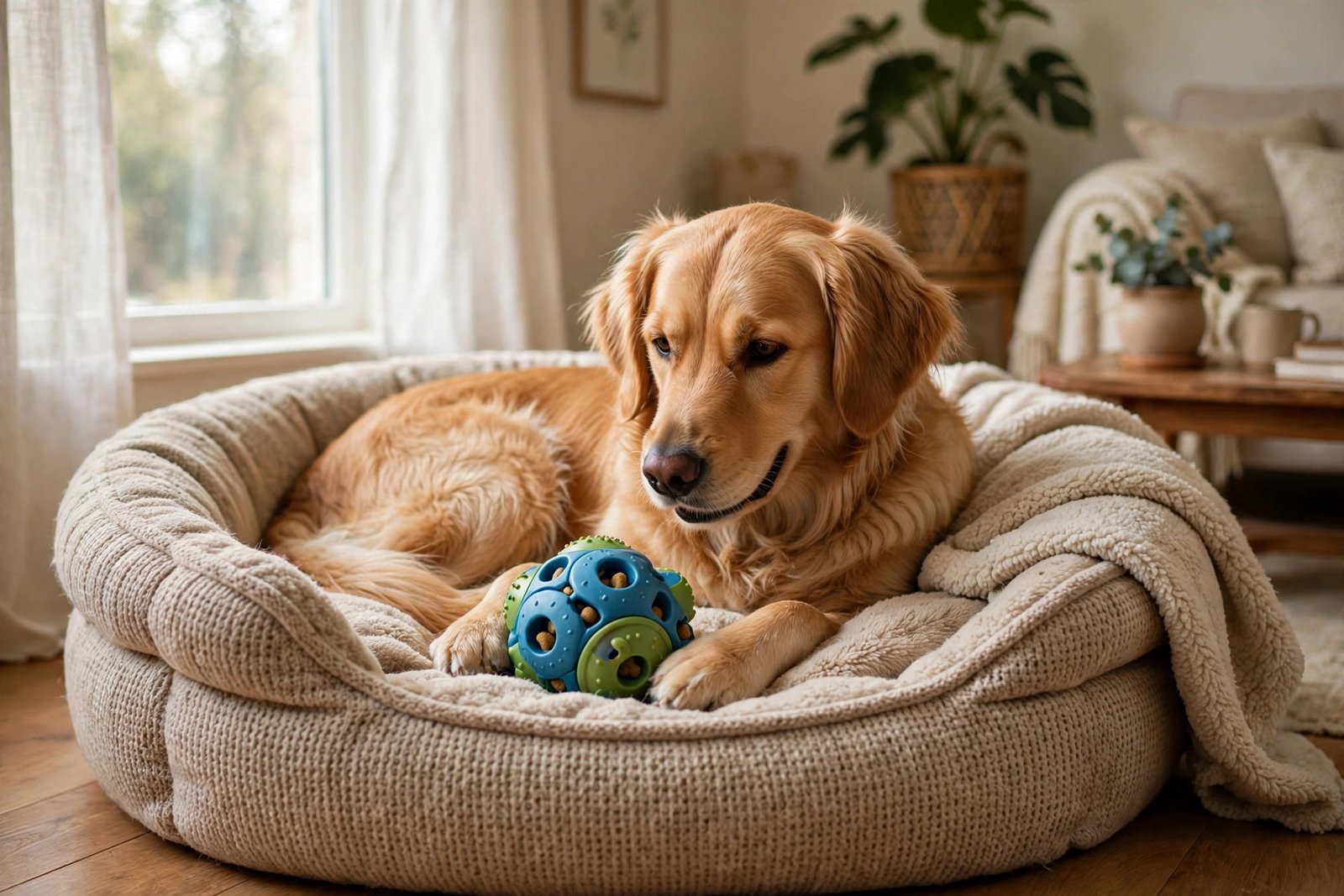
A bored dog invents a job — usually “monitor the human.” Give him better options: puzzle feeders that stretch breakfast into twenty minutes, snuffle mats, scent games (hide treats and let him “hunt”). A long-lasting dental chew works beautifully too, keeping him busy while earning its keep for his teeth. A tired, mentally satisfied dog doesn’t pace the hallway — he naps.
What NOT to Do
- Don’t punish the shadowing. Scolding an anxious dog teaches him his safe place is also unsafe — you’ll get more anxiety, not less.
- Don’t make departures dramatic. Long goodbyes teach your dog departures are events. Keep arrivals and departures boring.
- Don’t force “independence” with isolation. Shutting an anxious dog alone in a room for hours teaches him alone equals awful. Graduation beats the deep end.
- Don’t ignore sudden change. A previously independent dog who suddenly turns clingy gets a vet appointment, not a training plan. Full stop.
When to Call in a Professional
Most shadowing resolves with the plan above, given a few patient weeks. But bring in a certified trainer (CPDT or IAABC) or a veterinary behaviorist if your dog is injuring himself, destroying doors or windows, or not improving after a month of consistent practice.
Keep the separation anxiety signs guide bookmarked as your reference point — a clear checklist beats guessing.
One last thought: small rituals help enormously — the same bedtime pattern, the same wind-down cues, and a calming treat in the evening can teach an anxious dog the day is done and everything is fine. Our guide to the best calming treats for dogs with separation anxiety pairs nicely with the settle-mat work from Step 1.
Frequently Asked Questions
Is it bad if my dog follows me everywhere?
Usually not. A calm dog who handles alone-time fine is just being social. Address it only when it’s paired with stress signals — pacing, whining, inability to settle.
Why does my dog follow me but not my partner?
Dogs bond most with whoever feeds, walks, trains, and spends the most time with them. It isn’t about love — it’s about whose routine is most woven into the dog’s day.
Why does my dog suddenly follow me everywhere?
Sudden clinginess in a previously independent dog is the pattern to take seriously. Pain, illness, vision or hearing loss, and cognitive decline can all cause it — vet check first.
Should I let my puppy follow me everywhere?
It’s natural, but start building independence early. Short, positive solo time with enrichment is far easier to teach at twelve weeks than to fix at two years.
Does constant following always mean separation anxiety?
No — that’s the point of the spectrum. Separation anxiety means panic at departures, destruction when left, prolonged distress. A calm shadow with no distress when you’re gone is just social.
Can I train my dog to be more independent?
Yes. Mat settling, micro-absences, rewarding calm distance, and enrichment teach a dog that being apart is safe and even pleasant. Most dogs improve within a few consistent weeks.
🎄 Visit Our Etsy Shop — Fukroo
Printable Christmas wall art, gift tags & party games — instant download
Shop on Etsy →