
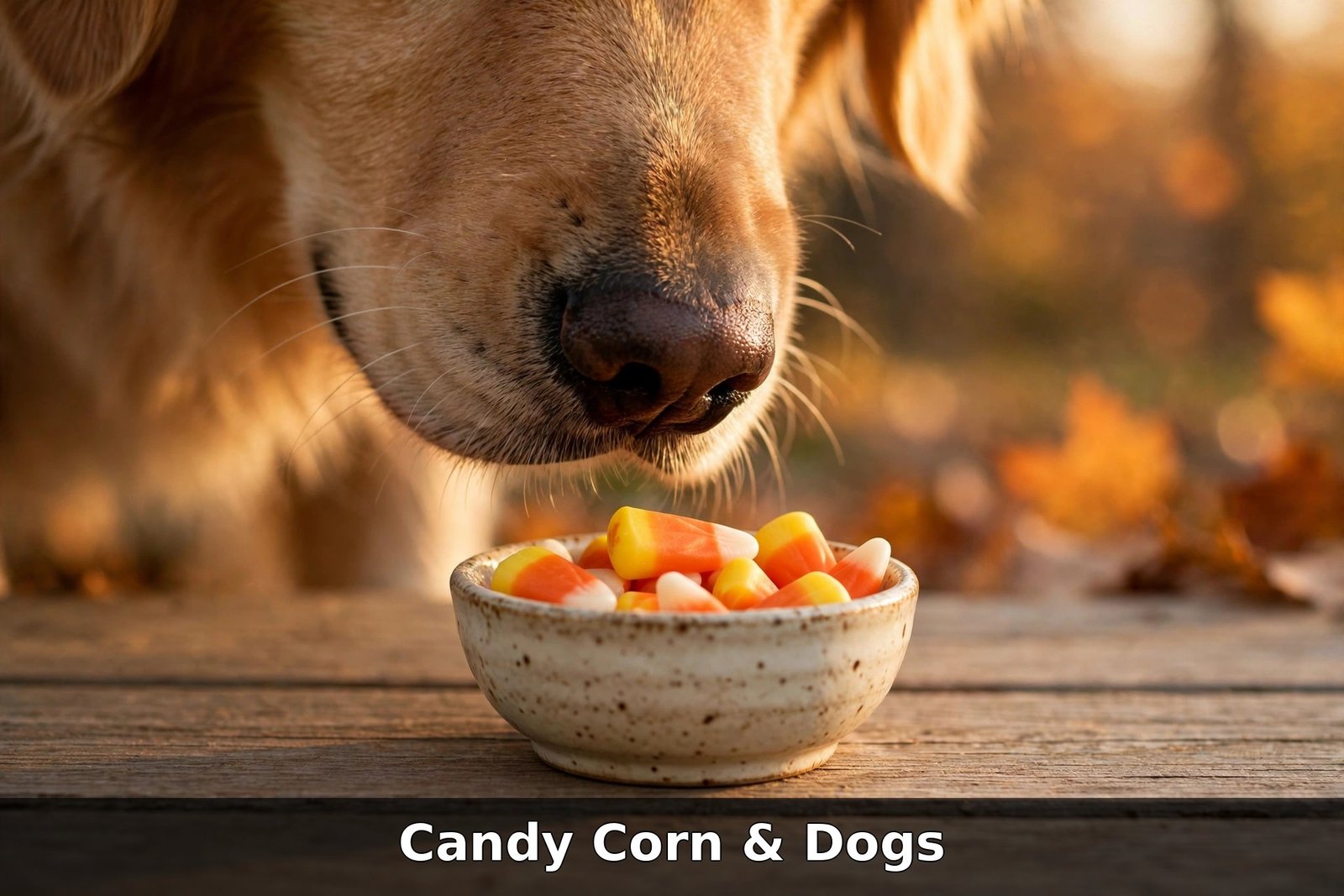
Can Dogs Eat Candy Corn? (Vet-Style Answer + Safe Fall Treats)
No — dogs shouldn’t eat candy corn. A single piece probably won’t send your dog to the emergency vet, but this is one Halloween candy where the risks are sneakier than they look. Candy corn is a concentrated lump of sugar and corn syrup with zero nutritional value, and some varieties hide an ingredient that is genuinely dangerous to dogs. If your pup is sitting next to your trick-or-treat bowl giving you those eyes right now, here’s the full picture — plus what to give them instead so nobody feels left out of the fall fun.
Why Candy Corn Is a Problem for Dogs
It helps to think about candy corn the way a vet would: not “poison” in the way chocolate is, but a food that offers dogs nothing good and several things bad.
It’s Basically Pure Sugar
A classic candy corn kernel is made from sugar, corn syrup, and a handful of flavorings and waxes. Dogs don’t process sugar the way we do, and they certainly don’t need it. A piece or two may cause nothing more than a brief sugar rush in a large, healthy dog — but more than that can trigger vomiting, diarrhea, and serious stomach discomfort, especially in small breeds and puppies. Over time, regular sugary “treats” contribute to weight gain, dental decay, and blood-sugar problems, including diabetes risk. Dogs also develop a taste for sweet things fast; the more human candy they get, the harder it becomes to keep them interested in their actual food.
The Xylitol Danger Is Real
This is the part that matters most. Xylitol — also labeled as birch sugar, E967, or wood sugar — is extremely toxic to dogs. While traditional candy corn isn’t usually sweetened with xylitol, sugar-free and “diet” versions absolutely can be, and Halloween candy bowls are a mix of everything these days. In dogs, xylitol triggers a rapid, massive insulin release that can drop blood sugar to life-threatening levels within 30 to 60 minutes, and larger amounts can cause liver failure. A tiny amount — far less than what’s in one piece of sugar-free candy — can be dangerous. Always read the wrapper, and when in doubt, assume the worst. If you ever suspect your dog ate anything sweetened with xylitol, treat it as an emergency and call your vet immediately.
Wrappers, Choking, and Blockages
Dogs rarely eat candy corn politely. Many will swallow pieces whole, wrappers and all — and foil or cellophane wrappers can cause choking or intestinal blockages. Wrapper-related blockages sometimes don’t show symptoms for a day or two, then arrive as vomiting, loss of appetite, and a painful belly. If your dog gulped down a handful of individually wrapped pieces, the wrappers may be the bigger concern than the sugar.
What to Do If Your Dog Ate Candy Corn
First, don’t panic — most cases of “my dog snagged one piece” end with nothing worse than mild stomach upset. But do take it seriously and act quickly:
- Check the packaging. Was it sugar-free? If xylitol is listed (or you can’t check), skip straight to calling your vet or an animal poison hotline — this is urgent.
- Count what you can. Estimate how many pieces your dog ate, including wrappers.
- Watch for symptoms. Vomiting, diarrhea, drooling, wobbliness, lethargy, or a swollen belly all warrant a vet call. Weakness or collapse after eating sugar-free candy is an emergency.
- Don’t induce vomiting unless your vet tells you to. It’s not always safe, and it can make some situations worse.
For the full step-by-step protocol, keep our what to do if your dog eats Halloween candy guide bookmarked — it walks through exactly what to check, when to call the vet, and how to dog-proof your candy stash.
Safe Fall Treats Your Dog CAN Have
The good news: fall is full of dog-friendly flavors. While everyone else is working through candy corn, your dog can enjoy treats that are actually good for them. Here are the standouts:

Plain pumpkin (not pumpkin pie filling). This is the fall MVP for dogs. A spoonful of plain canned pumpkin or roasted pumpkin pieces is rich in fiber and easy on the stomach — many vets even recommend it for mild digestive upset. Just make sure the label says 100% pumpkin with no added sugar, spices, or xylitol.
Apple slices. Crisp, sweet, and hydrating. Remove the seeds and core first (seeds contain trace amounts of cyanide compounds — not something to risk), and slice them into manageable pieces. Most dogs go wild for the crunch.
Xylitol-free peanut butter. Check the ingredients every single time — a few brands have started adding xylitol. Plain peanut butter is a perfect training treat and a great stuffing for a chew toy when you want your dog happily occupied while trick-or-treaters come to the door.
Carrots and blueberries. Both are a classic vet-recommended type of snack. Baby carrots make satisfying chews, and blueberries are tiny antioxidant-packed bites that double as low-mess training rewards.
Plain cooked sweet potato. Soft, naturally sweet, and gentle on digestion. Serve it plain — no marshmallows, no brown sugar, no butter.
A note on “pumpkin spice.” Dogs can have plain pumpkin, but pumpkin spice blends often contain nutmeg, which is toxic to dogs in quantity, plus added sugars. When in doubt, keep it plain and simple. If you want ready-made options you can grab instead of baking, check out our picks for safe Halloween dog treats — every option on that list is made for dogs, so there’s no label-reading anxiety.
Keeping the Candy Bowl Out of Reach on Halloween
Prevention beats a vet bill every time. A few habits make Halloween dramatically safer:
- Keep all candy bowls on high counters or in closed cabinets — never at coffee-table height where a curious nose can reach.
- Count the candy bowl nightly so you notice when some goes missing.
- Tell the kids. Little kids are generous treat-givers; make sure yours know the dog gets dog treats, not candy.
- Give your dog their own “trick-or-treat” moment with a few of the safe fall treats above so they’re not begging at the bowl.
For more seasonal tips, our Pet Halloween hub collects everything — costume safety, decoration hazards, and treat guides — in one place.
Frequently Asked Questions
How much candy corn is dangerous for a dog?
There isn’t a magic number. One regular piece is unlikely to cause serious harm in a medium or large dog, but even small amounts of a sugar-free (xylitol-containing) version can be dangerous. Puppies, small breeds, and dogs with diabetes or sensitive stomachs are at higher risk from any amount. When it’s not food made for dogs, the safest dose is zero.
Is sugar-free candy corn worse than regular candy corn?
Yes — dramatically. Regular candy corn is bad because of sugar overload. Sugar-free candy corn may contain xylitol, which is genuinely toxic to dogs and can cause a dangerous blood-sugar crash within an hour. Treat any sugar-free candy as an emergency until your vet says otherwise.
My dog ate the wrapper too. Should I worry?
Wrappers can cause choking or intestinal blockage, especially foil or thick cellophane. If your dog swallowed several wrapped pieces, call your vet for advice even if your dog seems fine right now — blockages sometimes take a day or two to show up.
Can puppies have candy corn?
No. Puppies have smaller bodies, more sensitive stomachs, and developing blood-sugar regulation — everything that makes candy risky for adult dogs is worse for them. Stick to puppy-appropriate treats and the safe fall snacks listed above.
The Bottom Line
Dogs should not eat candy corn — not the regular kind, and definitely not the sugar-free kind. A single traditional piece is unlikely to be an emergency, but there’s no nutritional upside and real downside, from stomach upset to the serious xylitol risk in sugar-free varieties. The good news is that fall gives dogs plenty of treats to be excited about: plain pumpkin, apple slices, and xylitol-free peanut butter will make your dog far happier than candy corn ever could — and you’ll spend Halloween relaxing instead of watching for symptoms.
🎄 Visit Our Etsy Shop — Fukroo
Printable Christmas wall art, gift tags & party games — instant download
Shop on Etsy →



One Comment