Can Dogs Eat Christmas Cake? (2026): The Honest Answer
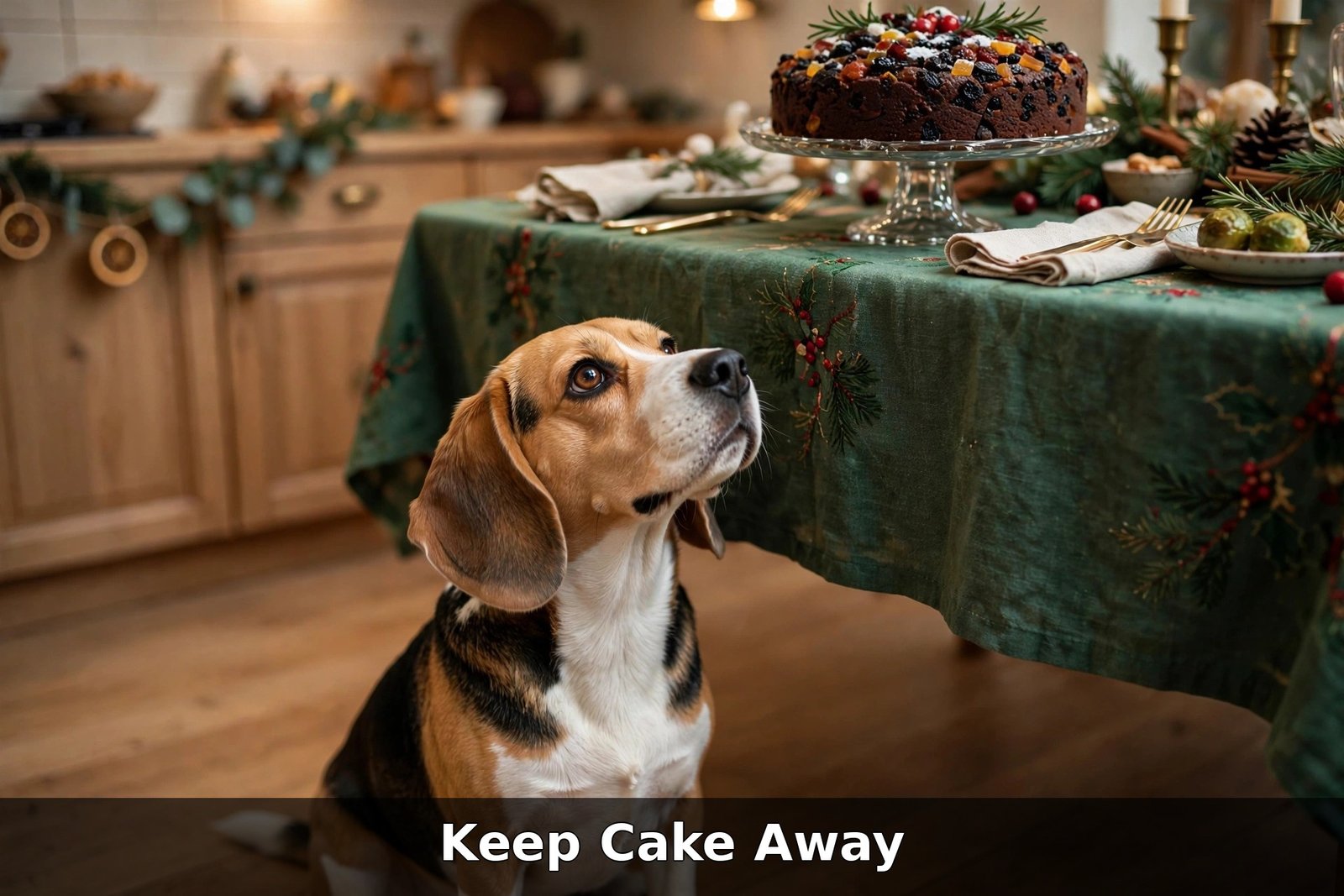
Every Christmas, the cake comes out of its tin, gets its slice of marzipan, and sits on the table looking like the best thing in the house. And every Christmas, a dog sits underneath that table, staring up at it with the full force of its personality. It happened in our house last year: the cake was on a stand, the beagle was on the floor, and the negotiation lasted until someone finally said the words out loud — can dogs eat Christmas cake?
The short answer is no. This guide covers how dangerous a stolen bite is, what to do in the ten minutes after it happens, and what to give your dog instead so it stops staring.
Quick Verdict: No — Christmas cake is not safe for dogs. Raisins, sultanas, and currants can damage a dog’s kidneys, and the cake also packs alcohol, nutmeg, sugar, and fat. A tiny stolen crumb is unlikely to hurt a big dog, but a slice — or any amount for a small dog — is a vet call, not a wait-and-see.
What Is Actually in a Christmas Cake?
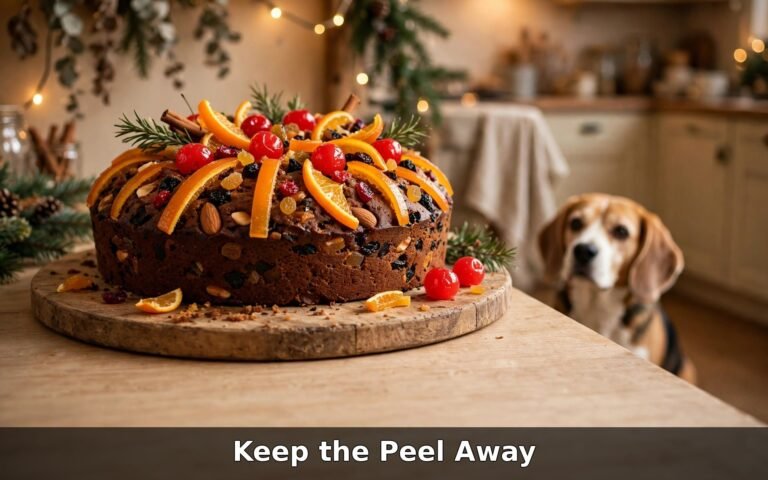
A traditional Christmas cake is a dark fruit cake: dried fruit soaked in alcohol, mixed into a rich butter-and-sugar batter with spices, then baked low and slow and fed with more alcohol for weeks. Every one of those ingredients is a problem for a dog, and the fruit is the serious one.
Raisins, sultanas, and currants are the main danger. Grapes and their dried forms can cause kidney failure in dogs, and vets still do not know exactly why — or how little it takes. Some dogs eat a handful of raisins and show nothing; others get seriously ill from a small amount. There is no safe dose to aim for, and no way to tell in advance which dog is sensitive. That uncertainty is the whole point: you cannot dose your way around it.
Then there is the alcohol. Most Christmas cakes are soaked in brandy, rum, or whisky, and the alcohol does not all bake off. Alcohol is toxic to dogs at much lower amounts than it is to people, and a small dog that eats a boozy slice gets a meaningful dose. Nutmeg, the spice that gives the cake its smell, is also toxic to dogs in quantity — it can cause tremors and seizures. And underneath all of that is a lot of butter and sugar: a rich, fatty slice that can trigger pancreatitis, the painful inflammation of the pancreas that vets see constantly over the holidays.
Christmas Cake vs Christmas Pudding: The Difference That Matters
People mix these two up, and dogs pay for the confusion. Christmas pudding is steamed, round, and served hot with custard or brandy butter; Christmas cake is baked, flat-topped, iced or marzipanned, and sliced cold. They look different on the table — but for a dog, the difference barely matters, because the dangerous ingredients are the same: dried fruit, alcohol, and spice.
The one practical difference is the icing. A marzipan layer adds a lot of sugar and almond paste, and some marzipan is made with bitter almonds, which are worse than sweet almonds. Royal icing is mostly sugar and egg white — less dangerous on its own, but still sugar your dog does not need.
| Bake | Dried fruit | Alcohol | Extra risk |
|---|---|---|---|
| Christmas cake | Raisins, sultanas, currants | Brandy or rum, soaked for weeks | Marzipan + icing; nutmeg |
| Christmas pudding | Raisins, sultanas, currants | Brandy, plus flaming brandy | Served hot; suet fat |
| Plain fruit cake | Often raisins or currants | Sometimes none | Still unsafe if it has dried fruit |
| Stollen | Raisins, candied peel | Often rum-soaked | Marzipan centre |
| Panettone | Usually raisins | Usually none | High sugar and fat; check the label |
The rule that covers all of them is simple: if a Christmas bake contains dried grapes in any form, it is not dog food. The name on the tin does not change the fruit inside it.
How Much Is Dangerous — and What to Do If Your Dog Eats Some
There is no reliable “safe amount” of Christmas cake for a dog, and anyone who gives you one is guessing. What vets do say is that the risk scales with three things: how much was eaten, how small the dog is, and how much dried fruit was in that particular slice. A large dog that steals a single crumb off the floor is in a very different position from a small dog that eats a whole slice off a low table.
If your dog has eaten Christmas cake, do not wait for symptoms to decide whether it matters. Note how much it ate and when, keep the cake’s packaging or recipe if you have it, and call your vet or a poison helpline straight away. Do not try to make your dog vomit at home unless a vet or the helpline tells you to — that can cause more harm than the cake. The vet may ask you to come in, or may ask you to watch the dog at home, and that decision depends on the amount and the dog’s size.
The signs to watch for usually start within 12 to 24 hours: repeated vomiting, diarrhoea, a hunched back or prayer position, a tender or swollen belly, loss of appetite, and unusual tiredness. With raisin poisoning specifically, the worrying signs are drinking much more water than usual, passing very little urine, or seeming weak and wobbly — those point to the kidneys, and they need a vet the same day. Pancreatitis from the fat and sugar looks similar at first: vomiting, belly pain, and refusing food. Either way, the response is the same — call the vet early, while it is still a phone call and not an emergency.
A Dog-Safe Christmas Cake Your Dog Can Actually Eat
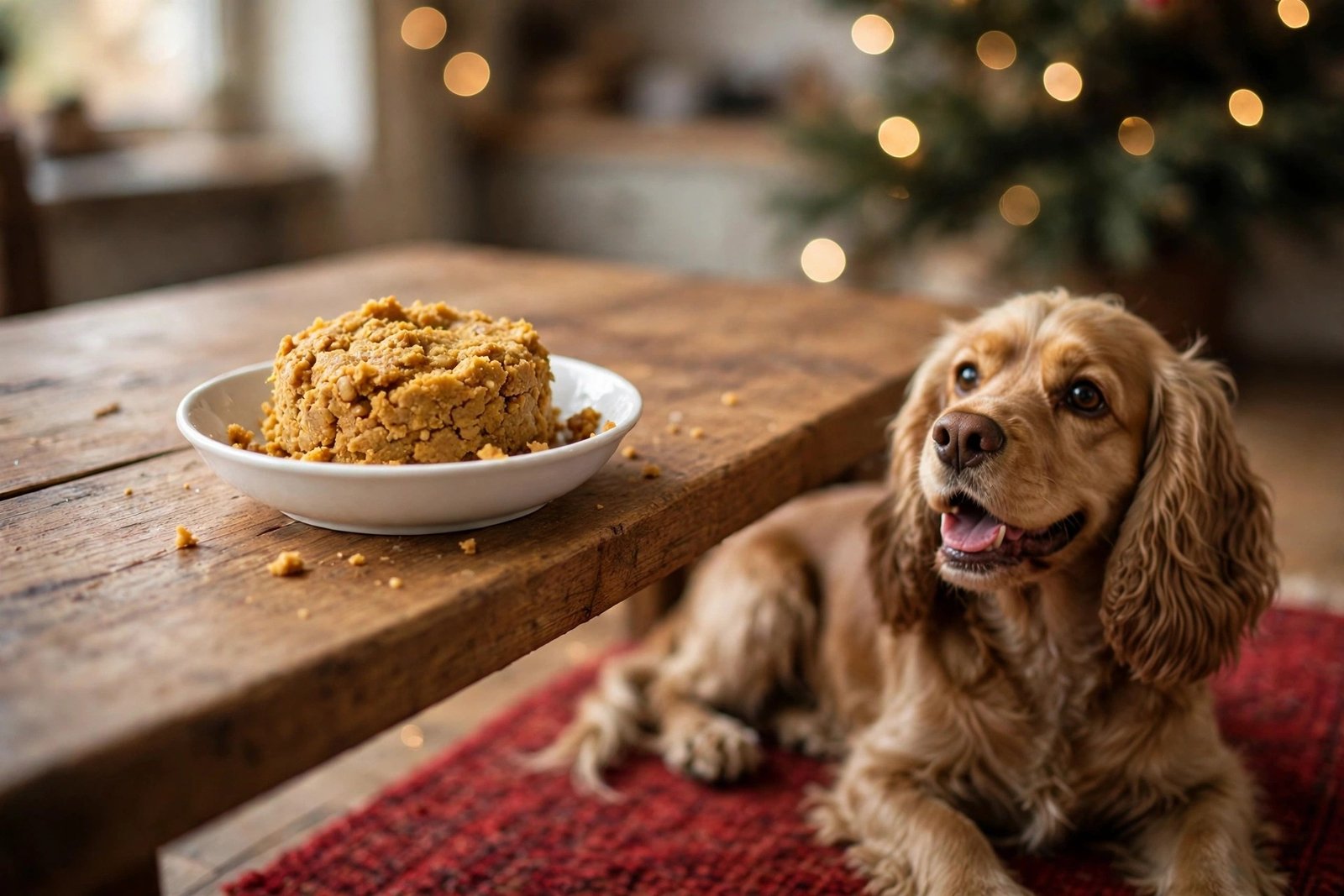
Your dog does not need to miss out — it just needs its own cake. A dog-safe version takes ten minutes and uses ingredients that are already in most kitchens: plain pumpkin puree (not pie filling), smooth peanut butter with no xylitol, oat flour, and an egg. Mix them into a thick batter, bake in a small tin until firm, and let it cool completely. No dried fruit, no alcohol, no nutmeg, no added sugar.
Keep the slice small — a few bites, not a whole cake — and introduce it the way you would any new food: a small piece first, then watch for an upset stomach. The point is not to bake a masterpiece; it is to have something on the table that belongs to the dog, so the staring stops and nobody is tempted to share the real cake.
Other Christmas Cakes and Bakes to Watch
Christmas cake is not the only risk on the dessert table. Fruit cake from the supermarket is the same recipe with a different label — check for raisins and currants before assuming it is plainer and safer. Stollen has a marzipan centre and rum-soaked raisins. Panettone usually has raisins too, though some versions are raisin-free; the label is the only way to know, and a “chocolate chip panettone” can hide chocolate as well as fruit.
Mince pies deserve a mention because they sit next to the cake on most tables: they are small, they smell sweet, and they are full of mincemeat — which is mostly raisins, sultanas, and currants. One mince pie is enough dried fruit to matter for a small dog.
Frequently Asked Questions
Can dogs eat Christmas cake?
No. Christmas cake contains raisins, sultanas, or currants, which can damage a dog’s kidneys, plus alcohol, nutmeg, sugar, and fat. There is no safe amount — do not feed it to your dog, even as a small treat.
What should I do if my dog ate Christmas cake?
Note how much it ate and when, then call your vet or a poison helpline straight away — ASPCA Animal Poison Control Center 888-426-4435 or Pet Poison Helpline 855-764-7661. Do not make your dog vomit unless a vet tells you to.
How much Christmas cake is dangerous for a dog?
There is no known safe dose, because sensitivity to dried grapes varies from dog to dog. The risk grows with the amount eaten and shrinks with the dog’s size — a whole slice is dangerous for any dog, and even a small amount can matter for a small dog.
What’s the difference between Christmas cake and Christmas pudding for dogs?
Very little, from the dog’s point of view. Both are packed with dried fruit, alcohol, and spice. The cake is baked and sliced cold with marzipan or icing; the pudding is steamed and served hot. Both are unsafe, for the same reasons.
Can dogs eat fruit cake?
Only if it is genuinely free of dried grapes — most fruit cakes contain raisins or currants, which makes them unsafe. A plain sponge cake with no dried fruit, chocolate, alcohol, or xylitol is a different matter, but check the ingredients first and keep the portion small.
Is there a dog-safe Christmas cake alternative?
Yes — bake a small cake from plain pumpkin puree, xylitol-free peanut butter, oat flour, and an egg. No dried fruit, no alcohol, no nutmeg, no added sugar. Serve a few bites, not a whole cake, and store the rest in the fridge.
For more of the Christmas season with your dog, see our guides to whether dogs can eat Christmas pudding, what dogs can and cannot eat at Christmas dinner, pigs in blankets, and Christmas ham — and if your dog still deserves a present, our Christmas dog treats guide picks treats by type.
🎄 Visit Our Etsy Shop — Fukroo
Printable Christmas wall art, gift tags & party games — instant download
Shop on Etsy →