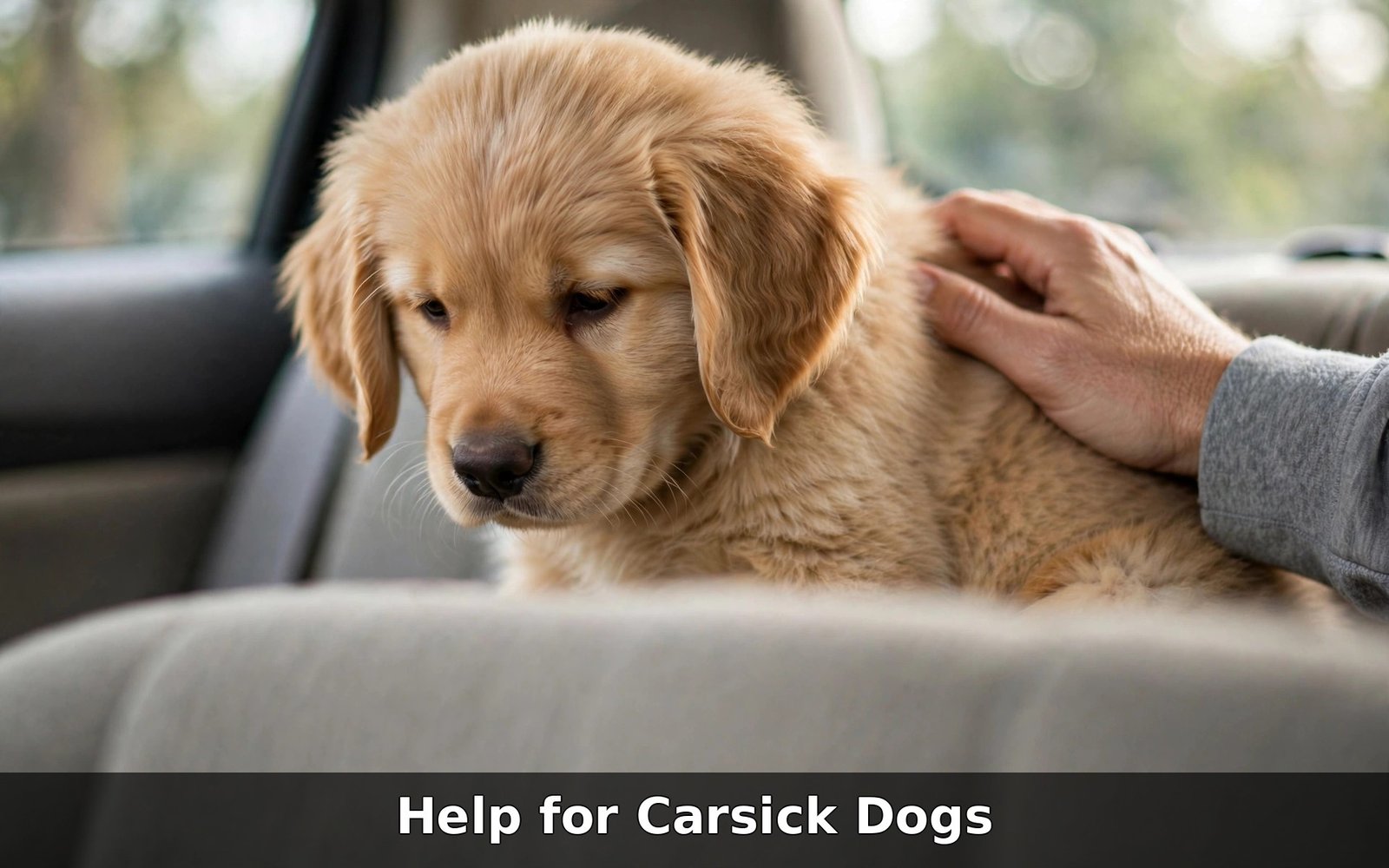
Dog Car Sickness: Signs and How to Help (2026)
Our first road trip was supposed to be magical — a cabin three hours away, hiking trails, the whole golden-weekend fantasy. Ten minutes down the highway, our six-month-old lab mix started drooling like a faucet someone forgot to turn off. Twenty minutes in, he threw up all over the back seat. I spent the rest of the drive Googling “dog car sickness” from the passenger seat.
Four years later, I wish someone had told me two things: car sickness is incredibly common in dogs, especially puppies — and it usually gets better with the right approach. Here’s what actually worked.
A quick note before we start: this article is for information only and isn’t a substitute for professional veterinary advice. I’m not a vet — just a dog owner who’s been through it. If you’re worried about your dog, your vet is the right call.
Quick Verdict
True motion sickness — drooling, lip-licking, vomiting — is very common in puppies and most outgrow it by their first birthday as their inner ear matures. But many “carsick” dogs are actually anxious, not nauseous, and that needs training, not anti-nausea tricks. A patient desensitization ladder plus smart trip setup fixes most cases. For severe cases, your vet can prescribe anti-nausea medication — never give human travel tablets without veterinary advice.
The Signs of Dog Car Sickness
Car sickness rarely starts with vomit. It builds. Most dogs telegraph their nausea well before anything comes up — and spotting the early signs is half the battle.
- Excessive drooling. The big one. A dog who never drools at home but turns into a drool machine in the car is waving a red flag.
- Lip licking and swallowing. Repeated, deliberate lip-licking with nothing to lick is a classic nausea tell.
- Yawning (the non-sleepy kind). Twenty yawns in ten minutes, when the dog clearly isn’t tired, is stress or nausea talking.
- Whining or restlessness. Pacing, unable to settle — the dog is uncomfortable and telling you so.
- Listlessness. A lively dog goes still and glassy-eyed. Some owners mistake this for finally calming down. It’s misery, not calm.
- Panting in a cool car. Heavy panting without heat points to stress, often paired with nausea.
- Vomiting or retching. The end of the line — by this point, the dog has been suffering quietly for a while.
There’s a catch: several of these signs — panting, whining, yawning, restlessness — show up in anxious dogs with zero nausea. Telling the two apart is the most important skill in this whole article.
Is It Motion Sickness or Anxiety?
True motion sickness and car anxiety look almost identical from the outside, and confusing them is why so many fixes fail. A dog who’s been sick in the car twice can develop a learned fear of it — now both problems feed each other.
The tell is timing. Motion sickness follows the motion: signs build as the car moves and fade within minutes of stopping. A genuinely motion-sick dog will often hop into a parked car happily and eat treats in it, then start drooling on a winding road.
Anxiety starts before the car moves. The dog freezes at the open door, pants in a parked car, refuses treats he’d normally inhale. This is the classic “vet-visit-only dog” — he only ever rides to the clinic, so the car itself has become the villain. If that sounds familiar, our guide for dogs scared of thunder covers the same fear-learning pattern.
Why does it matter? The cures differ. A nauseous puppy needs better trip setup and time to mature. An anxious dog needs slow desensitization — and anti-nausea medication won’t touch anxiety. Get the diagnosis right and you’re halfway home.
Why It Happens (And Why Puppies Get It Most)
The mechanism is the same one that makes humans seasick: a mismatch between what the eyes see and what the inner ear feels. The inner ear’s balance system isn’t fully developed in young dogs, so every bump and curve sends confused signals to the brain — and the brain reads “confused signals” as “something’s wrong, evacuate the stomach.”
That immaturity is why puppies are the prime victims, and why most cases resolve on their own around one year of age, when the vestibular system finishes maturing. Miserable at eight months, totally fine by fourteen — it’s a common story.
A few other players in the mix:
- Learned fear. One bad vomit-filled ride can poison the whole experience. If the car meant misery twice, the third trip starts with dread — and dread itself brings on nausea.
- The vet-visit trap. Dogs who only travel to the vet associate the car with unpleasantness. The car becomes the thing they hate, and hate feels a lot like nausea.
- Poor trip setup. A hot, stuffy car, a full stomach, sliding on a slippery seat, stale fast-food smells — all of it raises baseline misery and pushes borderline dogs over the edge.

The Desensitization Ladder
This is the fix for the anxiety half of car sickness — and it helps the motion half too, since a relaxed dog gets less nauseous. Rebuild the car’s reputation one tiny, boring step at a time. Never move to the next rung until the current one is genuinely boring for your dog.
Step 1 — The parked car is a treat machine. Engine off, doors open. Toss treats in and around the car; let your dog hop in, sniff, hop out. A few five-minute sessions a day. The car becomes “that place where chicken appears.”
Step 2 — Hang out inside. Dog in the car, engine off, you sitting with him, occasional treat. Aim for total boredom. If your dog is tense here, you’ve just diagnosed anxiety rather than motion sickness.
Step 3 — Engine on, going nowhere. Start the engine and sit in the driveway. Treats, calm praise, turn it off after a few minutes. Repeat until the engine sound is as exciting as a refrigerator hum.
Step 4 — The driveway crawl. To the end of the driveway and back — too short for anything bad to happen. A few days of this.
Step 5 — Around the block. Two to five minutes, ending somewhere fun — a park, somewhere with sniffs. The critical rule: the car must stop being the vehicle that only goes to the vet.
Step 6 — Stretch it out. Add time gradually. One bad day isn’t failure — drop back a rung for a day or two and carry on.
Honest expectations: this takes weeks, not days. Our dog went from vomiting at twenty minutes to tolerating two-hour drives in about six weeks. It felt glacial. It worked.
Trip Setup: Getting the Ride Right
Training rebuilds the dog’s attitude; setup handles the physics. These adjustments make every ride easier on a sensitive stomach:
- Feed lighter before travel. A full stomach sloshes. Withhold food for 3–4 hours before a trip — just an “empty-ish” stomach, not starving. A small snack is fine.
- Ventilate. Fresh air helps nausea enormously. Crack a window a few inches — enough for airflow, not enough for a head out. Skip heavy air fresheners; dogs’ noses are far more sensitive than ours.
- Secure the dog so he can’t slide. A dog surfing across the seat on every turn gets more nauseous. A secured crate or a harness clipped to a seatbelt anchor keeps him stable. A dog car seat cover with a grippy underside stops the sliding and protects your upholstery from the drool-and-dirt reality of a nauseous passenger.
- Drive like you’re transporting soup. Smooth acceleration, gentle braking, easy cornering. Your dog notices aggressive driving more than your stomach does.
- Plan breaks. Stop every 1–2 hours on long drives: fresh air, water, a short walk. These stops are also when a GPS tracker for road trips earns its keep — unfamiliar rest stops are where nervous dogs bolt.
- Keep it cool. Heat and stuffiness amplify nausea fast. AC on, or windows down — whatever keeps air moving.
What About Medication?
There is real, effective veterinary medication for canine motion sickness. Your vet can prescribe anti-nausea medication that works well for many dogs — especially useful for unavoidable longer trips while training is still in progress.
What you must not do: never give your dog human travel-sickness tablets or any other human medication without explicit veterinary advice. Dogs metabolize drugs differently, doses don’t translate, and some human formulations contain ingredients dangerous for dogs. Think of medication as a bridge, not a cure — it gets you through the unavoidable trips while the desensitization ladder does the long-term work.
When to Call the Vet
Most car sickness is a training-and-patience problem. But know the lines:
- Vomiting that won’t stop — more than a couple of episodes, or vomiting continuing after the car stops.
- Signs of dehydration: dry gums, sunken eyes, lethargy after repeated vomiting.
- Blood in vomit or anything that looks wrong beyond normal stomach contents.
- No improvement by around a year old — if puppy motion sickness isn’t easing as they mature, get a checkup to rule out ear or balance issues.
- Sudden onset in an adult dog who previously traveled fine. New nausea can signal an inner-ear problem or something else — don’t just assume it’s “car sickness now.”
- Extreme panic — a dog thrashing or trying to jump out of a moving car may need professional behavioral help alongside the home ladder.
And the standing disclaimer, because it bears repeating: this article is for information only and isn’t a substitute for professional veterinary advice. If something feels off about your dog, the vet’s number is the right search result.
Frequently Asked Questions
Will my puppy outgrow car sickness?
Most do — the inner-ear balance system typically matures around 12 months. The exception is when repeated bad experiences have built a learned fear on top of the nausea. That needs the desensitization ladder, not just time.
Can I give my dog human travel sickness tablets?
No — not without explicit veterinary advice. Human formulations and doses don’t translate safely to dogs, and some contain ingredients dangerous for them. Your vet can prescribe proper anti-nausea medication dosed for your dog.
Why does my dog only get sick on winding roads?
Curves maximize the sensory mismatch behind motion sickness — the inner ear reports turning while the eyes report a stable interior. Smooth, straight driving is genuinely easier on a sensitive dog.
Should I feed my dog before a car trip?
Travel on a lighter stomach: withhold food for about 3–4 hours rather than feeding a full meal. A small snack is fine, and water should always be available.
Does cracking the window really help?
Yes — fresh, cool airflow is one of the simplest and most effective nausea reducers, for dogs and humans alike. A few inches is enough.
My dog is fine in parked cars but sick when moving — is that anxiety?
That pattern points away from anxiety and toward genuine motion sickness: comfortable when still, nauseous when moving. Anxiety usually shows up before the car moves. Yours is the classic puppy inner-ear scenario — very fixable with time, training, and good trip setup.
🎄 Visit Our Etsy Shop — Fukroo
Printable Christmas wall art, gift tags & party games — instant download
Shop on Etsy →