

Walking Your Dog on Halloween Night: 9 Safety Tips for a Stress-Free Stroll
As an Amazon Associate, Furveko earns from qualifying purchases made through links on this page, at no extra cost to you. See our Affiliate Disclosure.
As an Amazon Associate, Furveko earns from qualifying purchases.
Walking Your Dog on Halloween Night: 9 Safety Tips for a Stress-Free Stroll
Every Halloween, dog owners face the same quiet dilemma: the dog still needs a walk, but October 31st isn’t a normal evening. The street fills with kids in masks, doorbells go feral, the sidewalk turns into a candy minefield, and everything your dog trusts about the neighborhood changes shape for one night.
I get asked every year whether it’s even safe to walk a dog on Halloween night. My honest answer: yes — but only if you treat it like a mission, not a stroll. The timing, the route, the gear, and the plan are what matter. Get those right and the walk is fine.
This isn’t a general Halloween safety article — it’s about the walk itself. The timing, the route, what you clip on, what you scan for, and what to do when your dog meets a seven-foot inflatable ghost. Nine tips, all from the stuff that actually goes wrong on Halloween walks.
The 9 Halloween Walk Rules
1. Walk early — beat the 6pm switch-over
The single biggest safety upgrade costs nothing: walk before the trick-or-treating starts. In most neighborhoods, the floodgates open around 6pm. A 4:30 or 5pm walk gets your dog exercised, toileted, and back on the couch before the first doorbell rings.
If your schedule absolutely won’t allow an early walk, don’t walk at 7:30 “just for a bit.” Wait until after 10pm, when the candy crowd has thinned out. The 6–9pm window is the worst of it; everything before and after is calmer by an order of magnitude.
2. Pick your route like a tactician
Your normal loop is probably the worst loop on Halloween night. The street with forty decorated houses and kids streaming down the sidewalk is the whole problem condensed into one block. On Halloween night, walk the quiet streets — the ones with no porch lights, no inflatables, no crowds. Cut across to the park-adjacent block, the office street, anywhere the holiday isn’t happening.
And have an escape route in your head. If you round a corner and find a group of teenagers in masks heading your way, you want to already know which side street takes you away from it. Crossing the street calmly before your dog locks onto something scary beats a wrestling match at close range every time. Skip the dog park on Halloween night too — Halloween plus a pack of overexcited strange dogs is not a combination anyone needs.
3. Ditch the retractable leash — short and sturdy wins
Retractable leashes have their uses; Halloween night is not one of them. They give a scared dog sixteen feet of rope to bolt with, they snap back in crowds, and they offer exactly zero control when a kid in a werewolf mask appears from behind a hedge. On Halloween night you want a standard 4-to-6-foot leash clipped to a well-fitted collar or harness, held with both hands in tricky spots.
The short leash does two things: it keeps your dog close enough that you can body-block a scary encounter, and it tells your dog you’re in charge of the situation. Dogs read leash tension like a mood ring — a loose short leash says “I’ve got this.”
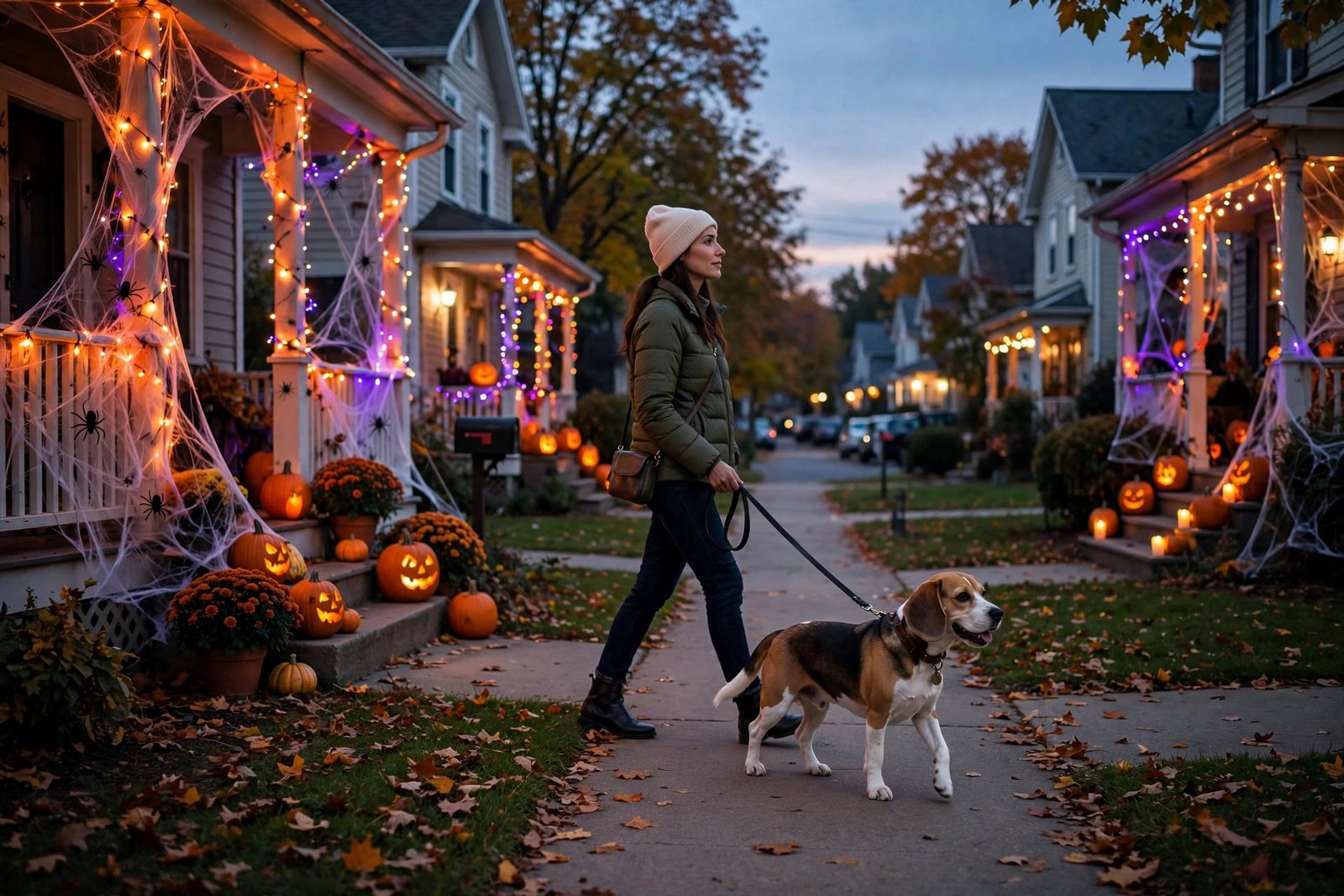
4. Light the dog up — and mean it
Reflective gear is better than nothing, but here’s the thing most people miss: reflective material only works when light hits it. On a dark street with no headlights nearby, a reflective strip is basically invisible. Own light — an LED leash, a light-up collar — is visible from every angle, all the time. For Halloween, that’s the difference between a driver seeing your dog at the curb and not.
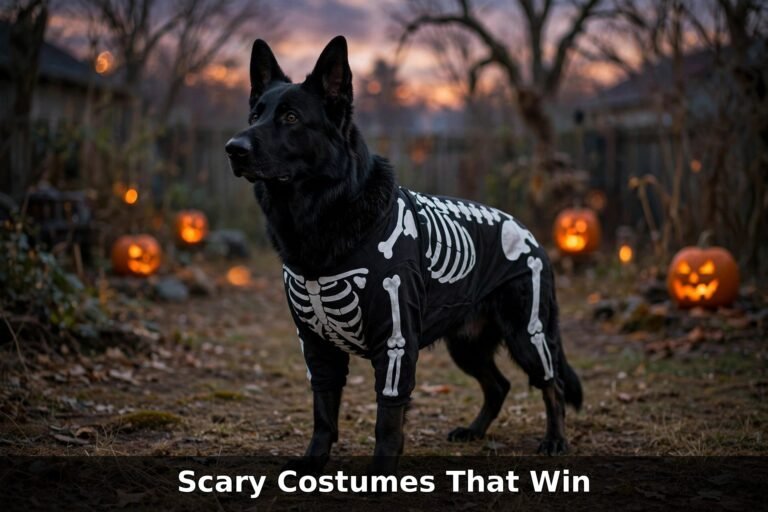
The combo that actually works is both: an LED collar or leash for active light plus reflective trim as backup. If your dog is black or dark-coated, this isn’t optional — a dark dog at night is functionally invisible. Our guide to light-up Halloween dog collars goes deep on the collar options; the short version is that the collar-and-leash combo is the safest setup you can put together in one shopping trip.
5. Your visibility and their ID matter as much as the dog’s
Two things people forget while fussing over the dog. First: you need to be visible too — a reflective band or a headlamp keeps you safe and signals there’s a leashed dog attached. Second: check the ID tags before you leave. Tags fall off, numbers change. If the worst happens and your dog bolts, a tag with a current phone number is worth more than every gadget on this list.
6. Scan the sidewalk like it’s a minefield
Because it is. By 8pm, the average residential sidewalk is scattered with dropped candy, torn wrappers, and things kids handed out and immediately discarded. Chocolate and xylitol (the sweetener in sugar-free candy and gum) are both dangerous for dogs, and wrappers can cause blockages on their own. This is not a “let them sniff everything” walk. It’s a “heads-down, eyes-on-the-ground” walk.
Bring a flashlight and sweep the path ahead of you — a headlamp is better because your hands stay free. Practice “leave it” before Halloween if your dog’s recall on dropped food is shaky. Halloween night’s trade is simple: every piece of sidewalk candy they skip is one you never have to call the vet about.

7. Have a plan for the costume people
Your dog doesn’t know what a costume is. A neighbor in a mask and a cape isn’t a person to your dog — it’s an unpredictable tall thing that smells wrong and moves weird. The most common Halloween walk problem isn’t candy or cars; it’s a dog that panics at a stranger in costume and either lunges or bolts.
The plan: spot them early, create distance, and reward calm. Cross the street before the encounter, not during it. If a costumed kid wants to pet your dog, “sorry, not on Halloween night” is completely fine — most parents get it. Carry treats and pay your dog for disengaging. And if your dog freezes, shakes, or tries to drag you home — listen. That’s not disobedience, it’s information. Shorten the walk and head back.
8. If the dog wears a costume on the walk, keep it minimal
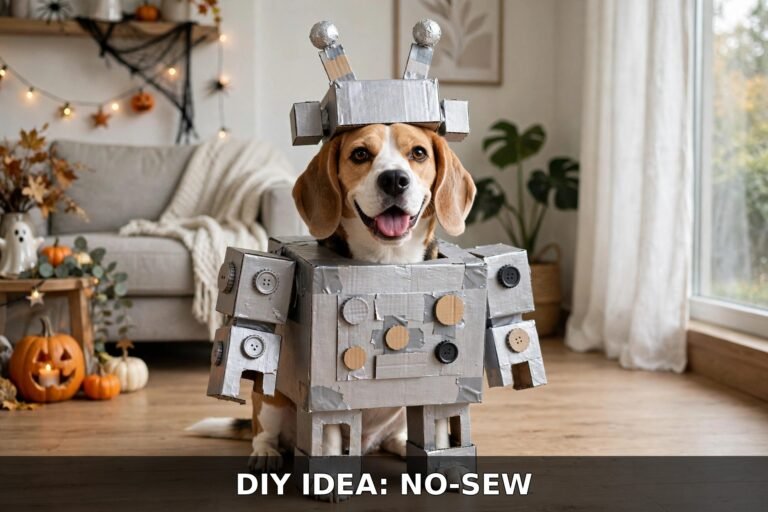
Some dogs love a costume. Most tolerate one. A meaningful number hate them — and a dog that hates its costume, on a leash, on a chaotic night, is a dog working with zero margin. If your dog walks beautifully in a bandana or strap-on cape, fine. If the full body suit makes them freeze or chew at it, the costume stays home. Halloween photos take two minutes; the walk takes twenty, and a miserable dog doesn’t become less miserable at minute twelve.
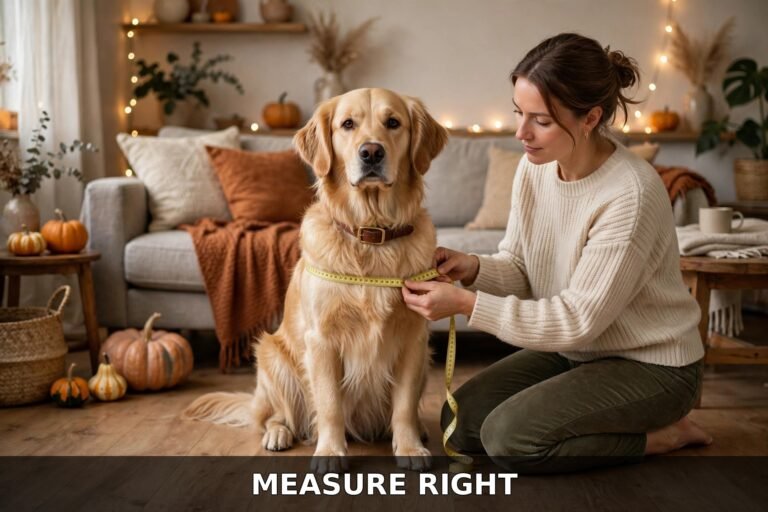
The rule I’d tattoo on every Halloween dog owner’s hand: the walk is the dog’s time, the costume is your photo’s time, and they don’t have to be the same time. Get the photos in the living room, then walk the naked (or bandana’d) dog in peace. If you’re still shopping, our dog Halloween costume size guide has the three measurements that prevent the most common costume disasters.
9. Do the bedtime walk after 10pm
Here’s the move most people skip: a second, short walk after about 10pm. The trick-or-treaters are gone, the porch lights are off, and the street is just a street again. Ten minutes lets your dog empty the tank and sniff a world that’s gone back to normal — which does real work settling a dog whose evening was weird. Keep the LED gear on anyway and the leash short. Some years, this is my favorite part of the holiday.
The Gear That Actually Earns Its Place
This is a tips article, not a shopping list — but two pieces of gear come up in nearly every tip above, so here they are, both verified live Amazon listings. One LED leash, one LED collar: the visibility combo from tip 4.
Visinite 4 Ft LED Dog Leash — 7 Lighting Modes, USB Rechargeable, Reflective Strips — A 4-foot light-up leash with double-sided LED strips and seven lighting modes, rechargeable over USB. The short length is exactly right for Halloween crowd control, and the active light is visible from every angle on a dark street.
WIGZI Luna LED Dog Leash — Rechargeable Light, Gel Comfort Handle, Reflective Rope (6 Ft) — The longer, comfort-grip alternative: an LED light-up rope leash with a padded gel handle and reflective threading, for owners who want the full six feet on quieter stretches and a handle that won’t chew up the hand on a long night.
NOVKIN Lighted Dog Collar — Rechargeable, 7 Colors — The collar half of the visibility combo: a rechargeable light-up collar with multiple colors that pairs with the LED leash above. Collar plus leash means your dog is carrying two independent light sources, which is the setup I’d want on a black-coated dog on October 31st.
FAQ
Is it safe to walk my dog on Halloween night?
Yes, with the precautions in this article — or walk early and skip the night walk entirely. Know your dog: a crowd-loving dog and an anxious rescue are having two very different Halloweens, and your plan should match the dog in front of you.
What time should I walk my dog on Halloween?
Before 6pm if you can — before trick-or-treating starts. If that’s not possible, wait until after about 10pm, when the crowds are gone. The 6–9pm peak window is the one to avoid.
Should I use a retractable leash on Halloween?
No. A short, sturdy 4-to-6-foot leash gives you real control in crowds and around costumed strangers. Retractable leashes give a panicking dog sixteen feet of running room — the opposite of what you want on Halloween night.
How do I keep my dog visible at night?
Active light beats reflective material alone: an LED leash and/or light-up collar is visible from every angle regardless of headlights. Add reflective trim as backup, and wear something reflective yourself.
What should I do if my dog is scared of costumes?
Create distance early — cross the street before the encounter. Reward calm disengagement with treats. Never force an interaction, and if your dog freezes, shakes, or tries to bolt, shorten the walk and head home. That’s the dog telling you the night is too much.
Can my dog eat candy dropped on the sidewalk?
No. Chocolate and xylitol (in sugar-free candy and gum) are dangerous for dogs, and wrappers can cause blockages. Scan the sidewalk with a flashlight, keep the walk moving, and reward a solid “leave it” every time.
Should I bring my dog trick-or-treating?
Only if your dog is genuinely calm and crowd-proof — most aren’t, and that’s fine. The happier setup for most dogs is an early walk, a cozy night in with a chew, and a short late walk after the crowds go home.
The Bottom Line
Walking your dog on Halloween night comes down to three decisions: when, where, and what’s clipped on. Walk early or late — not in the 6–9pm crush. Walk the quiet streets, not the candy corridor. Use a short leash, light the dog up with real LEDs, and scan the ground. And give your dog an out: the dog that gets to go home early is the dog that trusts you next Halloween too.
For more seasonal fun, browse the full Pet Halloween hub.
🎄 Visit Our Etsy Shop — Fukroo
Printable Christmas wall art, gift tags & party games — instant download
Shop on Etsy →


5 Comments