Dog Halloween Costume Size Guide & Safety Checklist (Before You Buy)
The cutest dog Halloween costume in the world is the wrong costume if it is one size too small. Dogs cannot tell us a strap is pinching or a hood keeps sliding into their eyes. They show us by freezing, pawing, panting, or trying to back out of the outfit like it owes them money. This guide will help you measure properly, choose a safe style, and do a calm trial run before Halloween night.
Start here, then browse our tested shortlist of best dog Halloween costumes for small, medium and large dogs. For the whole seasonal collection in one place, visit our Pet Halloween Costumes & Safety Guide.
What You Need to Measure Your Dog
You do not need special equipment. Grab a soft measuring tape, a handful of small treats, and two quiet minutes. If you do not own a soft tape, use a piece of string or a phone charging cable, mark the length, then lay it flat against a ruler. Measure while your dog is standing, not curled up asleep, because a sleeping dog is a surprisingly different shape.
Keep the mood light. Measure one area, reward, take a short break, then measure the next. If your dog is wiggly, ask another person to offer treats at nose height while you measure. You are not just getting numbers here. You are teaching your dog that Halloween gear means good things happen.
Step 1: Measure Chest Girth (The Most Important Number)
Wrap the tape around the widest part of your dog’s rib cage, just behind the front legs. The tape should be snug enough to stay in place but loose enough that you can slide two fingers underneath. Write the number down and add a little breathing room in your head. Chest girth decides most body costumes, including pumpkins, hot dogs, and dresses. If the chest is tight, nothing else about the costume will feel right.
Step 2: Measure the Neck
Measure where a normal collar sits, again with two fingers of space. Neck size matters for manes, capes, hoods, and any costume that closes at the throat. A costume should never press on the windpipe or make swallowing look effortful. When a size chart gives you a neck range and your dog is at the very top of it, size up. Halloween photos are not worth a tight throat.
Step 3: Measure Back Length
Start at the base of the neck, where the shoulders begin, and measure along the back to the base of the tail. This number keeps capes, dresses, and novelty body costumes sitting in the right place instead of sliding toward the hips. For long-bodied dogs, length can be the reason a costume looks perfect in the product photo and oddly short at home, so do not skip it.
Quick Size Reference Table
| Dog size | Chest (girth) | Neck | Back length | Costume tip |
|---|---|---|---|---|
| Small | 12-18 in | 8-12 in | 8-12 in | Light dresses and simple body styles work well |
| Medium | 18-24 in | 12-16 in | 12-16 in | Compare chest first, then length |
| Large | 24-32 in | 16-22 in | 16-22 in | Head-only styles like manes are often easiest |
Between sizes? Choose the larger one almost every time. You can usually adjust straps down on a bigger costume. You cannot add comfort to a costume that is already squeezing the chest. The one exception is a very deep-chested or very slim dog, where a too-large costume may twist. In that case, look for adjustable straps and do an indoor test walk.
The Before-You-Buy Safety Checklist
Keep eyes, nose, and mouth completely clear
Avoid masks, tight hoods, and hats that can slide over the eyes or block breathing. Your dog should be able to see the treat in your hand, pant normally, drink water, and bark if they want to. If a piece needs constant adjusting to stay out of their face, send it back.
Remove dangling and chewable parts
Check for loose strings, glued-on buttons, bells, ribbons, and plastic pieces. Anything a bored dog can chew off at a party can become a swallowing or choking hazard. Give every seam a gentle tug test before the first wear, and supervise the whole time the costume is on.
Make sure walking, sitting, and bathroom breaks still work
A safe costume lets your dog walk without tripping, sit without fabric bunching painfully, lie down, and go to the bathroom without soiling the outfit or themselves. Do a hallway test at home. If your dog minces, hops, or refuses stairs they normally take, the fit or style is wrong.
Plan for darkness: reflective and LED visibility
Halloween walks happen at dusk, with excited kids, decorations, and cars all competing for attention. Add light and reflection to your dog’s normal setup. An LED collar worn at a comfortable fit, alongside their regular collar or harness, makes your dog visible from the front, side, and behind.
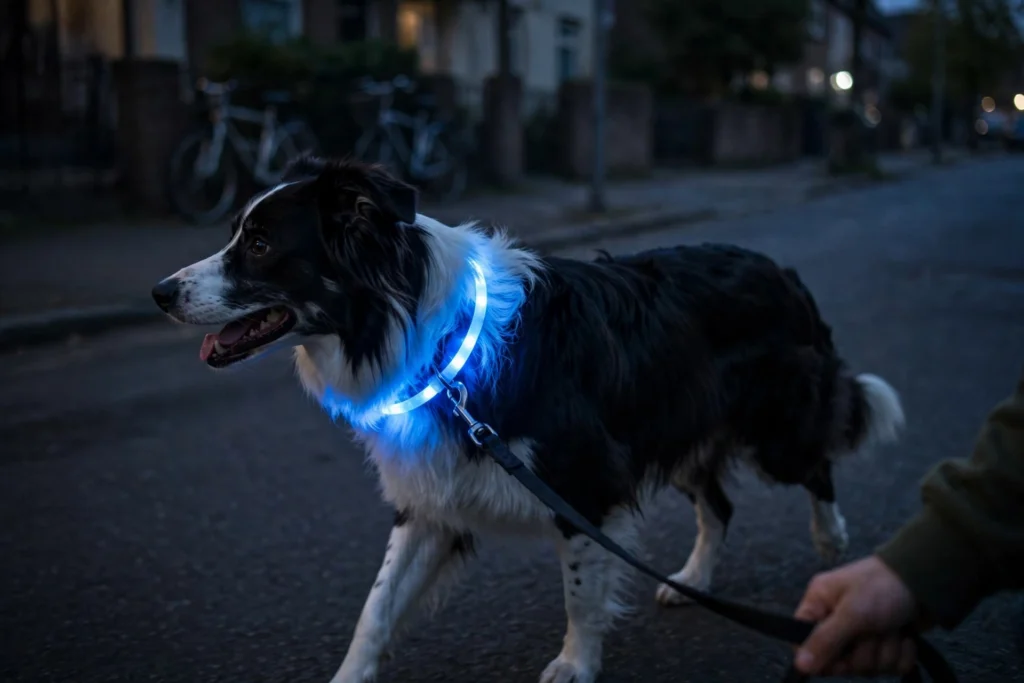
A second, ultra-light option is handy for smaller dogs or as a backup for a longer evening out. Whichever light you choose, charge or test it the night before, not at the front door.
Do a real trial wear, not a surprise reveal
Put the costume on for five to ten minutes at home, two or three days before Halloween. Reward calm behavior, play a favorite game, then take it off while things are still going well. Repeat the next day. On Halloween, your dog will already know the costume predicts treats and attention, not stress. If our pumpkin, lion, and funny costume picks are on your shortlist, order early enough to allow this rehearsal window.
Know when to skip the costume
Some dogs are simply happier in a festive bandana or with no outfit at all. Seniors, very young puppies, dogs recovering from surgery, and anxious dogs who freeze or hide get a free pass. Halloween should be fun for them too, and a relaxed dog at the party is better than a dressed-up dog enduring the party.
Halloween Night Reminders
- Keep candy, wrappers, glow sticks, and chocolate well out of reach, and brief guests not to share treats meant for people.
- Use a normal, well-fitted collar or harness and a regular leash. Never attach a leash to a costume.
- Bring water, poop bags, and a small towel. Costumes plus excitement can mean drool and muddy paws.
- Watch for open doors during trick-or-treat. Even a confident dog can bolt when a costumed stranger appears.
- Give your dog a quiet retreat away from the doorbell, music, and visitors, with a familiar bed and a chew.
- Take photos early in the evening, before your dog is tired. Then let the costume come off if they have had enough.
Frequently Asked Questions
What if my dog is between two costume sizes?
Size up, especially if the chest measurement is near the top of the smaller size. Adjust the straps, check the two-finger rule at neck and chest, and do a short indoor walk to confirm nothing twists or drags.
How tight should a dog Halloween costume be?
Snug enough to stay in place, loose enough for two fingers at the neck and chest. Your dog should breathe, pant, sit, and shake normally. If you see skin or fur bulging at an opening, it is too tight.
Can my dog wear a costume for the whole party?
Give breaks. Even a relaxed dog benefits from costume-free time for water, a bathroom trip, and a quiet reset. Supervise the entire time the costume is on, and remove it at the first persistent sign of stress.
What is the safest costume style for a nervous dog?
The lightest one possible: a simple, well-fitted festive piece that does not cover the face or legs, worn briefly and paired with treats. Our guide to cute and safe dog Halloween costumes includes head-only options that many nervous dogs accept faster than full outfits. And if your dog says no, the safest costume is no costume.
Measure First, Then Have Fun
Three measurements, a two-finger check, one calm rehearsal, and a light for after dark. That is genuinely most of the work. Do it before you buy, and Halloween becomes what it should be: a silly, safe evening with a comfortable dog in the photos. Head back to our Pet Halloween hub for both guides in one place, pick a style your dog will actually enjoy, and enjoy the night.
One Comment