

Dog Halloween Costume Size Guide & Safety Checklist
As an Amazon Associate, Furveko earns from qualifying purchases made through links on this page, at no extra cost to you. See our Affiliate Disclosure.
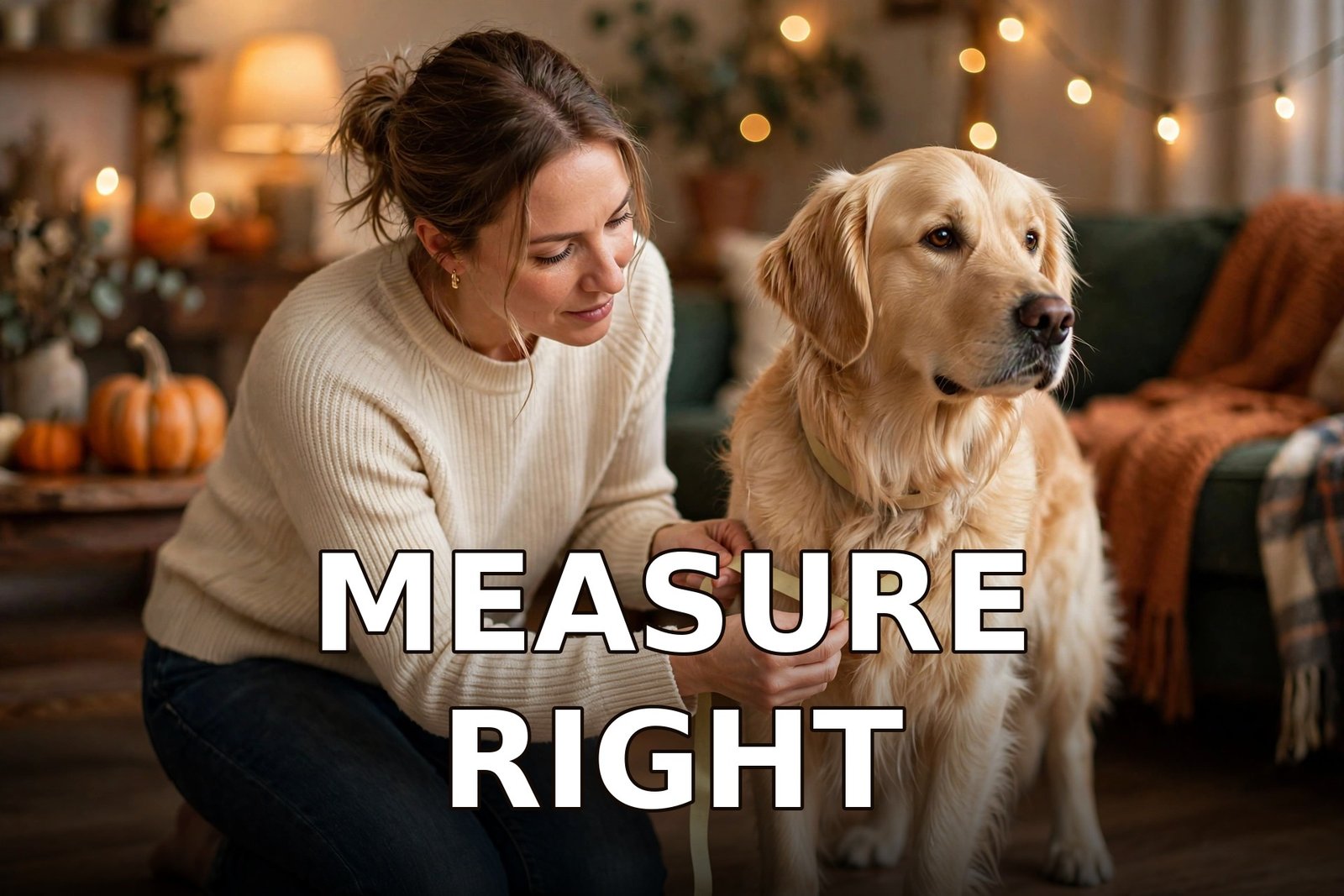
There’s a special kind of heartbreak that only happens in late October. The package arrives, you tear it open, and your dog — who looked so noble in the product photos — ends up wearing what can only be described as a fabric traffic jam. The taco shell won’t close. The cape drags on the floor.
Here’s the thing: most costume disasters aren’t about the costume. They’re about the step that got skipped before the box was ever opened — measuring the dog.
Three minutes, one soft tape, a small treat bribe — that’s the difference between a Halloween photo you’ll frame and one you’ll quietly delete. Here’s exactly how to measure your dog for a costume: what to measure, where the tape goes, and what those numbers mean on a size chart.
Once you have the numbers, our complete pet Halloween guide will help you pick something worth wearing them in — and the safety checklist further down covers the candy, candles, and front-door chaos of the night itself.
The Only 3 Measurements That Matter
Forget weight: a 50-pound greyhound and a 50-pound bulldog are shaped like entirely different animals. Every decent costume size chart is built on the same three body measurements.
1. Chest Girth — The King Measurement
Wrap a soft tape around the widest part of the ribcage, just behind the front legs — snug, not tight, with two fingers of slack. Note it to the nearest half inch.
Why does the chest rule everything? A costume that can’t close over the ribcage can’t be worn. A slightly roomy neck or extra back length can be worked around; a chest an inch too small is a returned costume.
2. Neck Circumference
Measure where the collar naturally sits — the base of the neck, not up under the jaw. Two fingers of slack. This matters most for capes, bandanas, and collar-style closures.
3. Back Length
With your dog standing — sitting changes the numbers — measure from the base of the neck to the base of the tail (not including the tail). This decides whether a full-body suit pulls at the shoulders or bunches up like an accordion.
How to Measure a Wiggly Dog (Without Losing Your Mind)
Your dog will treat the measuring tape as a toy, a snake, or a personal insult. Here’s what actually works:
- Recruit a helper. One person feeds a slow drip of tiny treats; the other handles the tape.
- Time it right. Measure after a walk, not before. A tired dog is a cooperative dog.
- Make the tape boring first. Let them sniff it. Drape it over your own arm. After ninety seconds it stops being interesting.
- Go lick-mat if you’re solo. A little peanut butter on a lick mat, stuck to the floor, buys you two blissful minutes of still dog.
- Measure standing. When your dog sits mid-measurement — and they will — get them back on all fours and redo that number.

Dog Costume Size Chart (General Guide)
Compare your three numbers to a chart like this — general ranges from commonly published charts, since every brand sizes a little differently. Always check the specific product’s own chart before buying.
| Size | Chest (inches) | Neck (inches) | Back (inches) | Example breeds |
|---|---|---|---|---|
| XS | 12–14 | 8–10 | 8–10 | Chihuahua, Yorkshire Terrier |
| S | 14–17 | 10–12 | 10–12 | Shih Tzu, Miniature Dachshund |
| M | 17–20 | 12–14 | 12–14 | Beagle, French Bulldog, Corgi |
| L | 20–23 | 14–16 | 14–16 | Golden Retriever, Labrador Retriever |
| XL | 23–26 | 16–18 | 16–18 | German Shepherd, Boxer |
| XXL | 26–30 | 18–20 | 18–22 | Great Dane, Mastiff |
Near a boundary? The next section saves you a return label.
Between Sizes? Size Up — and Let the Chest Decide
The golden rule: when in doubt, size up, and let the chest measurement make the final call.
Neck says medium but chest says large? Buy the large. A roomy neck can be adjusted; a straining chest restricts breathing and rubs behind the front legs.
Two numbers can be a little off and the costume still works — but if the chest is wrong, nothing else matters. Match the chest first.
Different Costumes Measure Differently
Not every costume cares about all three numbers equally:
- Full-body suits (hot dogs, dinosaurs, superheroes): back length is critical. If it’s between sizes, size up so the suit doesn’t pull at the shoulders. Our best dog Halloween costumes of 2026 notes which full-body picks run long or short.
- Capes and ponchos: neck and chest only — back length barely matters since nothing is tailored to the body. For more fitting advice across costume styles, see our best dog Halloween costumes of 2026.
- Headpieces and hats: measure around the widest part of the head, just in front of the ears. Headpieces are the number-one return category in pet costumes because almost nobody measures the head.
- Bandanas: neck only, and most tie with plenty of adjustability. The lowest-stakes costume category there is.
The Halloween Safety Checklist for Dog Owners
A well-fitted costume is only half the job — Halloween night has its own hazards. Work through this checklist before the first trick-or-treater rings.
- Lock down the candy. Chocolate is toxic to dogs; sugar-free candy and gum with xylitol are even more dangerous. Keep it all out of nose reach.
- Make a doorbell plan. Strangers at the door all evening is a lot for a dog. Set yours up in a quiet room away from the entry with bed, water, and a chew toy. Keep exits secure.
- Keep cats indoors. The front door opens constantly, and dark cats are hard for drivers to spot after dark.
- Flame-proof the decor. Use flameless LED candles in pumpkins, tape down cords, and move small or fragile things out of reach.
- Follow the costume-safety rules. No costume should restrict movement, sight, or breathing. Remove dangling parts your dog could chew off, do a short trial run a few days before.
- Save the emergency number. If your dog eats something suspicious — chocolate, xylitol candy, wrappers — call the ASPCA Animal Poison Control Center at (888) 426-4435.
Signs of a Good Fit vs. a Bad One
You measured, you ordered, it arrived. Before Halloween night, check:
Good fit: two fingers slide under every strap and edge; your dog can sit, lie down, and turn around without the costume shifting; nothing rubs behind the front legs.
Bad fit: heavier panting than the weather justifies; freezing in place and refusing to walk; constant scratching at the fabric; straining fasteners; bunching under the belly.
The Treat Protocol: Always Do a Trial Run
A few days before, do a dress rehearsal: treat for the head, treat for each leg, a jackpot handful when it’s fully on. Five minutes, then off before they get annoyed. Repeat two or three times.
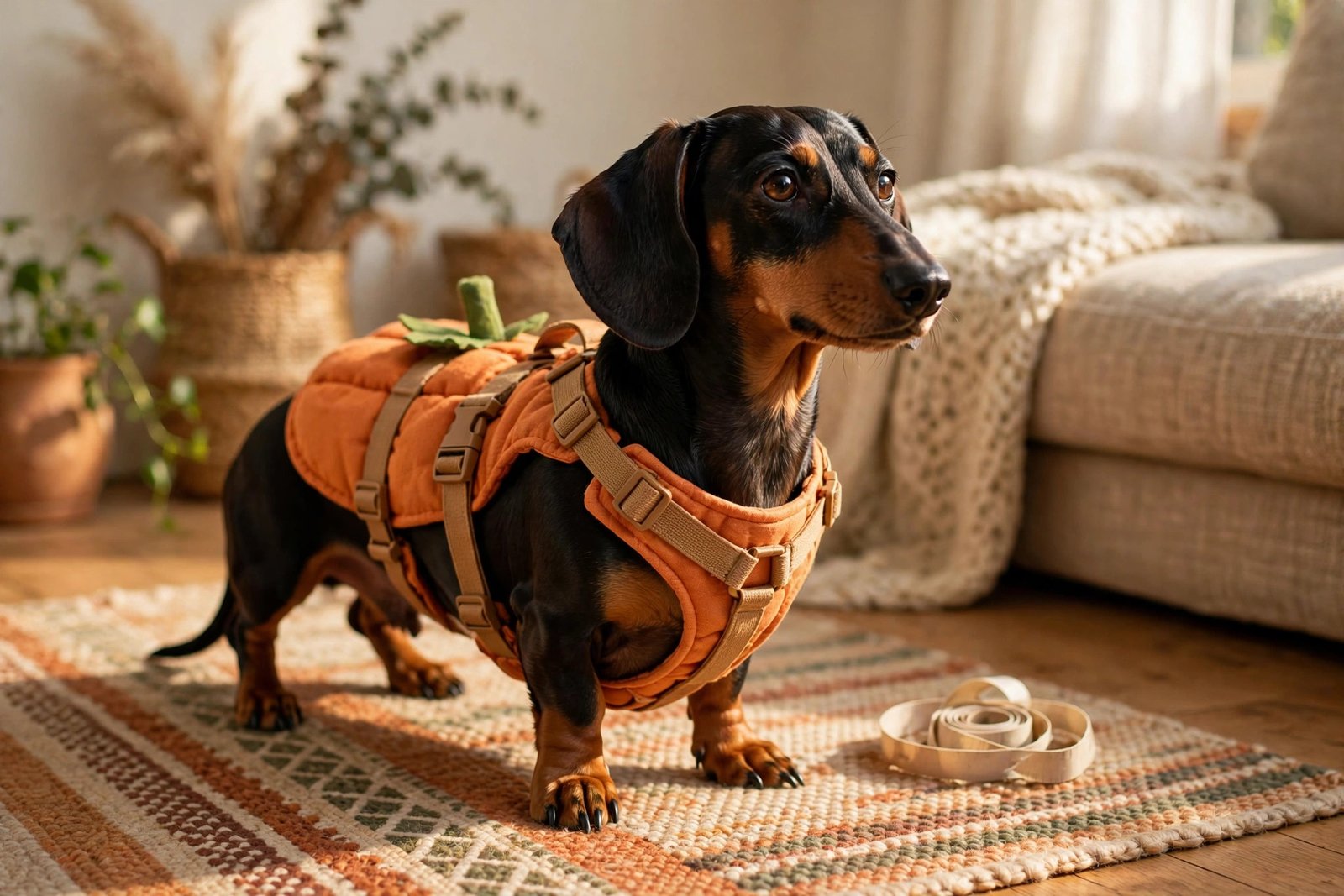
Not Ready to Commit? Start With a Zero-Stress First Costume
If your dog might prefer something simpler — or this is your first Halloween with a costume skeptic — start with a bandana.
Bandanas need only the neck measurement, tie with wide adjustability, and autumn plaid reads instantly festive.
If you want a zero-stress first costume while you figure sizing out, the E-Clover fall plaid dog bandana set is a solid pick — it even comes with a matching scrunchie for you.
E-Clover Fall Plaid Dog Bandana + Matching Scrunchie Set
A soft, adjustable fall-plaid bandana for your dog — plus a matching scrunchie for you. Only the neck measurement matters, the tie closure fits a wide range, and there’s nothing to zip, buckle, or wrestle.
As an Amazon Associate, Furveko earns from qualifying purchases.
Extra Safety Checks and Halloween Night Reminders
The checklist above covers the big hazards. These extra checks cover the details people miss.
- Eyes, nose, and mouth must stay clear – no mask or hood should block sight, smell, or panting.
- Check walking, sitting, and bathroom – your dog should walk, sit, and go to the bathroom comfortably in the costume.
- Make your dog visible – add a reflective or LED collar for dark streets and porches.
- Know when to skip a costume – skip it for seniors, puppies, and dogs in pain or recovering from surgery.
- Leash on the collar, not the costume – clip the leash to the collar or harness underneath, never to the costume itself.
On Halloween night, bring water and poop bags, take photos early while your dog is fresh, keep doors closed between visitors, and give your dog a quiet retreat away from the doorbell. For a nervous dog, the safest style is a simple bandana or cape with no headpiece – if your dog freezes or panics, take the costume off.
Frequently Asked Questions
How do I measure my dog for a costume?
Chest: widest ribcage behind the front legs. Neck: base of the neck where the collar sits. Back: base of the neck to base of the tail, dog standing.
What is the most important measurement for a dog costume?
Chest girth, by a wide margin. A costume that can’t close over the chest can’t be worn; a loose neck or back can usually be adjusted.
Should I size up or down if my dog is between sizes?
Size up. A slightly roomy costume is comfortable and adjustable; a too-tight one restricts breathing and rubs behind the front legs.
My dog hates wearing costumes. What should I do?
Don’t force it. Try a bandana with short, treat-filled trial sessions. Still stressed after several tries? Skip the costume — comfort beats a photo.
Do I need to measure for a bandana?
Just the neck, and even that’s forgiving since most bandanas tie with a wide adjustable range.
The Three-Minute Habit That Saves Halloween
No dog ever held a grudge about being measured. Tape, treats, ninety seconds of standing still — the smallest investment for the biggest payoff: a costume that fits and a dog comfortable in it.
Going full family theme? Don’t miss our guide to matching dog-and-owner Halloween costumes — or, for the cat people reading over your shoulder, costumes cats will actually tolerate.
🎄 Visit Our Etsy Shop — Fukroo
Printable Christmas wall art, gift tags & party games — instant download
Shop on Etsy →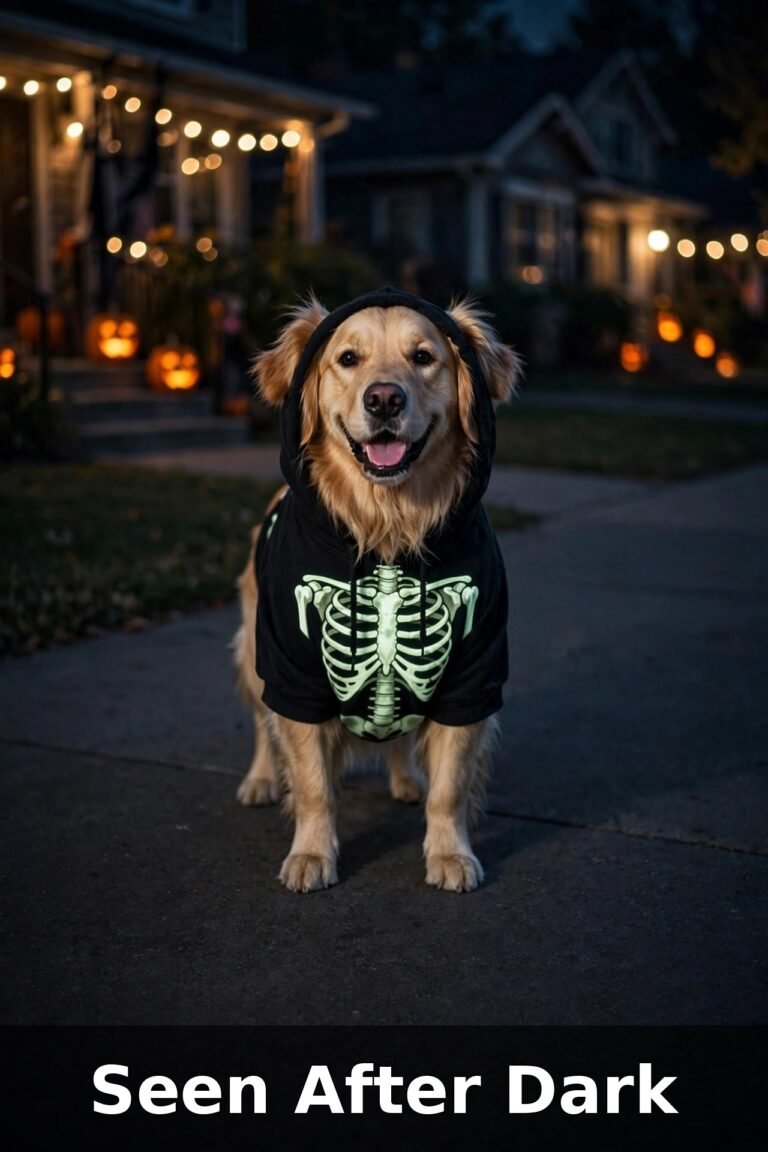


3 Comments