Best Dog Treadmill (2026): The Winter-Exercise Buyer’s Guide
As an Amazon Associate, Furveko earns from qualifying purchases made through links on this page, at no extra cost to you. See our Affiliate Disclosure.
As an Amazon Associate, Furveko earns from qualifying purchases.
October’s ending, the evenings are getting dark by six, and if you share your home with a high-energy dog, you know what’s coming: short walks, icy sidewalks, and a stir-crazy pup bouncing off the walls by February. I’ve watched owners learn this the hard way — the dog gains weight, the chewing gets creative, and everyone in the house gets grumpier.
A dog treadmill won’t fix winter by itself. But as part of an indoor exercise plan, it’s one of the most honest tools a busy owner can buy — especially for apartment dogs, reactive dogs who can’t do crowded parks, and working breeds that need more than a twenty-minute loop around the block. I dug into what’s selling well on Amazon right now, checked the safety specs that matter, and narrowed it to two picks worth your money. Every link below was live and in stock as of October 2026.
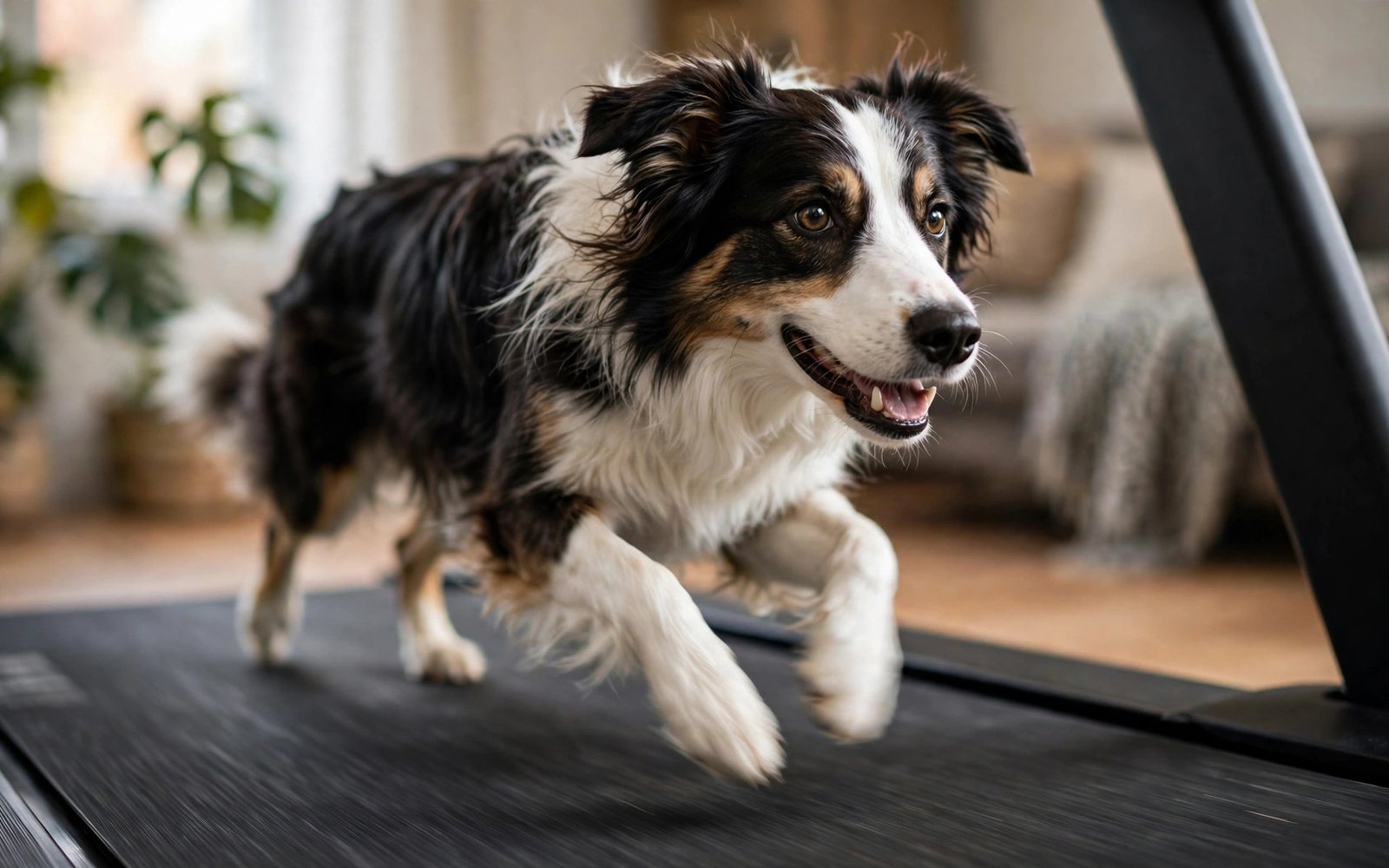
When a Dog Treadmill Actually Helps — and When Walks Still Win
A treadmill replaces the physical part of a walk — mileage, cardio, calorie burn. It doesn’t replace sniffing, sunshine, or the mental workout of the real world. A dog that only treadmills for four months stays fit but can still get bored, so I always pair the recommendation with puzzle toys for bored dogs — the treadmill burns the body, the puzzle works the brain.
Where a treadmill genuinely shines:
- Apartment and urban dogs. When sidewalks are salted, slushy, or pitch black at 5:30 PM, a living-room workout beats skipping exercise entirely.
- High-drive breeds. Border collies, huskies, Belgian Malinois types — dogs bred to move all day. One walk barely dents their battery.
- Reactive or anxious dogs. Some dogs can’t handle busy trails or dog parks. A treadmill lets them exercise hard in a calm, controlled space.
- Senior-dog conditioning (low speed). Gentle, supervised walking keeps older joints moving on days the weather says no.
- Packed schedules. A focused 20–30 minutes while you answer email is exercise you actually get done.
And when walks still win: puppies under a year shouldn’t do sustained forced exercise on a belt — their growth plates are still open. Dogs with heart conditions, orthopedic injuries, or breathing issues need a vet’s clearance first. And a treadmill won’t fix behavior — if your dog is destroying the house while you’re out, read up on separation anxiety in dogs, because no amount of cardio cures a panic problem.
Quick Verdict
Lifepro PawRunner — Best Overall. Quiet motor, remote control, a magnetic safety key that stops the belt if your dog steps off, and a 130-lb capacity covering most breeds. If you buy one dog treadmill, buy this one.
CIIHI Dog Treadmill — Best Value / 2-in-1 Pick. Works for dogs and people, low-noise, and the display rotates so you can check stats from wherever you’re standing. The smart buy for small-to-medium dogs.
Our 2 Verified Picks for Winter 2026
Lifepro PawRunner Dog Treadmill — the best overall pick: a quiet motor that won’t rattle the apartment, remote control for mid-walk speed changes, magnetic safety key, and support for dogs up to 130 lbs.
Here’s why the PawRunner earned the top spot. The motor is where most dog treadmills fail — too loud and the dog won’t step on; too weak and it stalls under a 60-lb dog. Lifepro sits in the sweet spot: genuinely low noise, which matters more than buyers expect, because one scary first session can put a dog off the belt for weeks. The remote control is the sleeper feature — you stand beside your dog, reward them, and nudge the speed up without leaning over the console.
The magnetic safety key is non-negotiable for me. Clip it to your dog’s collar; if the dog steps off or panics, the key pulls free and the belt stops. The 130-lb ceiling covers everything from a Frenchie to a big Lab. It’s the big-ticket pick in this guide, but for gear you’ll use daily through four months of winter, the cost-per-walk math works out fast.
CIIHI Dog Treadmill — a clever 2-in-1 design for dogs and humans, low-noise, with a rotatable display so you can watch speed and time from any angle.
The CIIHI is the pick for smaller dogs and smaller budgets. The 2-in-1 angle is genuinely useful: it’s built so a person can walk on it too, so if your dog never takes to the belt (some won’t — more below), you haven’t bought a very expensive drying rack. The rotatable display sounds like a gimmick until you use it — glancing at the timer from the couch keeps sessions calmer for everyone.
Low noise is the headline here too, and for the same reason: sound is what scares dogs off treadmills. It’s aimed at small-to-medium dogs, so a 90-lb powerhouse should step up to the PawRunner. For a beagle, corgi, or terrier mix, it’s the value play.
Side-by-Side Comparison
| Pick | Weight capacity | Standout feature | Best for |
|---|---|---|---|
| Lifepro PawRunner | Up to 130 lbs | Remote control + magnetic safety key | Best overall, most breeds |
| CIIHI Dog Treadmill | Small to medium dogs | 2-in-1 dog & human use, rotatable display | Best value, smaller dogs |
Pros and Cons at a Glance
Lifepro PawRunner — Pros: quiet motor nervous dogs tolerate; remote keeps you beside your dog, not over the console; magnetic safety key stops the belt fast; 130-lb capacity. Cons: bigger and pricier than a casual buyer needs — overkill for light winter walking with a small dog.
CIIHI Dog Treadmill — Pros: 2-in-1 dog-and-human design; low noise; rotatable display is a genuinely useful touch; better price point. Cons: sized for small-to-medium dogs, so large breeds need to look elsewhere.
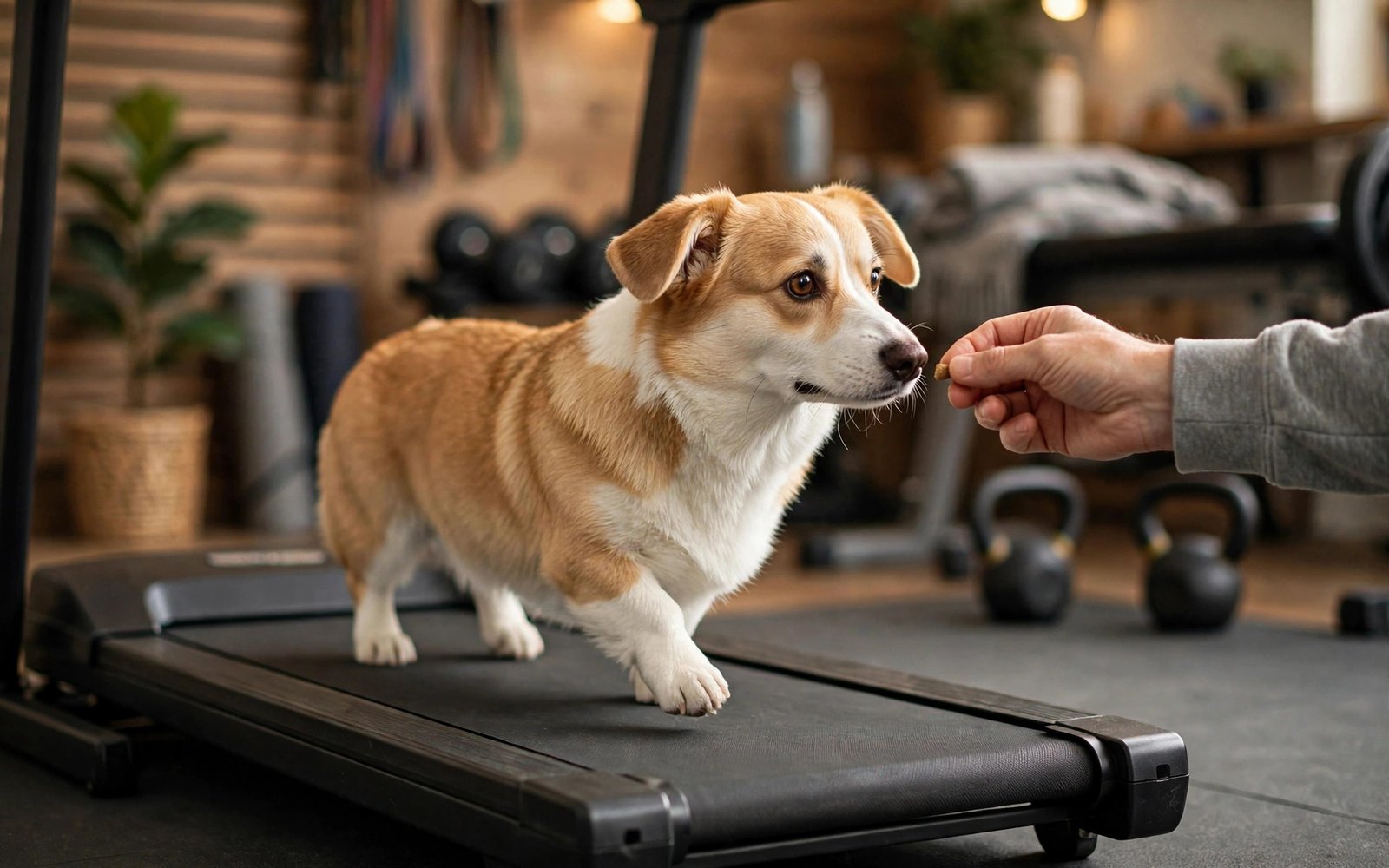
Size, Weight & Fit: Getting the Belt Right
The number-one sizing mistake is a belt your dog can’t take a full stride on. Your dog should walk and trot with a natural gait — not shuffle. As a rough rule, the belt should be at least as long as your dog’s body (nose to base of tail), with inches to spare front and back.
Weight capacity is the other hard line. Stay comfortably under whatever number a treadmill claims — a dog near the max rating works the motor harder and the belt runs louder. Between sizes? Go up. An oversized treadmill is awkward in a small apartment, but an undersized one is useless.
Measure your space first. Dog treadmills are longer than they look in photos, and you’ll want a foot or two of clearance so you can stand beside your dog. Indoor season is also peak shedding season — a good time to make sure your grooming vacuum for dog hair is up to the job.
How to Introduce Your Dog to a Treadmill (No Rushing)
Almost every bad treadmill story starts the same way: the owner turned it on, put the dog on it, and the dog panicked. Plan on a week of short sessions, not one heroic afternoon.
- Belt off, treats on. Let the dog investigate the powered-off machine. Treats on the belt, treats near the belt, praise for any interaction. Today the treadmill is just a boring object.
- Belt on, dog off. Run the machine at its slowest speed while your dog watches from a few feet away. Treat calm behavior. Repeat for a couple of days — the sound has to become background noise.
- Dog on, speed lowest. Lure your dog onto the belt with the machine off, then start it at the absolute slowest setting, leash held loosely (never tied to the machine), you standing beside them. Thirty to sixty seconds, then off with a treat.
- Build slowly. Add a minute or two per session. Keep your voice upbeat — your dog reads your tension before anything else.
- Never force it. If your dog freezes, shakes, or tries to bolt, stop and go back a step. Most dogs come around within a week or two; a few never do, and that’s fine.
Safety Rules: Read These Before the First Walk
- Never leave a dog unsupervised on a treadmill. Not for a minute. Stay in the room, watching, for the entire session.
- Use the safety key every time. Clip it to the collar or harness — it’s the difference between a startled dog and an injured one.
- Start slow, stay short. Ten to twenty minutes at a walking pace is plenty for the first couple of weeks.
- Never tie the leash to the machine. Hold it loosely or let the dog walk free — a tied leash is a strangulation risk if the dog falls.
- Watch for fatigue. Heavy panting, drooling, lagging toward the back of the belt — session over. Dogs push past their limits to please you; stop first.
- Warm up and cool down. A minute or two of slow walking at each end, same as a real walk.
FAQ
Are dog treadmills safe?
Yes, used the way this guide describes: supervised sessions, safety key attached, sensible speeds, gradual build-up. Most injuries involve an unsupervised dog, a tied leash, or speeds the dog wasn’t ready for.
How long should a dog walk on a treadmill?
Start with 10–20 minutes at a walk. After two to three weeks of consistent sessions, 30 minutes at a steady trot is a solid workout for most medium and large breeds. End while your dog still has energy left.
Can I just use my human treadmill for my dog?
In a pinch, yes — but dog treadmills earn their keep: belts sized for a dog’s stride, quieter motors, and safety keys made for collars. Human treadmills also start at speeds too fast for a small dog’s first steps.
Will a treadmill replace daily walks completely?
No — walks give sniffing, socialization, and mental stimulation a belt can’t. Treat the treadmill as the winter backup for cardio on the days weather, darkness, or your schedule kills the walk.
My dog is scared of the treadmill. Should I keep trying?
Slow down, don’t push through. Go back an introduction step, keep sessions to a minute, and end on a win. Most dogs come around within one to two weeks of patient work. If yours still panics after a few weeks, accept it — forcing it only deepens the fear.
What size dog treadmill do I need?
The belt should be at least as long as your dog from nose to tail base, with room to spare, and your dog’s weight should sit comfortably under the machine’s stated capacity. Between two sizes, choose the larger one.
Affiliate Disclosure
As an Amazon Associate I earn from qualifying purchases — if you buy through one of my links, I may earn a commission at no extra cost to you. That support keeps Furveko’s guides free and independent: it never changes which products I recommend or how I rank them.
The Bottom Line
Winter doesn’t have to mean four months of an under-exercised dog. A treadmill handles the cardio when the weather won’t cooperate: the Lifepro PawRunner if you want the best all-round machine for most breeds, the CIIHI if your dog is small-to-medium and you’d like the 2-in-1 flexibility. Size the belt to your dog’s stride, introduce it patiently over a week or two, and never walk away mid-session. Do that, and by spring you’ll have the fittest dog on the block.
🎄 Visit Our Etsy Shop — Fukroo
Printable Christmas wall art, gift tags & party games — instant download
Shop on Etsy →